
Exercise Assistance
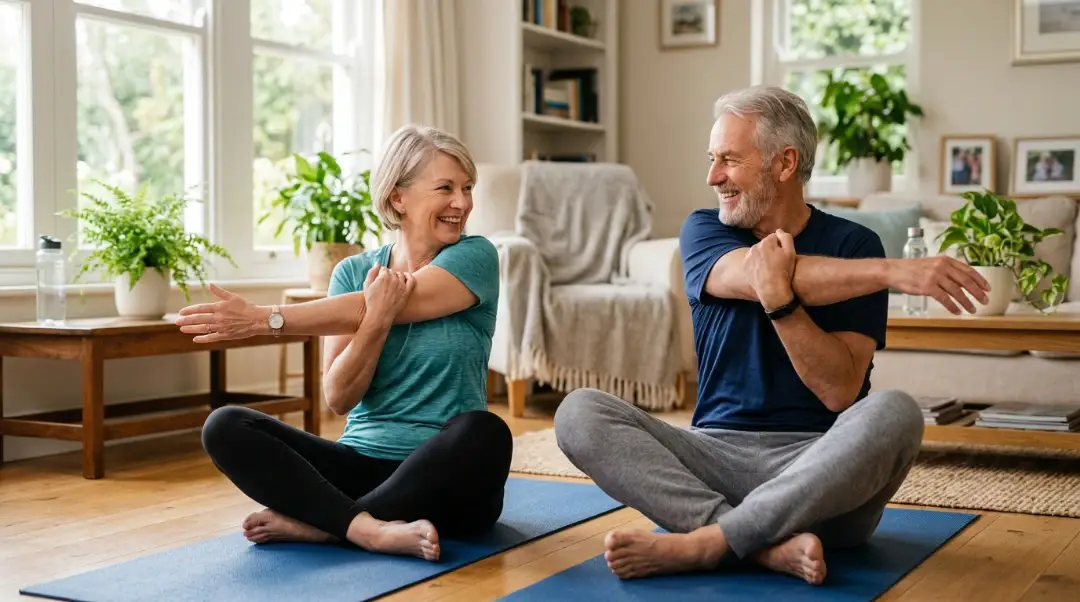
What Are the Best Exercises for Seniors?
Finding safe, effective solutions to keep your aging family member mobile can seem daunting. You want to keep them independent, yet you worry about slips, falls and joint pain. This is a perfectly natural feeling.” The good news? A planned physical program is the most potent thing you can do to help older individuals stay steady, smart, and self-reliant at home. The fastest response to your question is simple: The best physical workout includes low-impact aerobic, functional strength work, balancing work, and gentle stretching. Good activities include brisk walking, chair yoga and resistance band routines that are good for the joints and promote core stability. By concentrating on these safe ways, you may help your loved one to be mobile and prevent damage. Let’s see how to develop this safe foundation precisely. What Are the Most Beneficial Exercises for Seniors? Walking, resistance training with light dumbbells or resistance bands, water aerobics, tai chi, and balance exercises like standing on one foot are the best workouts for older adults. These five types combined contribute to heart health, muscle and bone density, which reduces fall risk, and helps older persons stay independent longer. None of these require special equipment or a personal trainer. A resistance band is less expensive than a huge coffee order, and it takes up almost no space in a drawer. You need a pair of supportive shoes and a sidewalk or mall or hallway for walking. It’s not about how hard it is. It’s consistent. A body that moves a bit each day hangs onto strength much better than one that moves a lot once a week. The Health Benefits of Exercise in Older Adults Keeping the body moving later in life delivers immediate, measurable changes that go far beyond weight management. Regular movement acts like a natural medicine for aging cardiovascular systems and joints. Here is what happens when older adults commit to a consistent routine: Protects Core Autonomy: Physical activity keeps your loved one capable of handling daily tasks like dressing, cooking, and bathing without needing constant assistance. Reverses Age-Related Muscle Loss: Known medically as sarcopenia, natural muscle wasting begins to accelerate after age 65. Targeted resistance training slows this process down, keeping limbs strong. Preserves Bone Mineral Density: Weight-bearing activities signal the body to keep bones dense and strong, which lowers the risk of severe fractures from minor trips. Lowers Blood Pressure: Consistent, light cardiovascular movement keeps blood vessels elastic, helping manage hypertension naturally. Beyond the structural perks, movement is deeply tied to mental sharpness. When an older adult exercises, blood flow to the brain increases. Research from the National Institute on Aging shows that regular aerobic activity can slow down cognitive decline and help protect against conditions like dementia. It also triggers the release of natural mood-boosting hormones, which help clear away the fog of chronic stress and low energy. Why Exercise Matters More As You Age With age, the margin for error in the body reduces and so does what “staying active” means. 30 and miss a workout, it hardly matters. A lost season of activity at 75 can mean the difference between navigating stairs alone and needing a handrail every time. Chronic conditions also add up. With each decade we have more arthritis, more high blood pressure, more type 2 diabetes, more osteoporosis, and exercise is one of the few strategies that helps control all of these at once without a prescription. That’s not a minor feat when someone’s already managing many drugs and visits. Then there’s the independence aspect, which appears to matter more to seniors than a number on a scale. The ability to dress, wash, cook and get around without help frequently makes the difference between living at home and having full-time care. Regular movement, even light movement, preserves that independence longer than practically anything else that is in a person’s control. The Best Exercises for Seniors Starting a new routine can feel intimidating if your loved one hasn’t worked out in years. The secret is focusing on low-impact movements that don’t place sudden, harsh pressure on the spine or knees. Here are the top physical modalities that offer the highest health rewards with the lowest risk of strain. 1. Chair Yoga for Seniors This approach modifies traditional poses by using a sturdy seat for total support. It targets tight muscles, poor posture, and stiff joints without forcing your loved one to get down on the floor. It’s an exceptional way to build total-body flexibility and quiet the nervous system. Seated Mountain Pose: Teaches spinal alignment and engages the deep abdominal wall. Overhead Stretch: Opens the ribcage and maintains shoulder mobility for reaching high objects. Seated Twist: Gently rotates the lower back to keep the spine flexible. 2. Tai Chi for Seniors This slow, meditative practice focuses on deliberate weight shifts and controlled breathing. It acts as a powerful system for fall prevention because it forces the brain and feet to coordinate perfectly. Commencement Move: Uses slow arm rises to establish balance and calm breathing. Cloud Hands: Requires continuous, gentle weight shifting from one leg to the other, which builds deep ankle stability. 3. Resistance Band Exercises for Seniors Elastic bands provide smooth, continuous tension throughout a movement without the joint strain caused by heavy iron dumbbells. They allow you to safely run through a senior strength workout right in the living room. Seated Rows: Wrapping the band around the feet and pulling toward the ribs strengthens the upper back and improves posture. Bicep Curls: Stepping on the band and curling the hands upward keeps arms strong enough to lift grocery bags comfortably. 4. Outdoor Walking Walking remains the most accessible form of aerobic exercise for seniors. It strengthens the lower body, improves heart health, and keeps joints moving naturally. When clients ask how many steps seniors should walk per day, the answer depends entirely on their current fitness level. While public health campaigns often push for 10,000 steps, modern research shows that hitting 6,000 to 8,000 steps
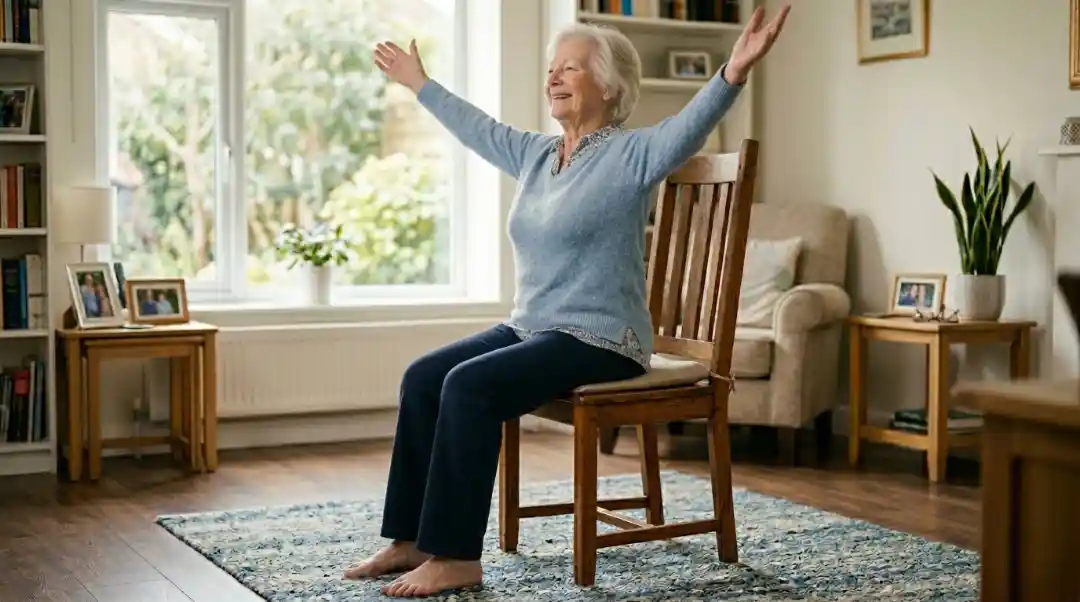
Chair Yoga Exercises for Seniors: A Complete Guide to Safe, Seated Movement at Home
Getting older doesn’t mean giving up on movement. But if traditional yoga feels out of reach because of stiff joints, balance concerns, or limited mobility, that’s a completely valid concern. Chair yoga exercises for seniors offer a safe, practical way to stay active without the risk of a floor fall or strained muscle. In short: you can get real physical and mental benefits from yoga without ever leaving your seat. This guide walks through everything worth knowing, including what chair yoga actually is, the science-backed benefits, eight easy exercises to try today, and honest answers about whether it helps with weight loss. Whether you’re looking for something to try at home or guidance for a loved one, this is a good place to start. Key Takeaways Chair yoga is a seated or supported version of traditional yoga that’s safe for older adults, including those with limited mobility or chronic pain. Regular practice can improve flexibility, balance, strength, and mental well-being. Research shows chair yoga may reduce the fear of falling in older adults after just 8 weeks of practice. It’s not a weight loss shortcut, but it supports healthy body composition when paired with good nutrition. No prior yoga experience is needed to begin. What Is Chair Yoga for Seniors? Chair yoga is a modified form of traditional yoga performed while seated in a sturdy chair or using a chair as a support prop. It adapts classic yoga poses so that older adults, people with arthritis, or anyone recovering from injury can practice safely. The chair acts as an anchor, providing stability so the focus stays on movement, not balance. Think of it as yoga’s gentler sibling. The breathing stays the same. The poses are adapted. The benefits are real. Traditional yoga often requires getting up and down from the floor, holding balance-heavy standing poses, or twisting into positions that put strain on aging joints. Chair yoga removes all of that pressure while keeping the core principles intact: intentional movement, controlled breathing, and body awareness. It’s a particularly good fit for adults dealing with osteoarthritis, osteoporosis, lower back pain, or anyone who simply hasn’t exercised in a while. A yoga class doesn’t need to look intense to be effective. Benefits of Chair Yoga for Seniors The benefits of yoga practiced from a chair are well supported by research. Here is what regular practice does for older adults. Improved Flexibility and Range of Motion As the body ages, muscles shorten and connective tissue tightens. That’s why something as simple as reaching overhead or turning to check your blind spot while driving becomes harder. Gentle stretching through a consistent chair yoga routine helps lengthen those tissues again. A 2023 study published in the journal Healthcare found that chair yoga was an effective intervention for women aged 65 and older with knee osteoarthritis, improving functional fitness and daily activity levels. Stronger Muscles Without Joint Stress Sarcopenia, the gradual loss of muscle mass that comes with aging, speeds up after age 60. It slows metabolism and reduces balance. Chair yoga engages the core, upper body, and legs through controlled resistance without putting excessive load on the knees or hips. Better Balance and Fall Prevention Falls are the leading cause of injury-related death in adults over 65 in the United States, according to the CDC. A 2012 study found that just 8 weeks of regular chair yoga may reduce the fear of falling in older adults with a median age of 88, with no adverse effects. Reduced Anxiety and Depression A 2024 study published in the Journal of Applied Gerontology found that older adults living in care homes experienced reduced anxiety and depression, along with improved mood, after participating in chair yoga. Mental health support that doesn’t require a prescription is worth paying attention to. Better Sleep Sleep becomes harder to get and easier to lose with age. The breathing exercises and calming poses in a chair yoga workout help activate the parasympathetic nervous system, essentially sending the body a signal that it’s safe to rest. Joint Health Support Arthritis affects over 54 million adults in the U.S., and it’s one of the top reasons older adults stop moving. Slow, controlled joint movement in chair yoga increases synovial fluid circulation, which lubricates joints and reduces stiffness. It’s like oiling a hinge that’s been stuck. 8 Easy Chair Yoga Exercises for Seniors Before you start, sit on a stable chair that doesn’t have wheels. Your knees should be bent at a 90-degree angle, and your feet should be flat on the floor. For most positions, sit toward the edge of the seat. During each exercise, move slowly and take deep breaths. 1. Chair Cat-Cow Stretch This is the seated version of the classic cat cow pose, and it does wonders for the spine. How to do it: Sit up straight with both hands on your knees. On an inhale, arch your back, lift your chest, and look slightly upward (cow position). On an exhale, round your spine, drop your chin to your chest, and draw your belly in (cat position). Repeat 8 to 10 times, moving with your breath. This gently mobilizes the entire spine and relieves tension in the lower back. It also helps improve posture in older adults who tend to hunch forward. 2. Seated Spinal Twist Good for digestion, spine mobility, and releasing tension in the upper body. How to do it: Sit upright with feet flat on the floor. On an inhale, lengthen the spine. On the exhale, place your right hand on your left knee and your left hand on the back of the chair. Gently rotate your torso to the left. Hold for 3 to 5 breaths, then return to center and repeat on the other side. Move slowly. The twist should feel like a gentle wringing, not a strain. 3. Seated Forward Fold A gentle hamstring and lower back stretch that also calms the nervous system. How to do it: From seated mountain pose, inhale to lengthen the