Managing multiple prescriptions isn’t easy. Managing prescriptions for an aging parent or a loved one recovering from a health setback is even harder. Between confusing dosage schedules, hard-to-read pill bottles, and fear of bad side effects, taking care of daily health needs quickly turns into a full-time job.
If you feel overwhelmed by daily doses, you’re not alone. This guide breaks down what medication management is, how it works in daily life, and simple ways to keep your family safe at home without losing your peace of mind.
Understanding Medication Management
Medication management is a structured system of tracking, organizing, and administering prescription and over-the-counter drugs safely. It ensures people take the right dose at the correct time, preventing harmful drug interactions, missed doses, and unexpected trips to the hospital room.
For many families, keeping up with daily health needs starts simple. A doctor prescribes one daily pill for blood pressure. Over time, new health conditions pop up. Suddenly, your kitchen counter holds six different bottles with different instructions.
A clear management system replaces chaos with a routine. It moves you away from guessing whether mom took her afternoon dose and gives you control over daily care routines.
Key Components of an Effective Daily System
Creating a smooth routine at home depends on four basic steps:
-
Complete Inventory: Keep an active list of every prescription, over-the-counter item, vitamin, and dietary supplement.
-
Routine Reviews: Schedule regular check-ins with primary doctors or local pharmacists to check for unsafe drug combinations.
-
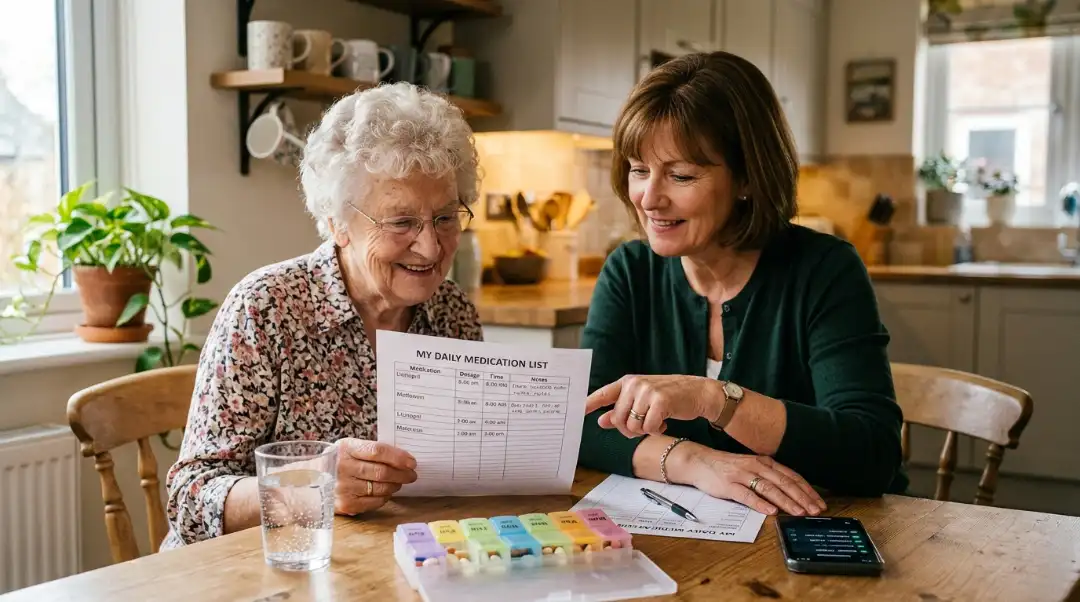
Organized Storage: Use color-coded pill organizers, daily containers, or pre-sorted blister packs to separate doses by day and time.
-
Tracked Administration: Keep a simple paper chart or digital app to check off doses as soon as someone takes them.
How Is Medication Management Handled?
Medication management is handled through a set schedule, a system for sorting doses such as a pill organizer or blister pack, and regular check-ins from a caregiver or family member. A trained aide reviews the medication list with a pharmacist, tracks refills, and watches for side effects or missed doses.
It usually starts with a full review of every prescription, supplement, and over-the-counter medication someone takes. From there, a caregiver or family member builds a daily or weekly schedule, often using a labeled pill organizer, blister pack, or an automatic dispenser that locks until the right time.
Why Is Medication Management Important?
Medication management is important because it prevents dangerous drug interactions, cuts down on emergency hospital visits, and protects overall health. Taking prescriptions exactly as directed helps control chronic conditions, speeds up illness recovery, and keeps vulnerable seniors safe while living independently.
Failing to follow doctor instructions causes serious health risks. According to health research data, non-adherence leads to thousands of preventable deaths each year.
Preventing Negative Interactions
Different drugs react in unexpected ways inside the body. A common over-the-counter painkiller can clash with a blood thinner, causing internal bleeding. Proper monitoring spots these red flags early.
Reducing Caregiver Fatigue
Constant worry over whether a relative took their morning pills causes heavy emotional stress. Family members providing non-clinical assistance often feel burned out. Using temporary support like respite care gives family members a much-needed break while trained caregivers step in to keep daily routines running smoothly.
Who Is a Good Candidate for Medication Management?

Good candidates for medication management include elderly, persons managing chronic diseases, anyone using 5 or more drugs, and people recovering from a hospital stay or recent diagnosis. Complexity is the common denominator . The more medications , ailments , and providers involved , the more likely something will go between the cracks without a system for that .
Seniors are at the top of the list, mainly because the older you become, the more prescriptions you tend to have. If you have chronic diseases such as heart disease, COPD or type 2 diabetes, you likely have several medications to take each day at specific times, and missing or increasing a dose could be dangerous. People with memory problems, particularly early cognitive decline, are at much greater risk as forgetting is part of the underlying disorder itself.
It’s also worth mentioning folks who don’t match the “elderly” label. Adults with disabilities, adults on psychiatric medication for mental health disorders, and individuals just released from surgery all face the same basic challenge: too many moving pieces, not enough built-in structure. If a home has more than two prescriptions running simultaneously, it is better having a proper system than trying to keep them in your head.
What Are the Benefits of Professional Medication Management?
Professional medication management reduces errors, improves treatment outcomes, and gives patients and families peace of mind. A trained professional reviews your full medication list, monitors for side effects, and makes sure each drug is doing what it’s supposed to do.
Here’s what consistent, professional oversight actually looks like in practice:
- Fewer drug interactions A pharmacist or provider catches dangerous combinations before they cause harm
- Better dosage tracking Ensures you’re taking the right amount at the right time
- Improved patient compliance Regular check-ins make it less likely you’ll skip doses
- Smarter refill reminders No more running out mid-week because you forgot to call the pharmacy
- Clear communication Your providers stay on the same page, which leads to better care
How to Build Your Medication Management Plan (Step-by-Step)
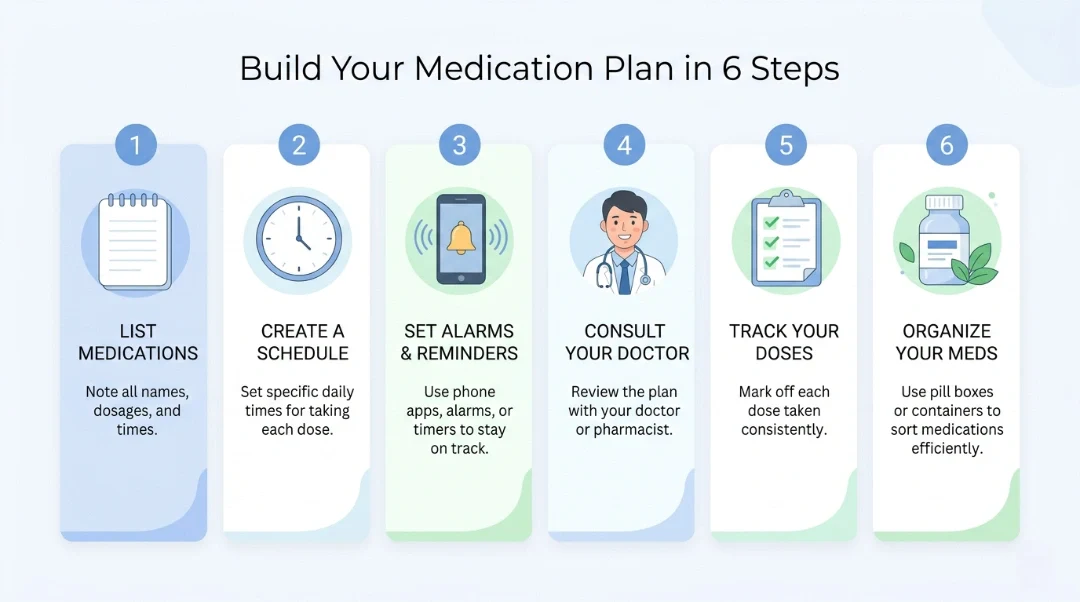
Building a plan doesn’t require special training, just a system that’s easy to repeat every day.
- List everything. Write down every prescription, over-the-counter drug, vitamin, and supplement, including dosage and timing. Bring this list to every doctor visit.
- Get a pharmacist review. Ask a pharmacist to check the full list for interactions at least once a year, or any time a new medication is added.
- Set up a physical system. A weekly pill organizer with morning, afternoon, and evening slots removes most guessing. Label it clearly if vision is an issue.
- Add reminders. Phone alarms, smart pill dispensers, or a simple wall calendar all work. Pick whatever the person will actually use consistently.
- Track side effects. Keep a short notebook or notes app log of any new symptoms after starting a medication, and note the date it began.
- Schedule regular check-ins. A quarterly review with the primary doctor, even a quick one, catches problems before they compound.
- Loop in a caregiver. If daily oversight isn’t realistic for family, a home care aide can take on doses, reminders, and monitoring as part of their visit.
Goals of Medication Management
The main goals of medication management are improving patient safety, increasing treatment success, and avoiding unnecessary medical costs. It aims to simplify daily care routines, minimize side effects, and keep individuals living comfortably in their own homes for as long as possible.
Setting clear targets helps you measure whether your home system works effectively.
| Core Goal | How It Works in Practice | Primary Benefit |
| Dose Accuracy | Taking exact amounts at scheduled times | Prevents accidental overdoses |
| Symptom Relief | Keeping steady drug levels in the bloodstream | Maintains chronic illness control |
| Cost Control | Refilling prescriptions on time to avoid waste | Prevents expensive ER visits |
| Independence | Using simple tools to track daily doses | Allows seniors to age in place |
Types of Medications Used
Not every household needs the same level of help, and it helps to know what’s actually out there. A few common types of support cover most situations families run into.
Clinical medication therapy management, usually run through a pharmacy or primary care office, involves a formal review of every medication with a licensed professional. Pharmacy based support offers a lighter touch, such as blister packs, refill syncing, and quick consultations at pickup. Home caregiver support brings a trained person into the house to handle reminders, organize pill boxes, and flag concerns in real time. App based tools work well for tech comfortable seniors who just need a nudge at the right hour.
Most families end up mixing two or three of these together. A pharmacist handles the formal review, an app sends the daily reminder, and a family member or caregiver checks in to make sure everything actually got taken.
Essential Tips for Effective Medication Management
A few habits make the biggest difference over time.
- Keep one master list, updated after every doctor visit, not a mental note.
- Use the same pharmacy for every prescription so pharmacists can catch interactions automatically.
- Never adjust a dose without talking to the prescriber first, even if a symptom seems to improve.
- Store medications away from heat and moisture, not in a bathroom cabinet.
- Ask about generic alternatives at every refill; prices shift more often than people expect.
- Review the full list every three to six months, since conditions and needs change.
Common Medication Management Mistakes to Avoid
Even careful families slip up here, usually not from a lack of care but from a lack of a system. A few mistakes show up again and again, and most are easy to fix once you know to watch for them.
Keeping medications in more than one place.
Pills in the kitchen, the bathroom, and a purse make it nearly impossible to track what’s actually been taken. One location and one list works far better than three scattered ones.
Skipping the reason behind each medication.
If you don’t know what a pill is for, it’s harder to notice when something feels off. Ask your provider or pharmacist to explain the purpose of every item on the list.
Ignoring expired medications.
Old pills lose potency and can occasionally become unsafe. Check bottles regularly and use a local drug take back program to dispose of anything expired or no longer needed.
Not updating the list after a hospital visit.
Discharge instructions often change doses or add new prescriptions. If the master list doesn’t get updated right away, old and new instructions can conflict with each other.
Assuming supplements are automatically safe.
Herbal supplements and vitamins can interact with prescription drugs just as seriously as two prescriptions can interact with each other. Every supplement belongs on the same list as everything else.
Medication Reminder Support for Seniors at Home
If you or a loved one is managing several medications and struggling to keep up, you don’t have to figure it out alone. At Castle Pines Home Care, we provide trusted home care services in Denver that include hands-on support with daily routines, including our Medication Reminder Services for Seniors.
Our caregivers help ensure that medications are taken on time, every time, without the stress of doing it solo. It’s practical, caring, and exactly the kind of support that makes staying home safely possible.
Frequently Asked Questions
What is medication management in simple terms?
Medication management is the process of organizing, tracking, and monitoring your medications to make sure they’re taken correctly and safely. It involves prescription tracking, dosage scheduling, side effects monitoring, and regular communication with your healthcare providers.
What does medication management mean for mental health patients?
In mental health, medication management in mental health involves ongoing monitoring of psychiatric medications to evaluate their effectiveness, manage side effects, and adjust dosages as needed. A psychiatrist or licensed prescriber typically oversees this process.
What is assisted living medication management?
Assisted living medication management refers to the structured support provided in residential care settings where trained staff help residents take medications correctly, on schedule, and in the right doses.
How is medication management different from medication therapy management (MTM)?
MTM is a specific clinical service provided by pharmacists that reviews all of a patient’s medications in detail. General medication management is broader and includes daily habits, caregiver support, and provider communication, not just pharmacy review.
Can a caregiver help with medication management at home?
Yes. A caregiver can provide reminders, help organize medications, and track side effects. However, they cannot administer prescription medications unless specifically trained and authorized to do so.