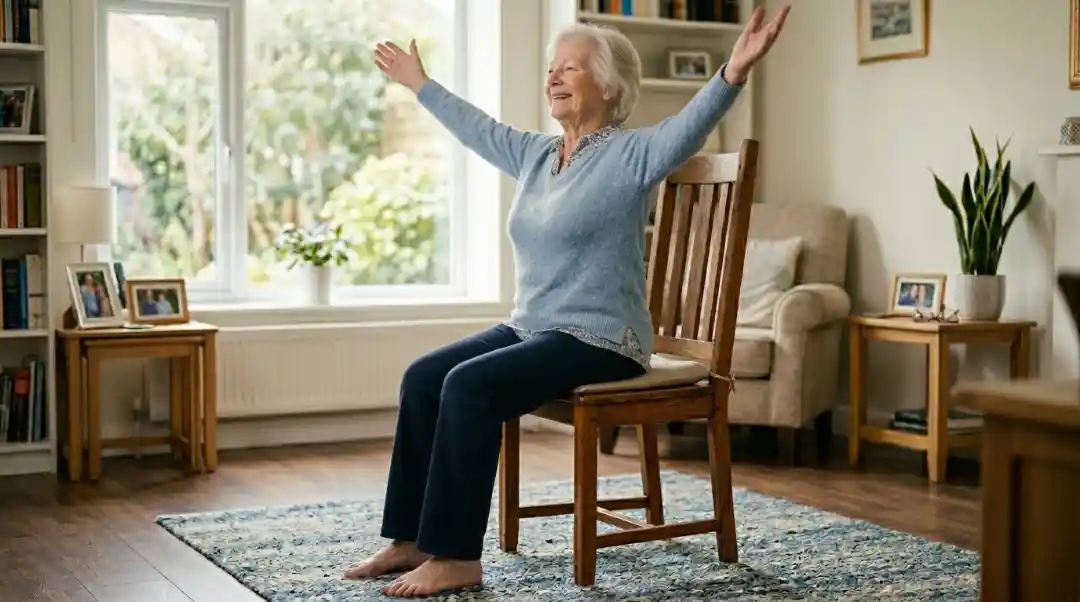
Chair yoga for seniors is a modified form of traditional yoga that uses a sturdy seat for support while performing gentle stretches and postures. It allows individuals with limited mobility or balance concerns to build physical strength, flexibility, and mental calm without the risk of falling or getting down on the floor.
Traditional fitness routines often demand quick transitions between standing and lying down. Modified seated routines remove those physical barriers entirely. You receive the exact same cardiovascular and muscular benefits while keeping your feet firmly planted or your body securely supported.
Key Takeaways
- Chair yoga is a modified yoga practice done sitting in or standing near a chair for support.
- It builds strength, flexibility, and balance without the fall risk of a traditional mat class.
- Research links regular chair yoga to better balance, less joint pain, and improved mood in older adults.
- You need a sturdy, armless chair and about 15 to 20 minutes to get started.
- Caregivers play a big role in keeping sessions safe, especially for seniors with limited mobility.
What Is Chair Yoga for Seniors?
Chair yoga is a moderate style of yoga for seniors that involves sitting in a chair or using one to balance while standing. Traditional stretches and strength postures are modified so that joints and muscles receive the same benefits without running the danger of falling.
Think of it as training wheels for yoga. The chair relieves pressure on your knees, hips, and lower back as you still practice positions like Tadasana (mountain pose) or a seated Paschimottanasana (forward bend). For those managing arthritis, recuperating from surgery, or just coping with the stiffness that comes with aging, this makes it a practical choice.
Benefits of Chair Yoga for Seniors

The benefits of yoga practiced from a chair are well supported by research. Here is what regular practice does for older adults.
Supports Flexibility and Joint Movement
Gentle stretches can help maintain flexibility and range of motion. This matters during everyday tasks such as reaching for an item, turning the body, putting on clothing, or getting in and out of a vehicle.
The movement should stay comfortable. Stretching farther isn’t automatically better.
Stronger Muscles Without Joint Stress
Sarcopenia, the gradual loss of muscle mass that comes with aging, speeds up after age 60. It slows metabolism and reduces balance. Chair yoga engages the core, upper body, and legs through controlled resistance without putting excessive load on the knees or hips.
Helps Build Functional Strength
Some chair movements ask the legs, hips, abdomen, back, shoulders, and arms to work against resistance from the body itself.
For older adults, functional strength has a practical purpose. Stronger muscles can make activities such as standing from a chair, carrying groceries, or climbing steps easier. The National Institute on Aging recommends muscle-strengthening activity as part of regular physical activity for older adults.
Reduced Anxiety and Depression
A 2024 study published in the Journal of Applied Gerontology found that older adults living in care homes experienced reduced anxiety and depression, along with improved mood, after participating in chair yoga. Mental health support that doesn’t require a prescription is worth paying attention to.
Promotes Relaxation
Chair yoga often combines movement with controlled breathing. Slow breathing can make a session feel calmer and gives the person a chance to focus on how the body feels during each movement.
Research on yoga and well-being in older adults is promising in some areas, but results aren’t uniform. It’s better to describe relaxation as a possible benefit rather than promise a specific mental-health outcome.
Supports Balance and Mobility
Balance can become more challenging with age. Seated movements don’t replace standing balance practice, but they can provide a gentle starting point for people who aren’t ready for more demanding exercises.
Research has found potential improvements in balance and mobility among older adults who participate in yoga-based exercise. However, research doesn’t establish that chair yoga alone prevents falls.
8 Easy Chair Yoga Exercises for Seniors

Before you start, sit on a stable chair that doesn’t have wheels. Your knees should be bent at a 90-degree angle, and your feet should be flat on the floor. For most positions, sit toward the edge of the seat. During each exercise, move slowly and take deep breaths.
1. Chair Cat-Cow Stretch
This is the seated version of the classic cat cow pose, and it does wonders for the spine.
How to do it:
- Sit up straight with both hands on your knees.
- On an inhale, arch your back, lift your chest, and look slightly upward (cow position).
- On an exhale, round your spine, drop your chin to your chest, and draw your belly in (cat position).
- Repeat 8 to 10 times, moving with your breath.
This gently mobilizes the entire spine and relieves tension in the lower back. It also helps improve posture in older adults who tend to hunch forward.

2. Seated Spinal Twist
Good for digestion, spine mobility, and releasing tension in the upper body.
How to do it:
- Sit upright with feet flat on the floor.
- On an inhale, lengthen the spine.
- On the exhale, place your right hand on your left knee and your left hand on the back of the chair.
- Gently rotate your torso to the left.
- Hold for 3 to 5 breaths, then return to center and repeat on the other side.
Move slowly. The twist should feel like a gentle wringing, not a strain.

3. Seated Forward Fold
A gentle hamstring and lower back stretch that also calms the nervous system.
How to do it:
- From seated mountain pose, inhale to lengthen the spine.
- On the exhale, slowly hinge forward from the hips and let your upper body lower toward your thighs.
- Rest your hands on your shins or the floor, depending on flexibility.
- Hold for 5 deep breaths, then slowly roll back up.
Don’t force the fold. The stretch happens wherever you feel it first.

4. Seated Chair Pigeon Pose
One of the best chair yoga positions for hip flexibility and sciatic nerve relief.
How to do it:
- Start seated upright, feet flat.
- Lift your right leg and cross the right ankle over the left knee, flexing the right foot.
- Sit tall and gently press the right knee downward with your hand.
- Hold for 5 to 8 breaths, then switch sides.
This pose targets the piriformis muscle, which is often tight in adults who sit for long periods.

5. Seated Leg Lifts
This strengthening exercise builds the quadriceps muscles on the front of the thighs, which are critical for climbing stairs.
-
Step 1: Sit up straight with your back away from the chair cushion and hold the sides of the seat for stability.
-
Step 2: Tighten your core muscles, then slowly extend your right leg straight out in front of you until it is parallel to the floor.
-
Step 3: Hold the extended leg in the air for three seconds, then slowly lower your foot back to the ground.
-
Step 4: Complete 10 repetitions on this side, then switch over to lift your left leg for an identical set.

6. Seated Mountain Pose with Deep Breathing
This foundational posture establishes excellent spinal alignment and centers your focus for the rest of the yoga practice.
-
Step 1: Sit up straight toward the front edge of your chair with your knees bent at a perfect 90-degree angle.
-
Step 2: Plant the soles of your feet flat on the floor, keeping your ankles directly underneath your knees.
-
Step 3: Lengthen your spine by lifting the crown of your head toward the ceiling while keeping your shoulders relaxed and down.
-
Step 4: Rest your hands flat on your thighs, close your eyes, and take five slow, deep breaths through your nose.

7. Chair Warrior II Pose
This upper body variation builds strength in the shoulders and opens the chest.
How to do it:
- Sit upright, feet flat on the floor.
- Raise both arms overhead, palms facing each other.
- Keep the shoulders relaxed and reach actively through the fingertips.
- Hold for 5 breaths, then lower the arms slowly.
For anyone with shoulder limitations, keep the arms at 90 degrees rather than fully overhead.

8. Seated Camel Pose
Target areas: Chest, abdominals, upper back muscles
Camel pose counters the forward-hunched posture many seniors develop from long periods of sitting. It stretches the front of the body and strengthens the back.
- Sit near the chair edge with feet flat and knees over ankles.
- Place both hands in the small of your back with fingers pointing down.
- Inhale and press your chest up and forward toward the ceiling.
- Allow your back to arch gently. Drop the head back slightly.
- Hold for 3 to 5 slow deep breaths. Slowly return upright.

Chair Yoga for Seniors With Specific Health Conditions
Not every senior has the same needs. Here is how to safely adjust your chair yoga routine.
Arthritis or Joint Stiffness
Gentle range-of-motion movements may help keep joints moving comfortably. Avoid forcing a stiff joint into a large stretch.
For knee osteoarthritis, for example, seated marching and controlled leg movements may be easier than deep standing poses. Research on chair yoga in older adults with knee osteoarthritis has reported improvements in functional fitness, but this doesn’t mean every exercise suits every person.
Chair Yoga for Back Pain
The cat-cow stretch and seated spinal twist are safe starting points. Avoid the forward fold if you have a herniated disc. Always hinge from the hips, not by rounding the lower back.
Chair Yoga After Surgery or Hospitalization
Start with breathing exercises and leg lifts only for the first few weeks. Get clearance from your physician or physical therapist before progressing to twists and backbends. Chair yoga bridges the gap between formal physical therapy and independent daily movement.
Chronic Health Conditions
Exercise is not always prohibited by a chronic illness. However, depending on symptoms and medical advice, a new workout regimen might need to be modified.
Elderly people with health issues should talk to their doctor about appropriate activities. Before starting yoga, the National Center for Complementary and Integrative Health advises older persons with health concerns to consult their medical professionals and yoga instructors.
Can I Lose Weight Doing Chair Yoga?
By increasing lean muscle mass, enhancing everyday metabolic function, and lowering cortisol levels brought on by stress, chair yoga can help with weight management. A durable basis for long-term weight control is created when seated exercises are combined with a nutritious diet, even though they burn less calories than high-impact aerobics.
Body composition is indirectly improved by mild exercise. Your body burns more calories throughout the day when you build active muscle because it raises your resting metabolism.
Regular exercise also lessens long-term stress. Reduced stress inhibits the overproduction of cortisol, a hormone that is directly associated with the storage of belly fat. Above all, mild exercise increases general endurance, which makes everyday tasks around the house simpler and more vigorous.
A Guide for Caregivers: Supporting Chair Yoga at Home
Family members and professional caregivers play an essential role in keeping home exercise routines safe and rewarding.
-
Create a Safe Environment: Before your loved one begins, clear away loose throw rugs, electrical cords, or clutter. Ensure the room has bright lighting and comfortable air temperature.
-
Focus on Encouragement: Never push a senior relative past their comfort zone. Remind them that resting during a pose is entirely okay. Praise their effort rather than their flexibility.
-
Watch for Subtle Cues: Monitor their breathing and facial expressions. If you notice holding of breath, grimacing, or sudden dizziness, gently ask them to pause, sit back, and drink some water.
Tips for Your First Chair Yoga Session
Walking into a new exercise environment can bring up feelings of hesitation, especially if you’re managing a chronic health condition or haven’t exercised in a long time. Knowing what to expect can help you feel completely comfortable.
-
Choose the Right Setup: Use a heavy kitchen chair or a dedicated folding chair. Avoid using rolling desk chairs or soft, deep recliners that pull your spine out of alignment.
-
Wear Comfortable Clothing: Select loose, breathable pants and tops that allow your limbs to move freely without binding or pinching.
-
Listen to Your Body: It is normal to feel a mild, warm stretch in your muscles during a yoga routine. However, you should stop immediately if you feel any sharp, shooting pain.
-
Stay Consistent: A short 10-minute session practiced three times a week will provide much greater long-term physical benefits than a long one-hour class practiced once a month.
Looking for an Active Lifestyle? Contact Castle Pines Home Care
One of the best things an older person can do for their long-term health and independence is to stay active at home. Castle Pines Home Care helps older people live fully and comfortably in the place they love most: their own home.
Our caregivers are trained to help with mild movement routines, like sitting exercises and daily wellness activities that promote mobility and health. Our exercise assistance services in Denver can help your loved one get started with chair yoga or any other everyday activity.
Castle Pines Home Care can help you with anything from companionship to personal care to structured activity support for an elderly parent. They offer caring, tailored care plans. We also help families with fall prevention at home, recuperation from surgery, and daily living help for seniors who have trouble moving about.
Contact us today to learn how we can support the healthy, active life your loved one deserves.
Final Thoughts
Chair yoga exercises for seniors are one of the most effective and accessible tools for healthy aging. They require no equipment, no gym membership, and no prior experience. From the cat-cow stretch to warrior II, each pose in this guide was chosen for its direct benefit to senior bodies.
Start with two or three poses. Take deep breaths. Move at your own pace. Over time you will notice more flexibility, better balance, less pain, and a calmer mind. That is what a consistent seated yoga practice delivers.
And if you are a caregiver reading this for a loved one, starting this together is one of the most genuinely caring things you can do.
FAQs About Chair Yoga Exercises for Seniors
Is chair yoga good for seniors?
Yes. Chair yoga is one of the safest and most beneficial forms of exercise for older adults. It improves flexibility, balance, strength, and mental health without straining the joints.
How long should a senior do chair yoga each day?
Even 10 to 15 minutes per day produces real benefits. A 30-minute chair yoga workout three times per week meets CDC guidelines for balance activity in older adults.
What type of chair is best for chair yoga?
Use a sturdy, armless chair with a standard seat height of about 18 inches. Avoid chairs with wheels or very soft cushions. A metal folding chair with a thin cushion is ideal.
Can chair yoga help with balance problems?
Yes. Chair yoga builds core and leg strength, the foundation of good balance. Poses like warrior II and leg lifts directly target the muscles that prevent falls.
Is there a free printable chair yoga guide for seniors?
Many yoga teachers and senior wellness sites offer free printable chair yoga for seniors and printable chair exercises for seniors. Ask your home care provider or check reputable health websites for downloadable routines.
Can a caregiver assist with chair yoga at home?
Absolutely. Caregivers can guide seniors through yoga poses verbally, provide light physical support, and help set up the space safely. This makes chair yoga for seniors with limited mobility both safer and more enjoyable.
Should I talk to a doctor before starting chair yoga?
Yes. Always consult your primary care provider before beginning any new exercise program. This is especially important if you have heart disease, osteoporosis, recent surgery, or chronic pain.