

If you’re asking this question, you’re probably staring down a hospital discharge date, a worried parent, or a diagnosis that just changed everything. I get it, and I’ll give you a straight answer, not a runaround.
Here’s the short version: you qualify for Medicare-covered home health care if a doctor certifies that you’re homebound and need intermittent skilled nursing or therapy. That’s the legal bar. But “who qualifies for home health care services” has a second, quieter meaning too, because millions of families need in-home help that has nothing to do with Medicare’s rules at all. This article covers both paths, what they cost, and what to do if you get turned down.
Understanding Home Health Care Services
Home health care and home care sound like the same thing. They’re not, and mixing them up is the single biggest reason families get confused or denied.
Home health care is medical. It’s skilled nursing, physical therapy, wound care, or speech therapy delivered by licensed professionals under a doctor’s plan of care. Home care, by contrast, covers non-medical support: bathing, meal prep, companionship, medication reminders. A retired nurse checking a surgical incision is home health. A caregiver helping someone shower and get dressed is home care.
This distinction matters because it decides who pays. Medicare covers home health under strict medical criteria. It generally won’t touch non-medical home care, no matter how badly a family needs it. Knowing which category you’re in before you call anyone saves weeks of frustration.
Who Qualifies for Home Health Care Services? (By Insurance Type)
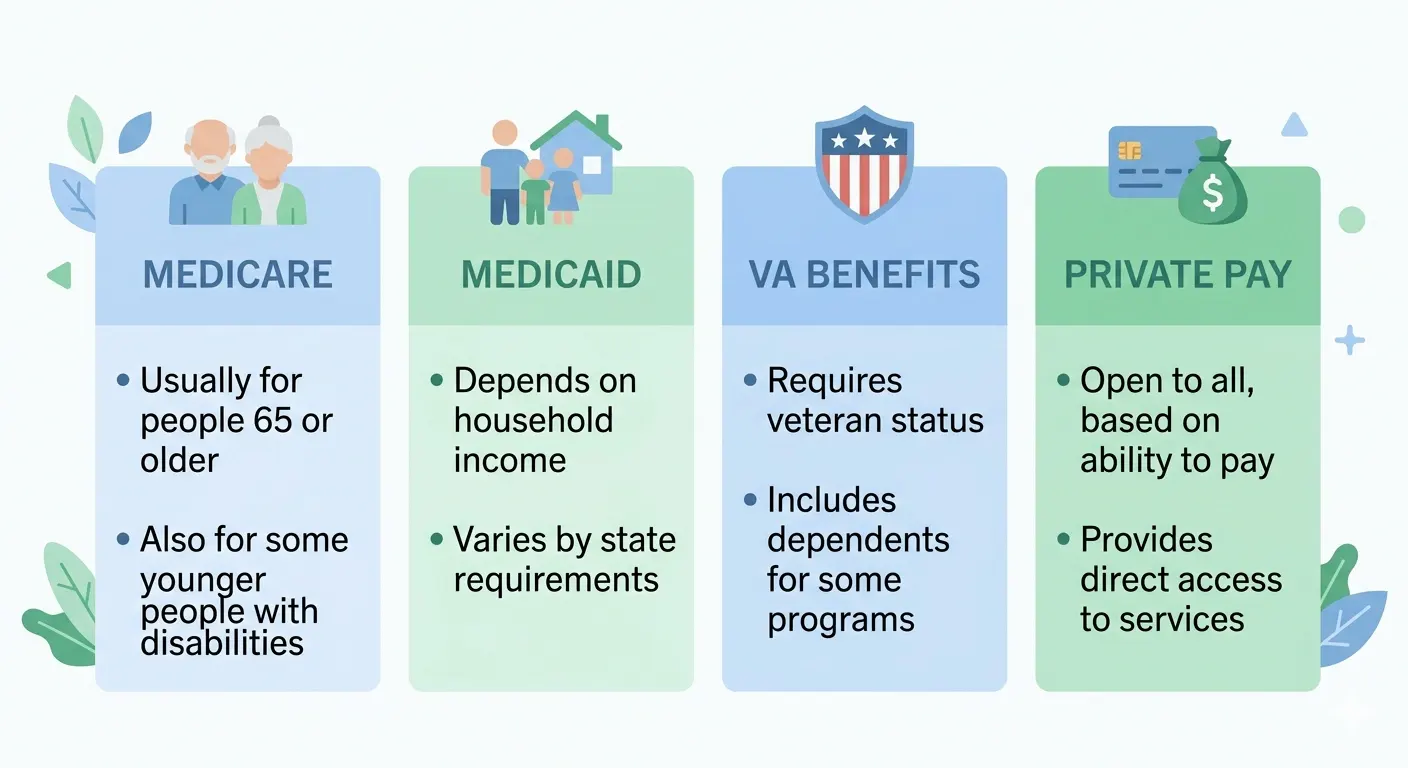
The answer depends almost entirely on how you’re paying for it. Here’s a breakdown of each path.
Qualifying for in-home care depends heavily on the specific insurance program funding the visits.
While clinical needs remain similar across plans, each payer enforces distinct administrative rules. Here is how eligibility breaks down across major payment sources:
| Insurance Type | Key Qualifying Standard | Primary Coverage Focus |
| Medicare Part A & B | Homebound status + skilled care need | Short-term recovery & clinical management |
| Medicaid | Medical necessity + income limits | Long-term support & personal care assistance |
| Private / Commercial | Prior authorization + acute care plan | Short-term rehabilitation post-surgery |
| VA Benefits | Service-connected rating or clinical need | Community-based care & skilled nursing |
Eligibility Criteria for Medicare Home Health Care
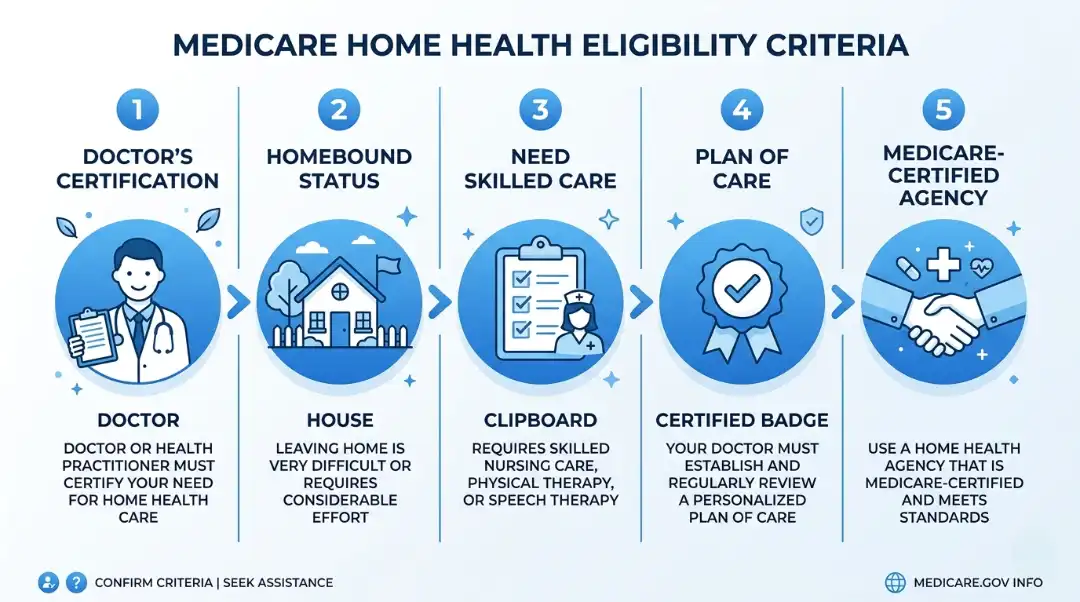
To qualify for home health care under Medicare, a patient must be an active beneficiary, require part-time skilled medical care, have a signed doctor’s certification, and hold an official homebound status. These strict federal requirements ensure that the provided clinical services are medically necessary and legally compliant.
Understanding how these rules operate keeps your family from facing unexpected insurance denials. Every single criterion must line up perfectly before a certified agency can send professionals to your door.
1. Active Insurance Enrollment
You must have an active policy in Original Medicare (Part A and/or Part B) or a Medicare Advantage Plan (Part C). Part A provides services usually associated with post-hospital care while Part B covers outpatient medical requirements. With a private Medicare Advantage plan, your loved one’s benefits must be at least as good as standard requirements, but you’ll need to use an agency in that specific insurance network.
2. The Face-to-Face Evaluation
A formal clinical meeting must occur within 90 days before care begins, or within 30 days after the initial start date. This encounter allows a medical provider to examine the patient, document their physical limitations, and confirm that treating them at home is the safest path forward.
3. A Certified Medical Plan
A professional clinician must fill out and sign the official CMS-485 form, widely known as the Plan of Care. This document acts as the master medical blueprint for your loved one. It explicitly dictates which therapies are necessary, how many times a week a nurse will visit, and what specific recovery goals the patient needs to achieve.
How to Apply for Medicare Home Health Care
To apply for Medicare home health care, schedule an evaluation with your physician to establish medical necessity and request a referral.
The doctor sends the clinical order to a certified agency, which conducts an in-home health assessment to begin care.
What Medical Conditions Qualify for Home Health Care?
No official list of “qualifying diagnoses” exists. Medicare cares about functional need, not the name of your condition.
That said, certain situations show up constantly in approved plans of care. Recovery after hip or knee replacement, stroke rehabilitation, wound care following surgery, management of diabetes with insulin adjustments, COPD flare-ups, and post-hospitalization monitoring for heart failure all commonly qualify. Heart home health care in particular is one of the most frequent reasons agencies get involved, since congestive heart failure often needs frequent weight checks, medication titration, and symptom monitoring that a family can’t safely manage alone. Parkinson’s disease, multiple sclerosis, and advanced dementia can also qualify when skilled nursing or therapy is genuinely required, not just supervision.
What Does Homebound Status Mean in Home Health Care?
Homebound status means leaving your home takes considerable and taxing effort, or your doctor advises against it because of your condition. It doesn’t mean you never leave the house. Occasional trips for medical appointments, religious services, or short family events don’t disqualify you.
This is the part families misread most. Medicare isn’t asking whether you’re bedbound. It’s asking whether getting out requires assistance, like a walker, a wheelchair, a cane, or another person, and whether it wears you out. If your dad needs help getting to the car, someone beside him the whole way, and a rest afterward to go to a checkup, he almost certainly meets the standard, even though he’s technically capable of leaving.
A useful way to think about it: homebound status is measured by effort and risk, not by a locked front door. Someone who drives themselves to the grocery store weekly likely doesn’t qualify. Someone who can only manage a monthly doctor visit with help absolutely might.
How Much Does Home Health Care Cost?
Medicare Part A and Part B cover eligible home health care services at 100%, leaving patients with $0 out-of-pocket costs for clinical visits.
Patients only pay a 20% coinsurance for durable medical equipment like wheelchairs or walkers after meeting their annual deductible.
For care not covered by Medicare such as round-the-clock custodial assistance—costs vary widely:
-
Medicare Home Health Visits: $0 copay for covered nursing and therapy visits.
-
Private Pay Non-Medical Home Care: Averages $30 to $40 per hour depending on geographic location.
-
Private Nursing Care: Continuous 24 hour nursing care at home cost ranges from $15,000 to $25,000+ per month when paying privately, as standard insurance policies rarely cover continuous private care.
What Services Are Covered Under Home Health Care?
Covered services include skilled nursing, physical therapy, occupational therapy, speech-language pathology, medical social work, and part-time home health aide visits.
All personal care services must support an active clinical therapy plan to receive insurance coverage.
-
Skilled Nursing: Wound care, IV therapies, disease education, and pain management.
-
Physical & Occupational Therapy: Gait training, balance exercises, and adaptive device setup.
-
Home Health Aides: Short-term assistance with bathing and dressing while under active therapy.
What If Medicare Denies Your Home Health Care?
Denials happen, but they’re not the final word. You have the right to appeal every Medicare decision.
Common reasons for denial include:
- The agency didn’t properly document homebound status
- The services were classified as custodial rather than skilled
- The face-to-face requirement wasn’t met on time
If your claim is denied, you’ll receive a written notice called an Advance Beneficiary Notice (ABN) or a denial letter. From there, you can file a formal appeal through Medicare’s appeals process. The first level is called a Redetermination, and you have 120 days to request it.
Your rights as a patient also include the right to choose your own Medicare-approved agency, receive a detailed written plan of care, and be involved in all decisions about your care.
Final Thoughts
Finding the right care for a loved one, or for yourself, doesn’t have to feel like solving a puzzle with half the pieces missing. Most people who need home health care do qualify, they just don’t know how to start.
If you’re looking for home care services in Denver or the surrounding area, our team at Castle Pines Home Care is here to help you figure out exactly what your family needs. We work alongside Medicare, Medicaid, VA benefits, and private plans to make sure you get the care you’re entitled to without the runaround.
If you’re also supporting a loved one with dementia-related challenges, our post on What Stage of Dementia Is Anger? walks through what to expect and how to respond.
Ready to talk? Contact us today and let’s find the right path forward together.
Frequently Asked Questions
Do you have to be 65 or older to qualify for home health care?
No. Adults under 65 can qualify through Medicaid, VA benefits, or Medicare if they’ve been on Social Security disability for 24 months. Age is not the deciding factor. Medical need and insurance type determine eligibility.
Can someone under 65 get Medicare home health care?
Yes, if they qualify for Medicare due to a qualifying disability or End-Stage Renal Disease (ESRD). Once on Medicare, the same home health eligibility rules apply regardless of age.
How long can you receive home health care under Medicare?
There’s no set time limit. Medicare covers home health care as long as you continue to meet eligibility criteria: you remain homebound, need skilled care, have a valid doctor’s order, and your plan of care is reviewed every 60 days.
Is home health care the same as a nursing home?
No. Home health care is skilled medical care delivered in your own home. A nursing home provides round-the-clock residential care. Home health care supports aging in place and post-hospitalization care without requiring you to leave your home.
Can a family member be paid as a home health caregiver?
In most cases, Medicare won’t pay a family member to provide skilled care. However, some Medicaid programs and VA programs do allow family members to be paid caregivers through specific waiver programs. Check with your state Medicaid office or VA for details.
What’s the difference between home health care and home care?
Home health care involves skilled medical services covered by insurance. Home care (custodial care) covers non-medical support like bathing, dressing, and meal preparation, and is typically paid privately or through Medicaid waivers.