
Looking after an aging loved one can feel like stepping into a maze without a map. Most families begin searching for answers late at night, right after a traumatic fall or a doctor’s visit that changes everything. If you’re feeling overwhelmed, unsure of what to do next or scared that you’re taking the wrong road, you’re not alone.
The best way to care for the elderly is to create a personalized combination of daily routines, home safety updates and supportive care options that will protect your loved one’s dignity and independence. When we balance physical safety with emotional well-being, aging at home becomes more safer and significantly less stressful for the whole family.
Understanding Your Loved One’s Care Needs
Knowing where to start requires assessing two key parts of daily life: Activities of Daily Living (ADLs) and Instrumental Activities of Daily Living (IADLs).
Activities of Daily Living (ADLs)
include basic self-care tasks like bathing, dressing, grooming, using the toilet, moving safely around the house, and eating.
Instrumental Activities of Daily Living (IADLs)
involve more complex tasks needed to live independently. These cover cooking meals, taking medications on time, running errands, handling finances, and managing light housework.
Look for subtle changes in daily habits. Is the refrigerator mostly empty? Are there unpaid bills piling up on the kitchen table? Is laundry sitting untouched for weeks? These early signs point to growing difficulty with IADLs, which usually happens before a person loses the ability to manage basic ADLs.
Choosing the Right Level of Care: Home Care vs. Senior Living Facilities
Deciding between home care and senior living facilities involves balancing safety needs, social preferences, and financial realities.
In-home care allows your parent or relative to stay in familiar surroundings, keeping their local community ties and personal daily routines intact. Professional caregivers come directly to the house for a few hours a week or provide 24-hour assistance. This keeps disruption low, which is especially helpful for adults experiencing early memory loss.
Senior living facilities offer structured environment options across several distinct settings:
- Independent Living Communities: Great for active seniors who want to skip lawn care and housekeeping while enjoying community outings.
- Assisted Living Facilities: Ideal for individuals who need help with daily tasks like bathing or taking medication, but do not require complex nursing care.
- Memory Care Units: Specialized environments with high staff ratios, secure layouts, and targeted routines for those living with Alzheimer’s or other forms of dementia.
- Skilled Nursing Facilities: Formally known as nursing homes, these offer round-the-clock clinical care for seniors recovering from major surgery or living with advanced illness.
Managing Health, Medications & Daily Routines
Medication errors are one of the most common and preventable hazards for older adults. A missed dose, a doubled dose or two prescriptions that shouldn’t combine can send a senior to the hospital quickly. For many families, this is solved by a simple pill organizer, a written timetable, or a medication reminder app.
Daily habits are as important as medical care. Having a regular wake time, meal time and bedtime helps seniors sleep better and reduces confusion, especially for seniors living with memory loss. Structure is their day, when nothing else is.
Set reminders not only when things feel awry, but also for routine checkups. When no one is watching, vision, hearing, dental health and mental health all erode gradually. Annual examinations catch little problems before they become serious problems.
Keep a basic written record of all doctors, medicines and diagnoses in one location. It sounds simple yet that one page saves crucial time during an emergency room visit or a new specialist appointment. Family caregivers who are juggling several doctors for a parent say this is the one habit that reduces stress more than everything else on this list.
The Main Types of Elderly Care Explained
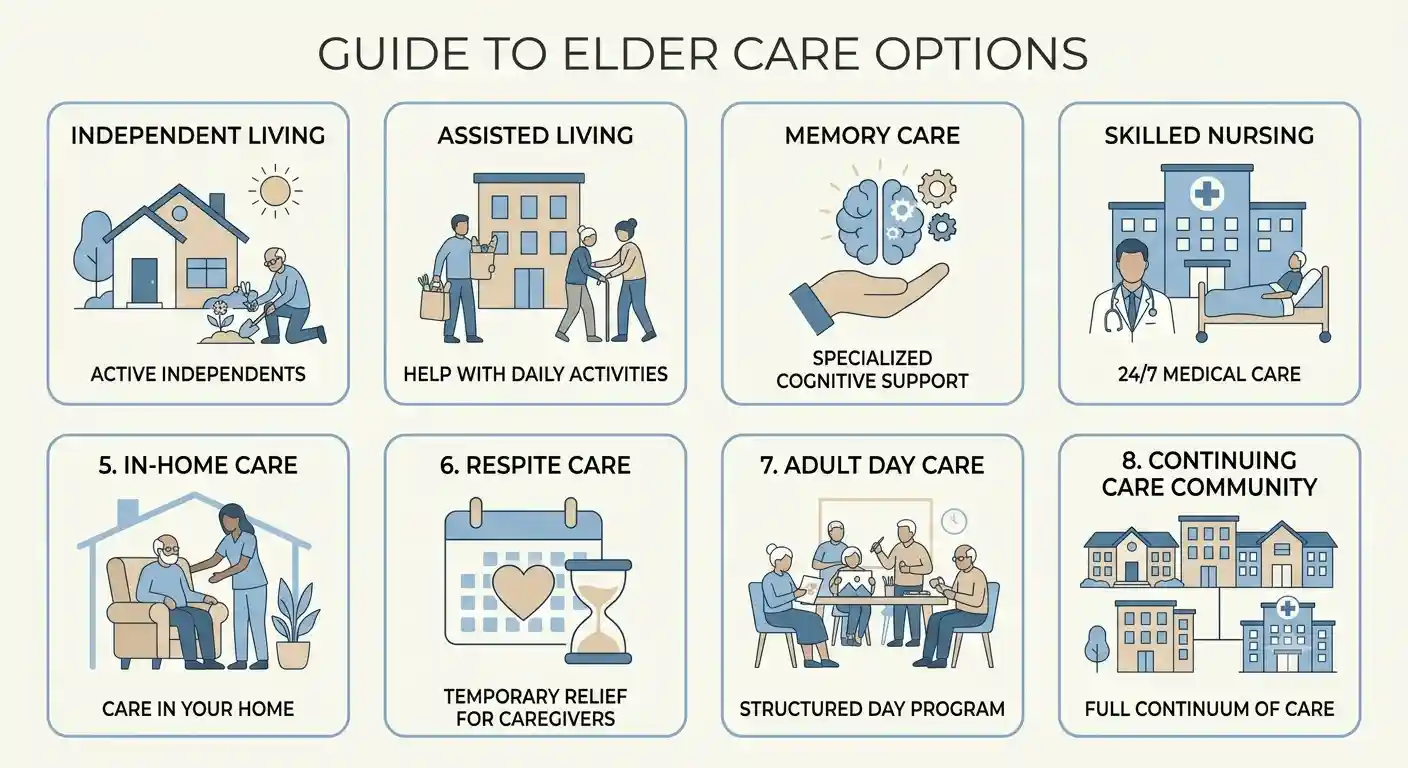
Old folks care is not one thing. There are many types and understanding the differences can help you choose the right one instead of just guessing.
Independent living is for active seniors who desire a maintenance-free lifestyle with built-in social activities and do not require help daily. Assisted living provides help to elders with minor physical or memory limitations with daily duties like bathing and dressing. Memory care is a safe, specialized setting for individuals with Alzheimer’s or another form of dementia that requires close supervision. Skilled nursing care offers 24-hour medical care to elders with major health issues or complex demands.
Another option is in-home care, where a caregiver comes to your loved one’s home to help with daily tasks, personal care and companionship. Respite care provides family caregivers with a short respite, from a few days to a couple of weeks, with a trained professional stepping in. Adult day care provides supervision and social activities during work hours, and assists families who can’t be home during the day. Continuing care retirement communities combine several of these levels on one campus, so a senior can move between levels as needs change, without changing location altogether.
To follow this section, a good table would be a quick comparison of cost range, staff supervision and ideal candidate for each of these eight care types. It gives readers something to scan and compare in seconds, rather than re-reading paragraphs.
Daily Care Essentials for Aging Loved Ones
Small safety updates around the home can prevent dangerous falls and make daily chores much easier to manage.
Start by checking every room for hidden safety traps. Throw rugs cause countless stumbles, so remove them or stick them down with strong carpet tape. Improve hallway lighting with automatic motion-sensor nightlights that turn on as soon as someone steps out of bed.
Adapt living spaces using practical, budget-friendly additions:
- Bathroom updates: Add textured grab rails near the toilet and inside the shower stall. Swap out standard seats for a raised toilet seat, and place non-slip rubber mats inside the tub.
- Kitchen tweaks: Move frequently used dishes, glasses, and food to waist-level counters so no one has to reach high or bend down low. Switch out thin handles for easy-grip cabinet hardware.
- Bedroom modifications: Place a firm bed rail between the mattress and box spring to make standing up easier in the morning.
For individuals living with dementia, simple design adjustments lower stress. Use brightly colored plates that contrast with food, clear away extra clutter from counter space, and put clear labels on draw fronts so finding clothes stays simple and frustration-free.
How to Pay for Elderly Care
Elderly care costs vary widely by type, location, and hours needed, but most families pay through a mix of personal savings, long-term care insurance, and government programs like Medicaid. Medicare covers very limited long-term care, so it’s worth checking eligibility for other programs early rather than assuming coverage exists.
Home care is typically billed by the hour, which means costs scale with how much help your loved one actually needs. A few hours a week costs far less than live-in support, so start with an honest assessment of need rather than jumping straight to full-time care.
Assisted living and nursing facilities usually charge a monthly rate that covers housing, meals, and care combined. Ask every facility for a full breakdown of what’s included and what costs extra, since add-on fees can surprise families later.
Local Area Agencies on Aging can point you toward financial assistance programs, sliding-scale services, and veteran’s benefits many families don’t know exist. A single phone call to one of these offices often uncovers options a Google search won’t.
Final Thoughts on Supporting Your Aging Family Member
Caring for an older relative works best when you build a stable support network, make the home safer, and respect their personal choices every step of the way. You don’t have to tackle every change on your own lean on family, explore local support groups, and bring in professional care when extra help is needed.
If you’re researching non-clinical support options in the Denver area, our team at Castle Pines Home Care provides reliable home care services in Denver tailored to your family’s daily routine. Feel free to contact us today to discuss your care goals and discover how we can help your loved one age safely at home.
Frequently Asked Questions
What is the best way to care for elderly parents at home?
The best way to care for elderly parents at home is to build a routine around their specific needs, using tools like pill organizers, home safety modifications, and part-time professional help when tasks get overwhelming. Start small, add support as needs grow, and don’t wait for a crisis to ask for help.
How do I know when my parent needs more help?
Watch for repeated falls, missed medications, weight loss, unpaid bills, or a home that’s noticeably less clean than usual. Any one of these on its own might mean nothing. Several happening together usually means it’s time for a real conversation about additional support.
Is in-home care cheaper than a nursing home?
In-home care is often cheaper for seniors who only need part-time help, since costs scale with hours used rather than a flat monthly rate. Once someone needs 24-hour supervision, though, live-in home care can cost close to or more than a facility.
Can family caregivers get paid?
Some states offer Medicaid programs that pay family members for caregiving, and veterans’ benefits sometimes cover family caregivers too. Check with your local Area Agency on Aging or a Medicaid caseworker to see what your state allows.