

Choosing senior care feels overwhelming when you’re facing a confusing list of options. What are the different levels of senior care, and how do you know which option fits your family’s situation?
Senior care ranges from low-level daily assistance at home to continuous medical supervision in a specialized facility. Understanding these options helps you protect your loved one’s health, budget, and independence.
How Are Senior Care Levels Defined?
Senior care levels describe the amount of help a person needs each day. Healthcare professionals measure these needs using two main categories: Activities of Daily Living (ADLs) and Instrumental Activities of Daily Living (IADLs).
ADLs include basic physical tasks like bathing, dressing, eating, using the restroom, and moving safely around the house. IADLs involve complex routines like managing medications, cooking meals, handling finances, and shopping.
When a senior struggles with IADLs, low-level support usually solves the problem. When physical ADLs or cognitive safety become difficult, higher levels of care are required.
The Senior Care Continuum, Explained
The senior care continuum structure allows individuals to receive appropriate physical support while maintaining personal autonomy. Aging in place through supportive services often serves as an initial step before residential placement becomes necessary.
Understanding how care levels function ensures families select services that align with current functional needs rather than paying for unnecessary levels of care.
Key Distinction: Non-clinical personal care assists with everyday physical routines (ADLs/IADLs). Skilled healthcare provides licensed medical interventions like wound management, physical therapy, and intravenous treatment
The 6 Levels of Senior Care
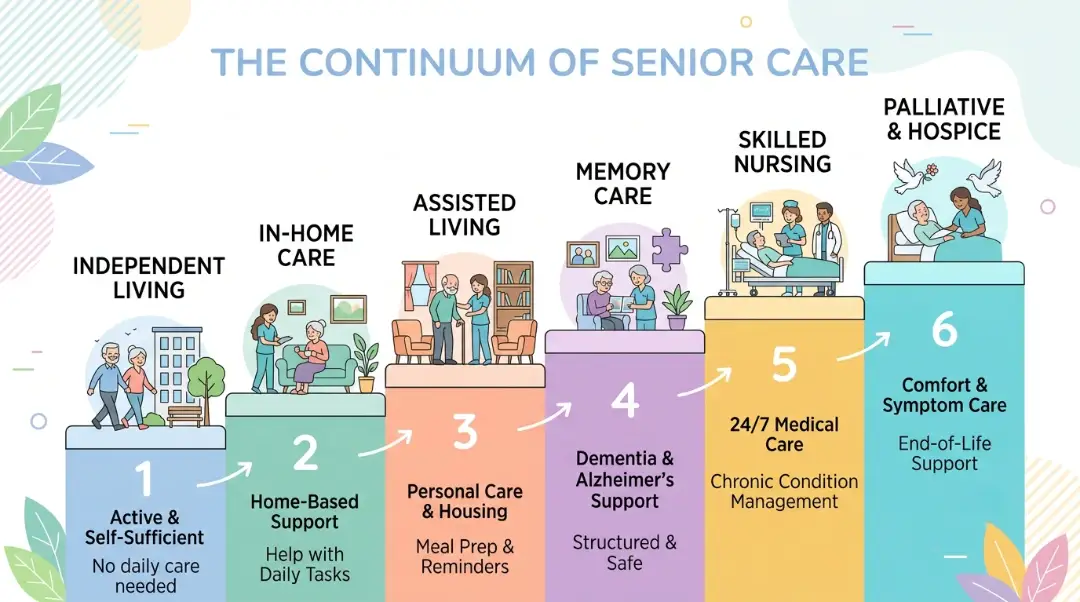
Level 1: Independent Living
Independent living communities suit active older adults who do not require physical assistance or medical supervision. These residential setups offer maintenance-free housing, social activities, and group dining options. Residents manage their own personal routines and healthcare needs without staff involvement.
Level 2: In-Home Care (Non-Medical)
In-home care allows seniors to remain safely in their own houses while receiving help from trained caregivers. Services focus on daily support rather than clinical medical procedures. Caregivers assist with meal preparation, light housekeeping, personal hygiene, mobility guidance, and companionship.
Level 3: Assisted Living Facilities
What are the levels of care in assisted living facilities? Assisted living combines housing with personalized daily support for individuals who can no longer live completely independently. Staff members assist with bathing, dressing, and medication administration while providing meals, laundry service, and 24-hour emergency monitoring.
Level 4: Memory Care
Memory care provides specialized residential support for individuals living with Alzheimer’s disease, dementia, or severe cognitive decline. Facilities feature secure building layouts to prevent wandering, along with structured daily routines designed to reduce anxiety and maintain cognitive skills.
Level 5: Skilled Nursing Facilities (Nursing Homes)
Skilled nursing facilities offer 24-hour clinical care provided by licensed nurses and physical therapists. This level fits seniors recovering from major surgeries, strokes, or severe chronic illnesses requiring complex medical equipment, wound care, or intensive rehabilitation therapy.
Level 6: Palliative and Hospice Care
Palliative care focuses on relief from symptoms and stress during serious illness at any stage. Hospice care delivers compassionate comfort measures for individuals nearing the end of life, prioritizing pain management, dignity, and family support over curative medical treatments.
How Is a Senior’s Level of Care Determined?
The level of care for a senior is established through a thorough assessment that measures ADLs, IADLs, mobility and cognitive function, usually by a nurse or care coordinator. “This is not a five minute talk. It’s a systematic assessment, generally repeated when someone enters a community, following a health event, and then routinely every six months or so.
The examination is more than just physical strength. They watch how a person gets out of a chair, if they can pick up a pen and how they react to simple everyday requests. Family members are often startled either way: sometimes a parent needs more help than anyone thought, and occasionally they are doing better than the family gave them credit for.
If you ever wonder how the level of care is determined in a certain community, ask to sit in on part of the assessment. Most places allow it and if you see it in person it is better than any brochure can tell you.
Cost Comparison by Level of Care
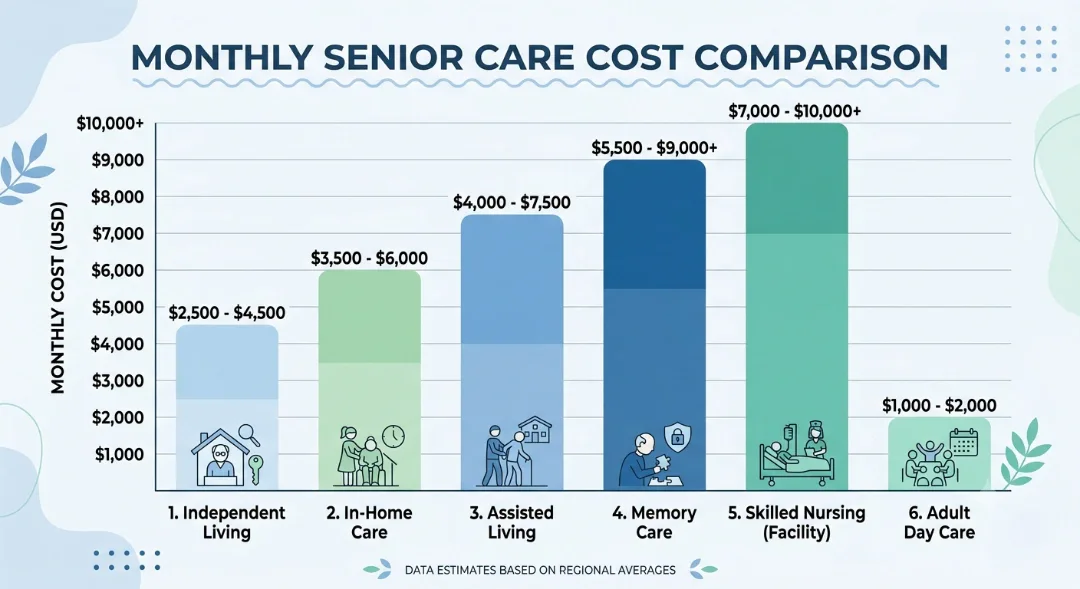
Senior care costs vary based on geographical location, required hours, and facility placement. The following table highlights average monthly expenses to help you plan effectively.
| Senior Care Level | Average Monthly Cost | Key Inclusions |
| Independent Living | $2,500 – $4,000 | Rent, maintenance, community amenities |
| In-Home Care | $3,000 – $5,000 | Hourly non-medical daily help at home |
| Assisted Living | $4,500 – $5,800 | Room, meals, assistance with 2-3 ADLs |
| Memory Care | $5,500 – $7,000 | Secure housing, specialized dementia support |
| Skilled Nursing | $7,900 – $9,200 | 24/7 medical supervision, nursing care |
Signs It’s Time to Move Up a Level of Care
Knowing when to adjust senior care levels prevents accidents and caregiver burnout. Watch for these common signs:
-
Unexplained weight loss or spoiled food left in the refrigerator.
-
Frequent stumbles, near-falls, or unexplainable bruises.
-
Unopened mail, unpaid bills, or missed medication doses.
-
Decline in personal hygiene or wearing dirty clothes repeatedly.
-
Caregiver exhaustion, stress, or health issues in family members.
How State Regulations Affect Senior Care Levels
Senior living regulations vary across state lines because residential care facilities operate under state oversight rather than uniform federal agencies.
States define facility licenses, room size specifications, caregiver-to-resident staffing ratios, and medication administration rules differently:
- Terminology Variations: Some states classify assisted living sites as “personal care homes,” “residential care facilities,” or “assisted care communities.”
- Staffing Regulations: State laws determine whether non-licensed staff members can administer medications or if licensed practical nurses (LPNs) must oversee drug administration.
- Transfer Requirements: State rules establish strict safety boundaries regarding when an individual’s health needs exceed what an assisted living facility can legally handle, requiring a transfer to a skilled nursing center.
Finding the Right Level of Care Near You
Reading about levels of care for elderly loved ones only gets you so far. At some point, you need someone local who knows the actual facilities, their real reputations, and which ones handle transitions well. That’s true whether you’re comparing large communities or looking into home care services in Denver for a more gradual, in-home start.
At Castle Pines Home Care, this is the exact conversation we have with families every week. We help sort out what level of support actually matches a loved one’s daily reality, not just what a brochure promises.
Final Thoughts
Figuring out what are the different levels of senior care isn’t about picking the “right” answer on the first try. It’s about matching support to need, watching for changes, and adjusting as things shift. Most families move through this in stages, and that’s normal.
If you’re at the point where you need a clearer picture of your options, contact us and we’ll walk through it with you.
Frequently Asked Questions
What are the main differences between assisted living and skilled nursing?
Assisted living offers non-clinical personal care and apartment housing for individuals needing help with daily tasks. Skilled nursing facilities provide 24-hour licensed medical care and clinical rehabilitation for complex medical conditions.
Can an individual combine home care services with independent living?
Yes. Many independent living residents hire external non-medical home care agencies to assist with personal routines, hygiene, or medication management, extending their ability to stay independent.
How often are senior care assessments updated?
Care facilities and home care agencies typically re-evaluate functional needs every 6 to 12 months, or immediately following any significant change in physical health, mobility, or hospital stay.