

Caring for a parent or spouse who can’t leave bed feels like learning a new language overnight. You worry about hurting them or missing something important, and that worry is normal. This guide shows how to care for bedridden elderly at home safely, with clear steps you can start today.
Quick answer: turn them every two hours, check their skin daily, keep them clean, fed, and hydrated, move their joints gently, and call a doctor early when something looks wrong. Below, I’ll cover each step, the equipment worth buying, and the signs that it’s time to bring in help.
What Does “Bedridden” Mean?
Bedridden means a person can’t get out of bed on their own and spends most or all of the day lying down. The cause is usually illness, injury, frailty, or weakness. Care needs include repositioning, hygiene, feeding, and skin protection around the clock.
Some people stay in bed for a few weeks after surgery. Others need bed-based care for years. Ask the doctor which timeline to expect, because it shapes your plan.
Understanding Bedbound Care: Definition & Expectations
Bedbound care is all about taking care of all physical, hygienic and emotional needs of a person right from the bed. “It sounds easy on paper. “It’s a full-time job in addition to your own job and your own family.
Home care for bedridden individuals includes daily cleanliness, meals, water, repositioning and keeping a bedroom clean and well-lit. And you’ll have an emotional load that’s easy to underestimate. Long lengths in bed bring on loneliness rapidly, so plain chat and the familiar music matter as much as the physical activities.
Bedbound vs. Bedridden: Is There a Real Difference?
Bedbound usually means someone can still shift positions or sit up with help, while bedridden often means almost no independent movement at all. In practice, most caregivers and even some clinicians use the two terms the same way. The distinction matters mostly when you’re talking to a doctor about the level of assistance needed.
| Term | Mobility Level | Typical Care Needs |
| Bedbound | Some assisted movement possible | Daily support, occasional independence |
| Bedridden | Minimal to no mobility | Full-time hands-on care |
| Bedfast | Older clinical term, similar to bedridden | Full supportive care |
Knowing the difference between bedbound and bedridden helps you describe your loved one’s condition accurately when you’re talking to a home health nurse or physical therapist. Accurate language gets you the right kind of help faster.
Common Causes of Being Bedridden in Elderly Adults
Seniors rarely become immobile overnight unless they suffer an acute injury. Most often, a mix of chronic issues gradually reduces their ability to stand and walk safely.
-
Neurological conditions: Strokes, late-stage Parkinson’s disease, and severe dementia limit motor control and balance.
-
Severe injuries: Hip fractures or major falls lead to sudden loss of mobility.
-
Chronic illnesses: Advanced heart failure, COPD, or severe arthritis make physical movement painful or exhausting.
-
General frailty: Prolonged hospital stays or severe infections often drain an older adult’s remaining physical strength.
Recognizing the root cause helps you anticipate specific risks, like swallowing difficulties or joint stiffness.
Essential Daily Care Checklist for Bedridden Elderly
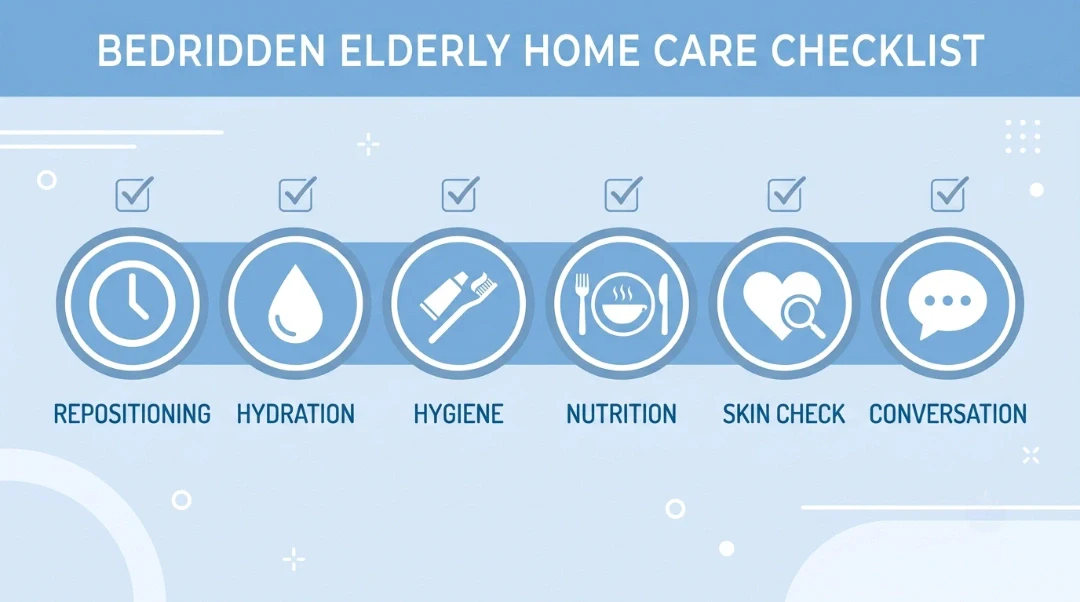
Keeping a daily schedule keeps your caregiving efforts organized and ensures no critical health checks get skipped.
Morning Care
- Conduct a full body skin inspection during the initial morning check.
- Provide a complete sponge bath, perineal cleaning, and fresh clothing.
- Perform oral hygiene care using a soft toothbrush or swabs.
- Gently turn the person and smooth out all bed sheet wrinkles.
- Serve a high-protein breakfast and track total fluid intake.
Afternoon Care
- Continue repositioning every two hours to relieve pressure points.
- Offer water, juices, or broth to support hydration.
- Carry out passive range-of-motion exercises for the arms and legs.
- Assist with toileting or change adult underpads promptly after use.
- Provide mental stimulation through reading, television, or quiet conversation.
Evening & Night Care
- Perform evening oral hygiene and clean hands and face.
- Apply moisture control barrier cream to high-risk skin areas.
- Change bed linens if they are damp or soiled.
- Set up extra pillow support for overnight comfort.
- Check room lighting and ensure a call bell or chime is within reach.
Preventing Complications: Skin Care & Bedsores
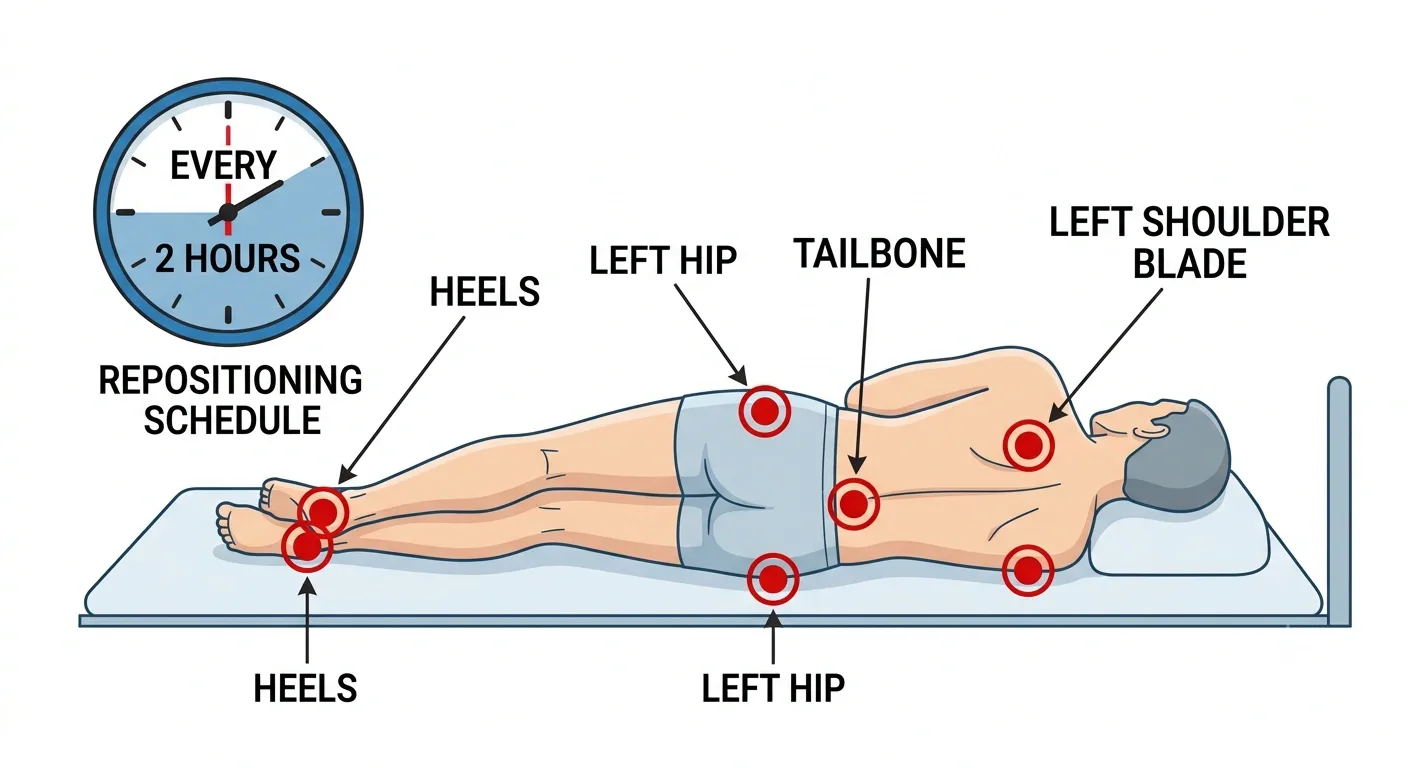
Preventing bedsores requires changing a patient’s body position every two hours, keeping skin clean and dry, and using pressure-relieving mattress pads. Consistent repositioning relieves targeted pressure on bony areas like hips, heels, and the tailbone, stopping tissue damage before open ulcers form.
Pressure sores develop quickly when blood flow to the skin is cut off. If left untreated, a minor patch of red skin turns into a deep medical issue that requires weeks to heal.
The 2-Hour Turning Schedule
Never let a bed-bound senior stay in one position longer than two hours during the day. Use pillows and foam wedges to prop them on their left side, right side, or back.
When turning your loved one, use a draw sheet folded underneath their midsection. Pulling the sheet instead of dragging their limbs prevents friction and shearing, which tear fragile, aging skin.
Identifying Early Stage Pressure Sores
Inspect the skin thoroughly during every bath and clothing change. Look closely at pressure points: the tailbone, elbows, shoulder blades, ankles, and heels.
Stage 1 bedsores look like persistent red patches on light skin or purplish spots on darker skin. If you press the spot with your finger and it stays red instead of turning white, pressure damage has started. Stop all pressure on that spot immediately and keep it dry.
Moisture and Incontinence Management
Moisture weakens aging skin, making it tear easily. Urine and feces contain chemicals that cause severe skin breakdown, often called incontinence-associated dermatitis.
Clean the perineal area right after any incontinence episode using warm water and mild skin cleansers. Avoid harsh rubbing with dry towels; pat the skin dry gently. Always apply a thick layer of zinc-oxide barrier cream to shield delicate skin from moisture.
6 Tips for Caring for a Bedridden Family Member
6 Tips for Caring for a Bedridden Family Member
- Talk before you touch. Explain each move so they feel respected, not handled.
- Protect your back. Bend your knees, keep the load close, and never lift alone.
- Keep the room comfortable. Aim for fresh air, soft light, and a steady temperature.
- Smooth the sheets. Wrinkles and crumbs press into skin like pebbles in a shoe.
- Keep essentials in reach. Water, glasses, the remote, and the call bell belong within an arm’s length.
- Feed their mind. Play music, read aloud, and schedule visits, since isolation can deepen low mood.
Daily In-Bed Exercises & Mobility Preservation
Gentle movement prevents stiff joints and supports circulation. Ask a doctor or physical therapist what’s safe first. Then try these, 5 to 10 repetitions, two or three times a day:
- Ankle pumps: Point the toes up and down.
- Heel slides: Slide one heel toward the buttocks, then straighten the leg.
- Arm raises: Lift each arm slowly overhead.
- Hand squeezes: Press a soft ball.
Move slowly and stop at any sign of pain. If they can’t move a limb on their own, you can move it for them, gently and within a comfortable range.
Equipment That Makes Home Care Easier
ood tools protect both of you. Start with these:
- An adjustable hospital bed that raises, lowers, and tilts
- A pressure-relieving mattress or overlay
- A slide sheet or draw sheet for repositioning
- Heel protectors and wedge pillows
- A bedside commode or urinal, plus an overbed table
- A mechanical lift for heavier or fully dependent adults
Use bed rails only with clinician advice, because gaps can trap arms and heads. Medicare may cover some items with a doctor’s order, so confirm before you buy.
When to Consider Professional Home Care
There’s a point where round-the-clock hands-on care becomes more than one person can safely handle, and that’s not a failure on your part. It’s simply the reality of physical limits. If transfers feel unsafe, if skin breakdown keeps happening despite your best efforts, or if you’re not sleeping, it’s worth bringing in outside support.
For families in Colorado looking into home care services in Denver, Castle Pines Home Care works directly with families managing bedridden loved ones, offering hands-on help with hygiene, mobility, and daily routines so you’re not doing this entirely alone.
Final Thoughts
Caring for a bedridden family member at home is hard, and it’s also one of the most meaningful things you’ll ever do for someone you love. Build your routine around repositioning, hygiene, nutrition, and connection, and you’ll avoid most of the serious complications that scare families early on. You don’t need to have this perfected on day one. Contact us if you’d like a hand figuring out what your loved one actually needs.
Frequently Asked Questions
How often should a bedridden patient be repositioned?
Most bedridden patients should be repositioned every two hours to prevent pressure sores. This timing isn’t arbitrary. It’s based on how long skin can handle sustained pressure before blood flow gets cut off enough to cause damage. Some patients with fragile skin or existing sores may need repositioning even more often, so check with their doctor if you notice any redness that isn’t fading between turns.
Can a bedridden person regain mobility over time?
Yes, some bedridden patients regain partial or full mobility, depending on the cause and how early rehabilitation starts. Patients recovering from surgery or a short illness often improve with physical therapy and consistent movement. Long-term conditions like advanced Parkinson’s or late-stage dementia usually don’t reverse, though gentle exercise still helps with comfort and circulation either way.
What are the biggest risks of caring for a bedridden elderly person at home?
The biggest risks include pressure sores, infections, dehydration, and blood clots from prolonged immobility. Falls during transfers are another real danger, especially if you’re lifting alone without the right equipment. Staying on top of repositioning, hydration, and skin checks cuts down most of these risks significantly, and catching early warning signs matters more than reacting after something’s already gone wrong.
How do you bathe a bedridden person who can’t get out of bed?
A sponge bath using warm water, mild soap, and a basin is the standard way to bathe a bedridden person in bed. Work in sections, keeping the parts you’re not washing covered so they stay warm. Pay extra attention to skin folds, the perineal area, and anywhere moisture tends to collect, since these spots are more prone to irritation and infection if they’re not dried thoroughly.
When should a family consider hiring professional home care for a bedridden loved one?
Families should consider professional home care when transfers become unsafe, skin breakdown keeps happening, or the primary caregiver is exhausted. Burnout doesn’t mean you’ve failed. It means the physical demands have outgrown what one person can safely manage. Bringing in outside help, even part-time, often extends how long a loved one can stay at home comfortably instead of moving to a facility.