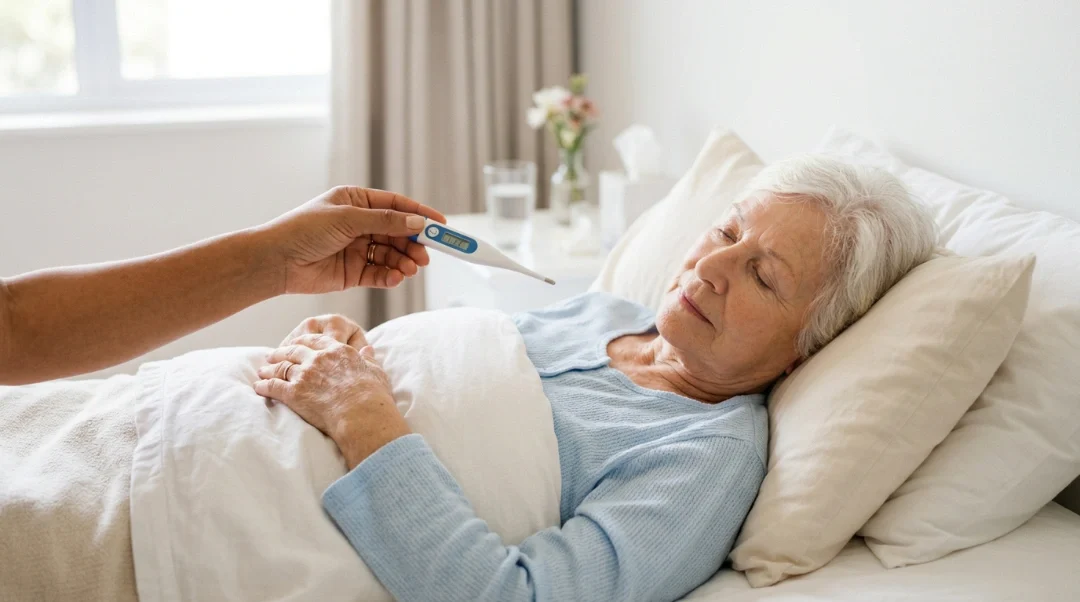
Checking a thermometer reading for an aging family member often raises immediate questions. Standard textbook numbers don’t always fit older adults, leaving family members unsure if a reading is safe or signals an illness.
Knowing What Is the Normal Body Temperature for Seniors gives you peace of mind and helps you catch health changes early. In this guide, we’ll explain normal temperature ranges, why aging changes body heat, dangerous warning signs, and practical steps to keep your loved ones safe at home.
Understanding Body Temperature
Body temperature represents the balance between the heat a human body produces and the heat it loses. The brain’s hypothalamus acts as an internal thermostat, adjusting heat production and blood flow to keep internal systems running smoothly.
When the body functions normally, it maintains a steady internal environment. Proper heat management supports key biological processes:
-
Metabolic efficiency during rest and activity
-
Immune system response against viral and bacterial threats
-
Enzymatic reactions that support digestion and organ function
-
Blood circulation to vital organs and peripheral limbs
As people age, this balance shifts. Knowing how these internal changes work makes daily caregiving far easier.
What Is Considered a Normal Body Temperature?

Normal Range for Adults vs. Seniors
The standard adult body temperature is 98.6°F (37°C), but for seniors, the normal range often sits lower between 96.8°F and 98.2°F (36°C to 36.8°C). This shift is well-documented in medical literature and reflects normal physiological changes that come with aging.
This matters a lot in practice. A reading of 99°F (37.2°C) might look harmless on a chart for a younger adult. For a senior, that same reading could signal the early stages of an infection. Their baseline is lower, so the jump is proportionally bigger.
A study published in the Journal of the American Geriatrics Society found that healthy older adults had a mean oral temperature of around 97.4°F (36.3°C) notably lower than the 98.6°F standard. [Suggest linking to or citing: Mackowiak et al., or Waalen & Buxbaum, 2011, “Evidence that age-related decline in normal body temperature is not a methodologic artifact.
Normal Body Temperature in °F and °C
Here’s a simple reference:
| Category | Normal Range (°F) | Normal Range (°C) |
| Healthy Adults | 97.8°F – 99.1°F | 36.5°C – 37.3°C |
| Seniors (65+) | 96.8°F – 98.2°F | 36°C – 36.8°C |
| Low-Grade Fever (Seniors) | 99°F – 100.4°F | 37.2°C – 38°C |
| High Fever (Seniors) | Above 101°F | Above 38.3°C |
| Hypothermia Risk | Below 95°F | Below 35°C |
Why Is Senior Body Temperature Different from Younger Adults?
Senior body temperature runs lower because aging slows the metabolic processes that generate heat, reduces muscle mass that produces warmth, and thins the layer of fat under the skin that holds heat in. Circulation also becomes less efficient, meaning warmth travels more slowly to the hands, feet, and skin surface.
How Aging Affects Thermoregulation
Think of a younger body’s temperature control like a new thermostat that reacts the second the room shifts. An older body still works, but it responds more slowly and less precisely, like an aging thermostat that takes a minute to catch up.
Several changes drive this. Muscle mass shrinks, which means less heat gets produced through daily movement. Skin thins and loses fat padding, so heat escapes faster than it should.
Sweat glands become less active too, which limits the body’s ability to cool down in hot weather. Blood vessels also lose some elasticity, slowing how quickly warmth reaches the extremities. Put together, these shifts explain why grandma reaches for a sweater when everyone else feels perfectly fine.
The Role of Chronic Conditions
Many seniors manage conditions like diabetes, thyroid disorders, or heart disease, and each one can interfere with temperature regulation in its own way. An underactive thyroid, for instance, slows metabolism and often leads to a consistently low baseline temperature. Diabetes can damage the nerves that sense temperature changes, so a senior might not notice they’re getting dangerously cold or overheated until symptoms are already severe.
Factors That Affect Body Temperature in Elderly People
Time of day, physical activity, medications, and chronic health conditions directly alter body temperature readings in older adults. Understanding these daily variables prevents misinterpreting routine fluctuations as health emergencies.
Several daily elements cause noticeable changes in baseline readings:
-
Circadian Fluctuation: Body heat reaches its lowest point in the early morning hours and climbs to its peak in the late afternoon. This natural cycle causes shifts up to 1°F throughout the day.
-
Daily Living & Mobility: Sitting still for long periods reduces blood circulation, while light movement generates healthy warmth.
-
Chronic Conditions: Health issues like hypothyroidism slow down metabolism. Diabetes can affect nerve signals, while cardiovascular disease limits warmth reaching the hands and feet.
-
Medication Side Effects: Beta-blockers, sedatives, antipsychotics, and diuretics alter how blood vessels widen or narrow, changing how heat releases through the skin.
What Body Temperature Is Dangerous for Seniors?
A body temperature above 104°F (40°C) or below 95°F (35°C) is considered a medical emergency for seniors and requires immediate attention. Anything between those two extremes still deserves attention, but these thresholds mark the point where the body can no longer regulate itself safely.
High Body Temperature Hyperthermia
Hyperthermia in seniors is any condition where the body overheats beyond its ability to self-regulate. It includes heat exhaustion (37.7°C–40°C / 100°F–104°F) and heat stroke (above 40°C / 104°F), both of which are medical emergencies in older adults.
Seniors are especially vulnerable because they sweat less efficiently and may not recognize heat stress until it’s severe.
Heat exhaustion symptoms include:
- Heavy sweating
- Dizziness or lightheadedness
- Nausea or vomiting
- Rapid heartbeat
- Muscle cramps
- Pale, cool, moist skin
Heat stroke is a life-threatening emergency. Signs include:
- Body temperature above 104°F (40°C)
- Confusion or disorientation
- Dry, hot skin (sweating stops)
- Shallow or rapid breathing
- Seizures or loss of consciousness
If you suspect heat stroke, call emergency services immediately. Do not wait.
Low Body Temperature Hypothermia
Hypothermia in seniors occurs when core body temperature drops below 95°F (35°C). It can develop even indoors in mild weather, especially in seniors with poor circulation, limited mobility, or certain medications that suppress heat generation.
What makes hypothermia particularly dangerous in older adults is that the warning signs are easy to miss. Confusion, fatigue, and slowed movement can look like normal aging or medication side effects.
Symptoms by severity:
- Mild (90°F–95°F / 32°C–35°C): Shivering, confusion, slurred speech, slowed movement
- Moderate (82°F–90°F / 28°C–32°C): Shivering stops (bad sign), drowsiness, stiff muscles
- Severe (below 82°F / 28°C): Loss of consciousness, very slow pulse, risk of cardiac arrest
When to Call a Doctor and When to Call 911

This is the question most caregivers really want answered. Here’s a practical guide:
Call a doctor if a senior has:
- Temperature above 100.4°F (38°C) even a mild fever can indicate serious infection
- Temperature consistently below 97°F (36.1°C) without a known cause
- A temperature that isn’t improving after 24 hours
Call 911 if a senior has:
- Temperature above 104°F (40°C) heat stroke emergency
- Temperature below 95°F (35°C) hypothermia emergency
- Any temperature combined with confusion, chest pain, difficulty breathing, or loss of consciousness
The Hidden Problem: Fever Without a High Temperature
This part gets overlooked constantly, and it’s one of the most important things a caregiver can understand. A senior can be fighting a serious infection like pneumonia or a urinary tract infection while their thermometer only reads 99°F. Because their baseline sits closer to 97°F, that small jump actually represents a real fever for their body, even though it looks unremarkable on paper.
Watch for other clues alongside the number itself. Sudden confusion, loss of appetite, unusual fatigue, or a fall out of nowhere can all point to infection even when the thermometer doesn’t scream “fever.”
Seniors with Dementia or Alzheimer’s
Communication becomes the real obstacle here. A senior with dementia may not be able to say “I feel cold” or “something’s wrong,” so caregivers need to watch behavior instead. Increased irritability, withdrawal, or unusual tiredness can all signal a temperature problem long before a thermometer confirms it.
How to Accurately Measure a Senior’s Body Temperature
Best Thermometer Types for Elderly People

The most accurate method for measuring body temperature in seniors is a rectal thermometer, but oral and tympanic (ear) thermometers are practical alternatives when used correctly. Forehead (temporal artery) thermometers are convenient but can read up to 1°F lower and should be used consistently rather than interchangeably with other methods.
Here’s a quick comparison:
| Thermometer Type | Accuracy | Best For |
| Rectal | Highest | Bedridden seniors, severe illness |
| Oral | High | Alert, cooperative seniors |
| Tympanic (ear) | Moderate-High | Quick daily checks |
| Temporal (forehead) | Moderate | Convenient screening |
| Axillary (armpit) | Lower | Least preferred reads 1°F lower |
How to Take Temperature Correctly
A few practical tips that make a real difference:
- For oral thermometers, wait 15–30 minutes after a senior has eaten or had a drink food and beverages skew the reading
- Ear thermometers need to be positioned correctly in the ear canal an improper angle can read 1–2°F lower than the true temperature
- Always use the same type of thermometer consistently so you’re comparing like to like
- Record readings with the date, time of day, and method used this creates a baseline that helps spot trends
Tips on Maintaining Normal Body Temperature in Elderly People
Prevention is always easier than treatment. Here are practical, evidence-backed ways to support healthy thermoregulation in seniors.
Control indoor temperatures. The recommended indoor temperature for elderly people is between 68°F and 75°F (20°C to 24°C). In winter, ensure heating is reliable and that rooms aren’t drafty. In summer, use fans or air conditioning and keep blinds closed during peak sun hours.
Dress in layers. Lightweight layers that can be added or removed easily are ideal. Thermal base layers work well in cold weather. For warm days, loose, light-colored, breathable fabrics like cotton allow natural cooling without sunburn risk.
Prioritize hydration. Seniors need 6–8 glasses of water daily, even when they don’t feel thirsty. Dehydration is one of the fastest routes to temperature dysregulation. Warm soups, herbal teas, and water-rich fruits like watermelon all count.
Keep moving. Regular, gentle physical activity walking, stretching, chair exercises maintains muscle mass and blood circulation, both of which support body heat production. Activity doesn’t need to be intense to be effective.
Monitor medications. Ask the prescribing doctor or pharmacist whether any of a senior’s current medications affect body temperature. This is especially important during seasonal transitions when temperature risks are higher.
Schedule routine health checks. Regular visits to a doctor allow for early detection of conditions like hypothyroidism, anemia, or infections that can quietly affect body temperature over time. Don’t wait for a crisis.
Final Thoughts
Understanding what is the normal body temperature for seniors is one of the most practical things a caregiver can know. It’s not complicated, but it’s easy to overlook especially when you’re comparing an older adult’s readings to general adult standards that weren’t designed with aging physiology in mind.
The numbers are different. The warning signs are different. And the stakes are higher.
If you’re caring for an aging loved one at home and want professional support in monitoring their health and daily wellbeing, our home care services in Denver are here to help. At Castle Pines Home Care, our trained caregivers understand the specific health needs of seniors including temperature monitoring, medication management, and recognizing early warning signs. Contact us today to learn how we can support your family.
Frequently Asked Questions
What is a normal temperature for a 70-year-old?
A normal temperature for a 70-year-old is typically between 96.8°F and 98.2°F (36°C to 36.8°C). This is slightly lower than the standard adult range. Any reading above 99°F (37.2°C) may indicate a fever and should be monitored closely.
Is 96.8°F normal for an elderly person?
Yes, 96.8°F (36°C) is within the normal range for most seniors. Older adults naturally run slightly cooler due to reduced metabolic rate, lower muscle mass, and changes in blood circulation. It becomes a concern only if accompanied by symptoms like confusion, shivering, or fatigue.
Can seniors have a fever without a high temperature?
Yes, and this is an important fact. Seniors can have a serious infection with a temperature of only 99°F (37.2°C) because their baseline is lower. Any noticeable rise above their personal normal baseline should be taken seriously, regardless of the absolute number.
Why do elderly people feel cold all the time?
Seniors feel cold more easily because of reduced metabolic heat production, thinner skin, decreased muscle mass, and slower blood circulation. Conditions like hypothyroidism or anemia can make this worse. Dressing in layers, staying hydrated, and gentle exercise all help.
At what temperature should I take an elderly person to the hospital?
Seek emergency care if a senior’s temperature rises above 104°F (40°C) or drops below 95°F (35°C). Also go to the emergency room if any temperature reading is combined with confusion, chest pain, difficulty breathing, seizures, or loss of consciousness — regardless of the number on the thermometer.