
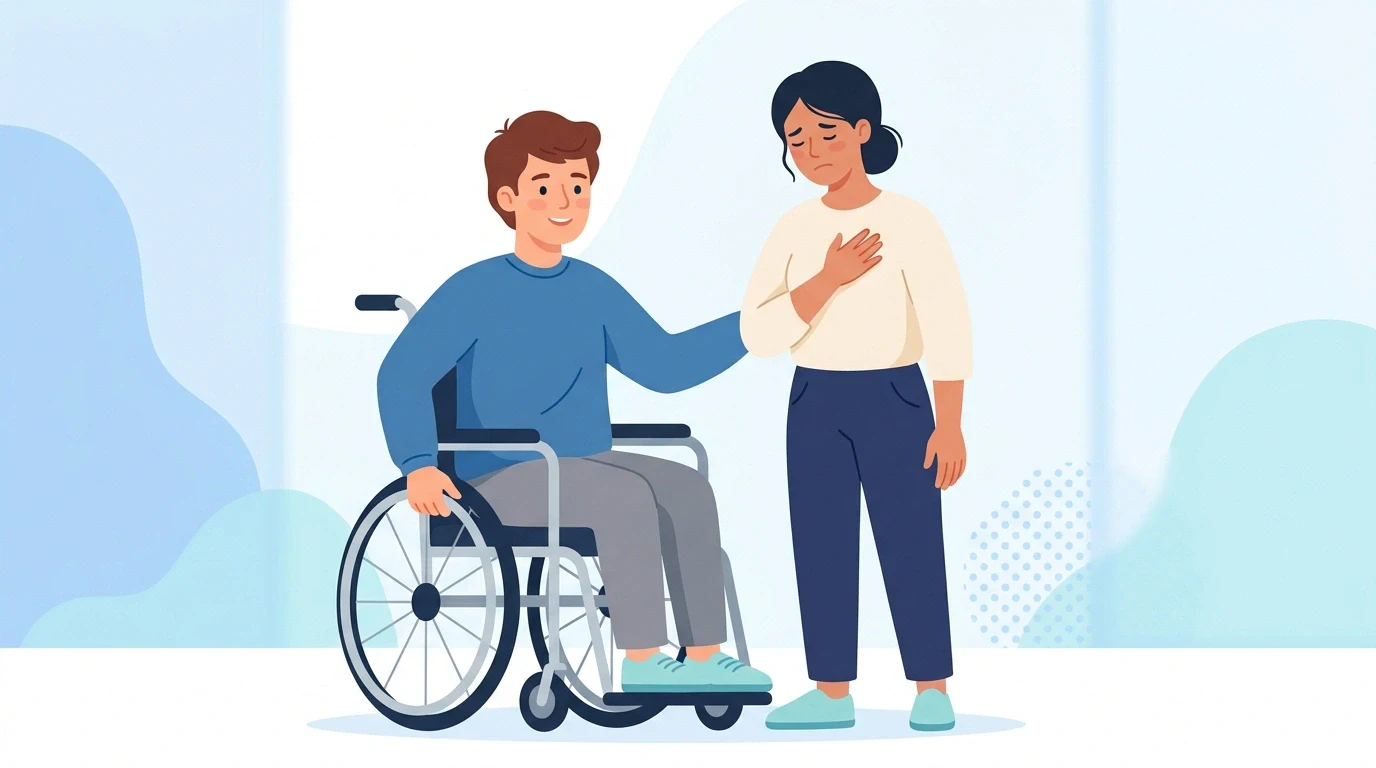
Every person deserves clear, practical support when navigating daily health challenges. Living with a physical condition or caring for a family member who does often comes with overwhelming questions about daily routines, independence, and long-term well-being.
Many families wonder how non-clinical support can ease the burden of managing chronic health issues at home. Comparing visible vs. invisible disabilities helps clarify the distinct physical and social hurdles people face, making it easier to choose the right daily care strategies.
What Is a Disability?
A disability is a physical or mental impairment that substantially limits one or more major life activities like walking, seeing, hearing, or caring for oneself. It affects how a person interacts with the environment around them and can be temporary, lifelong, progressive, or static in nature.
Disabilities cross all demographics, medical conditions, and age groups. They don’t define a person’s worth, capability, or desire for an active life. Instead, a disability simply means that certain everyday tasks require adjustments, adaptive devices, or extra assistance.
Medical providers categorize functional limitations based on how they impact independence:
-
Mobility impairments: Restrictions in moving, standing, or walking.
-
Sensory impairments: Limitations in sight or hearing.
-
Cognitive impairments: Differences in memory, learning, or processing speed.
-
Neurological impairments: Conditions affecting the brain and nervous system.
Recognizing these categories helps families find targeted care options that preserve dignity.
What Are Visible Disabilities?
Visible disabilities are physical, physiological, or neurological disorders that are obvious to others because of physical characteristics, mannerisms of movement, or use of assistive technology. Such problems are an obvious signal to observers that a person has functional limitations in their daily routine, movement, or communication abilities.
People normally understand these difficulties as they are in the public eye and do not need any medical details. But visibility has its own particular social dynamics, too.
Common Visible Disability Examples
So, what is categorized as a visible physical disability? Common visible disability examples include:
- Paralysis or spinal cord injuries requiring a wheelchair
- Amputations and limb differences
- Cerebral palsy affecting movement and coordination
- Down syndrome, which often includes recognizable physical features
- Blindness or significant vision loss requiring a cane or guide dog
- Severe burns or visible scarring
- Dwarfism and other physical growth differences
Each of these conditions affects the person differently, but they share the trait of being noticeable without a conversation. That visibility can bring quicker access to accommodations, but it can also bring more public scrutiny.
What Are Invisible Disabilities?
An invisible disability is a chronic illness or hidden medical impairment that limits daily activities but shows no obvious outward physical signs to a casual observer. These conditions are often called non-apparent disabilities because a person can look completely energetic while dealing with severe internal challenges.
Because these struggles are hidden, individuals often face heavy social skepticism from neighbors, coworkers, or strangers. A person might park in an accessible spot, step out of the car without a limp, and receive harsh glares from bystanders who assume they’re breaking the rules.
Common Invisible Disability Examples
Reviewing a hidden disabilities list reveals how many conditions operate entirely beneath the surface. Common hidden ailments include:
- Neurodivergence: Conditions like Autism Spectrum Disorder (ASD), ADHD, and severe learning challenges that alter how the brain processes sensory inputs or social cues.
- Autoimmune conditions: Systemic diseases like Lupus, Crohn’s Disease, and Rheumatoid Arthritis that cause sudden joint swelling, organ inflammation, or profound exhaustion.
- Cognitive disability types: Brain injuries, early-stage dementia, or severe memory changes that impair short-term recall and long-term planning.
- Chronic pain disability conditions: Intractable physical pain from nerve damage, Fibromyalgia, or structural back issues that saps a person’s daily strength.
An invisible challenge can change dramatically from one morning to the next. A person might feel well enough to cook a meal on Monday, but an unexpected autoimmune flare-up could leave them confined to bed by Tuesday afternoon.
Visible vs. Invisible Disabilities: Key Differences
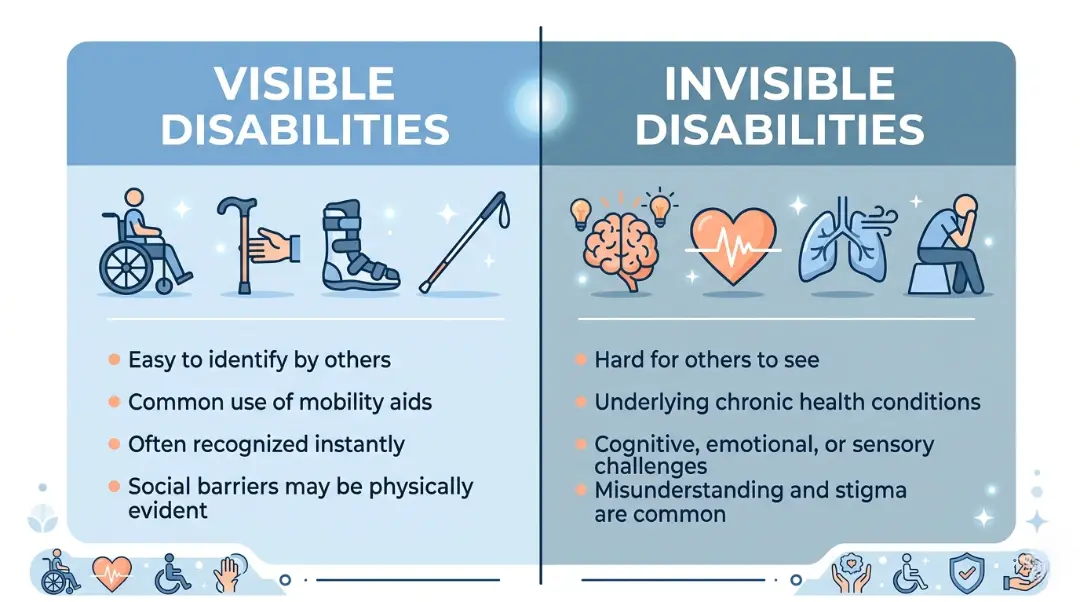
Understanding visible vs. invisible disabilities comes down to how society reacts to what it can see versus what stays hidden.
| Feature | Visible Disabilities | Invisible Disabilities |
| Public Recognition | Immediate; clear to strangers | Low; usually requires explanation |
| Social Assumptions | Pity, over-assistance, or helplessness | Doubt, skepticism, or accusations of faking |
| Accessibility Needs | Physical modifications (ramps, wide doors) | Pacing, rest periods, environmental changes |
| Daily Energy Burn | High physical effort to navigate spaces | High emotional effort to explain symptoms |
People with obvious impairments face physical barriers, like buildings without elevators. They also deal with unwanted pity or people assuming they cannot speak for themselves.
Conversely, people with non-apparent illnesses face social skepticism. They constantly hear phrases like “You look fine,” forcing them to repeatedly explain their medical history just to receive basic accommodations or open seats on public transit.
The Challenge No One Talks About: “But You Don’t Look Sick”
Living with a non-apparent illness means carrying an invisible weight. When your body hurts, but your appearance stays unchanged, society often misinterprets your struggles.
People frequently experience:
-
Invalidation: Family members assuming laziness instead of chronic fatigue.
-
Guilt: Feeling like an impostor when using accessible parking tags.
-
Unsolicited advice: Hearing endless suggestions about diet, yoga, or vitamins to cure complex medical issues.
-
Isolation: Pulling back from social events because explaining symptoms gets exhausting.
This dynamic creates intense mental pressure. Many adults spend valuable energy masking their symptoms just to avoid uncomfortable questions from neighbors or coworkers.
How Disabilities Affect Daily Life
Whether a health condition shows on the outside or not, it reshapes household routines. Simple chores that used to take twenty minutes can suddenly require hours of planning.
Personal Hygiene and Grooming
Standing over a sink, stepping over a tall bathtub ledge, or buttoning a shirt can cause severe pain or fall risks. Many seniors and adults skip essential grooming tasks simply to avoid physical distress.
Meal Preparation and Nutrition
Cooking requires standing, lifting heavy pots, and fine motor control. When fatigue or joint stiffness hits, preparing balanced meals becomes nearly impossible, often leading to poor nutrition.
Housekeeping and Maintenance
Vacuuming, laundry, and sweeping tax cardiovascular endurance and back strength. A cluttered home quickly becomes a major safety risk for anyone with balance issues.
Medication and Schedule Management
Complex health conditions mean strict medication schedules. Managing multiple prescriptions while dealing with cognitive fatigue or memory changes leads to missed doses or accidental double-dosing.
Visible vs. Invisible Disabilities in the Workplace
Workplaces tend to handle visible vs. invisible disabilities very differently, and that gap creates real problems for employees. A worker who uses a wheelchair usually gets a ramp or an accessible desk without much debate. A worker managing depression or a chronic illness often has to fight for a flexible schedule or a quiet workspace, even with a doctor’s recommendation.
The Job Accommodation Network and similar resources note that reasonable accommodations for invisible conditions are frequently inexpensive and simple, things like adjusted lighting, modified break schedules, or the option to work from home part of the week. The barrier usually isn’t cost. It’s understanding.
Employees with invisible disabilities also face a harder choice about disclosure. Telling a manager about a mental health condition can feel riskier than showing up in a wheelchair, since the stigma around conditions like anxiety or bipolar disorder is often stronger than the stigma around physical impairment.
How to Be an Ally for Someone with Any Disability
Supporting friends, family members, or neighbors with health conditions doesn’t require medical expertise. Small, thoughtful shifts in behavior make a huge difference.
-
Believe people when they share their limits. If someone says they’re too tired to sit through a dinner, trust them without pressing for details.
-
Never assume capability based on appearance. Looking healthy on the outside doesn’t mean a person feels good on the inside.
-
Keep accessible spaces clear. Avoid using accessible parking spots, building ramps, or wide stalls even for “just a minute.”
-
Offer specific, practical help. Instead of saying “Let me know if you need anything,” offer concrete assistance: “I’m heading to the grocery store, can I pick up your milk and eggs?”
-
Respect privacy. Let people share details about their medical conditions on their own terms.
Statistics You Should Know About Disabilities

Numbers make this real. Here are some key data points worth knowing:
- 1 in 4 adults in the United States has some form of disability (CDC)
- 61 million American adults live with a disability
- Only 6% of those use a visible mobility aid
- 1.3 billion people globally live with disability (WHO)
- About 10% of the 61 million, or around 6 million adults, have invisible disabilities (Access Living)
- Workers with disabilities are 30% more likely to experience discrimination in hiring compared to those without (EEOC data)
These numbers tell a clear story. Invisible disability is not a rare edge case. It’s the majority experience of people living with disabilities in the United States and around the world.
Diagnosing the Invisible: Why Hidden Disabilities Often Go Undetected
One of the most under-discussed parts of invisible disability is the time it takes to get a diagnosis.
Often conditions such as fibromyalgia, Ehlers-Danlos Syndrome, chronic Lyme Disease and even ADHD in adults are misdiagnosed or dismissed for years before the proper diagnosis is made. The reason for the delay is that the symptoms are not obvious on a routine physical exam and may not be found on routine testing.
There are real consequences to the diagnostic gap: People are left without adequate treatment, without legal protections under the ADA, without access to accommodations at work or school. They often feel like they’re fighting for something that feels absolutely real to them, every single day.
If you or someone you care about suspects a hidden condition, there are things you can do to make a difference: work with a specialist, keep a journal of symptoms and connect with support groups for specific conditions.
Disability Across Different Life Stages
Visible vs. Invisible Disabilities doesn’t just affect working-age adults. It’s a lifelong reality that shows up differently depending on where someone is in life.
In children and schools: Kids with ADHD, autism spectrum disorder, processing disorders, or anxiety may struggle academically or socially without anyone realizing why. Teachers and parents who understand the full disability spectrum are better equipped to support these children early.
In older adults: As people age, many develop conditions like chronic pain, cognitive decline, or sensory disability (hearing or vision loss) that are not always immediately visible. For family caregivers supporting aging parents, understanding how invisible conditions affect behavior, mood, and daily functioning helps provide better care.
Final Thoughts
Living with any disability, visible or not, comes with real challenges that deserve real respect. The goal isn’t to rank one type as harder than the other. Both visible and hidden disabilities affect people’s lives in serious ways.
What matters most is understanding, not assumptions. Whether you’re a caregiver, a coworker, a friend, or someone managing a condition yourself, seeing disability as a spectrum rather than a fixed image makes you better equipped to offer genuine support.
If you or a loved one needs help managing daily life with a disability or chronic condition, don’t wait to reach out. Castle Pines Home Care offers trusted, compassionate home care services in Denver and nearby communities. Contact us today to talk through what kind of support would make the most difference.
Frequently Asked Questions
Is anxiety considered an invisible disability?
Yes, anxiety can qualify as an invisible disability when it significantly limits a person’s ability to work, interact socially, or carry out daily activities. Under the ADA, anxiety disorders may qualify for workplace accommodations. The condition is not visible to others, which is why it’s often overlooked or dismissed.
Can a disability be both visible and invisible?
Yes. Some conditions have both visible and non-visible aspects. For example, Multiple Sclerosis may cause visible mobility issues in some stages while also involving chronic fatigue and cognitive symptoms that others cannot see. Disability doesn’t always fit neatly into one category.
What is the most common invisible disability?
Chronic pain conditions, depression, and anxiety are among the most common invisible disabilities worldwide. ADHD and diabetes also affect tens of millions of people and are largely non-apparent to outside observers.
How do I support someone with a hidden disability?
The most important thing is to believe them. Ask what they need rather than assuming. Be patient on difficult days and avoid comments that minimize what they’re experiencing. Educating yourself on their specific condition goes a long way.
Do invisible disabilities qualify for legal protections?
Yes. In the United States, the ADA protects people with both visible and invisible disabilities, as long as the condition substantially limits one or more major life activities. Employees with invisible conditions have the same rights to reasonable workplace accommodations as those with visible ones.