
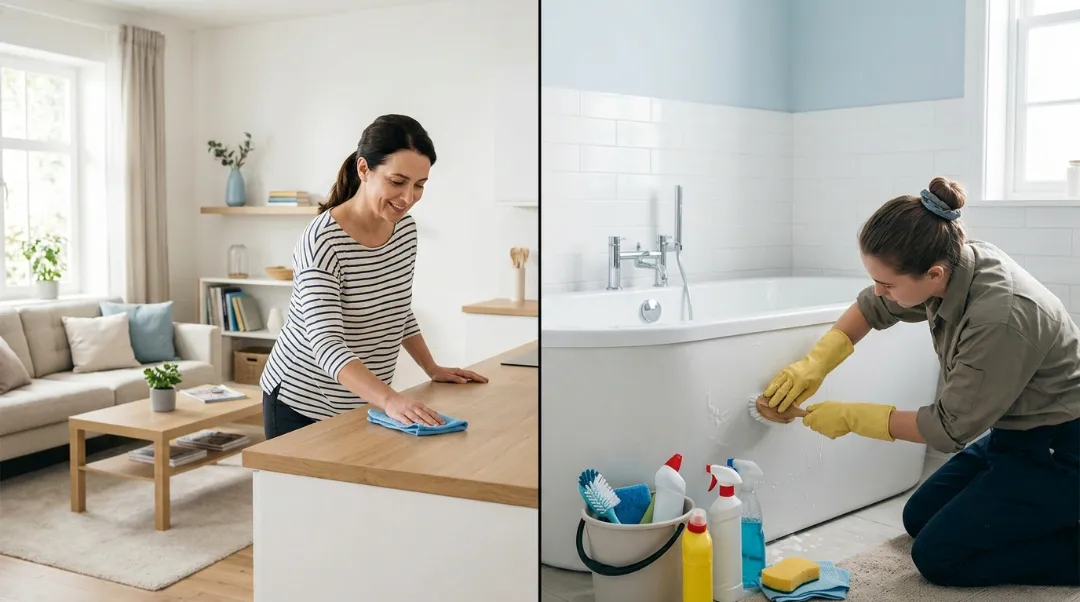
If you’re trying to keep a home comfortable and safe, the difference between light housekeeping and deep cleaning matters. Light housekeeping handles routine tasks that keep a home tidy, while deep cleaning focuses on detailed cleaning that reaches less frequently cleaned areas. The right option depends on the home’s condition, the person’s needs, and the type of help being requested.
Think of light housekeeping as keeping the house on track, not starting from scratch. This article explains what each type of cleaning usually includes, where home care fits in, how costs can differ, and when a professional cleaner may be a better choice.
What Is Light Housekeeping?
Light housekeeping includes routine, low-effort household chores designed to maintain a clean, orderly, and safe living space. It covers basic tasks like sweeping floors, wiping down kitchen counters, dusting open surfaces, taking out the trash, making beds, and washing daily dishes.
Think of this service as keeping the engine running smoothly. It doesn’t involve heavy lifting, ladder work, or scrubbing caked-on buildup. Instead, it prevents clutter from building up in high-traffic living spaces like bedrooms, living rooms, and kitchens.
Light Housekeeping Checklist
To understand what is considered light house cleaning, look at these standard daily and weekly duties:
-
Kitchen: Wiping counters, washing daily dishes, sweeping the floor, and cleaning out spoiled food from the refrigerator.
-
Bathroom: Rinsing out the sink, wiping down the vanity top, replacing hand towels, and light disinfectant spraying.
-
Bedrooms: Making the bed, changing bed linens once a week, and clearing clutter from walkways.
-
Living Spaces: Dusting reachable furniture, vacuuming main walkways, and tidying up magazines or mail.
-
Laundry: Washing, drying, folding, and putting away clothing and bed sheets.
What Is Deep Cleaning?
Deep cleaning is an intensive, detailed service that removes built-up dirt, grime, soap scum, and allergens from every corner of a home. It targets neglected areas like baseboards, inside kitchen appliances, tile grout, light fixtures, and behind heavy furniture.
While routine maintenance keeps a space presentable, an intensive clean resets the entire home. It requires specialized cleaning products, heavy scrub brushes, and significant physical effort to remove stubborn stains and buildup.
What Deep Cleaning Covers
-
Scrubbing interior oven walls and stove burners
-
Detailed cleaning inside the refrigerator and freezer
-
Scrubbing tile grout lines in showers and on floors
-
Hand-washing baseboards, door frames, and window sills
-
Cleaning behind major appliances like washers and dryers
-
Sanitizing trash cans and recycling bins inside and out
Light Housekeeping vs. Deep Cleaning: Side-by-Side Comparison

Seeing the two side by side usually clears up any lingering confusion faster than paragraphs of explanation.
| Category | Light Housekeeping | Deep Cleaning |
|---|---|---|
| Frequency | Daily to weekly | Quarterly to twice a year |
| Time per visit | 1 to 3 hours | 4 to 8 hours |
| Typical tasks | Dishes, laundry, tidying, surface wiping, trash | Grout scrubbing, oven interior, baseboards, window tracks |
| Tools needed | Basic supplies (cloth, broom, mild cleaner) | Degreasers, steam cleaners, specialized brushes |
| Best for | Ongoing home maintenance | Seasonal resets, move-in/move-out, post-illness recovery |
| Physical demand | Low to moderate | High |
Notice the physical demand row. That line matters a lot if you’re a family caregiver or an older adult reading this. Deep cleaning tasks involve kneeling, reaching, and lifting, which can be risky if balance or joint mobility is a concern.
Tips for Effective Light Housekeeping
Establishing a simple routine prevents minor chores from piling up into major projects. Here are practical ways to stay on top of daily tasks without burning out:
-
Follow the 5-Minute Rule: If a chore takes under five minutes, complete it immediately. Wiping down a counter or putting away shoes right away saves hours later.
-
Focus on High-Traffic Zones: Prioritize the kitchen sink, main hallway, and bathroom counter. Keeping these three areas clear maintains a sense of order throughout the home.
-
Keep Supplies Accessible: Place lightweight dusters and disinfectant wipes near living spaces so cleaning requires minimal movement.
-
Set a Daily Schedule: Assign single tasks to specific days. For example, change bed sheets on Monday and handle light vacuuming on Thursday.
When Do You Need Light Housekeeping vs Deep Cleaning?

Choosing between these options comes down to your primary goal, physical mobility, and current home condition.
Choose Light Housekeeping When:
-
You need ongoing help maintaining daily tidiness and safety.
-
You or a family member deal with fatigue, limited mobility, or joint pain.
-
You want to prevent clutter from creating dangerous tripping hazards.
-
You need regular help with routine chores like laundry and dishwashing.
Choose Deep Cleaning When:
-
You are preparing a home for a move or an end-of-lease inspection.
-
The home has months of untouched dirt, grease, or dust buildup.
-
You want to refresh your living environment at the start of spring or autumn.
-
You are preparing a home after a major recovery period or hospital stay.
Cost Comparison: Light Housekeeping vs Deep Cleaning
Understanding pricing structures helps you allocate home budgets effectively without unexpected expenses.
-
Light Housekeeping Costs: Typically billed hourly, ranging from $25 to $45 per hour depending on regional rates. Because these visits focus on light upkeep, total session costs remain manageable over time.
-
Deep Cleaning Costs: Often billed as a flat project rate ranging between $200 and $500+ depending on home square footage and total grime buildup.
Hiring a Professional vs Doing It Yourself
Hiring out light housekeeping tasks makes sense when time is limited, physical ability is a barrier, or the person needs consistent in-home support as part of a care plan. Deep cleaning almost always benefits from a professional cleaning service because of the equipment, products, and experience required.
DIY deep cleaning is possible, but it often takes far longer and produces less thorough results, especially for tasks like cleaning inside appliances, baseboards and blinds cleaning, or washing walls and ceilings.
Health Benefits of Each Cleaning Type
A clean home directly impacts physical wellness, emotional balance, and personal safety.
Benefits of Light Housekeeping
-
Fall Risk Reduction: Clearing hallway rugs, clutter, and electrical cords lowers fall risks significantly for older adults.
-
Lower Stress Levels: Visual clutter raises cortisol levels. Daily order promotes a calm mental state.
-
Better Daily Hygiene: Regular dishwashing and surface wiping prevent bacterial growth on prep surfaces.
Health Benefits of Deep Cleaning
-
Allergen Removal: Removing dust mites, pet dander, and mold spores improves indoor air quality for asthmatic individuals.
-
Infection Control: Disinfecting hidden grime eliminates bacteria like E. coli and Salmonella hiding in kitchens.
Light Housekeeping for Elderly and Caregiving Situations
This topic takes on an additional level for family caregivers. Light housekeeping is not just a cleaning service. It’s part of a care plan
For older adults and individuals with physical limitations, light housekeeping provides vital assistance with daily chores that become difficult due to arthritis, poor balance, or low energy. It ensures a clean, safe living environment without forcing individuals to do risky tasks like bending or lifting.
How to Choose the Right Cleaning Service for Your Home
Selecting an appropriate provider requires matching your exact support needs with service scopes.
-
Assess Physical Capabilities: If bending down or lifting laundry baskets creates pain, ongoing light cleaning support is the best fit.
-
Review Safety Standards: Ensure the provider uses non-toxic, non-slip cleaning solutions that keep walkways safe for people using walkers or canes.
-
Verify Service Agreements: Read service checklists carefully. Confirm whether laundry, dishwashing, and bed-making are included in standard visits.
-
Check Background Credentials: Select licensed, insured, and background-checked care teams for total peace of mind.
For families in the Denver area
Castle Pines Home Care provides professional home care services in Denver that include light housekeeping as part of personalized, in-home care plans. Whether it’s supporting an aging parent or helping someone manage daily tasks after a health setback, their team handles both personal care and homemaker services with real attention to the client’s comfort and routine. Reach out to learn more about what’s included and how to get started.
Final Thought
Getting this right doesn’t need to be complicated. Light housekeeping keeps a home safe, sanitary, and comfortable on a regular basis. Deep cleaning handles the deeper reset every few months or at major life transitions. Most homes need both, just at different frequencies.
If you’re helping a loved one age in place, managing a home after an illness, or simply trying to build a better cleaning routine, start with a clear picture of what the home actually needs. From there, it’s just a matter of matching the right service to the right situation.
If you’d like to talk through care options or learn how Castle Pines Home Care can support your family, contact us today for a consultation.
Frequently Asked Questions
What is the difference between light housekeeping and deep cleaning?
Light housekeeping focuses on simple daily tasks like sweeping, washing dishes, making beds, and tidying clutter. Deep cleaning targets heavy buildup, scrubbing oven interiors, tile grout, baseboards, and behind appliances to reset home hygiene.
Does light housekeeping include laundry?
Yes, standard light housekeeping covers washing, drying, folding, and putting away personal clothing and bed linens. It does not include heavy dry-cleaning processing or moving heavy laundry bags up multiple flights of stairs.
How often should deep cleaning be done?
Most homes benefit from a deep clean two to four times per year. Homes with pets, young children, or severe respiratory allergies may require detailed deep cleaning sessions every two months to control dust and dander.
Is light housekeeping the same as deep cleaning?
No. Light housekeeping covers routine, frequent upkeep like dishes and tidying, while deep cleaning targets buildup in spots that don’t get touched weekly, like grout and baseboards.
How often should a home get a deep clean?
Most homes benefit from a deep clean two to four times a year, though homes with pets, allergies, or a resident managing a respiratory condition may need it more often.