If you have observed a parent become less agile, grimace while rising, or forgo a stroll due to knee discomfort, you are familiar with the anxiety associated with aging physiques. It is not erroneous to seek solutions, and you are not solitary in contemplating whether anything as straightforward as yoga could truly be beneficial. It is indeed possible, and the rationale is supported by empirical evidence rather than mere optimism.
I assure you that by the conclusion of this piece, you will comprehend how yoga enhances the physical well-being of seniors, which styles are suitable for varying skill levels, and how to initiate practice safely at home or in a class. In brief, if you’re pressed for time: yoga enhances strength, balance, joint comfort, sleep quality, and mood in elderly individuals with deliberate, measured movements combined with breath control. Remain present, as the specifics are equally significant as the overview.
What Is Yoga and Why It Works for Older Adults
Yoga began in India thousands of years ago as a practice combining movement, breath control, and focused attention. It wasn’t designed as a workout trend. It was built around the idea that the body and mind function better together than apart.
That’s exactly why it suits older adults so well. Most yoga poses can be modified with a chair, a wall, or a folded blanket, which means someone with arthritis or a hip replacement can still take part. Unlike running or heavy lifting, yoga doesn’t demand speed or force. It asks for control, patience, and breath, three things that don’t fade with age the way muscle mass does.
There’s also a data point worth sharing here: according to the Yoga Alliance, roughly 21% of adults aged 60 and older already practice yoga in some form. That’s a useful stat to cite with a source link, and pairing it with a simple bar chart showing yoga adoption by age group would give readers a quick visual sense of how mainstream this has become among seniors.
Health Benefits of Yoga for Seniors
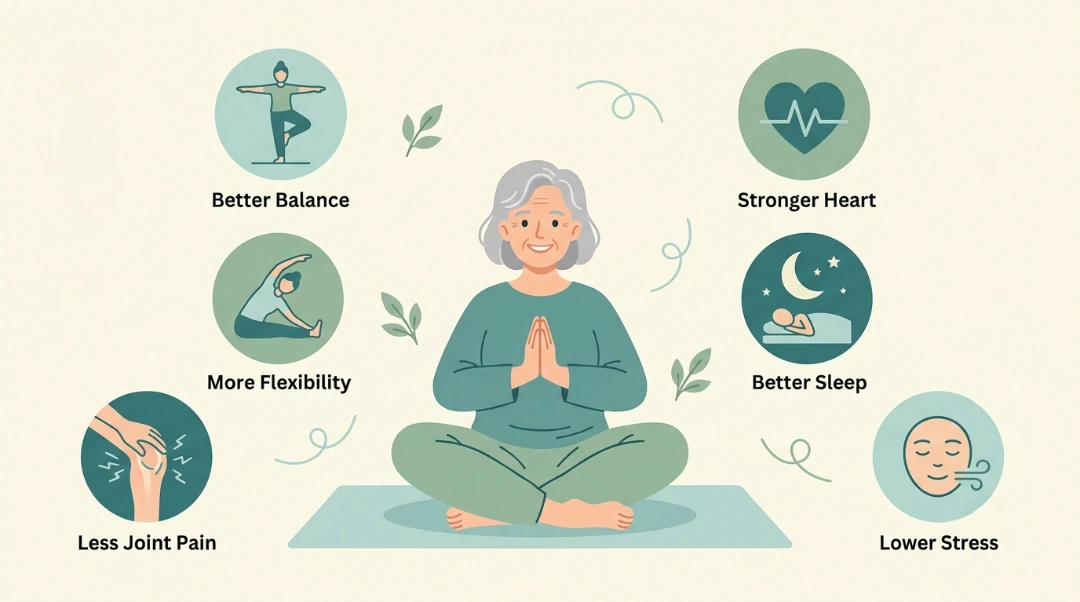
Improved Balance and Reduced Fall Risk
Yoga enhances equilibrium in elderly individuals by fortifying the minor stabilizing muscles in the ankles, hips, and core, while simultaneously conditioning the brain to respond more swiftly to changes in body posture. Falls pose a significant risk to autonomy in later age, and engaging in balanced exercise is one of the most effective methods to mitigate that danger.
Approximately 3 million seniors aged 65 and older need emergency care annually due to injuries sustained from falls. That statistic alone should indicate why balance exercise merits inclusion in any senior’s weekly regimen.
Increased Flexibility and Joint Mobility
Joints naturally lose range of motion with age, which is part of why bending, reaching, or turning gets harder. Yoga slows that decline through gentle, repeated stretching that keeps connective tissue pliable. It’s not about touching your toes on day one. It’s about moving a little further than you could last month.
Flexibility work also reduces the risk of strains during normal daily tasks. Reaching for a high shelf or twisting to check a blind spot while driving both rely on joint mobility most people take for granted until it’s gone.
Better Cardiovascular Health
Slow-paced yoga still asks the heart to work, especially in sequences that combine movement with steady breathing. Studies have linked regular yoga practice to lower blood pressure, improved cholesterol markers, and reduced resting heart rate. This is a spot where citing a peer-reviewed source, such as a study published in a journal like the Journals of Gerontology, would add real weight and credibility for readers who want more than a general claim.
Lower blood pressure and steadier heart rhythms matter more with age, since cardiovascular strain becomes a bigger factor in stroke and heart attack risk after 60.
Reduced Joint Pain From Arthritis
Yoga reduces arthritis-related joint pain in seniors by increasing blood flow to stiff areas and encouraging gentle movement through a joint’s full range, which lowers inflammation over time. This doesn’t mean pain disappears overnight. It means consistent, gentle practice tends to outperform staying still.
Many seniors avoid movement when joints hurt, which sounds logical but often backfires. Stiffness feeds on inactivity. A slow yoga flow, done with modifications, keeps joints from locking up further while respecting pain limits.
Stronger Bones and Reduced Osteoporosis Risk
Weight-bearing yoga poses, even gentle ones like standing mountain pose or supported warrior poses, place light stress on bones that can help maintain density. This matters most for postmenopausal women, who face a sharper decline in bone density than men of the same age.
That said, certain poses involving deep spinal twists or forward folds need caution for anyone with diagnosed osteoporosis, since the wrong movement can raise fracture risk instead of lowering it. A physical therapist or certified instructor can point out which poses to modify or skip.
Better Sleep Quality
Poor sleep is common in older adults, and it often gets brushed off as a normal part of aging. Research suggests otherwise. A consistent yoga practice, especially in the evening, has been linked to shorter time falling asleep and fewer nighttime wake-ups after around six months of regular practice.
The breathing techniques taught in most yoga classes activate the body’s relaxation response, which lowers cortisol and prepares the body for rest. That’s a mechanism worth explaining to readers who assume yoga is only about stretching.
Lower Stress, Anxiety, and Improved Mood
Yoga integrates physical activity with concentrated respiration, and this synergy accomplishes what walking alone may not: it soothes the nervous system while engaging the body. Elderly individuals who engage in yoga once or twice weekly experience significantly reduced anxiety and diminished depression symptoms relative to those who do not participate.
Group sessions introduce an additional dimension in this context. Engaging in conversation with peers prior to or following a class provides socially isolated seniors with motivation to get outside and maintain social connections, so promoting mental well-being.
Cognitive Benefits and Brain Health
Yoga’s focus on breath and body awareness appears to support attention and memory in older adults, likely through improved blood flow to the brain and lower chronic stress, which is linked to cognitive decline. This is an area still being studied, so it’s worth citing findings from sources like the National Institute on Aging rather than overstating the connection.
Mindful movement practices ask the brain to coordinate breath, balance, and sequence at the same time, which functions almost like light mental exercise layered onto physical activity.
Best Types of Yoga for Seniors
Not every yoga style suits every senior, and that’s fine. The goal is finding the right match for current mobility and comfort level.
- Chair yoga: Poses performed sitting or using a chair for support, ideal for limited mobility or balance concerns.
- Gentle yoga: Slow-paced sequences focused on breath and light stretching, a solid starting point for beginners.
- Restorative yoga: Poses held for several minutes using props like bolsters and blankets, aimed at deep relaxation.
- Hatha yoga: A foundational style with seated and standing poses, good for building strength and technique.
- Yin yoga: Long-held floor stretches that target connective tissue and improve flexibility over time.
Retirement communities and local studios often rotate through several of these styles, so trying more than one before settling in makes sense.
Chair Yoga Exercises for Seniors
Chair yoga uses a sturdy chair for support while performing seated or standing poses, making it one of the safest entry points for seniors with limited mobility, balance concerns, or joint pain. It removes the fear of falling that keeps many older adults from trying yoga at all.
A few simple chair exercises to start with:
- Seated cat-cow: Sit tall, hands on knees, arch the back on an inhale and round it on an exhale. Repeat 8 to 10 times to loosen the spine.
- Seated forward fold: Feet flat on the floor, hinge forward from the hips toward the knees, letting arms hang. Hold for a few slow breaths to stretch the lower back.
- Chair-assisted mountain pose: Stand behind the chair holding the backrest, feet hip-width apart, and rise onto the toes before lowering. This builds ankle strength and balance at the same time.
If getting to a studio isn’t realistic because of mobility limits or a lack of transportation, a caregiver or a trained aide can guide these same movements at home. That’s actually one of the more overlooked parts of home care services in Denver, where trained caregivers help seniors stay active safely between visits from a physical therapist or instructor. At Castle Pines Home Care, our caregivers work directly with families to build light movement routines, including chair yoga, into daily care plans so seniors stay mobile without added risk.
How Often Should Seniors Practice Yoga?
Elderly individuals ought to strive for a minimum of 150 minutes of moderate exercise each week, a goal that yoga can assist in achieving, and studies indicate that engaging in yoga two to three times weekly provides the most significant advantages for balance, flexibility, and emotional well-being while minimizing strain on joints and muscles. This corresponds with recommendations from the Centers for Disease Control and Prevention about weekly activity levels for senior citizens.
There is no rigid mandate necessitating daily practice. What is of greater significance is sustained consistency. A consistent 20-minute session three times weekly over several months generally yields superior outcomes compared to infrequent hour-long sessions conducted sporadically.
Commencing gradually is significant as well. Engaging in an advanced class following a prolonged period of inactivity increases the likelihood of damage rather than diminishing it. A progressive increase, incorporating more minutes or a novel pose weekly, honors the body’s current state.
Safety Tips and Precautions Before Starting
Yoga is low-impact, but it’s not risk-free, especially for seniors managing chronic conditions. A quick doctor’s check before starting is a reasonable first step, particularly for anyone with heart disease, severe osteoporosis, or recent joint surgery.
A few practical guardrails:
- Skip deep spinal twists and forward folds if osteoporosis has been diagnosed.
- Use a wall or chair for any standing balance pose until confidence builds.
- Avoid holding breath during poses, since that can spike blood pressure.
- Stop immediately if a pose causes sharp pain, not just muscle fatigue.
- Tell the instructor about any joint replacements, dizziness, or blood pressure medication before class starts.
None of this is meant to scare anyone away from trying yoga. It’s meant to make the first few sessions safer, which makes it far more likely the practice actually sticks.
Yoga vs. Other Low-Impact Exercises for Seniors
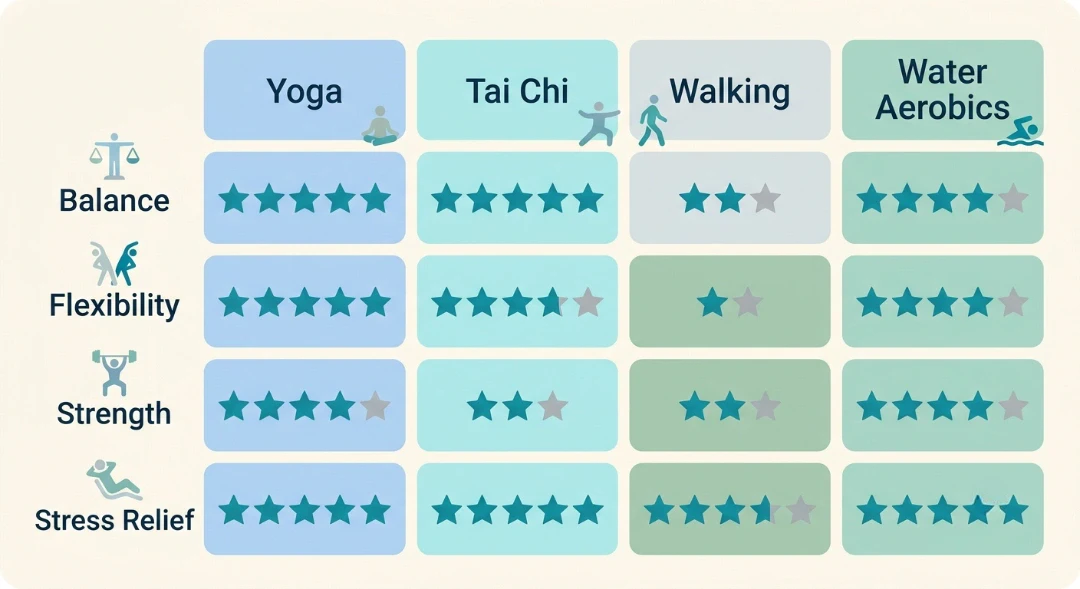
While walking, swimming, and tai chi are all fantastic activities, yoga is unique because of how many physical and mental benefits it packs into a single session.
| Exercise | Balance Support | Flexibility | Strength Building | Cardio / Endurance | Mindfulness Component |
| Yoga | Excellent | Excellent | Moderate | Low | High |
| Tai Chi | Excellent | Moderate | Low | Low | High |
| Walking | Moderate | Low | Low | Moderate | Low |
| Water Aerobics | Low | Moderate | Moderate |
How to Get Started
Finding the right class matters more than finding the “best” one. Community centers, senior living communities, and local studios often run yoga sessions specifically labeled for beginners or older adults. Many public libraries and YMCAs offer free or low-cost classes too, which helps if cost is a concern.
For seniors who prefer starting at home, free instructional videos from certified instructors are widely available online, though it’s worth choosing ones that specifically mention modifications for older adults or limited mobility. A rolled towel or sturdy chair works fine as equipment for the first few sessions. There’s no need to buy anything expensive before knowing if the practice is a good fit.
Final Thoughts
Yoga cannot halt the aging process, and it is unrealistic for anyone to anticipate such an outcome. It provides a low-risk, thoroughly researched method to enhance balance, joint comfort, sleep, and mood throughout a life phase when these aspects become increasingly challenging to sustain independently. If you have been inquiring about the benefits of yoga for elderly individuals as you consider options for yourself or a loved one, the evidence strongly indicates that regular, gentle practice is effective.
Start small, check with a doctor first if there’s an existing condition, and choose a style that matches current mobility rather than an ideal one. If daily support or guided movement at home sounds like the right next step for your family, contact us at Castle Pines Home Care to talk through what that could look like.
Frequently Asked Questions
How does yoga improve body seniors overall?
Yoga improves the aging body by combining gentle strength work, joint mobility, and breath control, which together support better balance, less joint pain, improved sleep, and reduced stress. It works because it trains multiple systems, muscular, neurological, and respiratory, in one low-impact practice rather than isolating just one area like most other workouts do.
Is yoga safe for seniors with arthritis?
Yes, yoga is generally safe for seniors with arthritis when poses are modified to avoid deep joint strain, and gentle movement often reduces stiffness rather than worsening it. A doctor or physical therapist can flag which specific poses to avoid based on which joints are affected.
Can yoga help with balance in elderly adults?
Yoga helps balance in elderly adults by strengthening stabilizing muscles and improving body awareness, which lowers fall risk over consistent practice. Poses like tree pose and warrior variations, done near support, are commonly used for this exact purpose.
What’s the best yoga style for seniors with limited mobility?
Chair yoga is generally the best style for seniors with limited mobility, since every pose can be performed seated or with a chair for support. It still delivers stretching, breathing, and light strength benefits without requiring the balance or floor transitions other styles demand.