Life is hectic, as we all know it and as you age and you’re taking medication more than once during the day it is so easy to forget and then take it late. Missing doses, forgetfulness about taking it, and the hustle and bustle can be dangerous to your health and cause worry for your family and yourself. It really can be simple.
What Is the Best Medication Reminder? It depends. The right reminder may be a weekly pill box for the independent senior who is aware of when they take the medication,, or it might be a reminder dispenser for a caregiver that tells the person when and if needed, according to your setting and level of memory and assistance.
What Is the Best Medication Reminder for Seniors?

There is no single reminder system that works for everyone. The best option is one that is easy to use, fits the prescribed medication schedule, and provides the right level of support.
Here are some common options to consider:
| Reminder option | Best suited for | Main benefit |
| Phone alarm or calendar | Seniors comfortable with smartphones | Simple, convenient alerts |
| Weekly pill organizer | People who need help organising doses | Makes scheduled doses easier to identify |
| Medication reminder app | Seniors or caregivers using smartphones | Customisable alerts and medication tracking |
| Talking reminder device | People who benefit from spoken prompts | Audible reminders without navigating an app |
| Automatic medication dispenser | Some seniors with complex but stable medication schedules | Releases selected doses at programmed times |
| Caregiver reminders | Seniors who need personal encouragement or follow-up | Human support and help maintaining routines |
Before choosing a tool, consider whether your loved one can recognise their medications, understand the instructions, and respond appropriately when a reminder sounds. If memory problems or confusion make independent medication use unsafe, a reminder alone may not be sufficient.
Medication Management Tips for Seniors
A cook does provide some cases in the prime of a designed program.
Try these medication management tips for seniors to ease the burden of your day.
- Keep an Updated Medication List
Please list all medications you take (both prescription and non-prescription vitamins and supplements) including the name, dose, directions & amount of dose, how often you take it and any directions.
Write down all of your medicines. Give the list to your health care provider each time he or she prescribes a new medication. Take the list with you when you visit your doctor or pharmacist to have your medicines checked for interactions.
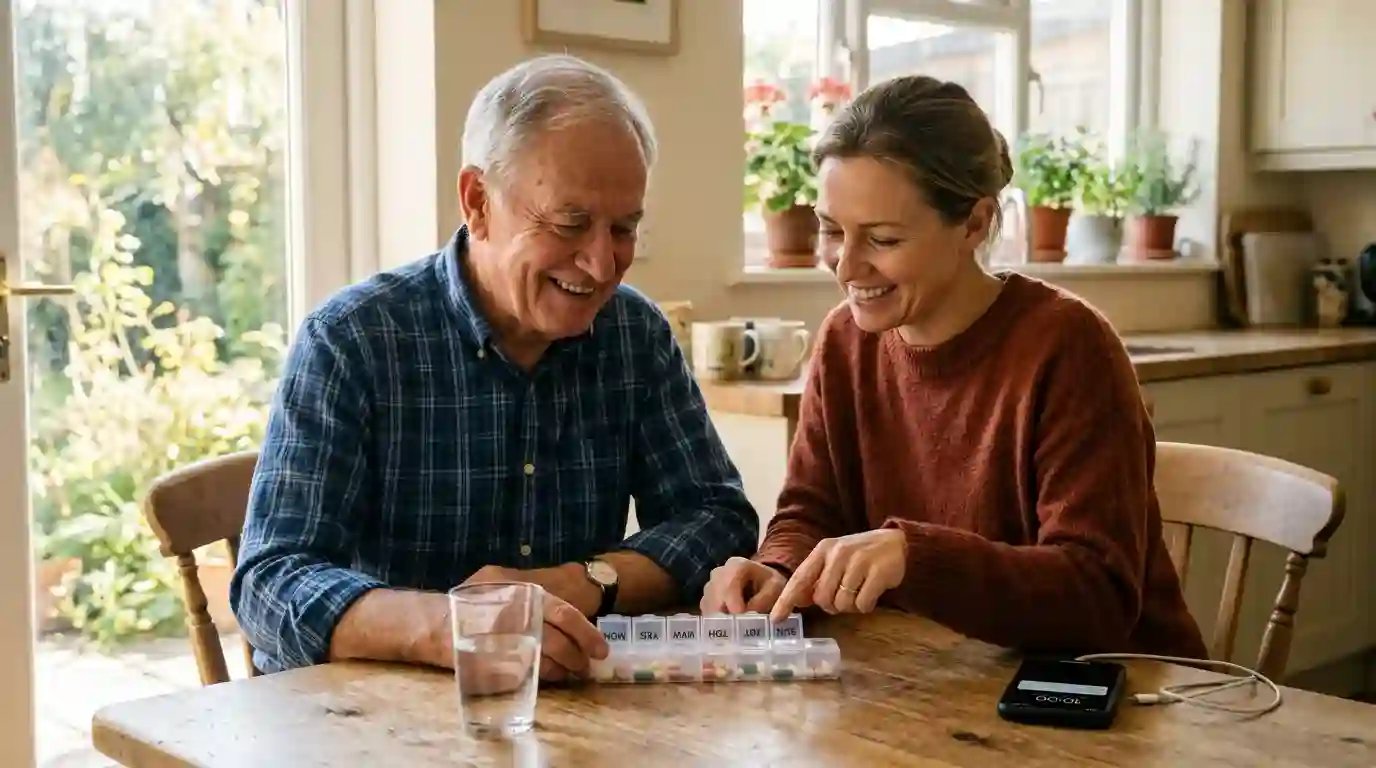
- Use a Pill Organizer When Appropriate
The individual dose box of a weekly pill organizer is removed from the organizer to allow the doses administered to be emptied for the relevant time or day. This box acts as a simple guide to assist the checking process to see if the doses administered are prepared for the particular day.
It is recommended that medicines be kept in their original pack. Certain medicines need to be kept in special packs—check with your pharmacist if you want to put these in an organizer; others may be light- or water-sensitive.
- Connect Medication Times to Daily Routines
Hold the box in your hand to make it easier to remember to take the tablets. Keep the tablets with other daily routines, like at breakfast time or when you brush your teeth.
(Only follow if mentioned on the medication prescribed.) You need to have some medicines after food; there are some medicines which need to be taken on an empty stomach and at the right times. It is best to check the label or ask a pharmacist if you are not sure.
- Review Prescriptions Regularly
A number of GPs may have prescribed medicine to a proportion of the older population. For example, an individual in this age group could have been prescribed a variety of drugs for the same issue. A drug review can also highlight drug repetition, adverse effects, and polypharmacy problems.
You want to change your dose or want to stay on the same dose. Don’t suddenly stop any medicines or change the dose or take two or more medicines together without letting your doctor or pharmacist know.
- Make the Reminder Easy to Notice
Use large print directions and labels, good lighting, and a medication chart that is easy to read. Keep reminders in a visible location.
People with hearing or sight difficulties for the elderly should choose one with multi types of alerts, like audible, visual, and vibration.
Pill Reminder Apps for Daily Medication
For seniors who use a phone or tablet each day, medication management apps can send reminders and make it easy to manage. Many of us receive reminders to refill prescriptions and keep track of doses or allow a friend or care partner to manage prescriptions for us.
These reminder apps are a good fit for those who always have their cell phone close and don’t mind getting notified.
Medisafe
Medisafe is a medication management app for medication reminders, pill tracking, and refill alerts. The availability of the rest of the features will vary based on your current plan and app version.
May be helpful for seniors who want to manage multiple medications at the same time. Families should check the status of the app and its settings before monitoring a loved one.
MyTherapy
MyTherapy is a medication reminder app that also allows for diary logging of medication and logging of some health data. It is a contender for those who are interested in monitoring their habit.
Older adults should check if the functionalities, interface, and notifications are appropriate for them prior to using the app.
Built-In Phone Reminders
Your phone’s built-in alarm or calendar app can be just as effective and probably easier to use than downloading a new medication app. You can have one or more loved ones help you set up recurring reminders for what you need to do-for example, “Check morning medication instructions.”
This may be fine for older people who require little assistance but do not need extra features.
How to Choose the Best Medication Reminder Apps for Seniors
While you’re evaluating our top selections for medication reminder apps for seniors, don’t let popularity influence your decision. Select a medication reminder app that is easy to read, simple to use, and reliable—one that you can incorporate into your everyday life.
Consider the following features:
- Large, readable text and clear buttons.
- Customizable alerts for different medication times.
- A fast way to see that you responded to the reminder.
- Refill notifications where available.
- Optional caregiver notifications or sharing features.
- Compatibility with the senior’s phone or tablet.
- Clear privacy policies and understandable data-sharing settings.
Trial the app with your loved one before relying on it. Check that notifications do pop up on the phone when it is locked and that the person knows what to do when they get a notification.
An app won’t automatically check that it’s the right drug for you or whether it’s appropriate to take a certain amount.
Medication Reminder Devices for Elderly Adults
Devices like this can be easier to use with alarms or fewer steps.
Here are some of the usual medication reminder tools used for adult senior living patients.
Digital Alarm Clocks and Talking Reminders
Digital alarm clocks with programmable alarms can beep at scheduled times. Talking reminder devices can recite a recorded message, which may help people who have difficulty reading reminder notices.
They may be nice choices for older adults who enjoy physical button controls and simple reminders.
Electronic Pill Dispensers
Automated medication dispensers can be programmed to release certain doses at particular times. Some devices have alarms, flashing lights or notifications that a dose is available.
Other dispensers include some extra precautions, but these differ from one another. For some people with a regular medication schedule, these others may be useful as long as the device will work for them and they are correctly configured.
A dispenser doesn’t inherently ensure the right medication has been prescribed or is appropriate for dispensing. It may need to be checked by a responsible person and refilled, cleaned, and maintained.
Pill Bottle Timers
Many pill bottle caps record the time that a bottle was last opened and some include alarm features. They allow a person to confirm the last time the bottle was opened but opening it doesn’t necessarily mean the medication was consumed.
It may not be as practical for seniors who have several prescriptions to take and reminders at more than one time of day.
Choosing a Device for Your Loved One
Before purchasing a device, consider:
- How simple it is to operate the buttons and display.
- In the case of alarms, whether they are of an audible level or have any vibration.
- If the device is capable of providing the necessary quantity of daily reminders.
- Whether it is connected to a power source and has a backup plan in place.
- If the caregiver is able to assist in its setup and supervise its operation.
- If the drug can be stored in the device safely.
Consult a pharmacist if the suggested device is the correct one for that person’s medication. Some medications need to stay in their original packaging. Some devices are not compatible with specific prescriptions.
How to Remember to Take Medication on Time
This daily tip is your best chance and best method for all the decisions you will make. If your loved one is missing doses, this tip is all you need.
Set Recurring Alerts
Set alarms for medication time. Label each alarm. It is a helpful reminder to the older adult as to which part of the process the alarm is for.
Avoid prescribing ‘for convenience.’ Write clear instructions for times and foods on the prescription label or hand to the pharmacist.
Use a Written Medication Chart.
Write down the names of the medicines and the times to take the doses. And give to you so that you can tick these boxes to help in making notes of the doses on the chart. (heavier print size and accessible format)
If many of you are helping to care for you, leave the chart as it is and work out how everyone will keep track of reminders or doses given.
Establish a Consistent Routine
Have a routine – take your medication at the same time of the day each day – eg. Every morning, or every evening. This may be helpful so that you always remember to take your medication.
If you are trying to remember to take your medication at a specific time or outside of a meal, you should pick a specific reminder rather than a general reminder.
Arrange Support From a Family Member
A family member might ring or send a message to say hi and to help you to check your chart. Tips: Some get the reminder prompt or check-in as a bonus when they are looking for a reminder or check-in when they want more than just an alarm.
People need to understand your expectations about communicating changes to medications. Become a little too comfortable trying to make sure the reminders work properly.
Know What to Do After a Missed Dose
A reminder system cannot prevent every missed dose. If a senior realises they have forgotten medication, they should follow the instructions supplied with the medicine or contact a pharmacist or prescriber for guidance.
However, never take a double dose. If you forget to take the medicine just take it as soon as you remember, unless you are near your next dose in which case you should just take the normal dose, and not take the missed dose. The amount of doses you’ll be taking will be set by the medication you’re on.
When Is a Caregiver Medication Reminder the Better Choice?
We can all teach ourselves to adjust to a new technology, although it may be a little more difficult for some individuals. For those with impairment (example: forgetfulness, vision impairment, literacy issues—reading labels on medication, instructions on device, alarm sounds, etc.), assistance will be needed.
–Provide a verbal cue, assist with a series of steps, and report to family or other carers.
The level of support must be tailored to the client. Clients may only need a reminder every now and again, whereas others may need to be monitored closely or have a medication support plan.
Learn the distinction between the reminder and administration of the medication. With reminders, the medication can be administered, but not the dose. It is at the discretion of the caregiver. Confirm the medication with the caregiver and the home health team.
You can’t replace supervision or supervision if the older person can’t swallow the medicine safely. Request help with directions on how to do this.
How Castle Pines Home Care Supports Medication Reminders
Medication may be a stressor in the family, e.g., an older person who takes medication and needs a lot of support in the home.
Castle Pines Home Care provides medication reminder services as one of our in-Medication Reminder services in the Denver, Colorado, area. It may help create a flexible routine at home.
Castle Pines Home Care includes medication reminders and medication administration. You can ask your loved one’s home care agency for anything they may provide.
To learn more about our services, visit Castle Pines Home Care or Contact us to talk to our staff and formulate your individualized care plan.
Conclusion
Choosing the proper reminder for medication routine can make taking medication an easy part of life for seniors and their caregivers. Sometimes it’s all a phone’s alarm and a daily pill box. Others need a medication reminder device or alarm app or a caregiver to check in.
A positive aspect of the senior has been able to give medication and go through the schedule and then if needed ask for help. Updated medication with practice nurse/pharmacist, and guidance is being reviewed. Will not change dose if you have missed a reminder.
Then even if you can keep yourself healthy at home, you may still require some additional assistance. That is just what we can provide through our medication reminder services at Castle Pines Home Care, to make sure the older adults we serve are able to operate daily. Medication management doesn’t have to be a struggle.
Frequently Asked Questions
- What is the best medication reminder for an elderly person?
Different things will suit different people. The right option is likely to depend on the level of memory, any affinity with computers and technology, the medication, and the amount of assistance that the senior needs. Someone who is able to travel when it is convenient might be better off with a medication box and alarm.
- Are medication reminder apps safe for seniors?
These might be useful if installed correctly and followed with medication instructions because they can notice the wrong dose or include all medication changes. Maintain your private health data and check medication instructions with your health care provider.
- What is the simplest way to remember daily medication?
Alarm clock–We tell the person to use a regular alarm; chart the medication; give the person a routine; or choose what is easiest for him to remember and makes sense with the dosing directions. We recommend talking with the pharmacist for more assistance.
- Do automatic pill dispensers work for seniors with memory problems?
Certain older adults could be helped by having the full dose dispensed at the scheduled time. But, when in doubt, whether or not a device is appropriate depends on the individual’s abilities, medication regimen, and amount of supervision required. A physician or pharmacist could advise on whether a device would be effective.
- Can a home care caregiver remind a senior to take medication?
However, some providers of home care do remind you. What the home carer can do for you depends on the home carer’s role, your home care plan and what the law says. Find out whether your home care provider offers different types of medication management and support.
- What should I do if an older adult keeps forgetting medication?
Review the medication schedule with their pharmacist or prescriber, choose an easy-to-use reminder, and consider whether the senior needs personal assistance. Repeatedly missed doses may indicate that the current routine or level of support needs to change.