
What makes a car journey long and a breeze for an older person? Discover what matters to health, movement, and comfort. A family road trip may be perfect for some seniors, and accessible transport, paid health care travel, or nursing care may be a blessing for others. How can you make the journey manageable? By being prepared.
Long-distance travel planning for an elderly person doesn’t only consist of counting the miles. Imagine the medications, bathroom needs, travel pains, and medical problems that can occur. With some planning in advance and the help of Castle Pines Home Care, you can travel and visit your senior with comfort and dignity.
How Do You Travel Long Distance with an Elderly Person?
The search for the ideal form of transportation for an elderly individual can be daunting. So what is the ideal? Can the elderly individual do a 360-degree turn—or give a 360-degree turn? Can he walk or be comfortably transferred to a car? Can the older person sit in one position for long periods? Can he/or carry his own medical demands? If the older individual is relatively medically stable and is at least fairly mobile, then a private car may be the perfect option—it allows the individual to make stops whenever needed, to have their temperature maintained, and to keep the elderly individual’s possessions in a familiar environment. But beware—it can take a lot of time to make a long journey comfortable. Accessible forms of transport or medical transport may be the better option if the older person has severe mobility challenges and/or medical demands.
Best Transportation Options for Elderly People
Have you ever wondered how the type of travel can change the experience for an elder?
I think that the elder’s medical condition, walking ability, budget, destination, and help availability should be checked before choosing a travel option.
The difference that the travel choice makes for an elder can really affect comfort.
- Traveling by Private Car
Imagine you cruising down the highway with someone with you in the driver’s seat, taking your time. For seniors who can relax for a bit and who are not at risk and do not need medical monitoring, a private vehicle is an excellent and cost‑efficient choice. Why not take your time to enjoy the trip? Pre-travel—is your loved one still safely in the seat? – Is the seatbelt on tight? Set a schedule for breaks to stretch, use the restroom, drink fluids, and eat a snack. Can your loved one comfortably enter and leave the car? Is another car better for you and your loved one? Don’t hurry the experience. If you get on a long stretch, try to divide it up or get a hotel space for the evening to cut down on exhaustion as well as make things much more comfortable for you.
- Wheelchair-Accessible Transportation
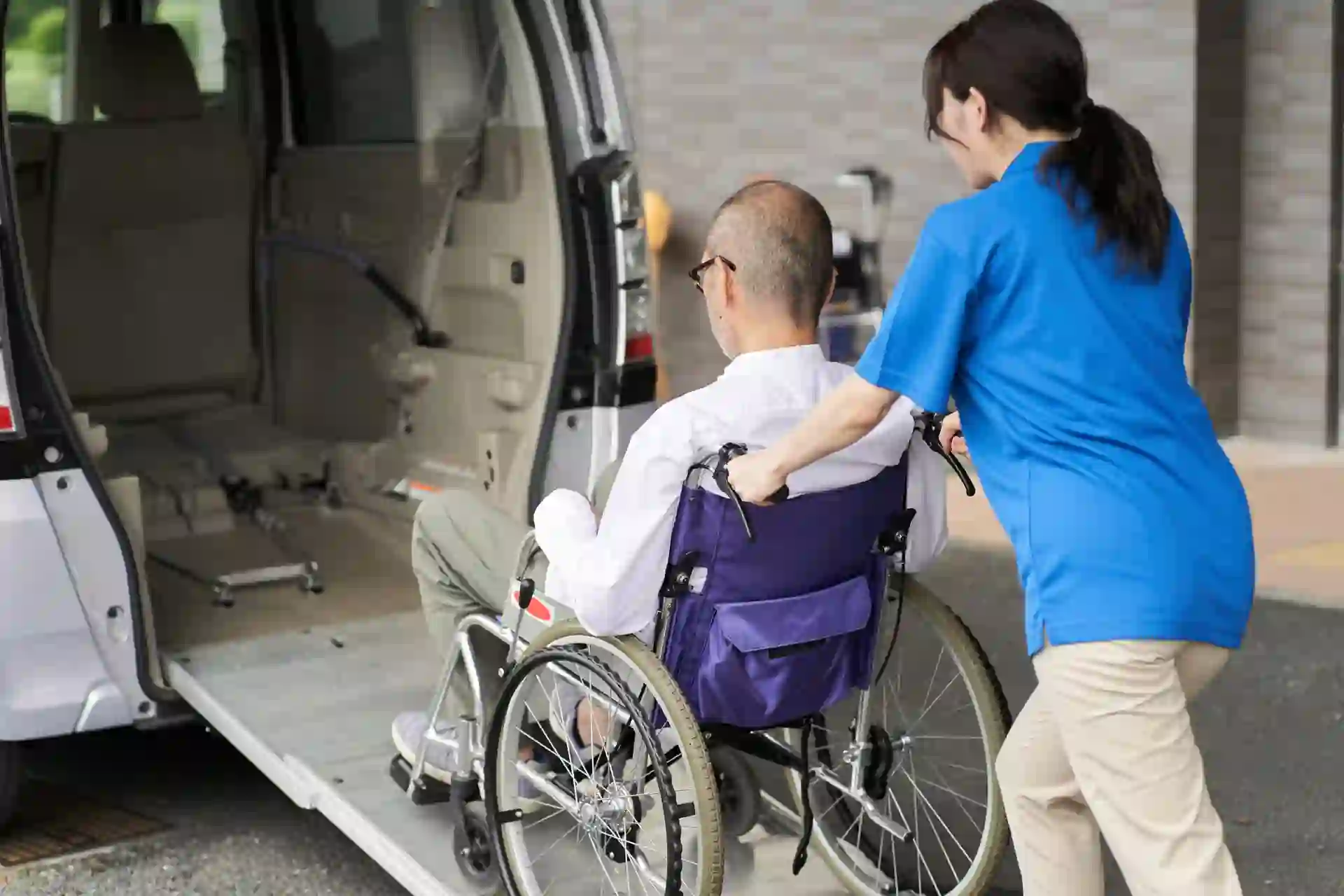
Have you ever wondered how elderly people who are too frail to ambulate for long distances or who must remain in wheelchairs are able to get around? It is through the wonder of wheelchair transportation—accessible vans that feature ramps, lifts, and securement straps—and, of course, anticipation as you make a reservation and learn that the entire design and layout of the vehicle allows for ample space to accommodate the wheelchair, along with a weight capacity to support it. But not all accessible vans are designated for medical use, and each family needs to inform the transport service provider of any additional health-related needs their loved ones have.
- Professional Medical Transportation
Ever wondered what it takes to safely carry an elderly person who’s simply in need of a little extra assistance to travel? Professional medical transport is the answer! For these situations, it’s the specialized service that covers you in long-distance travel by providing you with one of their trained, professionally equipped vehicles. Whether it’s to provide you with non-emergency medical transport or to take you to another health care facility via ambulance, professional medical transport is a service that’s here for everyone. But when are you actually in need of an ambulance? Whether or not you’re in need of medical monitoring or care is wholly dependent on the nurse or clinician, while age or walking impairments don’t matter.
- Traveling by Train or Airplane
Is the senior loved one traveling? If the senior loved one is in good health, the train or the airplane might be the best solution. The senior loved one will not have to endure car drives and will quickly cover long distances between nearby cities. Finally, whether the dear one considered it or not, what about their aid going through the safety check, strolling around lengthy distances to get through the terminal, or strolling via the line at boarding? Assistance to the airport or support to the airport and the plane, plus baggage, transfers, and delays. Think about reserving ahead of time within the facility services (wheelchair, oxygen, or pills) and consult with baggage and assistance procedures. The train may be best for mobility. Accessibility can vary, so don’t judge the trip on just the travel time.
Preparing an Elderly Person for a Long Journey
Traveling can be a great event or the beginning of a trip for the aging parent nightmare. So how do you make it the trip that everyone remembers for all the good reasons? Planning, planning, planning. Picture yourself walking into the big, wild, wet world, and you are already tired, and you have lost it a bit: your job is to take care of those fears. Speak slowly so they can hear your excitement about each step you’re taking on your trip: help them get their confidence back and participate in the trip. Do they want to choose the hat or the luggage or the extra shirt or the midnight snack? Bedroom? Want to go then? Preview the weather, roads, access routes, and departure time. Know how to access support upon departure and arrival. And then, add dementia or other cognitive problems, and things get very sticky: carry identification and emergency contacts, know how to supervise and consult.
Managing Comfort and Health During Long-Distance Travel
Older travelers with arthritis, circulation issues, balance issues, and complete exhaustion can find a long drive a real challenge—a mountain to climb. How can we help them up this mountain? Small tweaks in your plan can make it an easily navigable mountain.
Still can’t sit still? Try to find every moment of safety to move when you’re travelling. Sitting in one place is a silent killer and can play into other risk factors and increase your risk for clots. Inquire with your doctor about exercises, compression socks, and other crucial things. While there’s no magic elixir for hydration, there’s a ritual for the limited eater. If you do the ritual and don’t be afraid to ask for help, roll in. Think comfort quilt: food, temperature, sleeping. Take “safe” foods, dress in layers for short-term temperature changes, and omit those that run in the middle of the night or while your family needs extra attention.
Common Challenges When Traveling Long Distances
With Elderly Parents. What’s worse than a long car ride with your parents? Imagine this scenario: a schedule that turns into a maze of transfer points, locked doors, and difficult-to-find bathrooms as mile after mile pass by until you finally get ahold of your old parents’ worn and roughened hands. The toll is brutal; you’ll be drained of every ounce of energy, so why not take a little break instead of trucking it for hours on end? An hour or two of refreshment makes a big trip full of little accomplishments.
The second difficulty that awaits you will be on their way there—making the trip worth it for your parents. How can I know this trip will be okay? Also, stay in contact not only with your loved ones but also with the drivers and travel professionals. Tell them about your loved one’s consciousness, communication abilities, restrictions, etc., so you have the best trip!
How to Choose the Right Transportation Service
It’s not about the cost or the convenience. Maybe it’s about whether or not the agency actually provides the type of care your loved one needs. Can you see how devastated you would be if you picked an agency that you thought would work for you, only to realize they can’t provide the transfers, the wheelchair accessibility, or the help your loved one will need on a long trip?
Consider these three questions:
- Does the agency have trained staff to help with transfers?
- Does the agency provide comfort breaks and door‑to‑door support?
- Can the agency take wheelchairs and other medical equipment?
For complex trips, get the correct level of medical assistance between your healthcare provider and the transportation agency. Are they a normal car driver giving basic nursing care, or are they an emergency-trained medical car driver?
Final Thoughts
Good planning includes having an understanding of what the health needs are, preparing drugs, preparations, and the equipment, and finally knowing the way and where to stop to recover. It also requires that support is available once there. How can we take some of the emotional stresses out of travel? By including the individual in the planning and giving reassurance.
Castle Pines Home Care offers help for seniors, whether it is related to issues of daily living or where to go for help. With planning and forethought and a little extra help, older adults can go forth and be comfortable, safe, and in good hands.
FAQs
Should all wheelchair-using seniors use medical transportation?
It is not guaranteed. Not all wheelchairs are considered necessary medical transportation. The senior with a modified wheelchair-accessible vehicle who is healthy enough to take themselves around in it doesn’t need medical transport.
When should families avoid moving an elder?
What if the senior gets sick while traveling? While it’s best not to put travel plans on hold, there are exceptions: If the older adult was recently ill, showing signs of post-illness instability, or presenting a new problem that needs prompt care, it’s best to have a doctor’s instruction before considering travel. But not if symptoms include chest pain or cyanosis.