It’s a frustrating place to be, staring at a wall of workout gear and wondering which equipment won’t injure your knees or your parent’s back. Maybe you’re a carer attempting to keep an ageing loved one active and safe from falls. Or maybe you have tight joints yourself and wish to move more without paying the price later. Either way, that uncertainty is genuine, and picking the wrong equipment wastes money, or worse, causes an injury.
Best Workout Equipment for Seniors The quick answer is workout equipment designed for low impact, stable support and easy controls. Recumbent cycles, resistance bands, seated ellipticals and stability balls are at the top of the list. This article will walk you through what to look for, the best low-impact machines to buy, chair alternatives for limited mobility, and estimated pricing ranges for each, so you can make the best choice for your fitness goals. Ultimately, you will be able to identify the equipment that best suits your needs, rather than simply choosing the one with the most impressive marketing.
What to Look For in Exercise Equipment for Seniors
What should you look for in senior exercise gear? Look for equipment that offers low-impact movement, strong stability features, clear user controls, and joint-friendly resistance. Prioritize items with padded seating, non-slip handles, and easy step-through designs to prevent falls and ensure comfortable, safe daily workouts at home.
Starting a home fitness routine requires a focus on safety first. The wrong machine can cause joint strain or increase fall risks.
Focus on these essential features before buying any home fitness gear:
-
Low-Impact Design: Choose machines that protect knees, hips, and lower back joints from harsh force.
-
High Stability and Weight Capacity: Look for wide bases, heavy-duty frames, and non-slip rubber floor pads.
-
Easy Step-Through Access: Avoid machines requiring high step-overs that trip up unsteady legs.
-
Clear, Simple Consoles: Opt for high-contrast screens with large buttons that are easy to read and push.
-
Adjustable Resistance: Ensure tension changes smoothly without sudden jerks that pull delicate muscles.
Seated and Chair-Based Equipment for Seniors

Not every senior can stand for extended periods. Chair-based fitness tools are a genuine solution, not a compromise.
A seated leg raises machine or leg lift chair attachment builds lower-body strength without requiring balance. This directly supports fall prevention and daily mobility.
Resistance bands with handles are another excellent seated option. They’re lightweight, inexpensive, and can train the upper body, core, and legs from a chair. Most physical therapists recommend them as a starting point for seniors with mobility limitations.
Seated pedal exercisers round out this category. They’re discreet, quiet, and can even be used while watching television. For many families seeking exercise equipment for elderly at home on a tight budget, these are a top pick.
Benefits of Exercise for Older Adults
Regular movement can support more than physical fitness. It can help an older adult remain capable of handling everyday tasks such as standing from a chair, walking around the home, carrying groceries, and climbing stairs.
The National Institute on Aging notes that physical activity can support physical function, independence, sleep, mood, heart health, and management of several chronic health risks. Strength training can also help maintain muscle strength and make daily activities easier.
Here are some practical benefits:
Better muscle strength
Resistance bands and light weights can challenge the muscles without requiring heavy gym equipment. Stronger legs and hips can make everyday movements easier.
Improved balance
Balance exercises can help older adults work on stability. A sturdy chair or countertop can provide support during certain movements.
Greater mobility
Gentle strength, stretching, and aerobic activity can help maintain the movement needed for daily activities.
Better cardiovascular fitness
Walking, pedal exercisers, stationary bikes, and similar equipment can provide aerobic activity at an appropriate pace.
Support for independence
Exercise doesn’t guarantee independence, but maintaining strength and physical function can support everyday activities and independent living.
Different Types of Exercise Equipment
Not every senior needs the same setup. Equipment for older adults generally falls into four categories, and a well-rounded routine touches all four over the course of a week.
Cardio equipment keeps the heart and lungs working without straining the joints.
- Recumbent exercise bikes, which support the back and lower body
- Seated ellipticals, for a fuller-body motion while staying seated
- Pedal exercisers, small enough to use from a couch or armchair
- Treadmills with handrails, for those with steady balance
Strength equipment builds the muscle that protects joints and prevents falls.
- Resistance bands, light and gentle on the joints
- Adjustable dumbbells, starting as light as one or two pounds
- Wall-mounted pulley systems, good for shoulder mobility
- Ankle weights, for targeted leg strengthening
Balance equipment trains the small stabilizer muscles that keep a person upright.
- Balance pads or foam mats
- Sturdy grab bars or balance rails
- Wobble boards, used only with supervision
Flexibility equipment keeps joints and muscles from stiffening up.
- Stretching straps
- Yoga blocks for seated or supported stretches
- Foam rollers, used gently and never on bare bone or joints
A routine that mixes even one item from each category covers far more ground than a single expensive machine ever could. Rotating through them also keeps sessions interesting, which matters more than most people admit. A person is far more likely to stick with movement they don’t find boring.
Choosing Equipment Based on a Health Condition
The right equipment for an older adult with a health condition depends on the condition, symptoms, mobility, medications, fitness level, and exercise restrictions. A doctor or physical therapist can help determine which movements are appropriate, especially after surgery, injury, or a major change in health.
Arthritis
People with arthritis may prefer gentle, controlled movements rather than equipment that places heavy stress on painful joints.
A light resistance band, pedal exerciser, or recumbent bike may be worth considering when cleared for exercise. Comfort should guide the choice.
Limited mobility
Someone who spends much of the day sitting may benefit from seated exercises. A pedal exerciser and light resistance bands can provide options without requiring prolonged standing.
The equipment should never force a movement that causes pain or loss of control.
Balance problems
Balance concerns require extra care. A treadmill, step machine, or unstable exercise surface may not be appropriate without professional guidance.
The NIA recommends having a sturdy chair, wall, or another reliable support nearby during certain balance exercises. It also advises older adults to seek guidance when they’re unsure about a movement.
Seated and Chair-Based Equipment for Seniors
Chair-based equipment matters most for anyone recovering from surgery, managing severe arthritis, or dealing with limited standing tolerance. A pedal exerciser, sometimes called a mini exercise bike, sits on the floor or a table and lets someone pedal with their legs or arms while seated in a regular chair.
Seated resistance band routines work the arms, shoulders, and upper back without any standing at all. A resistance band anchored to a door handle, paired with a sturdy chair, covers a full upper body routine in about fifteen minutes.
Top 6 Low-Impact Exercise Machines for Seniors

Here are six solid options that consistently earn high marks for safety, usability, and effectiveness.
1. Recumbent Exercise Bikes
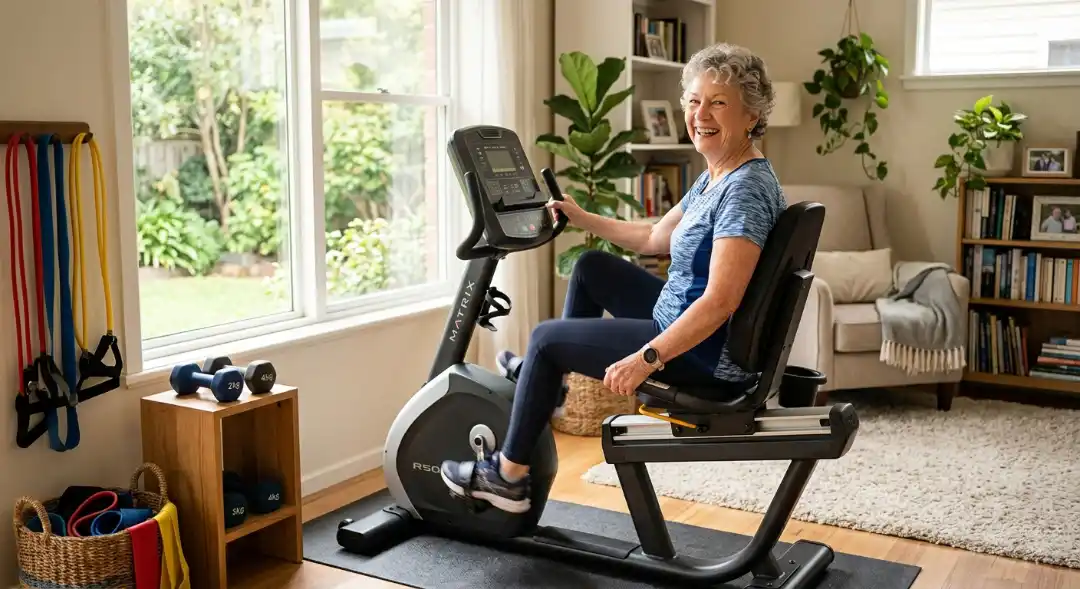
Recumbent cycles feature a bucket seat that lets you sit back while pedaling. This position supports your lower back and removes pressure from your hips. It is often considered the best exercise machine for elderly individuals who suffer from chronic back pain. Look for a model with a step-through frame so you do not have to lift your leg high to get on the seat.
2. Elliptical Cross Trainers
Ellipticals offer a smooth, gliding motion that mimics walking without the hard impact. Your feet never leave the pedals, which shields your ankles and knees from shocks. The long handlebars let you work your arms and legs at the same time. This dual action provides an excellent full-body workout that builds coordination.
3. Compact Walking Treadmills
A treadmill provides a flat, predictable surface for indoor walking when the weather outside is bad. For older adults, a senior-friendly treadmill must have long side handrails for balance. It should also feature a safety clip that stops the belt instantly if you lag behind. Look for decks with thick shock absorbers built under the walking belt.
4. Indoor Rowing Machines
Rowing units provide a fantastic seated workout that targets your back, legs, and core all at once. Because you are sitting down, your joints do not bear your body weight. You can easily adjust the resistance by pulling harder or changing a dial. This makes it highly customizable for older fitness enthusiasts who want to improve mobility.
5. Seated Steppers
Seated steppers combine the benefits of a recumbent bike with the motion of a stair climber. You sit safely in a chair and push pedals forward in a smooth, linear line. This movement path is highly gentle on arthritic knees. It is a wonderful option for adults who struggle with standard bicycle motions.
6. Fluid Cycle Trainers
These small devices rest on the floor in front of your favorite chair. You simply place your feet on the pedals and spin while reading or watching television. They take up very little space and are highly affordable. They work beautifully for boosting lower-body circulation and loosening tight morning joints.
Best Strength Training Equipment for Seniors
Strength doesn’t require heavy weights. Resistance bands are the most practical starting point because they’re cheap, lightweight, and adjustable simply by changing the band’s tension level or grip position.
Wrist and ankle weights, usually one to three pounds, add resistance to everyday movements like leg lifts or arm raises without needing to grip anything heavy. This helps a lot for people with arthritis or a weaker grip.
Light dumbbells, in the two to five pound range, cover basic upper body work like bicep curls and shoulder raises. A seated pull-down machine is a step up for anyone wanting to build back and shoulder strength, since the seated position removes the balance risk that free-standing cable machines carry.
Building strength safely also means starting with fewer reps at lower resistance and adding more only once the movement feels controlled. A physical therapist or trainer with experience in senior fitness can check form during the first few sessions, which cuts the risk of strain injuries considerably.
Our Favorite Exercise Equipment for Seniors
| Equipment | Best For | Typical Price Range |
|---|---|---|
| Recumbent bike | Cardio with back support | $250 to $800 |
| Elliptical machine | Low-impact full body cardio | $300 to $1,300 |
| Pedal exerciser | Seated, low-mobility use | $25 to $60 |
| Resistance bands | Strength and rehab work | $15 to $30 |
| Stability ball | Balance and core work | $15 to $35 |
| Wrist or ankle weights | Light strength training | $15 to $80 |
If you’re only buying one item, a set of resistance bands and a stability ball together cover strength, balance, and flexibility for less than fifty dollars. For a bigger investment, a recumbent bike gives the most rounded cardio benefit with the least strain on the body.
Before buying anything at a higher price point, ask about a return window or in-store trial. Sitting on a recumbent bike or stepping onto an elliptical for a few minutes at the store tells you far more about comfort and fit than any product description ever will.
Exercise Assistance Services in Denver
If you or a loved one needs support staying active at home, professional help makes a real difference. At Castle Pines Home Care, we offer personalized home care services in Denver that include exercise assistance for seniors. Our trained caregivers help older adults follow safe, consistent routines tailored to their mobility level and health goals. Whether it’s daily walks, guided chair exercises, or light stretching, we make sure seniors stay active and confident at home. Learn more about our Exercise Assistance Services in Denver and how we support aging in place with dignity.
Frequently Asked Questions
What is the safest exercise equipment for seniors with joint problems?
The safest options for seniors with joint problems are recumbent bikes, pedal exercisers, and resistance bands. These tools provide low-impact exercise equipment for seniors that strengthens muscles without stressing the knees, hips, or spine. They’re widely recommended by physical therapists for arthritis and post-surgery recovery.
What is the best exercise equipment for seniors over 70?
The best exercise equipment for seniors over 70 includes recumbent bikes, resistance bands, and balance boards. These options support cardiovascular health, muscle strength, and fall prevention. They’re designed for ease of use and can all be used safely as workout equipment for seniors at home.
How often should seniors exercise?
The CDC recommends at least 150 minutes of moderate activity per week for older adults. That breaks down to about 30 minutes, five days a week. Starting with 10-minute sessions and building up is perfectly fine.
Is strength training safe for seniors?
Yes. With proper guidance and appropriate resistance levels, strength training is safe and highly beneficial for older adults. It improves muscle strength, bone density, and daily function. Start with light resistance and focus on controlled movement.
Can seniors exercise if they have limited mobility?
Absolutely. Seated and chair-based equipment makes it possible for almost anyone to stay active. Pedal exercisers, resistance bands, and seated leg raises work well for individuals with limited standing ability or balance concerns.