If you’re caring for a parent, a spouse, or yourself at home, you’ve probably wiped down a thermometer or a glucose monitor with an alcohol pad and wondered if it’s really doing anything. It’s a fair question. Medical equipment touches skin, blood, and bodily fluids, and guessing isn’t good enough when someone’s health is on the line.
Here’s the short answer: heat and alcohol both kill germs by breaking down the proteins and outer layers that keep bacteria and viruses alive, and that’s the core reason why heat and alcohol are used to disinfect medical equipment in homes, clinics, and hospitals alike. In this guide, we’ll walk through how each method works, when to reach for one over the other, and what neither one can do on its own, so you can care for your equipment and your loved one with confidence.
Why Is Heat Used in Disinfecting Medical Equipment?
Heat is used because sufficient thermal exposure can destroy microorganisms on compatible medical equipment, and validated steam processes can achieve sterilization. Moist heat is particularly effective because steam transfers heat efficiently to surfaces and can destroy vegetative bacteria, viruses, fungi, and bacterial spores under appropriate sterilization conditions.
Heat has been used for medical equipment for a simple reason: microorganisms generally cannot withstand enough thermal exposure. But temperature alone isn’t the whole story. The result also depends on exposure time, moisture, pressure, the number and type of microorganisms present, and whether the heat reaches every required surface.
Steam sterilization is one of the main examples. In an autoclave, saturated steam contacts the equipment under controlled temperature and pressure for a specified time. This process is widely used for heat-stable surgical instruments because it can provide rapid microbial destruction, including destruction of bacterial spores when the validated cycle is achieved.
Why Is Alcohol Used in Disinfecting Medical Equipment?
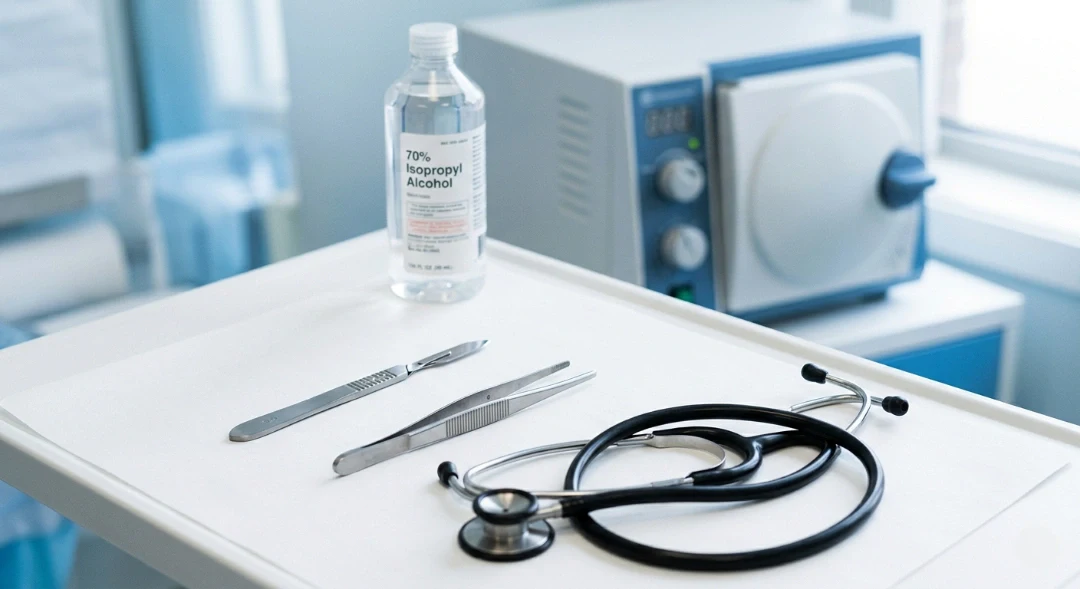
Alcohol disinfects medical equipment by dissolving the lipid envelope that surrounds certain viruses and by denaturing proteins inside bacteria and enveloped viruses. Isopropyl or ethyl alcohol at 60 to 70 percent concentration works best, because the water content slows evaporation just enough to give the alcohol time to penetrate and destroy the microbe.
Here’s the part most people get backward. Stronger isn’t always better. Pure alcohol evaporates too fast to do its job properly and can actually seal the outer layer of some bacteria instead of breaking it down. A little water in the mix keeps the alcohol on the surface long enough to finish the process.
Alcohol works especially well against enveloped viruses, the ones surrounded by a fatty lipid layer, because alcohol dissolves fat. Strip away that layer and the virus falls apart. This is one reason alcohol wipes are a staple for quick, low-level disinfection between uses on items like stethoscopes, blood pressure cuffs, and pulse oximeters.
How to Use Heat and Alcohol to Disinfect Medical Equipment
Medical equipment should be reprocessed according to its manufacturer instructions, intended use, material, and required level of microbial control. Clean the equipment first, then use an approved heat or alcohol method at the specified conditions rather than choosing a method based on convenience alone.
There isn’t one universal procedure for every medical device. A stainless-steel surgical instrument and an electronic home monitoring device don’t have the same cleaning requirements.
A safe approach starts with five questions:
- Is the equipment reusable?
- What does the manufacturer say about cleaning?
- Does the equipment tolerate heat, moisture, or alcohol?
- What part of the body does it contact?
- Does it require cleaning, disinfection, or sterilization?
The manufacturer instructions matter because equipment can contain hinges, narrow channels, plastics, lenses, electronics, adhesives, or other materials that react differently to heat and chemicals. FDA guidance notes that device design and the quality of reprocessing instructions can affect the safety of cleaning and disinfection.
7 Different Ways to Use Heat and Alcohol When Disinfecting
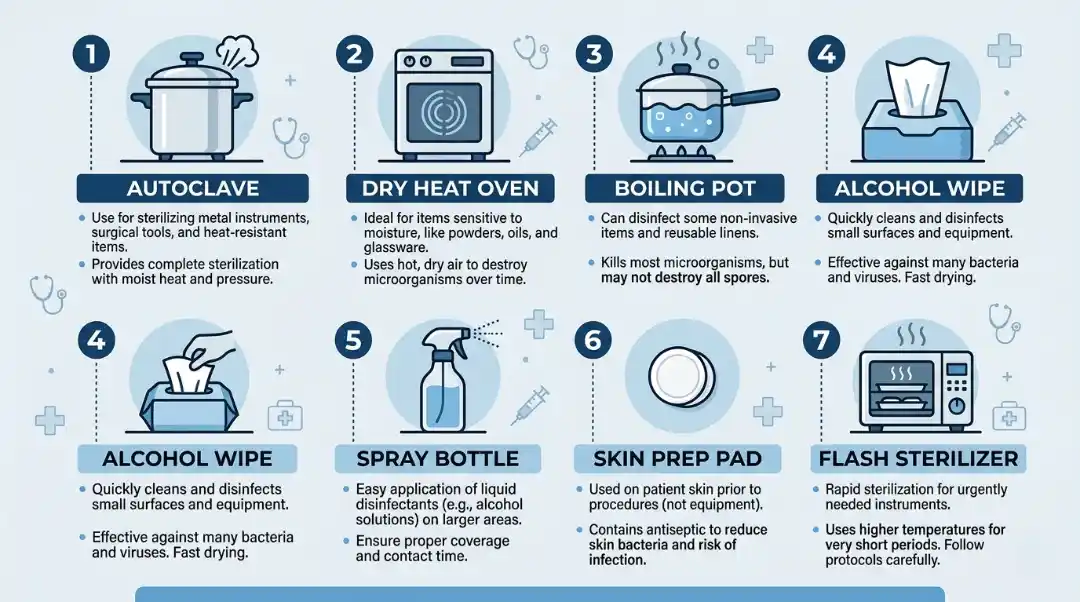
Not every disinfection job looks the same, and the method should match the equipment and the setting.
1. Alcohol wipes for quick surface disinfection.
These pre-moistened wipes are the fastest option for items like glucose meters, thermometers, and medical alert buttons between uses.
2. Alcohol soaks for small tools.
Submerging items like tweezers or nail clippers in a container of isopropyl alcohol for several minutes handles small non-electronic tools.
3. Boiling water for submersible items.
A rolling boil for at least five to ten minutes disinfects items like certain baby bottle parts, silicone feeding supplies, or reusable straws.
4. Dishwasher heat cycles for compatible items.
The high-heat sanitize setting on a standard dishwasher works for dishwasher-safe medical supplies, as long as the manufacturer confirms it’s safe.
5. Dry heat for moisture-sensitive items.
Some equipment that can’t tolerate steam, like certain electronic housings, can be disinfected using controlled dry heat, though this is more common in clinical settings than at home.
6. Steam sterilization (autoclaving) for critical clinical tools.
Hospitals and clinics rely on autoclaves, which use pressurized steam under heat, to sterilize surgical instruments that touch the bloodstream or sterile tissue.
7. Combining both, cleaning with alcohol first, then heat for reusable items.
Some reusable equipment benefits from an alcohol wipe to remove residue, followed by a heat-based method for a deeper level of disinfection.
How Heat and Alcohol Fight Bacteria and Viruses
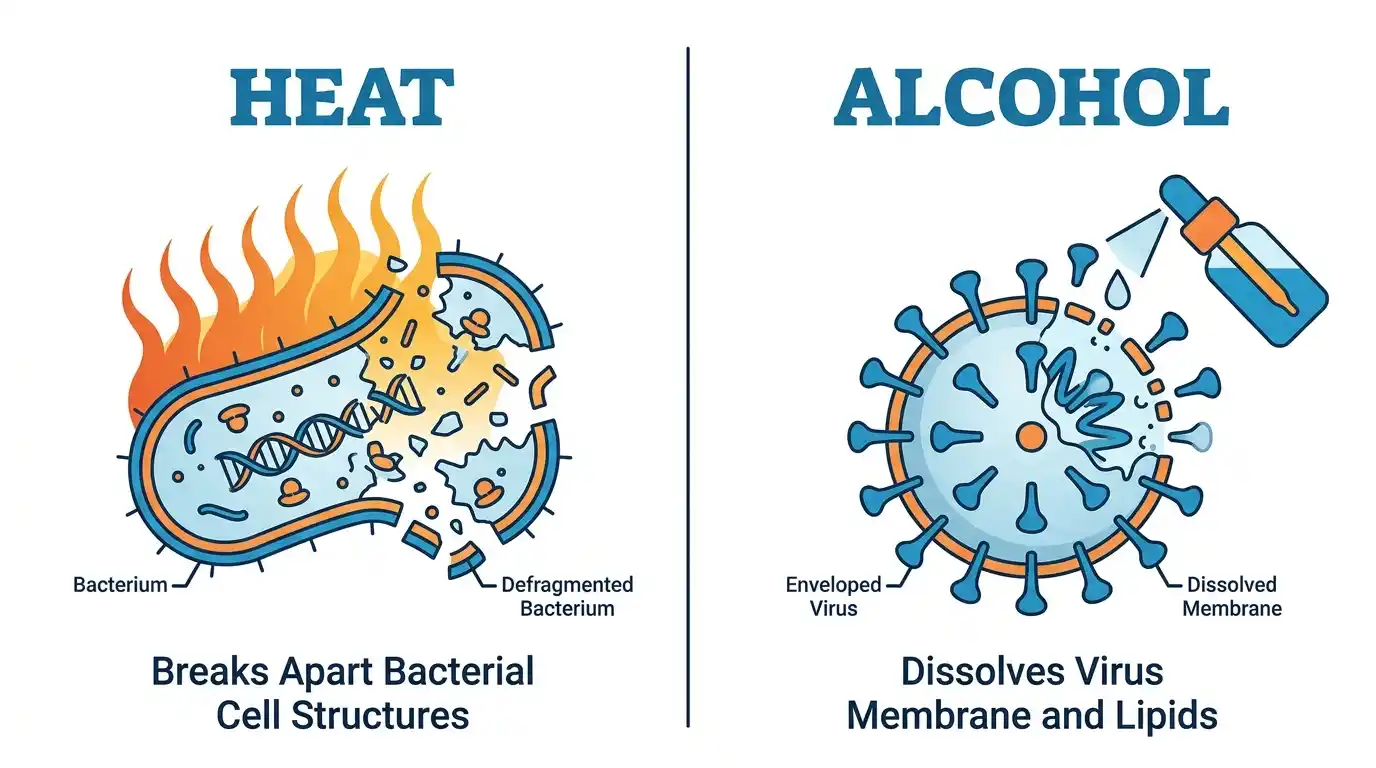
Both methods attack the same basic weak points in microbial life, just from different angles. Heat targets the internal machinery of a cell. Alcohol targets the outer defenses.
Every living microorganism, from vegetative bacteria to fungi, depends on proteins folded into precise shapes to carry out basic functions like feeding and reproducing. Heat scrambles that folding through protein denaturation, and once it’s gone, it doesn’t come back. This is true whether the heat comes from steam, boiling water, or dry air.
Alcohol works differently depending on the target. Against bacteria, it denatures proteins much like heat does. Against enveloped viruses, it dissolves the lipid envelope, the fatty outer coat that protects the virus and helps it attach to cells. Without that coat, the virus can’t infect anything.
What Surfaces Can Heat and Alcohol Not Be Used On?
Heat and alcohol shouldn’t be used on rubber seals, certain plastics, electronic components, or items held together with adhesive or glue. Heat can warp or melt these materials outright, while alcohol dries out rubber, clouds sensitive plastics, or breaks down adhesive bonds with repeated exposure.
Rubber tubing on oxygen equipment, for instance, can split and lose its seal after months of alcohol wiping, even though any single wipe looks harmless on its own. Some plastic housings on digital thermometers or glucose monitors are alcohol-sensitive too, meaning the display can fog or discolor over time.
Foam padding, memory foam cushions, and upholstered wheelchair seating are also poor fits for either method. Heat flattens foam permanently, and alcohol breaks down its internal structure even when the surface still looks fine at first glance.
When you’re unsure, check the manufacturer’s care instructions before applying heat or alcohol to anything involving electronics, batteries, or adhesive components.
Heat vs. Alcohol: Which One Should You Reach For?
Choose heat when the equipment is heat-stable and the manufacturer’s validated process calls for thermal disinfection or sterilization. Choose alcohol for compatible surfaces where an alcohol-based disinfectant is appropriate. For critical devices, don’t substitute alcohol for a required sterilization process.
| Factor | Heat | Alcohol |
|---|---|---|
| Main action | Thermal damage | Protein denaturation and membrane effects |
| Common healthcare use | Thermal disinfection or sterilization | Surface disinfection |
| Bacterial spores | Can destroy them under validated sterilization conditions | Not reliably destroyed |
| Speed | Depends on the validated cycle | Often rapid |
| Heat-sensitive equipment | Usually unsuitable | May be suitable if manufacturer-approved |
| Large surfaces | Depends on equipment | Evaporation can limit practical use |
| Common example | Steam autoclave | Alcohol-based wipe |
| Main concern | Heat or moisture damage | Material damage and flammability |
The Spaulding classification also helps explain why the choice matters. Critical devices contact sterile tissue or the bloodstream and generally require sterilization. Semi-critical devices contact mucous membranes or non-intact skin and generally require at least high-level disinfection. Non-critical items contact intact skin and usually need lower-level disinfection.
Common Hospital Equipment That Uses Heat and Alcohol
Here’s a quick breakdown of what gets treated with each method:
Heat Sterilization:
- Surgical scissors and scalpels
- Forceps and clamps
- Reusable syringes and needles (where applicable)
- Surgical drapes (some types)
- Metal dental tools
Alcohol Disinfection:
- Stethoscopes
- Blood pressure cuffs
- Thermometers
- Bedside tables and bed rails
- IV prep sites on patient skin
- Glucometers and monitoring devices
Some equipment gets both. A surgical tool might be autoclaved after use, then wiped with alcohol at the point of care between patients in an emergency.
Why This Matters in Home Care Settings
This isn’t just a hospital conversation. Anyone managing medical equipment at home whether caring for an elderly parent or recovering from surgery needs to understand basic disinfection principles too.
At Castle Pines Home Care, proper hygiene around medical equipment is part of every care plan. Whether it’s maintaining clean respiratory equipment or handling wound care tools safely, the same principles apply. If you’re looking for Home Care in Denver or need Medical Equipment Support Services in Denver, understanding why heat and alcohol are used to disinfect medical equipment helps you ask the right questions and make smarter choices for the people in your care.
Final Thoughts
The question of why heat and alcohol are used to disinfect medical equipment boils down to a balance of power and practicality. Heat provides the deep, total kill needed for invasive surgery, while alcohol provides the quick, everyday protection needed for surfaces and skin. By knowing when to use which, you’re protecting yourself and your loved ones from the invisible threats of the microbial world. If you have more questions about maintaining a safe environment or need professional assistance with your care needs, please feel free to contact us today to speak with one of our specialists. Stay safe, stay clean, and always double-check those equipment labels.
Frequently Asked Questions
Why do people use alcohol to clean instead of only water?
Water by itself doesn’t destroy germs; it just transports them around. Water can’t break down microbial cell membranes like alcohol does. That’s why alcohol is commonly used in medicine to clean surfaces.
What is the best concentration of alcohol for disinfecting medical equipment?
70% isopropyl alcohol is the most effective. Concentrations above 90% evaporate too quickly to work properly, while those below 60% may not kill enough pathogens reliably.
Does alcohol kill fungus on medical equipment?
Yes. Alcohol is effective against many fungal organisms, including Candida species. However, for heavy fungal contamination or spore-forming organisms, stronger disinfectants or heat sterilization may be needed.
Can you use rubbing alcohol on all medical equipment?
No. Alcohol can damage rubber, certain plastics, and acrylic surfaces with repeated use. Always check the manufacturer’s guidelines before applying alcohol to any piece of equipment.
What’s the difference between disinfection and sterilization?
Disinfection reduces pathogens to a safe level but may not eliminate all spores. Sterilization (typically via heat) destroys all microbial life, including spores. The method chosen depends on the risk level of the equipment’s use.
Is heat sanitizing better than alcohol?
It depends on the situation. Heat sanitizing is more thorough and handles a wider range of pathogens including spores. Alcohol is faster and more practical for surfaces that can’t be autoclaved. Most healthcare settings use both, depending on the equipment type.