
You’re probably here because a doctor mentioned “watch your sodium” at the last check-up, or because Mom’s been skipping meals and you’re not sure why. Either way, you want a straight answer, not a lecture.
Here’s the quick version: the best diet plan for seniors is one built around whole foods, higher protein, and fewer processed extras, adjusted for the specific health issues a person already has. There’s no single plan that fits everyone, but there is a clear pattern that works for most older adults, and we’re going to walk through it piece by piece, including what to eat, what to skip, named diet plans worth trying, and a full week of sample meals.
Why Nutrition Changes After 60
Nutritional needs change after 60 because your resting metabolic rate slows down while your body’s demand for specific vitamins and minerals actually increases. This means you require fewer overall calories each day, but every meal must carry higher nutritional density to maintain energy levels and prevent chronic disease.
As we age, natural physical shifts transform how our bodies process food:
-
Sarcopenia (Age-Related Muscle Loss): Starting around age 50, adults can lose 3% to 8% of their muscle mass per decade. To protect lean muscle, older adults need higher quality protein intake than younger individuals.
-
Decreased Stomach Acid (Achlorhydria): Lower levels of gastric acid make it harder for your digestive system to extract essential micronutrients like Vitamin B12 and iron from food.
-
Reduced Thirst Perception: The brain’s thirst signals dim over time. Many seniors experience mild dehydration without ever feeling thirsty, leading to fatigue, joint stiffness, and confusion.
Data suggests that calorie needs generally drop by about 100 to 200 calories per decade due to reduced physical activity and muscle loss, making nutrient density the top priority for aging bodies.
The Best Foods for Seniors to Eat
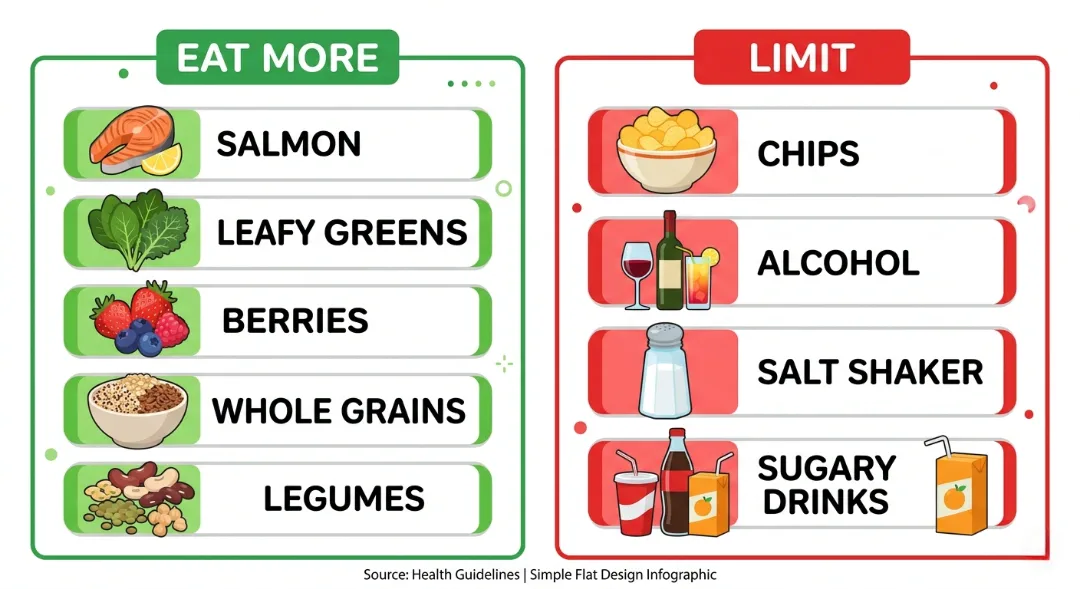
The best foods for seniors focus on high-quality protein, fiber-rich vegetables, and healthy fats to support heart and brain health. These include salmon for omega-3s, leafy greens for vitamin K, and berries for antioxidants. Incorporating these items helps prevent muscle loss and keeps the digestive system running smoothly.
Lean Proteins for Muscle Mass Preservation
Sarcopenia, or the natural loss of muscle mass, is a major concern. To fight this, we need to eat enough protein. Think of wild-caught salmon, eggs, and beans. These provide the building blocks your body needs to stay mobile and prevent falls.
Fiber for Digestive Health
Digestion often slows down as we age. Leafy greens, lentils, and whole grains are essential here. They provide the fiber needed to prevent constipation and help manage blood sugar levels.
Healthy Fats and Bone Density
Don’t fear fats just choose the right ones. Avocados, walnuts, and olive oil support brain health and keep your skin healthy. Pair these with calcium-rich dairy or fortified soy to keep your bone density high and avoid fractures.
Dairy or Fortified Alternatives
Milk, plain yogurt, and low-fat cheese support bone density. If dairy is an issue, look for fortified soy milk or almond milk with added calcium and vitamin D.
Dark Berries
Blueberries, raspberries, and dark cherries are rich in antioxidants. Studies from Harvard suggest regular berry consumption is linked to slower cognitive decline in older adults.
What Foods Should Seniors Avoid?
ertain packaged and processed items accelerate inflammation and worsen chronic health issues:
-
Ultra-Processed & Fast Foods: Packed with hidden trans fats, heavy sodium, and artificial additives that strain the heart and elevate blood sugar.
-
High-Sodium Canned & Frozen Goods: Standard canned soups and deli meats often exceed half your daily salt intake in a single serving.
-
Excess Added Sugars: Sweetened drinks, baked snacks, and flavored yogurt drive up internal inflammation and cause rapid energy crashes.
-
Alcohol: As metabolism slows, alcohol tolerance drops significantly. It can interfere with common prescription medications, disrupt deep sleep, and increase the risk of accidental slips or falls.
Best Named Diet Plans for Seniors
If you’ve searched for a nutrition plan for seniors, you’ve probably run into named diets like Mediterranean or DASH. Here’s how the main ones stack up.
Mediterranean diet. Built around vegetables, olive oil, fish, and whole grains, with red meat kept as an occasional food rather than a daily one. It’s associated with better heart health and is one of the easiest plans to sustain long term because it doesn’t ban entire food groups.
DASH diet. Short for Dietary Approaches to Stop Hypertension, this plan was designed specifically to lower blood pressure. It leans on fruits, vegetables, low-fat dairy, and reduced sodium, making it a solid fit for anyone managing hypertension.
MIND diet. A hybrid of Mediterranean and DASH, built with brain health in mind. It emphasizes berries, leafy greens, and nuts while limiting butter, cheese, and fried food.
How Many Calories Do Seniors Need Per Day?
Calorie needs vary by sex, age, and activity level. Here’s a general guide based on USDA data:
| Group | Sedentary | Moderately Active | Active |
| Women 60+ | ~1,600 cal | ~1,800 cal | ~2,000 cal |
| Men 60+ | ~2,000 cal | ~2,200 cal | ~2,400 cal |
These are starting points, not rules. Always talk with your doctor before making major changes, especially if you’re managing a chronic condition.
7-Day Sample Meal Plan for Seniors
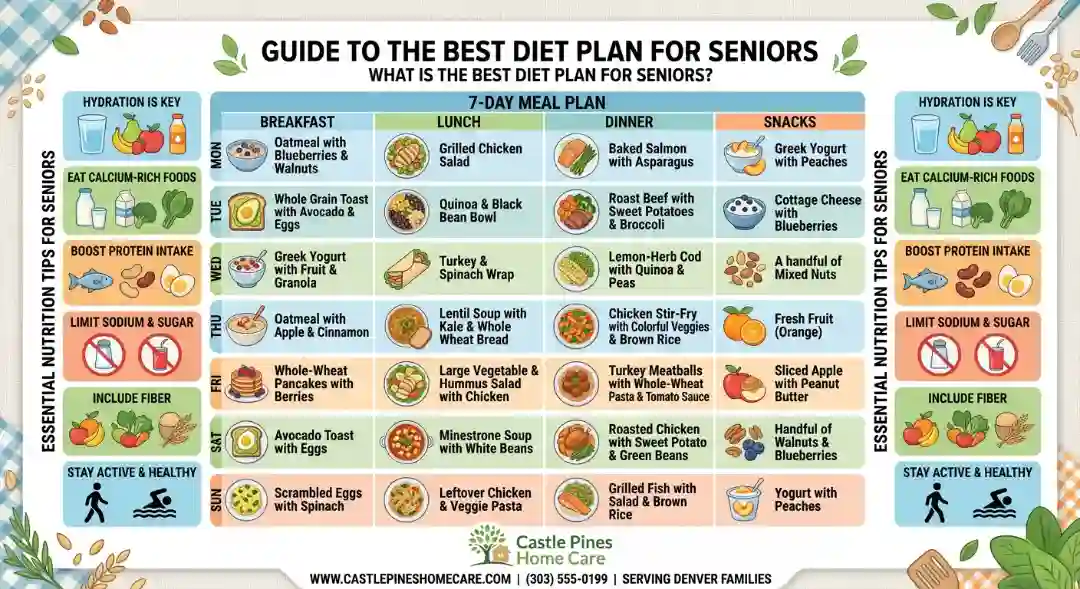
This is a starting pattern that covers protein, fiber, and calcium across the week without repeating the same three meals on a loop.
| Day | Breakfast | Lunch | Dinner |
|---|---|---|---|
| Monday | Oatmeal with berries and walnuts | Grilled chicken salad with olive oil dressing | Baked salmon, brown rice, steamed broccoli |
| Tuesday | Greek yogurt with sliced banana | Lentil soup with whole grain bread | Turkey chili with black beans |
| Wednesday | Scrambled eggs with spinach | Tuna salad on whole wheat toast | Grilled chicken, quinoa, roasted carrots |
| Thursday | Whole grain toast with almond butter | Vegetable and bean soup | Baked cod, sweet potato, green beans |
| Friday | Smoothie with spinach, berries, and milk | Chickpea salad with cucumber and feta | Lean beef stir-fry with mixed vegetables |
| Saturday | Cottage cheese with peaches | Turkey and avocado wrap | Grilled shrimp, brown rice, asparagus |
| Sunday | Oatmeal with cinnamon and flaxseed | Leftover stir-fry or soup | Roast chicken, roasted vegetables, salad |
Swap any meal for a similar option if it doesn’t match personal taste or a medical restriction. The pattern matters more than the exact dish: protein at every meal, produce on most plates, and whole grains instead of refined ones.
Healthy Eating Tips for Seniors Living Alone
Seniors living alone can eat well by keeping simple foods available, planning a few meals ahead, choosing easy-to-prepare ingredients, and making meals enjoyable rather than treating food as a chore. Social meals can also help when loneliness or low appetite affects eating habits.
Try these practical steps:
- Keep frozen vegetables and fruits available.
- Cook extra portions and refrigerate or freeze them.
- Keep easy protein foods ready.
- Make a grocery list before shopping.
- Choose lower-sodium canned foods when fresh options aren’t practical.
- Keep water nearby throughout the day.
- Eat with family or friends when possible.
- Ask for help with shopping or meal preparation when needed.
Difficulty chewing, swallowing, cooking, shopping, or maintaining an appetite can all make healthy eating harder. These barriers deserve attention instead of simply telling someone to “eat better.”
Essential Vitamins and Supplements for Seniors
While whole foods should always come first, specific micronutrients often require targeted supplementation as aging changes absorption efficiency:
-
Vitamin B12: Essential for nerve health and red blood cell production. Because reduced stomach acid hampers B12 extraction from meats, doctors frequently recommend crystalline B12 supplements.
-
Calcium and Vitamin D3: Critical for maintaining bone density and preventing osteoporosis. Vitamin D3 also supports muscle function and immune health.
-
Potassium & Magnesium: Vital for maintaining healthy cardiac rhythms, managing muscle cramps, and regulating blood pressure.
-
Omega-3 Fatty Acids: Reduces joint stiffness and protects long-term cognitive health.
Always consult your doctor or registered dietitian before starting new dietary supplements, as high doses can interact with prescription medications.
Using Your Medicare Annual Wellness Visit
If you’re on Medicare, your annual wellness visit is a free, underused resource. Bring your questions about nutrition, portion sizes, and any recent weight changes.
For those with type 2 diabetes or chronic kidney disease, Medicare Part B may cover medical nutrition therapy with a registered dietitian. That’s professional, personalized diet guidance at no extra cost.
If you’re caring for an aging parent, this visit is also a good time to address questions around how to get seniors to eat well, especially if appetite has declined significantly.
Diet Support for Seniors with Specific Conditions
- Diabetes: Limit refined carbs and added sugars. Focus on fiber-rich foods that stabilize blood sugar.
- High Blood Pressure: Follow a low-sodium diet. The DASH diet is your best tool here.
- Osteoporosis: Prioritize calcium and vitamin D daily.
- Kidney Disease: Limit potassium, phosphorus, and protein as directed by your doctor.
- Chewing Difficulties: Soft, nutrient-dense options like mashed sweet potato, yogurt, scrambled eggs, and blended soups work well.
A Note for Family Caregivers
If you’re managing a parent’s diet from a distance, or helping someone who resists dietary changes, you’re not alone. Caregiver anxiety around nutrition is real and valid. Small wins matter: swapping white bread for whole grain, adding a fruit to breakfast, reducing one salty snack per day.
At Castle Pines Home Care, we understand that nutrition is one of many daily challenges families navigate. Our team supports seniors in the Denver area with practical, compassionate in-home assistance, including meal preparation tailored to specific health needs. If you’re exploring home care services in Denver for a loved one, we’re here to help you figure out the right fit.
Frequently Asked Questions
What is the healthiest diet for a 70-year-old?
The healthiest diet for a 70-year-old focuses on nutrient-dense whole foods: lean proteins, leafy greens, whole grains, and healthy fats. The Mediterranean diet is consistently ranked first by dietitians and researchers for older adults due to its heart, brain, and bone health benefits.
What three foods should seniors avoid?
Seniors should most avoid high-sodium processed foods, sugary beverages, and alcohol. These three are directly linked to high blood pressure, blood sugar instability, increased fall risk, and medication interactions, all of which are more serious concerns after age 60.
How can I get my elderly parents to eat more?
Make meals social when possible, offer familiar and favorite foods in smaller portions, and avoid power struggles. If appetite loss is significant, talk to their doctor, as it can be a sign of medication side effects, depression, or an underlying condition.
Do seniors need protein supplements?
Not always. Most seniors can meet protein needs through food: eggs, fish, dairy, legumes, and chicken. If appetite is very low or muscle loss is significant, a doctor or dietitian may suggest a supplement like a protein shake.
Is the Mediterranean diet good for seniors?
Yes. Research consistently supports the Mediterranean diet for older adults. It reduces risk of heart disease, type 2 diabetes, and cognitive decline, while being flexible enough to adapt to individual tastes and health conditions.