

The best wheelchair depends on the senior’s mobility, strength, body size, home layout, and how often the chair will be used. What Is the Best Wheelchair for Seniors often has no single answer: a manual wheelchair can suit someone with enough upper-body strength or caregiver support, while a power wheelchair may suit someone who cannot self-propel.
Choosing a wheelchair can feel like picking shoes for someone else. A model that feels perfect for one person may be awkward or unsafe for another. This guide covers wheelchair types, fit, safety, Medicare, and buying factors.
What Are the Different Types of Wheelchairs for Seniors?
The best wheelchairs for seniors fall into four main categories: manual wheelchairs for self-propulsion, electric wheelchairs for upper-body weakness, transport chairs for temporary travel, and bariatric models for higher weight capacities. The right choice depends directly on physical strength, daily usage, and living space.
Transport Wheelchairs
Transport chairs are narrow, lightweight, and built with small wheels on all four corners. They fold down compactly, making them perfect for doctor visits, shopping trips, or quick outings. Because they require another person to push them, they work best for seniors who cannot self-propel.
Standard Manual Wheelchairs
Standard manual models feature large rear wheels and durable steel or aluminum frames. They provide excellent stability for daily indoor and outdoor use. They are ideal for individuals who retain sufficient upper-body strength to push themselves around the house.
Lightweight and Ultra-Lightweight Wheelchairs
Built from high-grade aluminum, these chairs reduce propulsion effort significantly. A lightweight manual wheelchair for elderly individuals helps preserve shoulder joints over long-term use while making vehicle loading painless for family members.
Heavy-Duty and Bariatric Wheelchairs
Featuring reinforced steel frames, wider seat widths (22 to 30 inches), and double cross-braces, heavy-duty models accommodate weight capacities from 350 to over 700 pounds. They ensure long-term durability and structural safety for larger users.
Reclining and Tilt-in-Space Wheelchairs
For seniors with severe trunk weakness or high risk of skin breakdown, reclining backrests allow position shifts. Tilt-in-space frames shift the entire seat angle while keeping hips at 90 degrees, relieving sacral pressure and aiding postural support.
Power Wheelchairs
Motorized options use joystick controls, allowing seniors with severe upper-body weakness or limited stamina to travel long distances independently without relying on caregiver muscle.
What Factors Should You Consider When Choosing a Wheelchair for an Elderly Person?
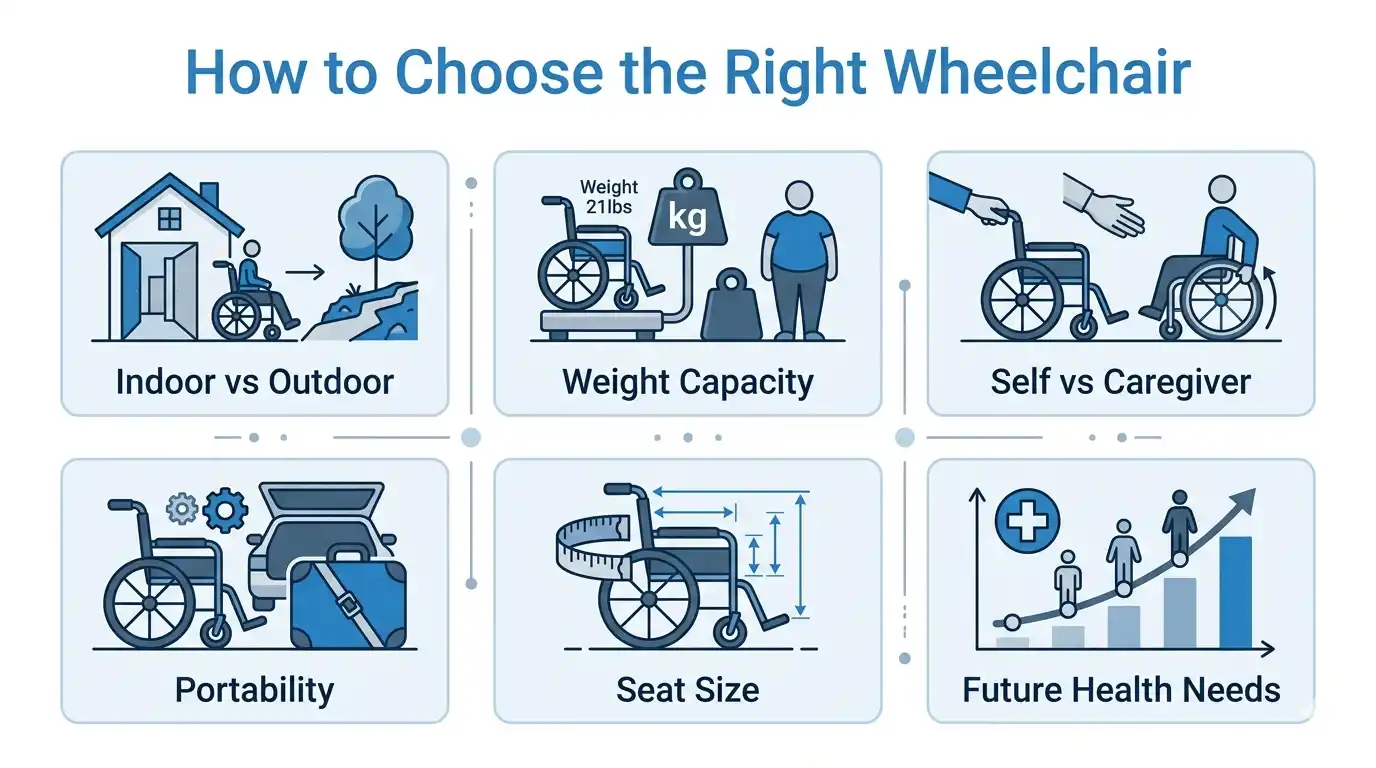
Choosing the right chair requires matching the user’s upper-body strength, daily activity level, living space, and caregiver lifting capabilities to the appropriate frame. You must evaluate key factors including total weight, frame material, seat dimensions, brake systems, and overall transportability to ensure long-term comfort and safe home navigation.
Selecting a mobility device isn’t just about picking a seat on wheels; it’s about preserving dignity and preventing secondary health issues like pressure sores or postural strain.
Weight and Frame Materials
The overall weight of the chair dictates how easily a senior can self-propel and how effortlessly a family caregiver can load it into a vehicle trunk. Standard steel wheelchairs weigh between 35 and 50 pounds, making them durable but heavy. Aircraft-grade aluminum frames drop that weight down to 15 to 25 pounds without sacrificing structural strength. High-end carbon fiber options can weigh as little as 13 pounds, though they carry a higher price tag.
Wheel size directly dictates who controls the movement:
-
Large Rear Wheels (20 to 24 inches): Feature outer handrims that allow seniors with functional arm strength to roll independently.
-
Small Rear Wheels (8 to 12 inches): Found on transport chairs, meaning the occupant cannot self-propel and relies entirely on a caregiver to push.
Brake Safety and Caregiver Controls
Standard wheel locks sit near the bottom frame to hold the chair stationary during transfers. However, if your family regularly navigates sloped driveways or steep outdoor ramps, look for models featuring companion handbrakes mounted on the top push handles. These squeeze-brakes give caregivers immediate speed control on down slopes.
What Are the Key Features to Look for in a Wheelchair for Seniors?
Key features to look for include pressure-relieving seat cushions, adjustable armrests, swinging footrests, anti-tip rear wheels, and accessible hand brakes. Prioritizing safety mechanics and customizable ergonomic components prevents falls, skin breakdown, and chronic physical discomfort.
Pressure Relief Cushions
Sitting for long periods puts direct stress on vulnerable bony prominences. High-density foam, gel-infused inserts, or dynamic air cell cushions distribute weight evenly across the seating surface. Proper pressure management prevents painful decubitus ulcers (pressure sores) and improves overall posture.
Anti-Tip Wheels and Braking Mechanics
Safety mechanics must be reliable. Anti-tip wheels are small extension pegs mounted near the ground behind the rear wheels. They prevent the frame from flipping backward on inclines or during sudden shifts in weight. Companion hand brakes on the push handles give caregivers immediate control when descending ramps or outdoor slopes.
Adjustability and Custom Accessories
Look for swing-away footrests and removable armrests. Swing-away footrests clear the front space for safe standing transfers. Desk-length armrests allow the chair to slide close to dining tables and desks, while elevating leg rests reduce swelling in the lower legs and ankles.
How to Ensure Proper Wheelchair Fit and Positioning for Seniors?
Proper fit requires taking accurate anatomical measurements of seat width, seat depth, and seat-to-floor height while the user sits upright. A properly fitted chair prevents skin shearing, postural slumping, and joint pain, while ensuring your loved one can reach the handrims or rest their feet comfortably.
An ill-fitting chair causes physical discomfort and serious health risks over time. Buying a seat that is too wide causes slumping, while a seat that is too narrow creates painful pressure points along the hips.
Follow these measuring steps using a flexible tape measure while the senior sits on a flat surface:
-
Seat Width: Measure across the widest part of the hips or thighs, then add 1 to 2 inches to allow comfortable clearance for thick clothing.
-
Seat Depth: Measure from the back of the buttocks to the back of the knee flex space, then subtract 1 to 2 inches to prevent the edge from pinching behind the knees.
-
Seat-to-Floor Height: Measure from the back of the knee down to the heel. If the senior uses their feet to heel-strike and propel the chair, keep this height lower so their soles rest flat.
-
Armrest and Footrest Heights: Desk-length armrests allow users to roll close to dining tables, while removable swing-away footrests make standing transfers safe and simple.
Wheelchair Comparison Table
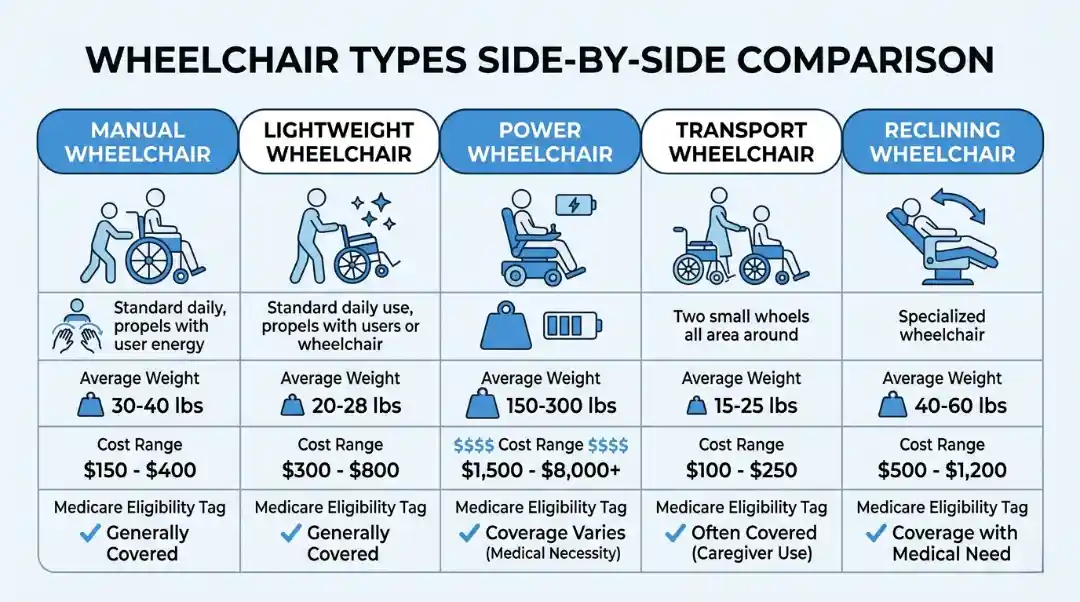
Comparing the main types side by side makes it easier to see how they stack up before you commit to one.
| Wheelchair Type | Best For | Typical Weight Capacity | Approx. Weight of Chair | Approx. Price Range |
|---|---|---|---|---|
| Standard manual | Occasional to daily self-propelled use | 250–300 lbs | 35–40 lbs | $150–$400 |
| Lightweight/ultralight manual | Frequent travel, caregiver lifting | 250–300 lbs | 18–30 lbs | $300–$1,200 |
| Transport chair | Short outings, caregiver-pushed | 250–300 lbs | 20–25 lbs | $100–$300 |
| Power wheelchair | Limited hand strength or fatigue | 250–450 lbs | 80–130 lbs | $1,500–$6,000 |
| Bariatric wheelchair | Higher weight capacity needs | 350–700 lbs | 45–60 lbs | $400–$1,500 |
This table won’t settle what is the best wheelchair for seniors on its own, but it narrows the field fast once you know the mobility level and budget you’re working with.
Does Medicare Cover Wheelchairs for Seniors?
Yes, Medicare Part B covers wheelchairs and power scooters when a doctor documents them as medically necessary. Medicare generally pays 80% of the approved cost after the deductible is met, which leaves the remaining 20% as an out-of-pocket cost.
The process runs through a few clear steps. A doctor documents a mobility-limiting condition, writes a prescription for the specific type of chair needed, and the senior purchases it from a Medicare-enrolled DME supplier. From there, Medicare Part B pays its share of the approved amount, provided every step is documented correctly.
language matters significantly here.
Final Thoughts
Choosing a wheelchair doesn’t have to feel like a medical exam. Once you know the type that fits your situation, narrow down by seat size, weight capacity, and daily use pattern. Then confirm insurance coverage before you buy.
If you’re looking for extra support beyond mobility equipment, Castle Pines Home Care offers personalized home care services in Denver to help seniors maintain independence safely at home. From daily assistance to caregiver support, our team works alongside families, not just patients. Contact us today to learn how we can help.
Frequently Asked Questions
What type of wheelchair is best for elderly people?
The best type depends on the senior’s strength and condition. Manual wheelchairs suit those with good upper-body strength. Power wheelchairs work best for those with limited mobility or conditions like Parkinson’s disease. Transport chairs are ideal for short-term or travel use.
What is the lightest wheelchair for seniors?
The Karman 19.8 lbs. Ultra Lightweight is among the lightest options available. Several carbon-fiber models go even lighter at 15–17 lbs., though they cost significantly more.
Can I rent a wheelchair instead of buying one?
Yes. DME suppliers and some pharmacies offer short-term wheelchair rentals. Renting makes sense if you’re recovering from surgery and only need a chair temporarily.
How do I get a wheelchair through Medicaid?
Ask your doctor to prescribe a wheelchair and document your medical need. Then contact a Medicaid-enrolled DME supplier in your state. The process is similar to Medicare but varies by state coverage rules.
What is the difference between a transport wheelchair and a standard wheelchair?
A transport wheelchair has small wheels on all four corners; it can only be pushed by a caregiver. A standard manual wheelchair has large rear wheels the user can grip and self-propel.
Is a power scooter the same as a power wheelchair?
No. A jazzy electric wheelchair or standard power wheelchair is more maneuverable indoors and designed for medical use. A wheelchair motor scooter is better for outdoor use but less suited for tight indoor spaces. Medicare treats them as separate categories.