

You’ve probably heard a doctor say “acute” or “chronic” and nodded along without being sure what it meant. That’s normal, and you’re not alone. Knowing What Is the Difference Between Acute and Chronic Conditions helps you ask sharper questions and plan the right support for yourself or a loved one.
Quick answer: an acute condition starts fast and usually clears up within days or weeks. A chronic condition lasts a year or more and needs steady management. This guide gives you plain definitions, real examples, and a side-by-side table. You’ll also learn how flare-ups work, how one type can lead to the other, and where help at home fits.
What Is an Acute Condition?
Acute illness is a health problem that is characterized by fast onset and is usually of a severe kind . It develops quickly but usually recovers within days to few weeks with appropriate treatment . Think fever, broken arm, or a nasty case of food sickness. The symptoms come on quickly and severely but the body normally returns to its normal state with effective treatment.
Docs usually describe an acute illness in terms of 3 things: How quickly it came on, how bad it got & how long it lasted. Swollen ankles sprain in hours. Burning and discomfort can occur within a day after exposure to bacteria, as with a urinary tract infection. They are not conditions which develop over years. They appear, they seek attention and then they disappear with treatment.
Common acute conditions include:
- Colds, flu, and strep throat
- Broken bones and sprains
- Appendicitis
- Allergic reactions
- Migraine attacks
- Acute bronchitis
What makes an acute condition different from a passing symptom is that it often needs medical attention to resolve fully. Left untreated, some acute problems can turn into something more serious, which we’ll get to later.
What Is a Chronic Condition?
A chronic condition is a health problem that lasts a year or longer, needs ongoing medical attention, or limits daily activities. Common examples include diabetes, heart disease, arthritis, asthma, and dementia. Most chronic conditions can’t be cured, but treatment, lifestyle habits, and support can control symptoms and protect quality of life.
The chronic and acute meaning comes down to timing. “Chronic” comes from the Greek word for time, so it’s the condition that sticks around. The CDC describes a chronic disease as a condition lasting a year or more that needs ongoing medical care, limits daily activities, or both. shadac
It’s also common. In 2023, about 76% of US adults reported at least one chronic condition, and roughly half reported two or more. cdc
Chronic conditions act more like a tide than a storm. Symptoms rise and fall, yet the condition itself stays.
Acute vs. Chronic: Key Differences at a Glance
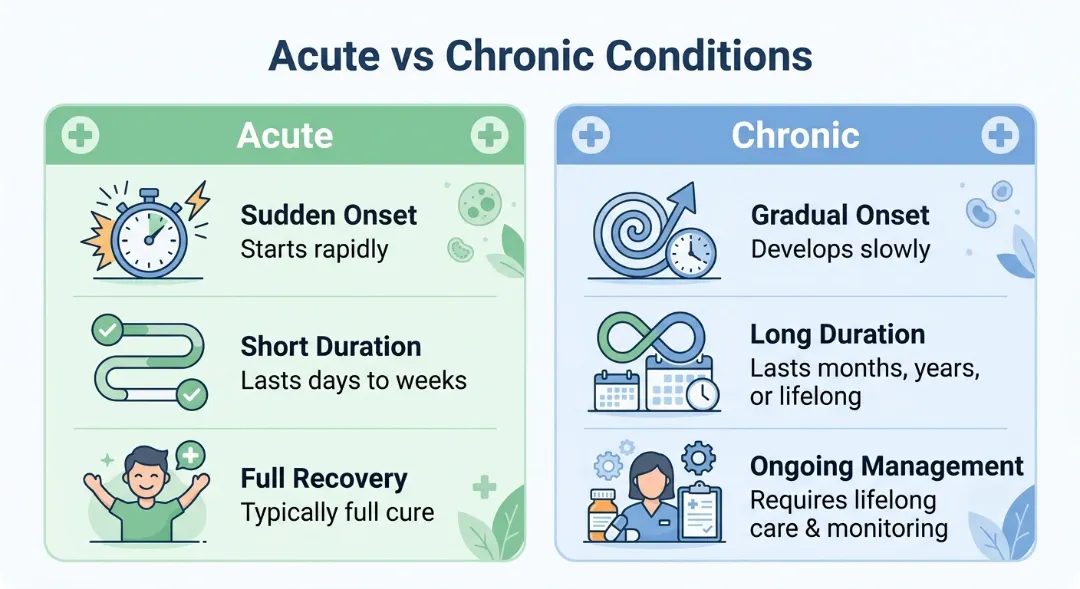
If you only have a minute, this table sums up What Is the Difference Between Acute and Chronic Conditions. Both labels describe time, not severity. That’s the core of chronic vs acute.
| Feature | Acute | Chronic |
|---|---|---|
| Onset | Sudden | Gradual or sudden |
| Duration | Days to weeks | One year or longer |
| Goal of care | Cure or full recovery | Control symptoms, slow progression |
| Typical care | Short-term, often urgent | Daily routines, regular check-ups |
| Examples | Flu, broken bone, pneumonia | Diabetes, arthritis, heart disease |
| Usual outlook | Full recovery | Long-term management |
How Are Acute and Chronic Conditions Diagnosed?
Doctors diagnose both types through a physical exam, medical history, and tests such as blood work or imaging. Acute conditions often get a fast diagnosis because symptoms appear suddenly. Chronic conditions may take longer, since symptoms can develop slowly and doctors track patterns over several visits before confirming a diagnosis.
Your doctor starts with questions about symptoms and history. Acute problems often show up on a quick exam or a single test. Chronic ones may need repeat blood pressure checks, blood sugar tests, or scans over time.
Ask for a written summary of any diagnosis. It keeps family members on the same page.
Treatment Approaches: Acute vs. Chronic Care
Acute and chronic care have different finish lines. Acute care aims to fix the problem. That may mean antibiotics, surgery, stitches, or a short hospital stay.
Chronic care aims to control the condition for the long haul. It usually includes daily medication, regular check-ups, healthy eating, movement, and symptom tracking. A primary care doctor, specialists, and a pharmacist often share the work.
The two overlap more than people expect. Pneumonia hits harder when someone already has heart disease, so doctors treat both together.
Day-to-day help matters in either case. Non-clinical support, such as meal preparation, medication reminders, rides to appointments, and light housekeeping, keeps recovery and routines on track. Licensed clinicians still make the medical decisions.
Can an Acute Condition Become Chronic?
Yes, an acute condition can become chronic if an injury heals improperly, an infection causes lasting structural damage, or recurring symptoms go untreated. Medical professionals call this transition disease progression.
A classic example involves back injuries. Lifting a heavy box might cause an acute back strain. If the underlying tissue doesn’t heal correctly, or if repetitive stress continues, that temporary injury can transform into persistent symptoms lasting for years.
Other common transitions include:
- Acute Kidney Injury (AKI): Severe, sudden damage to the kidneys can leave permanent scarring, leading directly to chronic kidney disease.
- Lyme Disease: An acute tick bite infection, if missed early, can trigger chronic joint pain and long-term fatigue.
- Acute Respiratory Infections: Severe bouts of pneumonia or viral infections can leave behind lung tissue damage, creating long-term respiratory difficulties.
Understanding how these states connect helps you realize why treating acute issues early matters. Prompt care prevents temporary problems from turning into permanent challenges.
Understanding Acute Flare-Ups Within Chronic Diseases
A flare-up is a sudden worsening of symptoms in someone who already has a chronic disease. It’s an acute episode inside a long-term condition. Picture a pot on low heat that suddenly boils over.
Common examples include asthma attacks, gout flares, low blood sugar episodes, and fluid buildup in heart failure. Triggers include infections, missed medication, stress, and weather changes.
Know the warning signs. Sudden trouble breathing, chest pain, confusion, or severe weakness needs emergency care, so call 911 instead of waiting. Keep a current medication list and the doctor’s action plan within easy reach.
Living With a Chronic Condition vs. Recovering From an Acute One
Recovering from an acute illness is a sprint. You rest, follow the plan, and head back to normal life. Living with a chronic condition is a marathon. You build routines, adjust the home, and learn what a good day and a bad day look like.
The emotional load differs too. Recovery brings short-term worry. Chronic illness brings steady fatigue, cost concerns, and strain on family caregivers. Share the load early, before burnout sets in.
Small changes help. Try grab bars, a weekly pill organizer, set meal times, and a standing check-in schedule.
When to Seek Immediate Medical Attention
Whether dealing with a sudden illness or managing a long-term condition, knowing when to get emergency medical help is essential. Seek immediate care if you notice:
- Sudden difficulty breathing or intense chest pain.
- High fever exceeding 103°F that doesn’t drop with medication.
- Sudden weakness, facial drooping, or trouble speaking.
- Uncontrolled bleeding or sudden severe abdominal pain.
- A rapid, unexpected worsening of chronic baseline symptoms.
Which Is Worse: Acute or Chronic Illness?
Neither condition is inherently worse, as an acute illness can be immediately life-threatening, while a chronic disease causes ongoing wear on your body and lifestyle over time.
Asking which condition type carries more risk depends on context. An acute event like a heart attack or severe allergic reaction demands rapid emergency response to save a life. The danger is high, but the timeline is short.
A chronic issue like diabetes or heart failure operates differently. It presents less immediate drama on a day-to-day basis, but it steadily taxes your physical strength, emotional health, and financial resources over decades. Balance, proactive tracking, and early intervention remain your best tools for managing both.
Final Thoughts: Navigating Your Health Care Needs
Understanding what is the difference between acute and chronic conditions empowers you to take control of your health decisions. Acute issues call for fast treatment and short-term rest, while chronic issues require steady routines, regular care, and reliable daily support.
If your family is navigating the daily demands of a long-term condition or recovering from a sudden medical setback, having extra hands at home makes all the difference. Professional caregivers assist with meal preparation, light housekeeping, medication reminders, and personal assistance, helping your loved one stay safe and comfortable in familiar surroundings.
For personalized guidance and reliable non-clinical home care services in Denver, reach out to Castle Pines Home Care. Contact us today to learn how our compassionate team can support your family’s unique care goals.
Frequently Asked Questions
How long does a condition have to last to be considered chronic?
A condition is considered chronic when it lasts for three months or longer. Unlike acute illnesses that resolve in days or weeks, chronic conditions persist over extended periods and require long-term management strategies rather than a single curative treatment.
Can chronic conditions go into remission?
Yes, certain chronic conditions can enter remission, meaning symptoms lessen significantly or disappear for a period. Diseases like rheumatoid arthritis or inflammatory bowel disease often cycle between active flare-ups and quiet periods of remission.
Can a person have acute and chronic conditions at the same time?
Yes, it is common to manage a long-term disease while facing a temporary illness. For instance, a senior living with chronic hypertension can catch an acute bout of the flu, requiring careful treatment coordination so remedies don’t interfere with daily medications.
How do treatment plans differ for acute pain versus chronic pain?
Acute pain treatment focuses on removing the underlying cause through short-term remedies like rest, ice, or medication until physical tissues heal. Chronic pain management centers on daily routines, physical therapy, and lifestyle adjustments to control persistent discomfort and preserve functional mobility over extended periods.
Can recurring acute symptoms be a sign of an undetected chronic condition?
Yes, recurring acute symptoms often indicate an undetected chronic condition developing beneath the surface. Experiencing repeated flare-ups, such as frequent bronchitis episodes or persistent joint swelling, signals that your body is dealing with an ongoing systemic issue that requires a thorough medical evaluation.


