Most people use “caretaker” and “caregiver” like they mean the same thing. They don’t. When it comes to caring for an elderly parent, a child with a disability, or a loved one with a chronic illness, the difference between a caretaker vs caregiver actually matters, and choosing the wrong setup can affect your loved one’s quality of life. The short answer: a caregiver supports and empowers. A caretaker manages and maintains.
This article thoroughly explains both roles, including their responsibilities, emotional dynamics, training, and how to tell when a caregiver relationship has gone too far. This guide has everything you need, whether you’re a family member trying to figure out what to do next, a job seeker looking at assisted living jobs, or a healthcare student trying to get your terms straight.
Key Takeaways
- A caregiver provides emotional, physical, and personal support, often out of love or compassion, while a caretaker typically performs care as a paid professional role.
- Caregivers focus on preserving the dignity and independence of the person they care for.
- Caretakers may handle broader responsibilities, including property, animals, or individuals.
- Both roles are valuable, but crossing the line from caregiving to caretaking can lead to unhealthy codependency.
- Understanding the difference helps families make smarter decisions about care arrangements.
The Quick Answer: Caretaker vs Caregiver
A caretaker gives someone regular emotional and physical help, usually with an eye on their long-term health and independence. A caretaker usually looks after a property or helps someone with specific tasks for a short time. Caregiving is more about the person than the task, while caretaking is more about the task or the job.
What Is a Caregiver?
A caregiver is someone who provides emotional, physical, and psychological support to a person who cannot fully care for themselves due to aging, disability, or chronic illness. Caregivers focus on preserving the person’s independence and dignity while assisting with daily activities. They could be relatives, friends, or trained professionals who work in home care or clinical settings.
What Does a Caregiver Do?
Caregivers wear many hats. On any given day, their responsibilities may include:
- Personal care: Helping with bathing, dressing, grooming, and mobility
- Medical care: Managing medications, tracking symptoms, and attending medical appointments
- Daily tasks: Preparing meals, doing laundry, grocery shopping, and light housekeeping
- Emotional support: Offering companionship, listening, and reducing feelings of isolation
- Health monitoring: Relaying changes in the care recipient’s condition to doctors or nurses
According to the National Alliance for Caregiving, there are over 53 million family caregivers in the United States alone.
One important thing to understand: a caregiver’s role is not to take over someone’s life. It’s to walk alongside them. Think of it like being a co-pilot, not the captain.
Most family caregivers don’t get paid. They do it out of love, obligation, or both. That emotional investment is what separates caregiving from a transactional service.
What Is a Caretaker?
A caretaker is traditionally someone hired to look after a person, property, animal, or place. In the context of human care, a caretaker provides physical assistance but typically operates within a professional, paid framework. There are rules and limits in the job description that shape the connection.
What Does a Caretaker Do?
A caretaker’s duties often overlap with a caregiver’s, but the motivation is different. Their responsibilities may include:
- Supervising and assisting with personal hygiene and physical care
- Transporting individuals to medical appointments
- Maintaining routines and daily schedules
- Reporting behavioral or health changes to medical staff
- Working overnight shifts in nursing homes or memory care facilities
Caretakers working in memory care facilities, for example, may need specific dementia training and CPR certification. Many assisted living facilities pay for this training directly.
The median annual wage for home health aides in the U.S. is around $33,000, according to the Bureau of Labor Statistics.
The caretaker role is a job. That’s not a criticism. It’s a structure that provides professional care and support to thousands of people who need it every day.
What’s the Difference Between a Caretaker and a Caregiver?
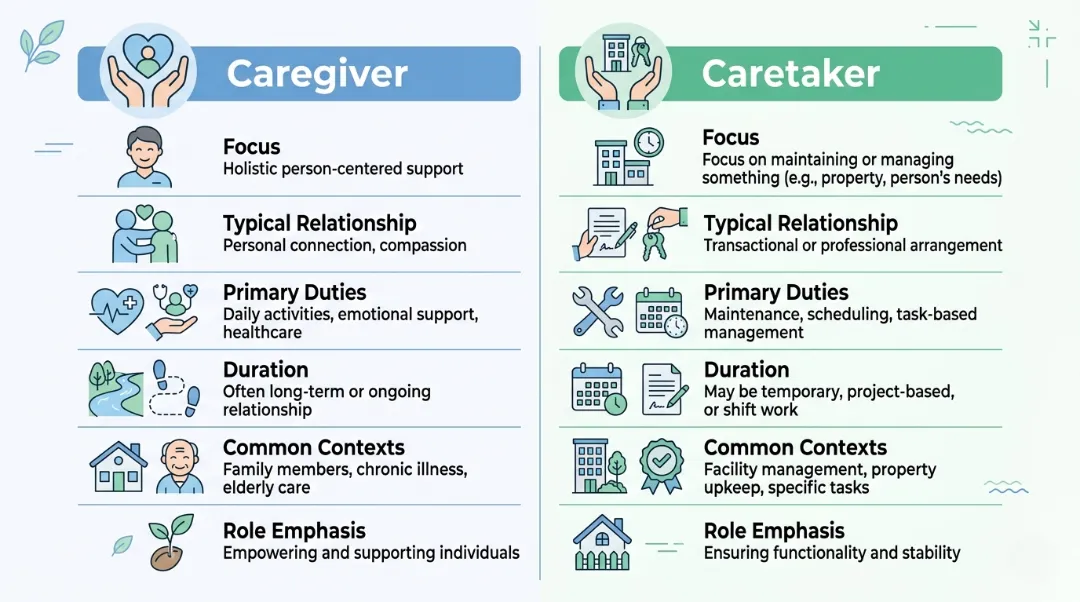
The core difference between a caregiver and caretaker comes down to motivation, emotional connection, and professional standing. A caregiver acts out of compassion and focuses on empowering the person they care for. A caretaker performs a defined role, usually for compensation, and maintains a professional distance.
Here’s a quick side-by-side comparison:
| Factor | Caregiver | Caretaker |
| Motivation | Compassion, love, or duty | Professional obligation |
| Compensation | Usually unpaid | Paid employee or contractor |
| Emotional connection | Deep personal bond | Professional distance |
| Training | Informal or self-taught | Certified, employer-trained |
| Autonomy focus | Encourages independence | Maintains the current condition |
| Setting | Home, community, or clinical | Facility, home, or property |
| Hours | Flexible, as needed | Set shifts, including overnight |
The key thing to remember about the caretaker vs caregiver distinction is this: it’s not just about what they do. It’s about how and why they do it.
Which One Do You Actually Need?
This is where most people get stuck. Here’s a simple way to think about it.
Choose a caregiver if:
- You need ongoing emotional support and companionship
- The person in your care values independence and wants to maintain their routine
- You’re a family member stepping into a supportive role
Choose a caretaker (professional) if:
- You need consistent, scheduled, and medically informed care
- The person requires round-the-clock assistance in a facility
- You need trained support for conditions like Alzheimer’s or dementia
A lot of households use both. During the week, a professional caregiver takes care of medical needs, and on the weekends, a family caregiver provides emotional support and company. That balance usually works best.
Does Terminology Differ by Country?
Yes, and it’s good to know. In the US, the word “caregiver” is the most common way to say someone who helps and cares for another person. In the UK and Australia, the same job is often called a “carer.” In the UK, the phrase “caretaker” usually means someone who takes care of a building or property, not someone who takes care of people.
If you’re researching caregiving and caretaking across international sources, this context helps avoid confusion.
How Do You Know You Have Crossed Over From Caregiving to Caretaking?
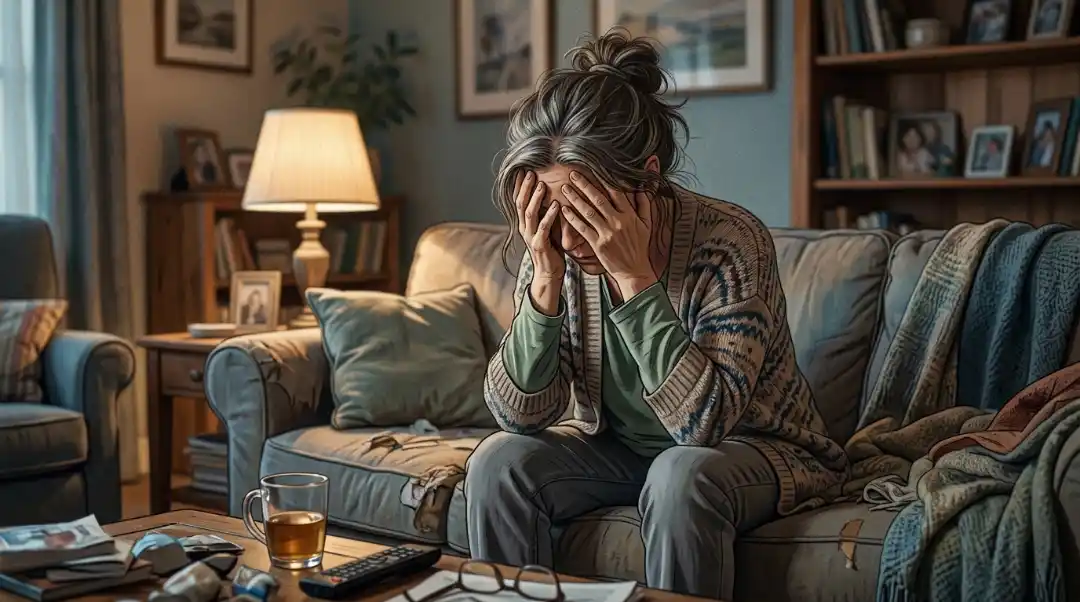
Crossing from caregiving into unhealthy caretaking happens gradually. It usually starts when the caregiver stops helping the person and starts controlling them. The care recipient loses their voice, their choices, and eventually their confidence. This shift creates a codependent dynamic that’s harmful for both sides.
Signs that you may have crossed the line include:
- You make decisions without asking: You’ve started choosing meals, schedules, and activities without considering what the person actually wants.
- You feel resentful: You’re giving constantly but feel unappreciated or exhausted.
- You’ve stopped encouraging independence: Instead of letting them try, you jump in before they ask.
- You feel needed, not helpful: There’s a difference between being a support system and becoming someone’s entire world.
- Caregiver burnout is setting in: You’re neglecting your own health, sleep, and relationships.
According to the American Psychological Association, approximately 40% of family caregivers report symptoms of depression.
Healthy caregiving and caretaking both require clear limits. Without them, even the most well-intentioned caregiver can end up doing more harm than good.
Caregiver Burnout: A Real and Overlooked Problem
Caregiver burnout is one of the most underreported issues in the caregiving world. It builds slowly, and by the time most people notice it, they’re already running on empty.
Common signs of burnout include constant fatigue, withdrawal from social activities, increased irritability, and a declining sense of purpose. It doesn’t mean you care less. It means you’ve been carrying too much for too long.
Self-care isn’t selfish in caregiving roles. It’s a professional and personal necessity. Taking a walk, resting, or asking for help isn’t a failure. It’s how you stay capable of showing up for someone who needs you.
Support for Caretakers and Caregivers
Whether you’re a family member or a professional, support resources exist to help you manage the weight of caregiving and caretaking responsibly.
For family caregivers:
- Family Caregiver Alliance (caregiver.org): Offers educational guides, legal resources, and emotional support tools
- Caregiver Action Network (caregiveraction.org): Provides a help desk and community forums
- National Alliance for Caregiving (caregiving.org): Research-based resources for family caregivers
For professional caretakers:
- Seek CPR and first-aid certification through the American Red Cross
- Look into dementia care training through the Alzheimer’s Association
- Connect with professional networks like the National Association for Home Care & Hospice
These resources don’t just offer information. They offer a community of people who genuinely understand what caregiving and caretaking looks like up close.
Find the Perfect Caretaker For Your Loved One in Denver CO
If you’re based in Denver and searching for reliable, compassionate professional care for an aging parent or family member, Castle Pines Home Care is here to help. Our team provides trusted home care services in Denver tailored to the specific needs of your loved one, whether they need part-time assistance or full-time personal care support.
Every caregiver on our team is carefully vetted, trained, and matched with clients based on personality, needs, and preferences. Good care isn’t one-size-fits-all, and we take that seriously.
Reach out today to talk through your options and find the right fit for your family.
Conclusion
The difference between a caretaker vs caregiver goes deeper than job titles. One is built on emotional connection and the drive to support someone’s independence. The other is a professional role with defined duties, training, and compensation. Both matter, and both serve real purposes in the world of care.
Knowing which position is right for you can help you make better choices, create better boundaries, and, in the end, give better care. And if you are now a caregiver, don’t forget about your own needs while you are doing it.
Frequently Asked Questions
Is a caretaker the same as a caregiver?
Not exactly. While both roles involve care and support, a caregiver typically provides personal, often unpaid care rooted in emotional connection. A caretaker usually refers to a paid professional role. The terms are sometimes used interchangeably, but they carry different meanings in healthcare and elder care.
What’s it called when you take care of old people professionally?
The most common terms are caregiver, caretaker, home health aide, or personal care aide. In formal medical settings, you might also see terms like certified nursing assistant (CNA) or patient care technician.
Can a family member be both a caregiver and a caretaker?
Yes. Family members often start as caregivers and gradually take on caretaker-like responsibilities as the person’s needs increase. The key is to stay aware of limits and avoid the controlling dynamics that lead to codependency.
What is caretaker vs caregiver in psychology?
In psychology, caretaker vs caregiver psychology refers to the emotional motivations behind each role. A caregiver acts from empathy and mutual respect. A caretaker, in psychological terms, may act from a need for control or validation, often at the expense of the care recipient’s independence.
What are the other terms for caregiver?
Other terms include carer (UK), personal care aide, home health aide, support worker, patient advocate, and companion caregiver, depending on the setting and country.