It can be hard to decide what kind of care to get for a loved one when you don’t know which way to go. If you’ve been trying to figure out the difference between assisted living vs memory care, the short answer is this: Assisted living helps older people who need help with everyday tasks, while memory care is for people with Alzheimer’s, dementia, or noticeable cognitive decline who need more supervision and a safer place to live.
If that choice feels hefty, it’s because it is. This article explains the true differences, expenses, stages of dementia, and indicators that can help you choose the proper one. This makes the decision feel less like guesswork and more like a clear next step..
What Is Assisted Living?
Assisted living is a type of residential care for seniors who need some help with everyday tasks, including showering, dressing, taking their medications, and making meals. Most of the time, residents live in their own or shared flats and yet have a lot of freedom.
These communities have things like food services, gyms, transportation, and group activities. Staff are trained to help, but not to give intensive medical or dementia-specific care. It’s like living at home and in a nursing home at the same time.
Seniors who are mainly intellectually alert but need help with physical tasks do well in assisted living. It’s also good for people who are just starting to have cognitive problems and don’t need a safe place yet.
What Is Memory Care?

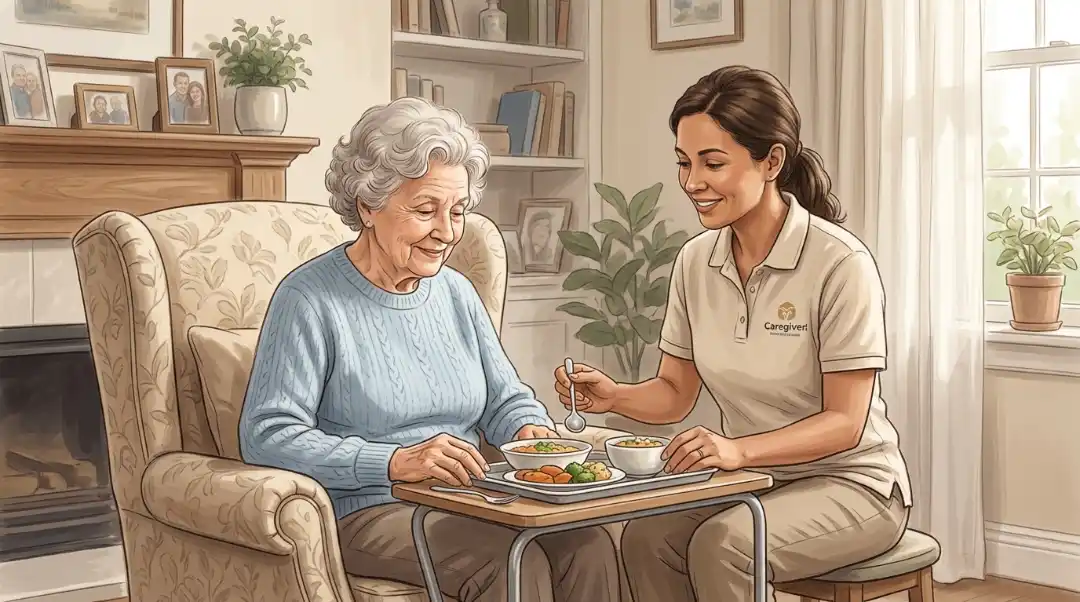
A memory care caregiver engages a senior resident in a calm, structured environment
Memory care is a type of residential care that is made just for people with Alzheimer’s disease and other types of dementia. It goes beyond standard assisted living services by providing a safe, organized space that is tailored to the needs of someone whose cognitive abilities are declining.
Staff at memory care centers get particular training in how to care for people with dementia. They know how to deal with problematic behaviors like roaming, agitation, and trouble communicating that regular assisted living personnel can’t handle at that level.
The activities, layout, and daily routines are all meant to help with cognitive performance and lower confusion. This is the best place for your loved one to get the care they need if they have been diagnosed with dementia and are worried about their safety.
The Key Differences Between Assisted Living and Memory Care
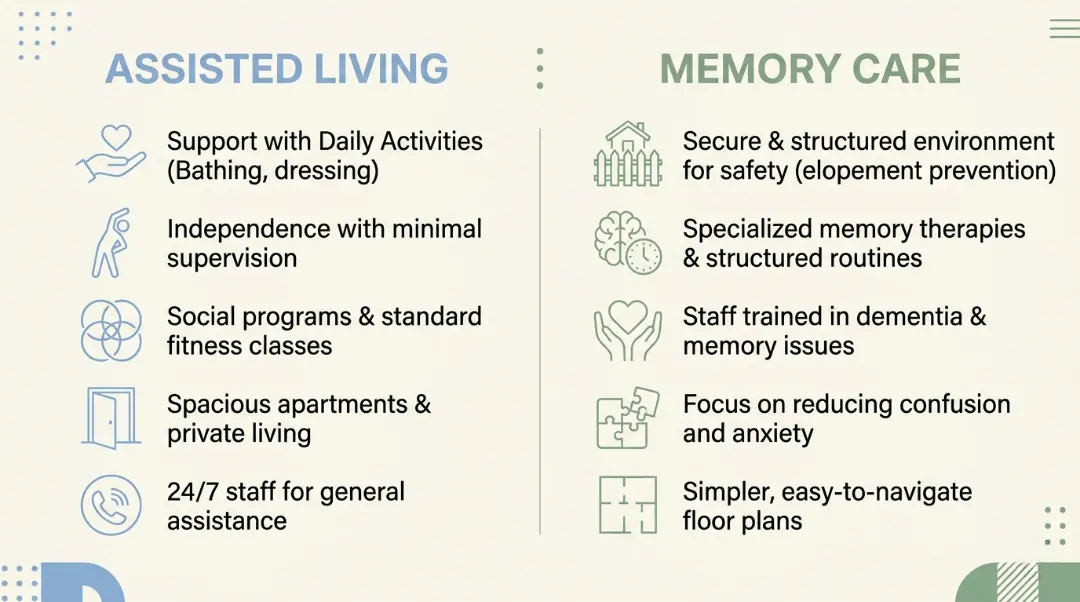
Understanding what sets these two apart isn’t just about labels. It’s about matching your loved one’s real needs to the right environment.
1. Safety Features
Assisted living communities offer basics like emergency call systems and 24-hour staff availability. Memory care communities go much further.
Security features in memory care typically include locked entrances, keypad entries, alarmed exits, and enclosed outdoor areas. These are specifically designed to prevent wandering, which is one of the most common and dangerous behaviors in people with dementia.
2. Staff Training
In assisted living, staff focus on helping with ADLs and general wellness. In memory care, every team member is trained specifically in dementia care, including behavior management, redirection techniques, and communication strategies tailored to people with cognitive impairment.
Memory care also maintains a higher caregiver-to-resident ratio. That’s not a small detail; it directly affects how quickly someone gets help and how much engagement they receive daily.
3. Activities and Therapies
Assisted living activities are built around social engagement: exercise classes, book clubs, group outings, and arts and crafts. These are great for mentally sharp residents.
Memory care programming is different. It’s built around cognitive stimulation and emotional well-being. Common therapies include music therapy, art therapy, reminiscence therapy (using senses like smell, touch, and sight to trigger positive memories), pet therapy, and light therapy.
4. Physical Environment and Amenities
Assisted living communities look and feel like upscale apartments. They’re designed for comfort and community.
Memory care units are designed differently. You’ll see color-coded walls, clearly marked common areas, memory boxes outside rooms to help residents identify their space, and enclosed courtyards so residents can enjoy the outdoors safely.
Everything in the memory care environment is intentional. Even furniture placement is chosen to reduce confusion and prevent falls.
5. Cost
This is often the deciding factor for families. Assisted living vs memory care comes down to a real price difference.
The higher cost of memory care reflects the specialized staffing, secured environment, individualized care plans, and therapeutic programming. Families should explore funding options including long-term care insurance, Medicaid, and VA benefits early in the process.
Assisted Living vs Memory Care: Side-by-Side Comparison
| Feature | Assisted Living | Memory Care |
| Target resident | Independent seniors needing ADL help | Individuals with Alzheimer’s or dementia |
| Security | Basic (emergency call systems) | High (locked doors, alarmed exits) |
| Staff training | General ADL support | Specialized dementia care |
| Activities | Social and recreational | Cognitive and therapeutic |
| Environment | Apartment-style, social | Structured, calming, secured |
| Caregiver ratio | Standard | Higher (more supervision) |
| Monthly cost (median) | ~$5,190 | ~$6,450 |
| Wandering prevention | Limited | Full systems in place |
Cost Comparison by Dementia Stage
Dementia progression affects care needs directly, and those needs affect cost. Here’s how it typically breaks down:
Early stage: Many families start with assisted living. It’s less expensive and can work well if wandering or behavioral issues aren’t present yet. Medication reminders, meal support, and activity engagement are the primary needs.
Middle stage: This is where most families face the hardest decision. Behavioral symptoms increase, safety risks rise, and assisted living staff often aren’t trained to handle the situation. Memory care becomes necessary.
Late stage: Advanced dementia typically requires memory care or skilled nursing. Costs rise with the level of hands-on care needed. Some families also explore hospice care in combination with memory care at this stage.
How To Decide Between Assisted Living and Memory Care
The best choice depends on your loved one’s present symptoms, safety risks, and stage of dementia. Assisted living is frequently the best place to start if they can still live on their own with some help and don’t have any serious behavioral problems. Memory care is the safest and best choice if wandering, violence, or serious confusion starts to happen.
Here are the questions to ask yourself:
- Has your loved one been diagnosed with Alzheimer’s, vascular dementia, Lewy body dementia, or frontotemporal dementia?
- Are they wandering, getting lost, or showing exit-seeking behavior?
- Can staff at an assisted living facility safely manage their behavior?
- Are their medications complex or changing frequently?
- Do they need reminders for basic tasks like eating or bathing?
If you answered yes to the first two questions especially, it’s worth speaking with their physician about moving directly to memory care.
Red Flag Signs It’s Time for Memory Care
These are the specific signs that assisted living is no longer enough:
- Getting lost in familiar places
- Leaving the stove on or forgetting to eat
- Aggression or agitation that’s hard to manage
- Sundowning (confusion and restlessness in the late afternoon or evening)
- Attempting to leave the facility repeatedly
- Inability to recognize close family members
Future Trends in Memory Care and Assisted Living
Both options are changing fast. Wearable devices now track health metrics in real time, alerting staff to falls or irregular patterns before a crisis happens. Smart home systems are being built into memory care units to improve safety monitoring without feeling clinical.
There is also more interest in person-centered care paradigms. Facilities are making care plans for each resident based on their own history, preferences, and residual abilities, rather than using a “one size fits all” approach. This is especially helpful in memory care, where familiar music, pictures, or rituals can help calm people down a lot.
Art therapy, pet therapy, and music therapy are becoming typical parts of high-quality memory care programs instead of just options.
Find the Perfect Caretaker For Your Loved One in Denver CO
If your loved one is in the early stages of dementia or needs support at home before transitioning to a care community, professional home care services in Denver can bridge that gap. At Castle Pines Home Care, we work with families across Denver to provide compassionate, personalized in-home support that fits each individual’s needs. Whether it’s help with ADLs, medication reminders, or simply consistent companionship, our team is here to help.
Conclusion
The main difference between assisted living and memory care is how much help, safety, and cognitive care a person needs. Seniors who require help with everyday duties but still want to be as independent as possible frequently do best in assisted living. Memory care, on the other hand, is for people with dementia, Alzheimer’s disease, or other types of cognitive decline.
The ideal option always relies on the person’s current health, daily safety needs, and how their symptoms can get worse over time. Taking the time to think about these things now will help you avoid making decisions that are stressful later and make sure your loved one gets the proper care at the right time.
If you’re still unsure which option is best for your family, contact us today. The team at Castle Pines Home Care is here to help you understand your options and guide you toward the most suitable care solution for your loved one in Denver, CO.
FAQs About Assisted Living vs Memory Care
Is assisted living good for dementia patients?
For those with dementia who are in the early stages of the disease and don’t have a lot of wandering or behavioral problems, assisted living can function. Memory care becomes the safer and better choice as dementia gets worse since it has a safe environment and trained staff.
What is a memory care facility exactly?
A memory care facility is a residential care setting designed specifically for people with Alzheimer’s disease or other forms of dementia. It offers secured environments, specialized staff, cognitive therapies, and higher supervision levels than standard assisted living.
How is memory care different from assisted living in terms of daily life?
In assisted living, residents have more freedom and independence. In memory care, daily life is more structured, routines are consistent, and every part of the environment is designed to reduce confusion and keep residents safe.
Can someone move from assisted living to memory care without changing communities?
Yes. About 80% of assisted living communities offer on-site memory care. This makes transitions easier because the resident already knows the staff and surroundings, which reduces trauma and cognitive disruption.
What’s the difference between assisted living and long-term care?
Long-term care is a broad category that includes assisted living, memory care, and skilled nursing facilities. Assisted living is typically for seniors who need moderate help, while long-term care can include full medical and nursing services for people with more serious health conditions.