

When a loved one is sick, medicalese might sound like a foreign language. Doctors use terminology during appointments that you hear, but you are left to decipher what that means for your day-to-day life. Knowing your health condition or diagnosis of a family member should not be scary.
The difference is in speed and time. Acute conditions come on quickly and last for a short time. Chronic conditions develop slowly and may endure for months, years or a lifetime. It’s important to understand the difference between acute and chronic diseases, so you can make good decisions regarding medical care, everyday assistance and recuperation
at home.
What Is an Acute Condition?
Acute illness is a health problem that is characterized by fast onset and is usually of a severe kind . It develops quickly but usually recovers within days to few weeks with appropriate treatment . Think fever, broken arm, or a nasty case of food sickness. The symptoms come on quickly and severely but the body normally returns to its normal state with effective treatment.
Docs usually describe an acute illness in terms of 3 things: How quickly it came on, how bad it got & how long it lasted. Swollen ankles sprain in hours. Burning and discomfort can occur within a day after exposure to bacteria, as with a urinary tract infection. They are not conditions which develop over years. They appear, they seek attention and then they disappear with treatment.
Common acute conditions include:
- Colds, flu, and strep throat
- Broken bones and sprains
- Appendicitis
- Allergic reactions
- Migraine attacks
- Acute bronchitis
What makes an acute condition different from a passing symptom is that it often needs medical attention to resolve fully. Left untreated, some acute problems can turn into something more serious, which we’ll get to later.
What Is a Chronic Condition?
A chronic condition is a human health condition or disease that is persistent or long-lasting in its effects or a disease with a slow progression. Chronic conditions last three months or more. These continuing health conditions are generally not treatable, therefore long-term health management measures are required to control symptoms and maintain your quality of life.
A chronic illness, unlike an acute illness, often creeps up on you with no warning indications. You may have high blood pressure or early wear of your joints for years before you notice any chronic symptoms.
Typical examples of a chronic condition include:
- Metabolic & Heart diseases: Type 2 diabetes, coronary artery disease, high blood pressure, and heart failure.
- Respiratory issues: Chronic obstructive pulmonary disease (COPD) and persistent asthma.
- Joint & Bone health: Osteoarthritis, rheumatoid arthritis, and osteoporosis.
- Neurological disorders: Alzheimer’s disease, dementia, and Parkinson’s disease.
Managing a chronic health issue isn’t about finding a quick cure. It involves building a sustainable daily routine that keeps symptoms manageable and stops disease progression.
Acute vs. Chronic: Key Differences at a Glance
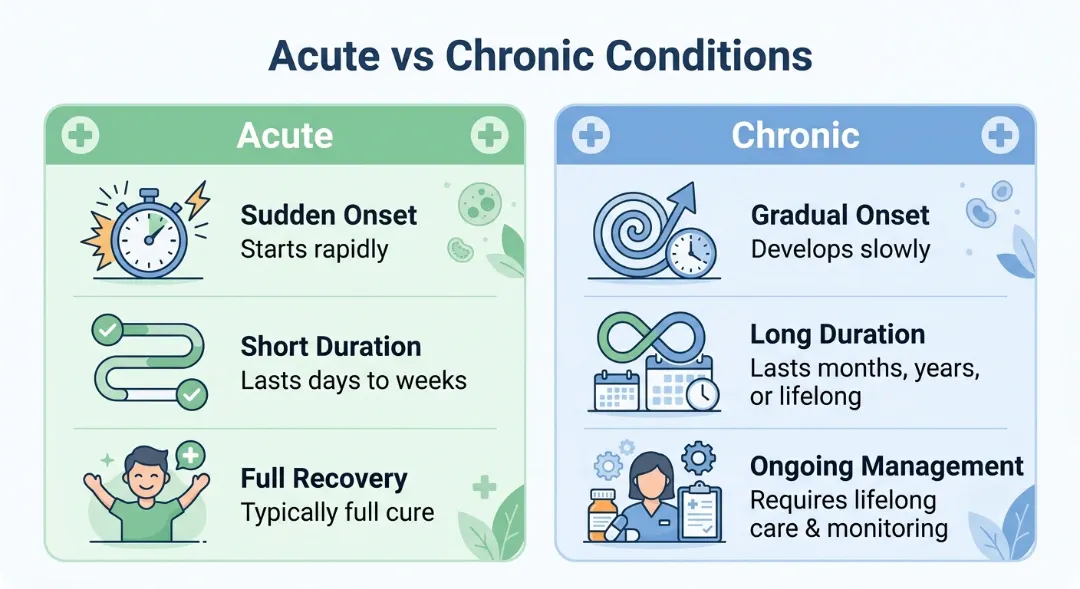
Side by side, the contrast becomes clear. Acute or chronic illness isn’t just medical vocabulary. It changes how a doctor treats you, how long recovery takes, and what kind of support you’ll need at home.
| Feature | Acute Condition | Chronic Condition |
| Onset | Sudden onset, often within hours or days | Gradual onset over months or years |
| Duration | Short-term illness, days to a few weeks | Long-term condition, three months to lifetime |
| Symptoms | Sharp, noticeable, sometimes severe | Persistent symptoms or recurring symptoms that fluctuate |
| Treatment goal | Full recovery or cure | Ongoing management and symptom control |
| Example | Flu, broken bone, ear infection | Diabetes, arthritis, heart failure |
This table answers the core question people search for when they type in what is the difference between acute and chronic conditions, but the real-world impact goes deeper than a chart can show. A short-term illness might mean a week off work. A long-term condition might mean rearranging your entire household routine.
How Are Acute and Chronic Conditions Diagnosed?
Doctors diagnose acute conditions using rapid point-of-care tests and immediate physical exams, while chronic conditions require comprehensive evaluations and long-term diagnostic tracking over time. The diagnostic path depends entirely on how quickly symptoms appear and evolve.
Rapid Testing for Acute Issues
When dealing with a short-term illness, speed is essential. Healthcare providers rely on quick diagnostic tools to pinpoint the cause:
- Swab tests: Quick throat or nasal swabs identify strep throat or the flu within minutes.
- Diagnostic imaging: X-rays, ultrasound scans, or CT scans locate broken bones, lung infections, or internal organ inflammation right away.
- Standard blood panels: Basic lab work checks for elevated white blood cell counts, signaling an active infection.
Comprehensive Tracking for Chronic Issues
Diagnosing chronic health problems takes time. A doctor rarely diagnoses diabetes or hypertension based on a single bad day.
The process involves running multiple blood tests over several weeks to check fasting glucose or kidney function. Patients track daily blood pressure readings at home, while specialists review personal health history, family genetic risks, and daily habits.
Treatment Approaches: Acute vs. Chronic Care
Resolution is the focus of treatment of acute difficulties. A round of antibiotics, a cast, a few days off and it is usually sorted. The goal is clear, solve the problem and move on.
Chronic care operates differently and that is where a lot of families are blindsided. Usually living with a long-term disease means you are always taking medication, seeing doctors regularly, making lifestyle adjustments and monitoring Adjustments like changing the diet for diabetes, physical treatment for arthritis, or blood pressure monitoring for hypertension are no longer a one-time cure, but become a routine. No finish line but that’s no need to take it as bad news. Years of careful maintenance keep chronic conditions stable.
Under certain conditions these two styles of treatment blend. Chronic asthma is a long-term condition. An acute asthma attack is a sudden worsening of the symptoms. One reason is that you can’t always treat acute and chronic diseases as two entirely independent boxes.
Can an Acute Condition Become Chronic?
Yes, an acute condition can become chronic if an injury heals improperly, an infection causes lasting structural damage, or recurring symptoms go untreated. Medical professionals call this transition disease progression.
A classic example involves back injuries. Lifting a heavy box might cause an acute back strain. If the underlying tissue doesn’t heal correctly, or if repetitive stress continues, that temporary injury can transform into persistent symptoms lasting for years.
Other common transitions include:
- Acute Kidney Injury (AKI): Severe, sudden damage to the kidneys can leave permanent scarring, leading directly to chronic kidney disease.
- Lyme Disease: An acute tick bite infection, if missed early, can trigger chronic joint pain and long-term fatigue.
- Acute Respiratory Infections: Severe bouts of pneumonia or viral infections can leave behind lung tissue damage, creating long-term respiratory difficulties.
Understanding how these states connect helps you realize why treating acute issues early matters. Prompt care prevents temporary problems from turning into permanent challenges.
Understanding Acute Flare-Ups Within Chronic Diseases
An acute flare-up is a sudden, severe spike in symptoms that occurs within an existing chronic disease. These episodes require immediate medical care or quick adjustments to your daily treatment plan to restore health stability.
Living with a long-term illness doesn’t mean your symptoms stay at the exact same level every single day. Many chronic conditions feature quiet periods punctuated by sudden, intense symptoms.
Consider these common flare-up scenarios:
- Asthma: A person lives with chronic asthma every day. Encountering heavy pollen or cold air can trigger a sudden asthma attack—an acute episode requiring a rescue inhaler.
- Rheumatoid Arthritis: Joint pain might stay mild for weeks, only to flare up suddenly with intense swelling and stiffness that limits movement.
- Gout: High uric acid levels represent an ongoing issue, but a gout attack brings sudden, severe pain to a joint overnight.
Spotting the warning signs of a flare-up allows families to react quickly before a predictable situation becomes an emergency medical visit.
Living With a Chronic Condition vs. Recovering From an Acute One
When your body is healing from an acute condition, it’s necessary to rest for a while and get help for a while. Having a chronic ailment is a lifestyle change, emotionally and with consistent support day to day, over the long haul.
You’ll be out of routine temporarily as you recover from an illness or surgery. Family members pitch in to take over grocery shopping, cook meals or help with movement for a few weeks. Once you regain your strength you will be able to resume normal independent living.
Chronic illness affects your baseline normal everyday rhythm. It impacts long term daily energy, mobility and emotional well-being. Families often change the residence, set up pill management systems, and organize their lives around doctor visits.
When to Seek Immediate Medical Attention
Whether dealing with a sudden illness or managing a long-term condition, knowing when to get emergency medical help is essential. Seek immediate care if you notice:
- Sudden difficulty breathing or intense chest pain.
- High fever exceeding 103°F that doesn’t drop with medication.
- Sudden weakness, facial drooping, or trouble speaking.
- Uncontrolled bleeding or sudden severe abdominal pain.
- A rapid, unexpected worsening of chronic baseline symptoms.
Which Is Worse: Acute or Chronic Illness?
Neither condition is inherently worse, as an acute illness can be immediately life-threatening, while a chronic disease causes ongoing wear on your body and lifestyle over time.
Asking which condition type carries more risk depends on context. An acute event like a heart attack or severe allergic reaction demands rapid emergency response to save a life. The danger is high, but the timeline is short.
A chronic issue like diabetes or heart failure operates differently. It presents less immediate drama on a day-to-day basis, but it steadily taxes your physical strength, emotional health, and financial resources over decades. Balance, proactive tracking, and early intervention remain your best tools for managing both.
Final Thoughts: Navigating Your Health Care Needs
Understanding what is the difference between acute and chronic conditions empowers you to take control of your health decisions. Acute issues call for fast treatment and short-term rest, while chronic issues require steady routines, regular care, and reliable daily support.
If your family is navigating the daily demands of a long-term condition or recovering from a sudden medical setback, having extra hands at home makes all the difference. Professional caregivers assist with meal preparation, light housekeeping, medication reminders, and personal assistance, helping your loved one stay safe and comfortable in familiar surroundings.
For personalized guidance and reliable non-clinical home care services in Denver, reach out to Castle Pines Home Care. Contact us today to learn how our compassionate team can support your family’s unique care goals.
Frequently Asked Questions
How long does a condition have to last to be considered chronic?
A condition is considered chronic when it lasts for three months or longer. Unlike acute illnesses that resolve in days or weeks, chronic conditions persist over extended periods and require long-term management strategies rather than a single curative treatment.
Can chronic conditions go into remission?
Yes, certain chronic conditions can enter remission, meaning symptoms lessen significantly or disappear for a period. Diseases like rheumatoid arthritis or inflammatory bowel disease often cycle between active flare-ups and quiet periods of remission.
Can a person have acute and chronic conditions at the same time?
Yes, it is common to manage a long-term disease while facing a temporary illness. For instance, a senior living with chronic hypertension can catch an acute bout of the flu, requiring careful treatment coordination so remedies don’t interfere with daily medications.
How do treatment plans differ for acute pain versus chronic pain?
Acute pain treatment focuses on removing the underlying cause through short-term remedies like rest, ice, or medication until physical tissues heal. Chronic pain management centers on daily routines, physical therapy, and lifestyle adjustments to control persistent discomfort and preserve functional mobility over extended periods.
Can recurring acute symptoms be a sign of an undetected chronic condition?
Yes, recurring acute symptoms often indicate an undetected chronic condition developing beneath the surface. Experiencing repeated flare-ups, such as frequent bronchitis episodes or persistent joint swelling, signals that your body is dealing with an ongoing systemic issue that requires a thorough medical evaluation.