
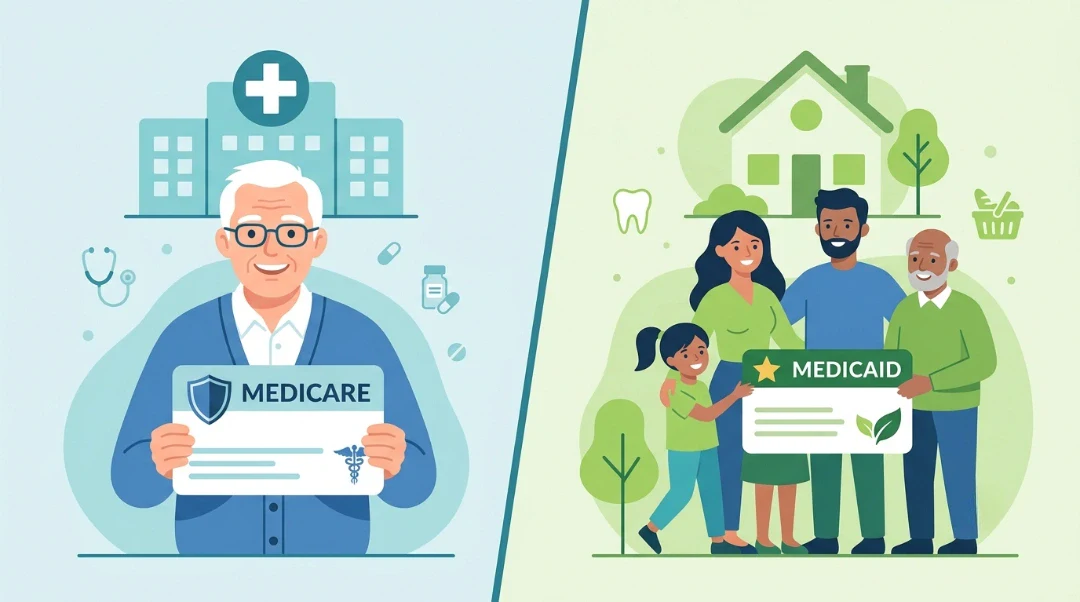
It can be very stressful trying to find the correct health insurance options for an aging family member, especially when the plans seem the same. It is very reasonable to ask is medicare and medicaid the same because their names create huge misunderstanding for millions of families every single year.
I assure you that I’m going to clear this up today and give you a direct description of how these two programs work, who they cover and how they safeguard your family. We’ll cover the main prerequisites, demystify the hidden out-of-pocket costs, and break down what is the difference between medicare and medicaid so you can make informed decisions for your family’s future care needs. Medicare is for older persons and certain people with disabilities. Medicaid is for people with low incomes.
What Is Medicare?
Medicare is a government health insurance program for those age 65 and older and certain younger adults with impairments or diseases such as ESRD or ALS. Part A through Part D. All states operate the program through the federal government in the same way.
Medicare does not count your income. If you or your spouse paid Medicare taxes for enough years, you usually qualify at 65, no matter how much money you have in the bank. Part A is for hospital stays, Part B is for doctors and outpatient care, Part C is Medicare Advantage which is A and B put together through a private insurer and Part D is for prescription prescriptions. It is run by the Centers for Medicare & Medicaid Services (CMS) and supported by payroll taxes, premiums and federal trust funds.
Original Medicare had gaps in parts A and B. It doesn’t cover routine dental, eye or hearing treatment, and it doesn’t cover long-term custodial care in a nursing home. That’s one of the main things people overlook when comparing programs, and it’s a large part of why Medicaid exists alongside it.
What Is Medicaid?
Medicaid is a joint federal and state program that pays for health care for people with limited income and resources. Eligibility depends mainly on income and household size rather than age, and the specific benefits you get depend on which state you live in.
Every state runs its own Medicaid program under federal rules, which is why coverage looks different depending on where you live. States must cover certain mandatory benefits, including hospital care, doctor visits, lab work, and X-rays. Beyond that, states choose whether to add optional benefits like medicaid dental coverage, physical therapy, or hospice services.
One detail that surprises a lot of families: Medicaid covers medicaid nursing home coverage and long-term custodial care, which Medicare generally does not. For many older adults who eventually need full-time nursing home support, Medicaid becomes the primary way to pay for it once their own savings run out. Children’s Medicaid coverage often runs through CHIP (the Children’s Health Insurance Program), a related program for kids whose families earn slightly too much for standard Medicaid but still need low-cost coverage.
Key Differences Between Medicare and Medicaid
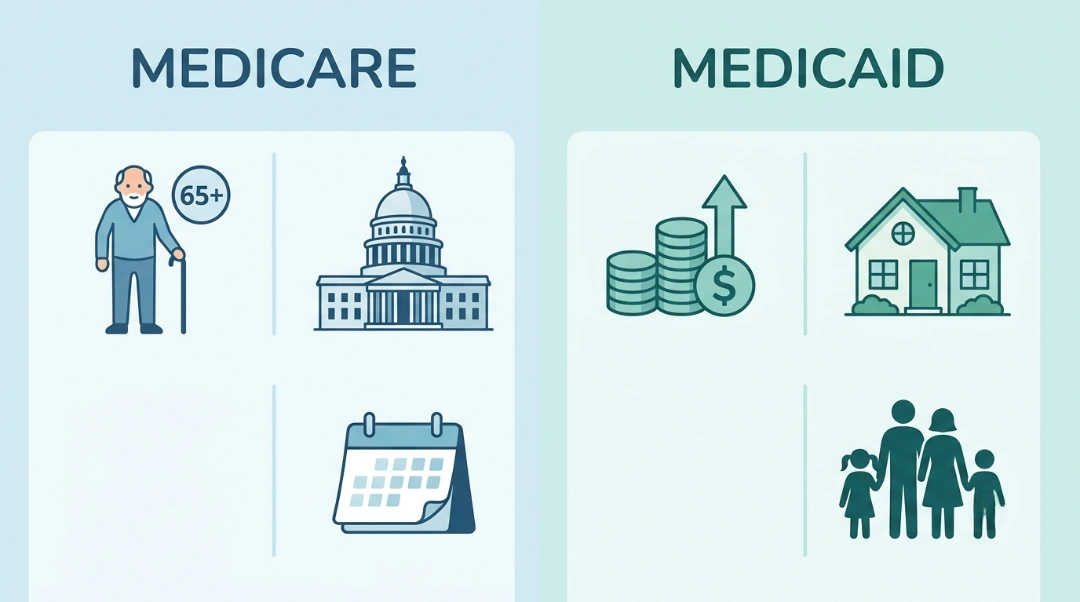
The medicare and medicaid difference comes down to four things: who runs the program, who qualifies, what’s covered, and what it costs. Medicare is federal only. Medicaid is federal and state, which means the same benefit can look different in Ohio than it does in Colorado.
| Feature | Medicare | Medicaid |
| Who runs it | Federal government (CMS) | State and federal government together |
| Who qualifies | Age 65+, or certain disabilities | Limited income and resources, any age |
| Funding | Payroll taxes, premiums, trust funds | Federal and state tax dollars |
| Cost to you | Premiums, deductibles, copays | Usually low or no premium |
| Nursing home care | Limited, short-term only | Covered for long-term stays |
This table answers the medicare medicaid difference at a glance, but the real-world impact matters more. A retired teacher with a pension pays Medicare premiums out of her Social Security check. A single mother working part-time might qualify for Medicaid at no monthly cost at all. Same country, same year, two completely different bills.
What Do Medicare and Medicaid Cover?
At first glance, the medical treatments covered by these schemes are identical, yet below they are quite different. Both plans cover the basics, like hospital stays, lab work, X-rays, and emergency department visits. But they address daily senior care requirements in very different ways.
The age-based system is purely medically-needs-based. It seeks to cure an ailment, or set a broken bone. It’s worth a doctor’s time to treat a cardiac disease, but it won’t pay someone to help a senior get dressed or make meals because of this concentration.
That takes us to a big issue of confusion: custodial care vs specialized care. Skilled care is care involving medical duties that must be done by licensed experts, such as physical therapists or registered nurses . Custodial care provides non-medical help with daily routines such as bathing, ambulating and medication management.
If you qualify medically, Original Medicare will cover skilled care in a nursing facility for a limited time (up to 100 days per benefit period). That would mean you would pay a copay of $217 a day for days 21 through 100 in 2026. It flatly rejects long-term custodial care.
Can You Have Both Medicare and Medicaid?
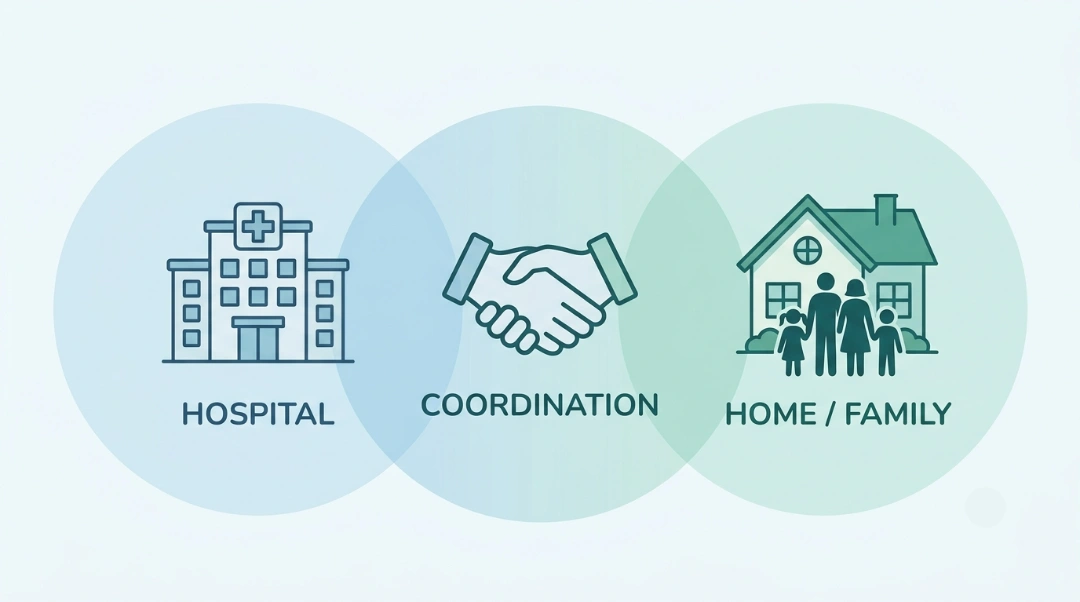
Yes, you can have both Medicare and Medicaid at the same time if you meet the eligibility rules for each program separately. People in this situation are called dual eligible, and the two programs work together so Medicaid picks up costs that Medicare doesn’t cover.
In fact, dual eligibility is more prevalent than you might think especially for low-income seniors and persons with disabilities. If you qualify for both, Medicaid will help pay your Medicare premiums, deductibles and co-pays, and will pay for long-term care that Medicare won’t touch. Some dual eligibles also qualify for a dual eligible special needs plan (D-SNP), a type of Medicare Advantage plan that coordinates both benefits under one card and one set of rules.
If you are not eligible for Medicaid but still have trouble paying for Medicare, look into the Medicare Savings Programs. There are four of them and they can help pay for some or all of Part B premiums and sometimes deductibles and coinsurance, depending on which one you qualify for.
Medicare and Medicaid Costs: What You’ll Actually Pay
Medicare premiums and deductibles change every year and depend on which parts you’re enrolled in. Most people don’t pay a Part A premium if they or a spouse worked and paid Medicare taxes for at least 10 years. Part B has a set monthly premium that can rise based on income, and Parts C and D vary by plan and provider.
Medicaid works almost the opposite way. Because it serves people with limited income, most states charge no premium at all, and any copays tend to be small. Medicaid asset limits matter here too. Most states cap countable assets somewhere around $2,000 for an individual, though certain assets like a primary home or one vehicle are usually excluded from that count. Rules shift by state, so the exact number is worth confirming locally rather than assuming a national standard.
There’s also the Extra Help program, which is separate from the Medicare Savings Programs but often confused with them. Extra Help specifically lowers what you pay for Part D prescription drug costs if your income and resources fall under a certain limit. It’s run through Social Security, not your state, so the application process looks more like a Medicare process than a Medicaid one, even though the underlying goal, helping people with lower income afford their medications, sounds a lot like what Medicaid already does.
How to Apply for Medicare or Medicaid
Applying for Medicare usually starts three months before your 65th birthday, during what’s called the Initial Enrollment Period. You can apply online through the Social Security Administration at ssa.gov, by phone, or in person at a local Social Security office. Miss that window, and you may face a late enrollment penalty unless you qualify for a special enrollment period.
Medicaid applications don’t run on a yearly schedule. You can apply any time of year directly through your state’s Medicaid website or through the Health Insurance Marketplace at healthcare.gov. Processing times vary, but most states aim to make a decision within 45 days, or 90 days if a disability determination is involved.
Where In-Home Support Fits Into the Picture
Neither program was built to pay for full-time, non-medical help around the house, and that catches a lot of families off guard. Medicare won’t cover ongoing help with bathing, meal prep, or daily companionship unless it’s tied to a short-term, medically necessary recovery plan. Medicaid can cover some of this through state-specific home and community-based waiver programs, but eligibility and availability depend heavily on where you live and how long the waitlist runs.
That gap is exactly why so many families end up paying privately for non-medical support, whether it’s a few hours a week or daily visits. If you’re in the Denver area and trying to figure out what that looks like in practice, Castle Pines Home Care works with families to arrange home care services in Denver that cover everything from companionship to help around the house. For a parent who just needs a daily check-in and a reminder to take their pills on time, medication reminder services for seniors in Denver can be the difference between a missed dose and a manageable routine.
Final Thoughts
Once you see Medicare and Medicaid side by side, the confusion tends to clear up fast. One is federal and tied to age, the other is a state partnership built around income, and plenty of people end up using both at once. The real work is figuring out which rules apply to your specific situation, checking your state’s Medicaid limits, and marking your enrollment dates so you don’t miss a deadline.
If you’re supporting an aging parent or a loved one with a chronic condition and you’re trying to figure out what falls outside what Medicare and Medicaid actually pay for, contact us at Castle Pines Home Care and we’ll walk you through the options available in your area.
Frequently Asked Questions
Is medicare and medicaid the same thing?
No, they are completely separate programs with different rules. The age-based program serves seniors and individuals with disabilities regardless of wealth, while the income-based program serves low-income individuals regardless of age. They use different funding sources and separate application systems.
What is the primary medicare and medicaid difference regarding long-term care?
Medicare refuses to pay for long-term custodial care, such as daily help with bathing or meal preparation. Medicaid covers long-term care in nursing homes and provides home care waivers to help seniors remain in their residences safely.
Can a person lose their state health benefits if their income rises?
Yes, you can lose these benefits if your monthly income or total countable assets exceed your state’s specific limits. State agencies perform regular reviews to confirm that every enrolled individual still meets the strict financial requirements.
What happens if I miss my age-based enrollment window?
Missing your initial window can result in a permanent financial penalty added to your monthly premiums. It can also delay your coverage start date, leaving you without health insurance for several months out of the year.
Do these programs cover prescription drugs completely?
The age program requires you to buy a separate Part D plan or a private advantage bundle to get drug coverage. The income program includes prescription drug coverage in all states, generally requiring only a tiny copay or no cost at all.