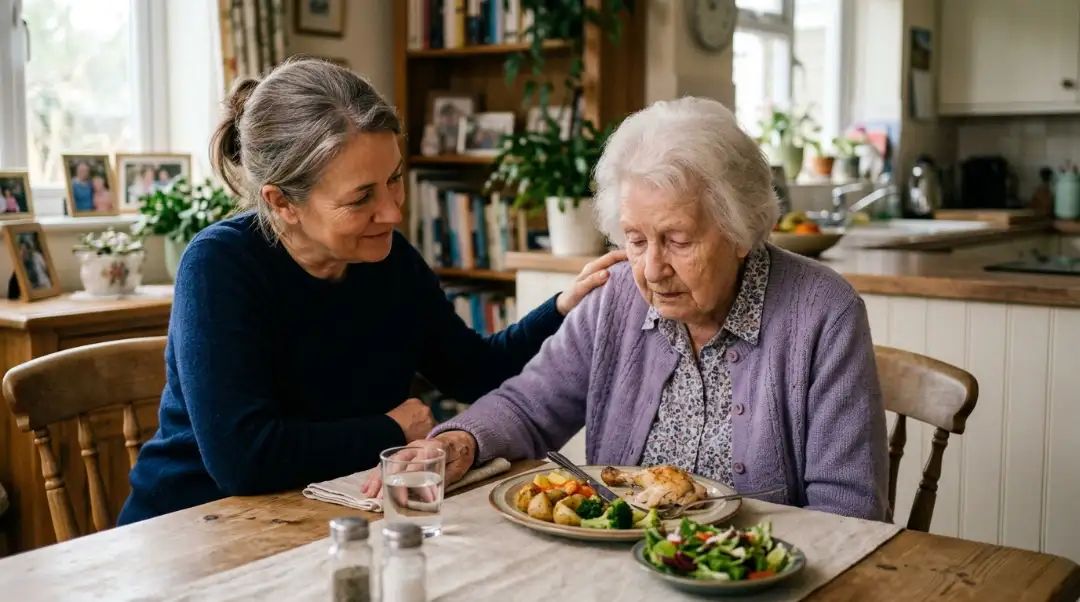
You’re not alone if you find your aging parent moving food around the plate or skipping meals altogether. Millions of family caregivers experience this very same concern every day. On the plus side? Most cases can be treated once you know what causes the condition.
What causes loss of appetite in elderly adults is rarely just one thing. It’s frequently a mix of physical changes, emotional issues and medical disorders acting together. This article explains the true reasons elders lose their appetite, when to worry, and what practical steps you may take to help.
Understanding Loss of Appetite in Older Adults
As the body ages, it naturally needs fewer calories. Muscle mass decreases, activity levels drop, and the digestive system slows down. This is called the anorexia of aging a clinical term for the gradual decline in appetite that comes with getting older.
But “gradual” is the key word. A slow, mild decrease over time is expected. A sudden drop is not.
The difference matters. One is a normal part of getting older. The other can be a signal your loved one’s body is fighting something more serious.
Is Loss of Appetite in Elderly Individuals a Cause for Concern?
Yes, it can be especially when appetite loss is sudden, severe, or paired with unexpected weight loss. Research shows that a 10% drop in overall body weight is linked to a significantly higher mortality rate within six months. Any rapid change in eating habits deserves medical attention, not just watchful waiting.
A slight reduction in appetite over years is expected. But when a senior stops eating for days, loses noticeable weight, or seems constantly fatigued alongside not eating, that’s a red flag.
Watch for these warning signs and contact a doctor if you notice them:
- Unintentional weight loss (especially 5–10% of body weight)
- Persistent fatigue alongside no appetite
- Refusal to eat for more than 2–3 days
- Signs of dehydration (dry mouth, dark urine, confusion)
- Sudden mood changes or withdrawal from social activities
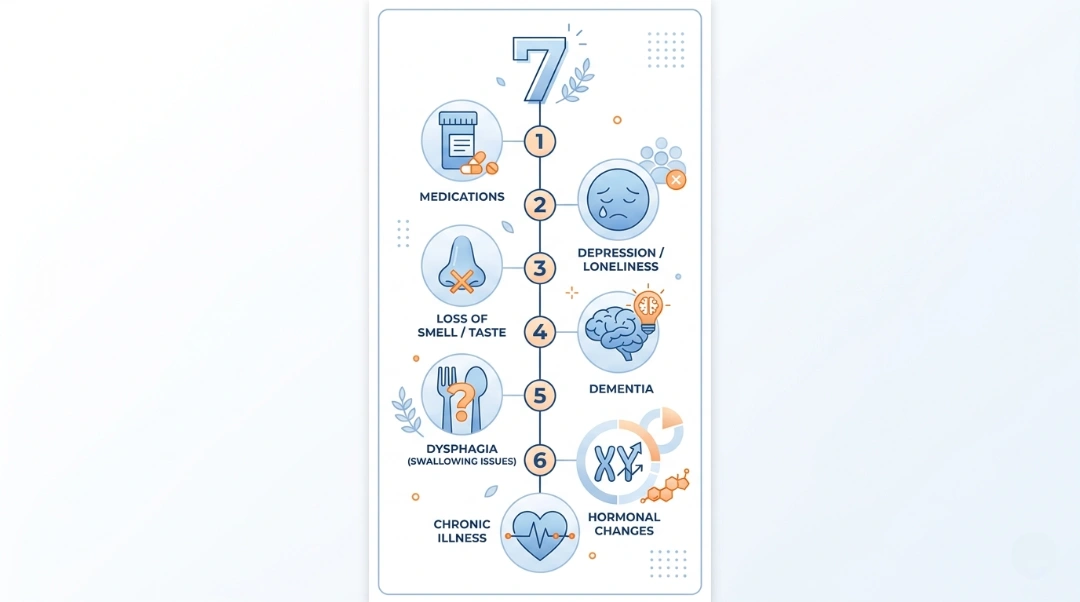
7 Common Causes of Loss of Appetite in Elderly Adults
1. Natural Metabolic Slowdown
The body’s resting metabolic rate drops with age. Lower hormone levels, reduced physical activity, and muscle loss all reduce the body’s caloric needs. Think of it like a car that’s idling slower it simply doesn’t need as much fuel.
This is why decreased appetite in elderly adults is so common and often normal. But just because it’s common doesn’t mean nutrition should be ignored.
2. Medication Side Effects
Many seniors take multiple medications a situation doctors call polypharmacy. Several common drug classes are known to suppress appetite, including:
- SSRIs and antidepressants (e.g., fluoxetine, sertraline)
- Antibiotics (can cause nausea and metallic taste)
- Digoxin (used for heart failure)
- Opioid pain medications
- Metformin (diabetes medication)
Medications can also cause dry mouth or a metallic taste, making food less appealing. If your loved one recently started a new medication and stopped eating, talk to their doctor about alternatives.
3. Loneliness, Depression, and Emotional Burden
Eating out alone every day takes a toll. For many seniors, mealtime used to be a social affair family meals, lunches with friends. When that leaves, food is meaningless.
Depression is one of the primary causes of decreased appetite in older individuals and affects approximately 10-20% of this population. It’s not just grief. In seniors, depression can manifest itself as weariness, withdrawal, and a total lack of interest in eating.
This is emotionally loaded for caregivers as well. Faced with the fear of a parent aging, anticipating anguish and the distress of watching someone you love fading, it can be hard to discern what is normal and what needs assistance. That emotional weight of caring is genuine, and knowing that helps you react better.
4. Difficulty Chewing or Swallowing (Dysphagia)
Dysphagia difficulty swallowing affects around 15% of the elderly population. Dental problems, ill-fitting dentures, stroke, Parkinson’s disease, or dementia can all make eating physically difficult or even painful.
When eating hurts or feels risky, seniors avoid it. That’s a survival instinct, not stubbornness.
Soft foods, thickened liquids, and speech therapy can make a significant difference. A doctor or dietitian can recommend the right approach.
5. Loss of Taste and Smell (Sensory Decline)
Imagine your favorite meal tasting like cardboard. That’s reality for many seniors. After age 70, both taste and smell begin to noticeably decline. The nerve endings in the nose reduce, mucous production drops, and food simply doesn’t smell or taste the way it used to.
Sour and bitter flavors tend to become sharper, while sweet, salty, and savory tastes fade. This leads many elderly adults to eat less or crave heavily salted or sugary foods neither great for their health.
6. Chronic Illness and Underlying Medical Conditions
Several serious conditions directly cause no appetite in elderly adults:
- Dementia and Alzheimer’s disease Loss of appetite in elderly with dementia is extremely common. As the disease advances, patients forget to eat, lose the ability to recognize hunger, or forget how to swallow.
- COPD Breathing difficulties make eating exhausting.
- Chronic kidney disease Up to 25% of CKD patients report reduced appetite as a primary symptom.
- Cancer Especially ovarian, pancreatic, lung, and stomach cancers.
- Thyroid disorders Both hypo- and hyperthyroidism affect appetite.
- Hepatitis and chronic liver disease Appetite loss is often one of the first noticeable symptoms.
Does dementia cause lack of appetite? Yes, consistently and it gets worse as the disease progresses. This is one area where early nutritional planning makes a real difference.
7. Hormonal Imbalances and the Satiety Signal Problem
The body uses hormones to signal hunger and fullness. One hormone in particular, cholecystokinin (CCK), tells the brain when you’re full. Research from the University of Plymouth found that this satiety hormone can become overstimulated in elderly adults meaning seniors feel “full” even when they haven’t eaten enough.
Combined with lower levels of ghrelin (the hunger hormone), elderly adults may genuinely not feel hungry, even when their body desperately needs nutrition.
Loss of Appetite Causes and Symptoms: What to Look For
Recognizing appetite loss early makes treatment easier. Here are the most common symptoms that accompany poor appetite in elderly adults:
- Rapid or unexpected weight loss
- Fatigue and weakness (signs of malnutrition)
- Increased confusion or cognitive decline
- Dry mouth, dark urine, or dizziness (signs of dehydration)
- Social withdrawal, especially around mealtimes
- Complaints that food “tastes different” or “smells bad”
Is Loss of Appetite a Normal Part of Aging?
A gradual, mild decrease in appetite is a normal part of aging. The body needs fewer calories as metabolism slows and activity decreases. However, sudden appetite loss, significant weight loss, or loss of appetite paired with fatigue or cognitive changes is not normal and requires medical evaluation.
Normal aging-related appetite changes happen slowly over years. They don’t cause dramatic weight loss in a matter of weeks. If you’re seeing rapid changes, trust your instincts and get a professional opinion.
Ways to Increase Appetite in the Elderly

Once you’ve ruled out a serious medical cause, there are practical ways to help your loved one eat more consistently:
Make meals social. Studies show seniors eat more and make better food choices when eating with others. Even a weekly shared meal makes a difference.
Stick to a schedule. Routine reduces confusion. Offering 5–6 small meals throughout the day rather than three large ones works better for most seniors.
Adjust for sensory decline. Use herbs and spices to add flavor without excess salt or sugar. Bright, colorful foods are more visually appealing and can trigger appetite.
Address oral health. If chewing is the issue, blended foods, smoothies, and soft textures can help. Don’t let a dental problem become a nutrition crisis.
Talk to a doctor about appetite stimulants. In some cases, prescription medications like megestrol acetate or mirtazapine are used to stimulate appetite in elderly patients. This is especially relevant for seniors with cancer or advanced dementia.
Keep them hydrated. Up to 40% of seniors are chronically under-hydrated. Dehydration itself suppresses appetite. Offering small sips of water, herbal tea, or broth throughout the day helps.
Getting Professional Support at Home
If you’re caring for an aging loved one and struggling with these challenges, you don’t have to figure it out alone. Professional caregivers trained in senior nutrition can make a real difference helping with meal preparation, monitoring eating habits, and spotting warning signs early.
At Castle Pines Home Care, we work with families to create personalized care plans that include nutrition support, daily meal assistance, and compassionate companionship. Our home care services in Denver are designed to help seniors maintain their quality of life while staying in the comfort of their own home.
Grief about a living parent, caregiver anxiety, the weight of watching someone you love struggle these are real burdens. Having the right support around you matters as much as having the right plan.
Frequently Asked Questions
What medical conditions cause loss of appetite in elderly adults?
Common conditions include dementia, Alzheimer’s disease, COPD, chronic kidney disease, thyroid disorders, hepatitis, and several types of cancer. Depression is also a major but often overlooked cause.
What can I give my elderly parent to increase their appetite?
Start with small, frequent meals, social mealtimes, and flavor-enhanced foods. If the problem persists, a doctor may recommend appetite stimulant medications like megestrol acetate or mirtazapine.
Is loss of appetite a sign of dying in elderly adults?
In the final stages of life, appetite loss is common and expected. However, appetite loss alone is not always a sign of dying it can have many treatable causes. A doctor should evaluate any significant change.
How long can an elderly person go without eating?
Most adults can survive without food for several weeks, but the elderly are far more vulnerable to complications. After just a few days without adequate nutrition, seniors can experience severe weakness, confusion, and immune decline. Don’t wait to seek help.
Why do old people lose their appetite even when they’re not sick?
Metabolic slowdown, sensory decline, loneliness, reduced physical activity, and hormonal changes can all reduce appetite even in otherwise healthy seniors. It’s worth monitoring, even when no illness is present.