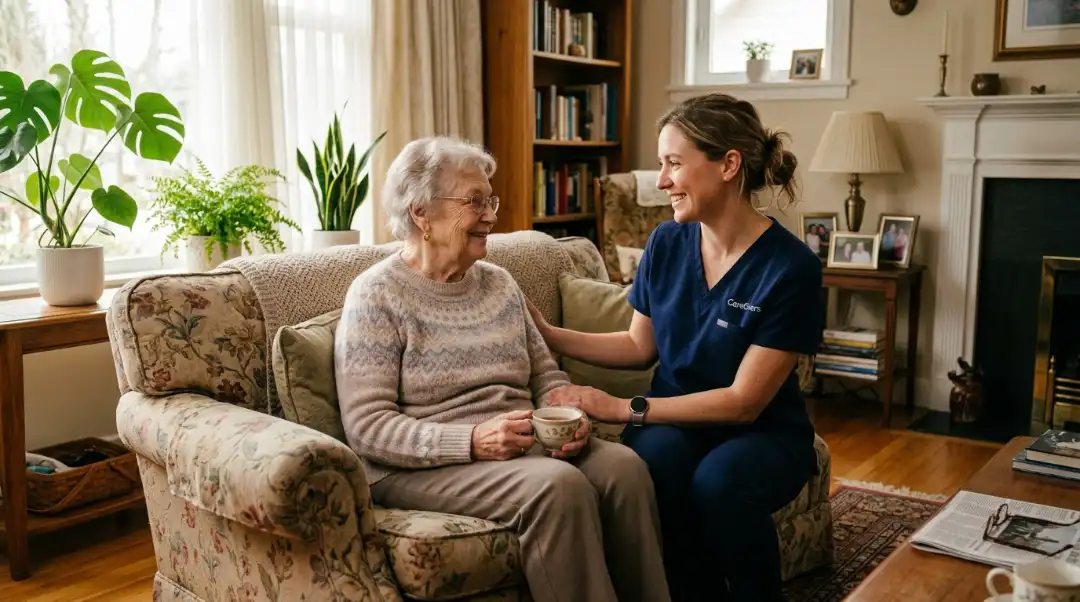
Protective oversight helps a person stay safe when they need another person nearby to notice risks, provide reminders, redirect unsafe actions, or offer standby assistance. It can be useful for older adults and people with disabilities who have difficulty recognizing danger, making safe decisions, or completing certain daily activities without support.
What Is Protective Oversight? In simple terms, it means providing appropriate supervision and safety support to someone who may be at risk when left alone. The exact meaning depends on the care program and state. This article explains how protective oversight works, how it differs from protective supervision, what an assessment may consider, and how families can find appropriate non-medical support at home.
Understanding the Importance of Protective Supervision
Safety can change when memory, judgment, mobility, orientation, or other abilities decline. A person may know how to use a stove but forget that it’s on. Someone who normally follows safety instructions may wander outside, attempt an unsafe transfer, or need help recognizing a hazard.
Protective supervision focuses on these situations. The goal isn’t to take away a person’s independence. It’s to provide the right level of support so the person can remain as safe and independent as possible.
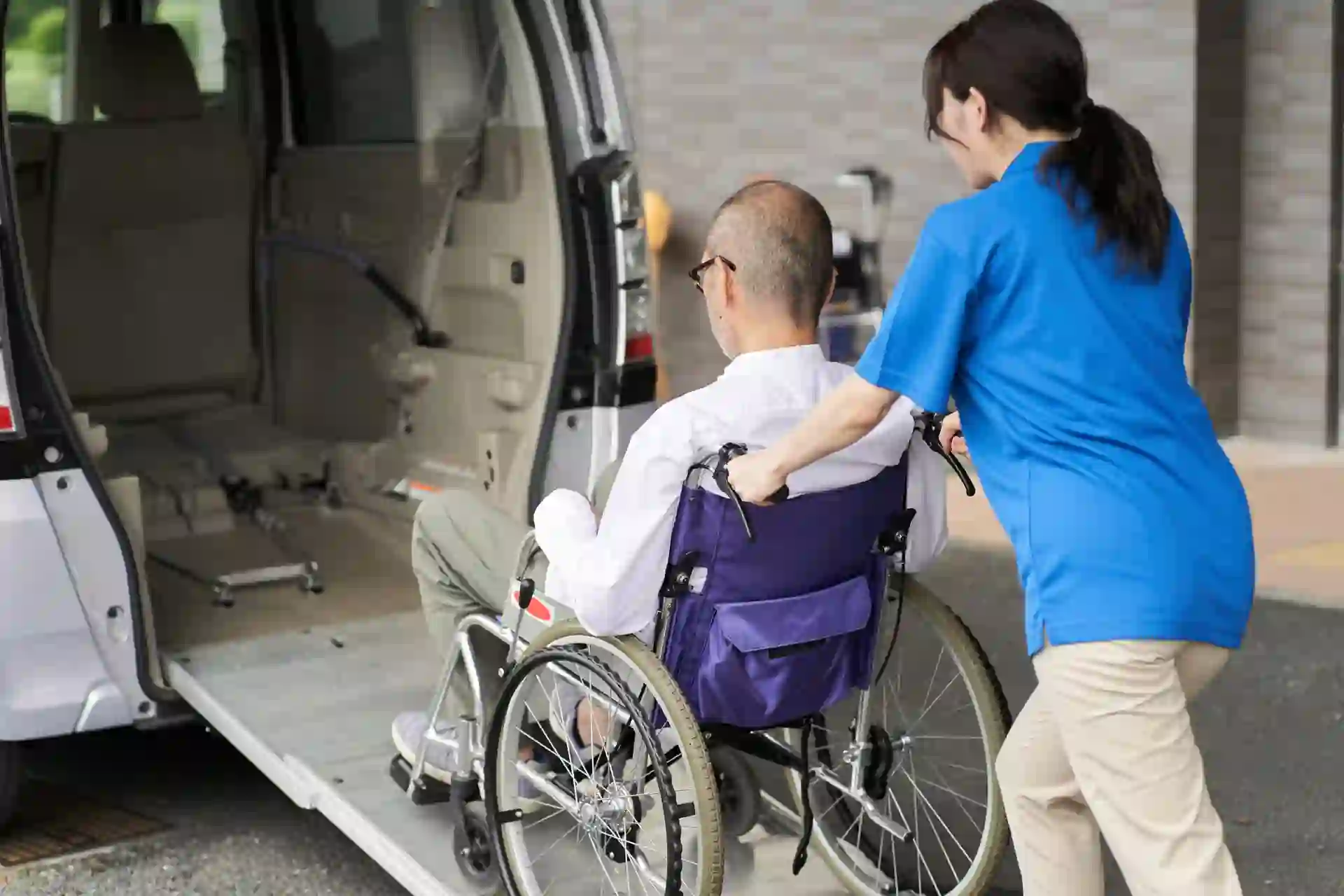
For example, a caregiver might stay nearby while an older adult moves around the kitchen, remind them to use a walker, redirect them away from a hot surface, or provide standby help during a transfer.
The Concept and Significance of Protective Supervision
Protective supervision is a non-medical service that provides continuous monitoring to individuals who, due to mental illness or cognitive impairment, cannot safely identify hazards or make safe decisions on their own. It is not about controlling someone it’s about being present so harm doesn’t occur.
The service is based on a basic premise: certain individuals need someone with them, not because they can’t move, or eat, but because their judgment is affected in ways that create genuine danger. A person may be wandering around the house, touching a hot stove or misusing household equipment, without knowing they are in risk.
That’s when protective monitoring comes in. A caregiver, termed the provider, often stays with the person, observes the behavior, and steps in when needed. It’s not reactive care. It’s preventative.
This kind of vigilance is also part of managing chronic illnesses. Such monitoring can be particularly important for someone with diabetes, for example, who could otherwise miss timely reminders to take prescriptions or to identify the early warning signals of high or low blood sugar. (Suggest insert here one data point about the link between unsupervised medication management and hospital readmission rates.
What Are the Eligibility Requirements for Protective Supervision?
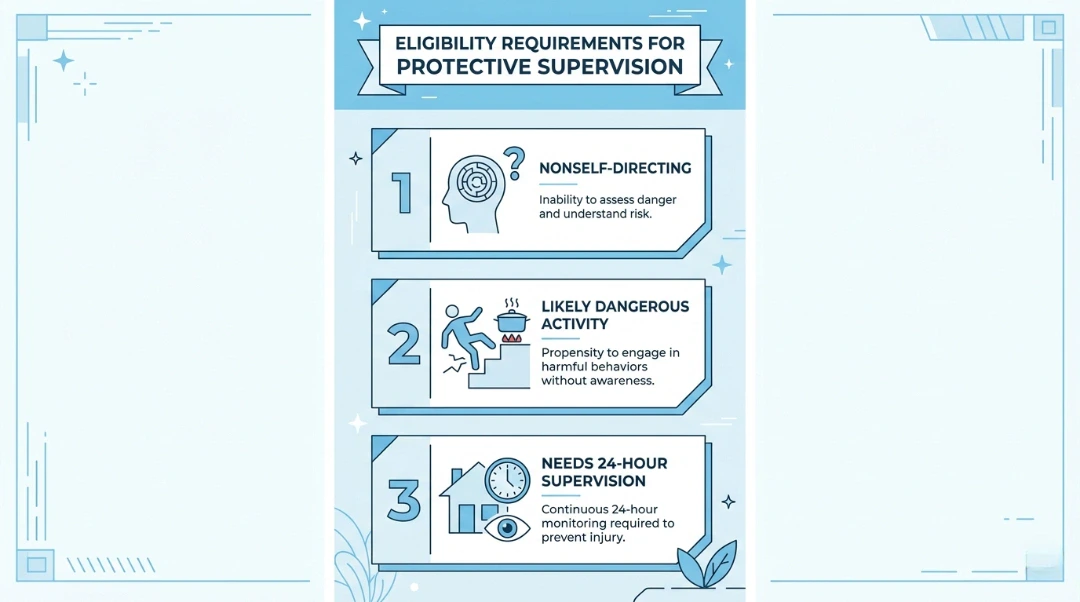
To qualify for protective supervision, an applicant must demonstrate a severe cognitive impairment, such as Alzheimer’s disease, dementia, or an intellectual disability. They must show that without continuous monitoring, they face immediate risk of accidental physical injury or severe self-harm.
Assessors review specific eligibility factors during the application process:
-
Cognitive assessment scores: Formal testing showing severe memory loss, impaired judgment, or disorientation.
-
Inability to recognize common hazards: Lack of awareness regarding fire, hot surfaces, toxic chemicals, or heights.
-
Physical capacity for motion: The individual must be physically capable of moving into dangerous situations independently.
-
Continuous need: The requirement for observation must extend across the entire day and night cycle.
Program rules generally exclude individuals who require physical restraint, medical nursing care, or direct supervision for violent behavior toward others.
What Documentation Do I Need for Protective Supervision?
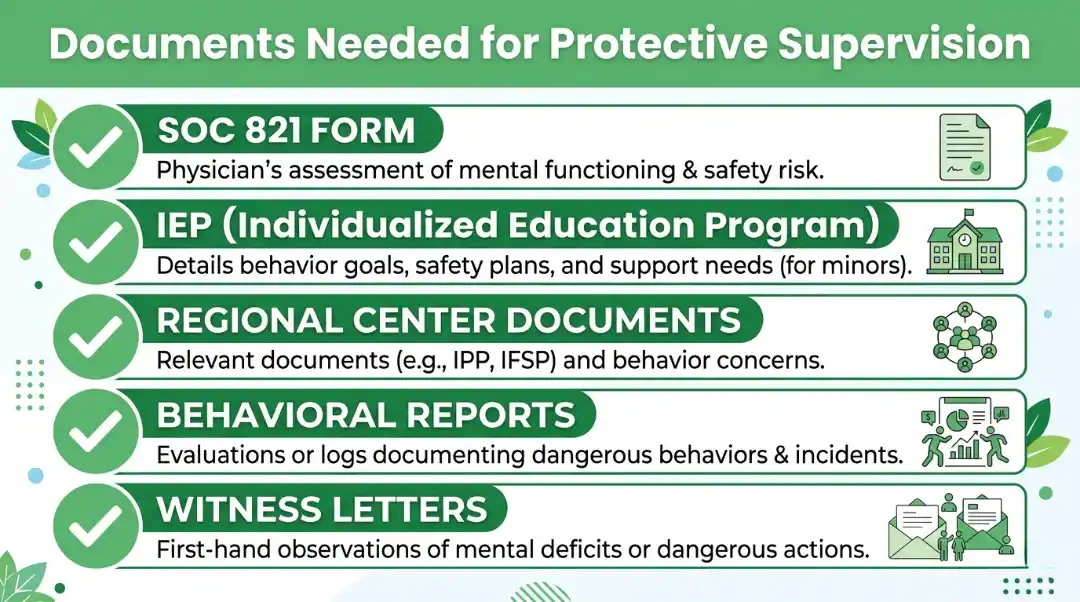
You need formal medical certifications, doctor reports detailing cognitive deficits, a completed 24-hour care log, and official state assessment forms. These documents must clearly demonstrate that the individual cannot safely stay home alone for any length of time.
Missing or incomplete documentation remains the leading cause of application delays and denials. Preparing your paperwork carefully establishes a strong record of need.
Gather these key documents before your intake appointment:
-
Medical certifications: Written statements from primary physicians or neurologists establishing diagnosis and cognitive limits.
-
24-hour care log: A detailed diary kept over 7 to 14 days tracking every unsafe attempt, wander event, or moment of severe confusion.
-
Assessment forms: Official state or agency medical forms completed directly by treating physicians.
-
Behavioral logs: Documented instances where the individual attempted dangerous tasks without realizing the risk.
Precise records establish the gap between physical independence and mental safety.
What Happens at the Assessment for Protective Supervision?
During the assessment, a social worker or trained assessor visits the home to evaluate the applicant’s cognitive function, living environment, and physical mobility. They interview family caregivers, review medical records, and observe the individual’s ability to process safety risks.
The evaluation phase determines the exact hours of care approved by state programs or private agencies.
Prepare for the assessment with these practical steps:
-
Keep daily care logs visible and organized for the assessor to review.
-
Speak openly about bad days rather than downplaying unsafe events.
-
Ensure the individual stays in their natural home environment during the visit.
-
Focus answers on cognitive safety risks rather than physical weakness alone.
Medical Equipment Assistance and Supportive Services
Medical equipment assistance and supportive services provide physical safety devices, emergency response tools, and non-clinical home modifications alongside direct oversight. These resources help secure the home environment while caregivers monitor individuals with severe cognitive loss.
Combining continuous monitoring with specialized safety devices creates a secure living space.
Key auxiliary services include:
-
Environmental modifications: Door alarms, window locks, auto-shutoff valves for gas stoves, and wander-prevention systems.
-
Personal alert devices: Wearable GPS trackers and motion sensors that notify caregivers when an individual leaves a safe area.
-
Adaptive home safety items: Grab bars, safe lighting paths, and non-slip surfaces that reduce fall risks during moments of confusion.
What Is IHSS Protective Supervision?
IHSS protective supervision is a financed program run by California county welfare departments under the supervision of the California Department of Social Services (CDSS) . Provides non-medical, in-home monitoring services to Medi-Cal qualified persons who are unable to live safely alone due to mental impairment.
The program is specifically developed as an alternative to institutional care . “People stay in their own homes and research always shows that that is linked to better emotional well-being and slower cognitive decline.” (suggest adding a peer-reviewed citation here on home-based care outcomes vs. institutional care)
County welfare agencies process applications, assessments, service authorization. At the state level, CDSS manages the program. Applicants have the right to a formal hearing process to appeal a denial of an application and, if required, to request a rehearing and even seek state court review.
Definition: What Does Protective Oversight Mean?
So, stepping back, what is protective oversight in the broadest sense?
It’s the practice of maintaining a watchful presence over someone who cannot fully protect themselves. In a home care context, it means having a person physically present to observe, respond, and prevent harm. In a broader sense, it’s about building systems of accountability around individuals who are vulnerable.
Protective oversight isn’t passive. It requires attention, documentation, and quick response. A good oversight provider isn’t just sitting in the room they’re actively monitoring, tracking patterns, and communicating with the care team about what they observe.
For families navigating the world of in-home support for the first time, understanding what is protective oversight helps clarify what to ask for, who qualifies, and why it matters.
The Future of Protective Supervision Services
Non-clinical safety monitoring continues to evolve alongside advances in home technology and changing healthcare policies. State agencies increasingly recognize that non-medical safety oversight keeps aging populations healthier while reducing long-term hospitalizations.
Future developments shaping non-clinical oversight include:
-
Smart home integration: Motion-sensing floors and smart cameras that alert caregivers to unusual movement patterns without intrusive tracking.
-
Expanded family support programs: Broader Medicaid waivers allowing family members to receive fair compensation for non-clinical supervision.
-
Hybrid care models: Combining in-person caregiver monitoring with remote safety technology to ensure 24-hour coverage.
As awareness grows, families have access to better resources and clearest paths to secure reliable non-medical care.
Protective Oversight Services in Denver: How Castle Pines Home Care Can Help
If you’re based in Colorado and searching for home care services in Denver, offers personalized in-home support for individuals who need consistent oversight and care.
We work with families navigating exactly what’s described in this guide older adults, individuals with disabilities, and people managing chronic conditions who want to stay safely at home rather than move into a facility.
Our team understands the difference between standard home care and true protective oversight. We build care plans around your loved one’s specific needs, not a generic checklist.
If you have questions or want to discuss options, contact us directly. We’re here to help you figure out the right level of support whether that’s a few hours a week or a full daily care plan.
Visit our page on Protective Oversight Services in Denver to learn more, or reach out to the Castle Pines Home Care team today.
Frequently Asked Questions
What is the difference between protective supervision and regular home care?
Regular home care assists with physical tasks like bathing, meals, and medication reminders. Protective supervision specifically addresses safety monitoring for individuals who cannot assess danger due to mental impairment. It’s less about physical help and more about preventing accidents and unsafe behaviors.
Does protective supervision require the person to be injured first?
No. An applicant never needs to suffer an actual injury to qualify. A documented history of unsafe behaviors or a tendency toward dangerous activities is sufficient for the assessment.
Can a parent be a paid IHSS protective supervision provider?
Yes, in many cases. Parents of minor children can qualify as paid IHSS providers under certain conditions. The process involves an application and assessment just like any other provider.
How long does it take to get approved for IHSS protective supervision?
Counties are generally required to process an application and mail a notice of action within 30 days of a completed application. However, the full timeline can vary based on documentation requirements and county workload.
What happens if my application for protective supervision is denied?
You have the right to appeal within 90 days of receiving the Notice of Action. An administrative law judge will review your case. You can also request a rehearing or seek court review if needed.
Is protective supervision available in states outside California?
IHSS is specific to California. However, other states have similar Medicaid-funded in-home support programs. The eligibility criteria and program names vary by state. Contact your local Medicaid office or a home care provider in your area for guidance.