When an aging family member suddenly stops finishing their meals, it naturally triggers immediate worry and stress. What causes loss of appetite in elderly adults usually boils down to a combination of physical health shifts, medication side effects, emotional challenges, and routine age-related metabolic changes. By identifying the root reason behind a declining appetite, you can take practical steps to restore their nutrition and protect their daily energy.
Watching an elderly parent not eating enough food is tough, but you don’t have to guess your way through a solution. In this guide, we’ll break down the warning signs to watch for, cover the most common underlying causes, and share real-world strategies to make mealtimes appealing again. You’ll learn how to handle routine appetite drops safely while knowing exactly when it’s time to bring in extra support.
Understanding Loss of Appetite in Older Adults
Loss of appetite in older adults is a reduced desire to eat that can show up as smaller portions, skipped meals, or a general lack of interest in food. It can creep in slowly over months, or it can show up almost overnight after an illness, a new prescription, or a hard emotional loss. Either way, it’s worth understanding rather than ignoring.
Appetite isn’t just about willpower or habit. It’s controlled by a complicated system of hormones, nerve signals, and brain chemistry that shifts as the body ages. Add in a slower digestive tract, weaker senses of taste and smell, and a body that simply burns fewer calories at rest, and you’ve got a recipe for eating less without even trying to.
That doesn’t mean every skipped meal is a crisis. But it does mean this deserves a closer look, especially if it’s paired with weight loss, fatigue, or a change in mood.
Is Loss of Appetite in Elderly Individuals a Cause for Concern?
Loss of appetite in elderly individuals becomes a major cause for concern when it leads to noticeable weight loss, low energy, or signs of dehydration. While minor appetite shifts happen naturally with age, sudden or severe drops in food intake can point to underlying health issues or dangerous nutrient deficiencies.
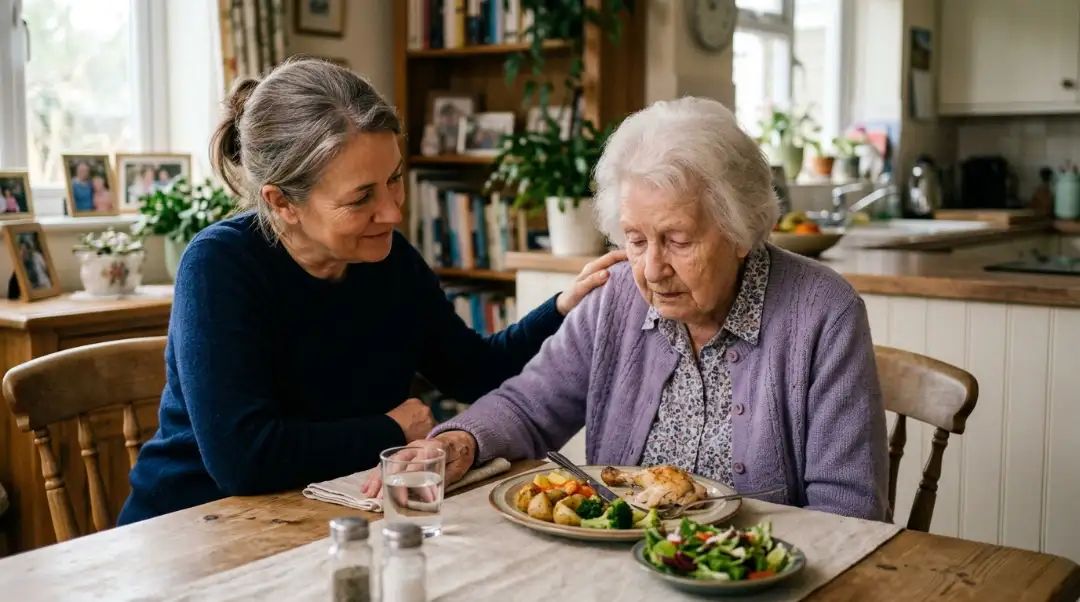
If an elderly person won t eat for several days in a row, subtle physical changes can quickly turn into serious medical risks.
-
Rapid weight loss: Clothes fitting loosely or watchbands sliding off unexpectedly.
-
Frequent fatigue: Trouble standing, walking, or keeping up with daily routines due to lack of calories.
-
Dehydration: Dry mouth, sunken eyes, confusion, or dark-colored urine.
-
Weakened immune system: Taking much longer to bounce back from minor colds or skin cuts.
-
Increased fall risk: Muscle loss leads to instability and balance issues.
7 Common Causes of Loss of Appetite in Elderly Adults
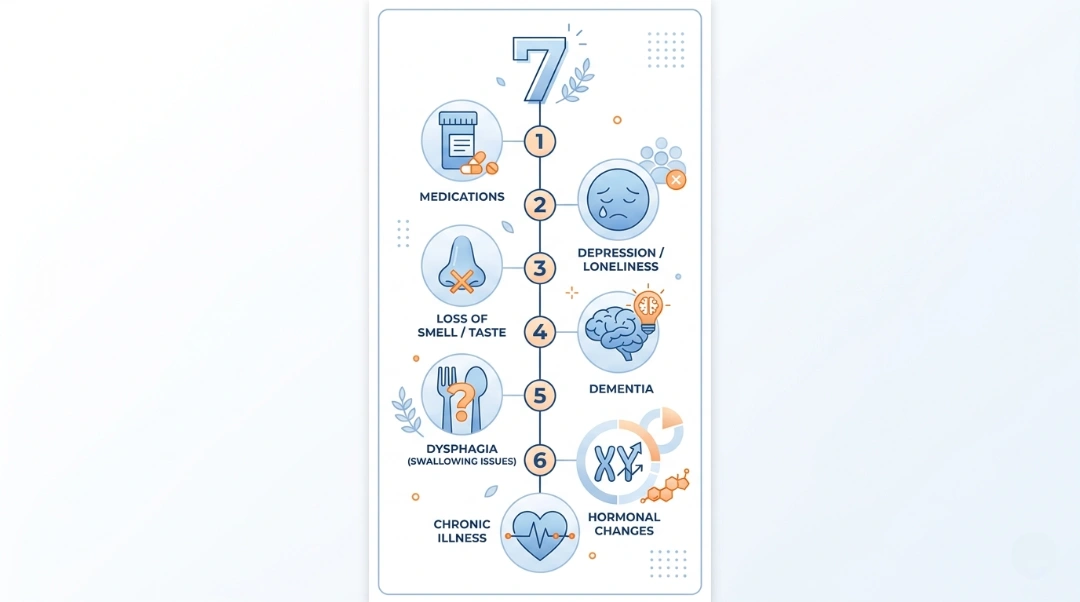
There isn’t one single answer to what causes loss of appetite in elderly adults. Usually it’s two or three things happening together. Here are the ones I see most often.
1. A Naturally Slower Metabolism
As people age, resting metabolic rate drops, which means the body simply needs fewer calories to keep going. This is one of the most normal, least worrying causes of loss of appetite in elderly adults, and on its own it rarely leads to serious weight loss.
2. Medication Side Effects
Many common prescriptions, including some blood pressure medications, antidepressants, and pain relievers, list appetite loss or nausea as a side effect. Older adults are often on five or more medications at once, and those effects can stack up in ways that are easy to miss. A pharmacist reviewing the full medication list can often spot the culprit fast.
3. Dental and Oral Health Problems
Missing teeth, ill-fitting dentures, or mouth pain make chewing genuinely unpleasant, not just inconvenient. If eating hurts, people eat less. It’s that simple, and it’s one of the most overlooked reasons an elderly person won’t eat.
4. Changes in Taste and Smell
The senses of taste and smell fade with age, and food that used to taste rich can start tasting flat or even metallic. When food stops being enjoyable, the motivation to eat goes with it.
5. Digestive Slowdown
The gut moves more slowly in older age, which can cause bloating, constipation, and a feeling of fullness after only a few bites. That early fullness, sometimes called early satiety, is a frequent driver of loss of appetite in elderly adults who otherwise feel fine.
6. Depression, Loneliness, and Grief
Eating is social. When a spouse passes away, or mobility issues keep someone from getting out, meals can start to feel pointless rather than enjoyable. Depression and social isolation are among the strongest psychological causes of loss of appetite in elderly adults, and they’re often mistaken for “just getting older.”
7. Underlying Illness
Thyroid disorders, chronic kidney disease, liver conditions, infections, and certain cancers can all suppress appetite as an early symptom, sometimes before any other signs appear. This is exactly why a sudden, unexplained change deserves a medical visit rather than a wait-and-see approach.
Loss of Appetite Causes and Symptoms: What to Look For
Spotting appetite loss early involves watching for subtle daily habits, such as picking at food, skipping entire meals, or complaining that food tastes strange. You should also watch for physical warning signs like loose clothing, lethargy, dry skin, and unexpected weakness during normal walking routines.
To catch subtle changes early, keep an eye out for these specific behavioral and physical indicators:
| Category | Warning Signs to Track |
| Mealtime Habits | Leaving plates mostly full, moving food around without eating, saying “I already ate” repeatedly. |
| Kitchen Signals | Unopened groceries, expired food in the fridge, unused cookware, untouched prepped meals. |
| Physical Appearance | Loose-fitting collarbones, sunken cheeks, sudden changes in belt notches. |
| Mood Changes | Irritability around meal times, social withdrawal, indifference toward favorite treats. |
Is Loss of Appetite a Normal Part of Aging?
Some decline in appetite is a normal part of aging, driven by a slower metabolism and reduced activity levels, but a sharp or sudden loss of appetite is not something to accept as normal. There’s a real difference between “I eat a bit less than I used to” and “I’ve stopped wanting food altogether.”
Here’s an analogy that might help. Think of appetite like your car’s fuel gauge. As you get older, the engine (your metabolism) needs less fuel to run, so naturally you’re not filling the tank as often. That’s expected. But if the gauge suddenly drops to empty overnight, something’s wrong with the system, not just the fuel needs. That’s the difference between typical aging and a problem that needs attention.
Ways to Increase Appetite in the Elderly

You can increase appetite in elderly adults by serving smaller, calorie-dense meals more frequently, adding natural flavor enhancers, making mealtimes social, and establishing a consistent daily eating routine. Soft, easy-to-chew foods and gentle physical activity also help spark natural hunger cues.
Data & Evidence Suggestion: Reference clinical nutrition recommendations regarding high-protein, small-frequency feeding models (e.g., serving 5 to 6 small meals daily rather than 3 large ones) to optimize intake without overwhelming digestion.
Trying to force a large plate of food on someone who isn’t hungry rarely works. Instead, small adjustments to how, when, and what you serve make a major difference:
-
Offer Small, Nutrient-Dense Portions: Serve 5 or 6 small mini-meals throughout the day instead of 3 heavy plates. Pack meals with healthy fats like avocado, olive oil, nut butters, or full-fat dairy.
-
Enhance Flavors and Colors: Use aromatic herbs, lemon juice, mild spices, and colorful vegetables to stimulate senses weakened by age.
-
Establish Routine: Serve meals at the exact same times every day. The body responds remarkably well to predictable schedules.
-
Keep Snacks Visible and Accessible: Place easy-to-grab snacks like cheese cubes, peeled fruit, or soft nuts within easy reach of their favorite chair.
-
Make Food Easy to Eat: Serve finger foods, soft casseroles, or smoothies if chewing utensils causes frustration or physical pain.
-
Encourage Hydration Between Meals: Offer liquids 30 minutes before or after meals rather than during, so drinks don’t fill up valuable stomach space.
Getting Professional Support at Home
If you’re caring for an aging loved one and struggling with these challenges, you don’t have to figure it out alone. Professional caregivers trained in senior nutrition can make a real difference helping with meal preparation, monitoring eating habits, and spotting warning signs early.
At Castle Pines Home Care, we work with families to create personalized care plans that include nutrition support, daily meal assistance, and compassionate companionship. Our home care services in Denver are designed to help seniors maintain their quality of life while staying in the comfort of their own home.
Grief about a living parent, caregiver anxiety, the weight of watching someone you love struggle these are real burdens. Having the right support around you matters as much as having the right plan.
Frequently Asked Questions
What medical conditions cause loss of appetite in elderly adults?
Common conditions include dementia, Alzheimer’s disease, COPD, chronic kidney disease, thyroid disorders, hepatitis, and several types of cancer. Depression is also a major but often overlooked cause.
What can I give my elderly parent to increase their appetite?
Start with small, frequent meals, social mealtimes, and flavor-enhanced foods. If the problem persists, a doctor may recommend appetite stimulant medications like megestrol acetate or mirtazapine.
Is loss of appetite a sign of dying in elderly adults?
In the final stages of life, appetite loss is common and expected. However, appetite loss alone is not always a sign of dying it can have many treatable causes. A doctor should evaluate any significant change.
How long can an elderly person go without eating?
Most adults can survive without food for several weeks, but the elderly are far more vulnerable to complications. After just a few days without adequate nutrition, seniors can experience severe weakness, confusion, and immune decline. Don’t wait to seek help.
Why do old people lose their appetite even when they’re not sick?
Metabolic slowdown, sensory decline, loneliness, reduced physical activity, and hormonal changes can all reduce appetite even in otherwise healthy seniors. It’s worth monitoring, even when no illness is present.