

If your parents have just been discharged from the hospital and you’re gazing at a mound of paperwork trying to figure out what’s next, you’re not alone. That gap between “leaving the hospital” and “being truly okay at home” is one of the most stressful gaps a family endures. It is also when things go wrong the most.
What Is Transitional Care for Seniors? The coordinated support that helps older persons make a safe transition from one care environment to another – whether it’s hospital to home, hospital to rehab, or rehab to assisted living. If done well, it keeps elders healthier and lowers the danger of going back to the hospital, while giving families a clear strategy instead of guesswork.
The Importance of Transitional Care
Poor care transitions are one of the leading causes of hospital readmissions in the U.S. Studies show nearly 1 in 5 Medicare patients returns to the hospital within 30 days of discharge and most of those readmissions are preventable. That statistic alone tells you why this matters.
Seniors often have more than one condition at a time: heart disease, diabetes, arthritis. Transitions between care settings without a well-defined plan generate dangerous gaps. Medications go missed. Missed follow up visits. The hospital doctor’s decision does not notify the home health nurse.
The emotional side is equally real. These transitions also coincide with the highest levels of caregiver anxiety, concern of a parent’s worsening health, and anticipatory grieving. A proper transitional care plan not only protects the senior’s body, it provides the family something to hang onto.
How to Plan for Transitional Care for Seniors
Start planning before discharge day not after. The earlier you get involved, the smoother things go.
Talk to the hospital’s social worker or discharge planner as soon as possible. Ask them: What services will my loved one need at home? What follow-up appointments are required? What medications are changing? Write every answer down.
Make sure every provider involved in the transition, the hospital team, the primary care physician, the home health agency is on the same page. Communication gaps between providers are the #1 reason transitions fail. Don’t assume one team is talking to another.
Also think practically. Does the home need grab bars? Is there someone who can drive to appointments? These details seem small but they matter greatly.
How Does Transitional Care for Seniors Work?
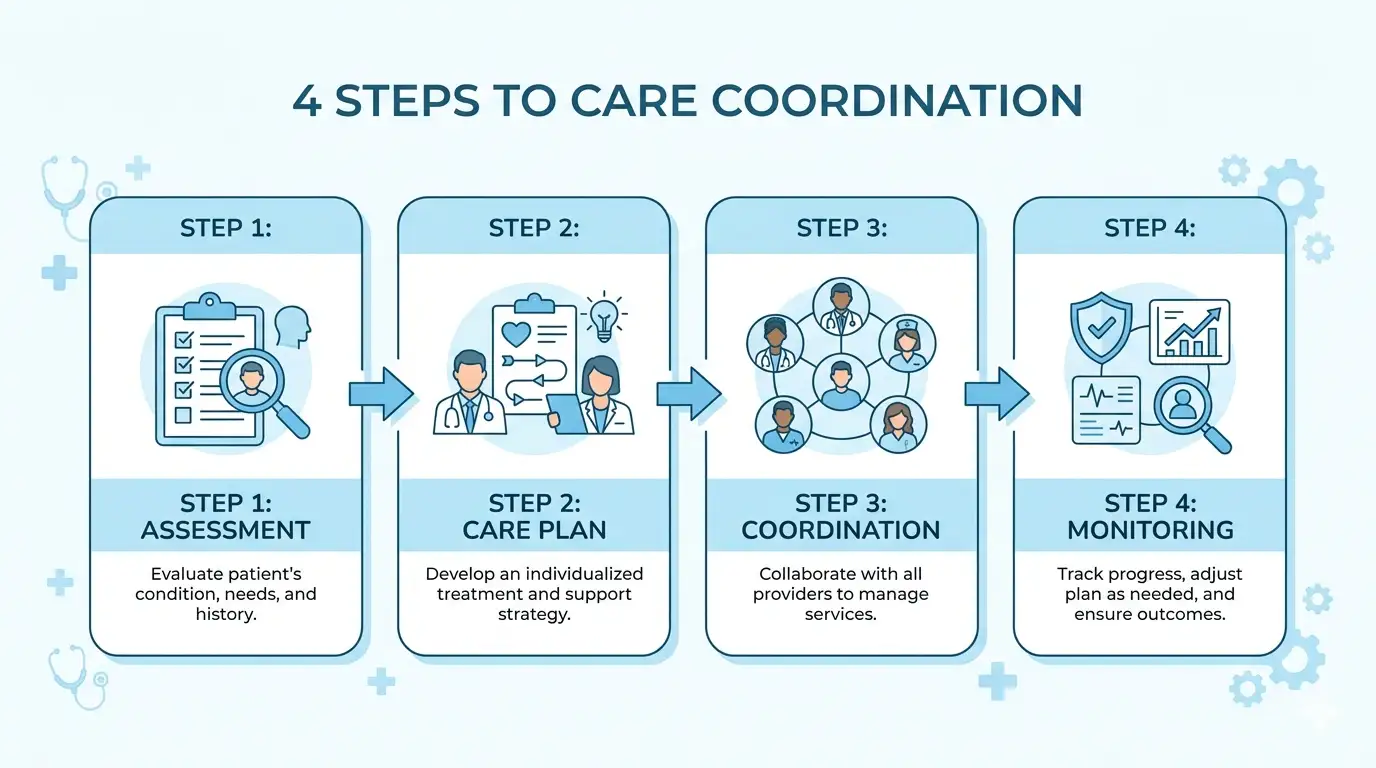
Transitional care starts with a full assessment of the senior’s medical history, current health status, home environment, and emotional needs. From there, a personalized care plan is built one that outlines every step of the transition and who is responsible for each part.
Here’s what that typically looks like step by step:
Step 1 Assessment. The care team reviews the senior’s medications, physical abilities, and home situation. They identify risks early.
Step 2 Care Plan. A written plan is created. It covers follow-up appointments, home health services, medication schedule, and any equipment needed (like a walker or oxygen).
Step 3 Coordination. The team contacts all involved providers: hospital, home health agency, primary physician and shares the plan.
Step 4 Monitoring. After the senior is home, the care team checks in regularly by phone or in-person visits. If something changes, the plan adjusts.
It’s less like handing off a baton and more like running alongside someone until they’re steady on their feet.
Types of Transitional Care for Seniors
There are three main types of transitional care for seniors, each built around a different kind of move: hospital to home, facility to facility, and transitions into palliative or hospice care.
Hospital-to-Home Transitional Care
This is the most common type. A senior leaves the hospital and returns home but they’re not fully independent yet. This type of care includes home health visits, medication reconciliation, physical therapy, and scheduled follow-up appointments with the primary care physician.
Think of it like a safety net. The senior is home, but trained professionals are checking in regularly to catch problems before they become emergencies.
Facility-to-Facility Transitional Care
Sometimes a senior moves from a hospital to a skilled nursing facility, or from a rehab center to an assisted living community. Each setting has its own care team, its own routines, its own records system. Without proper coordination, things fall through the cracks.
This type of transitional care focuses on transferring medical records accurately, briefing the new care team, and making sure the senior’s care plan continues without interruption.
Palliative and Hospice Transitional Care
This transition is different in nature. It’s about moving toward comfort-focused care. The goal shifts from recovery to quality of life managing pain, honoring the senior’s wishes, and supporting the family emotionally.
It requires honest conversations and careful planning. A transitional care team helps families understand their options and make decisions that reflect what the senior actually wants.
Benefits of Transitional Care for Seniors
The benefits go beyond just avoiding another hospital stay.
Reduces hospital readmissions. With a personalized care plan and consistent follow-up, seniors are far less likely to end up back in the emergency room.
Improves medication management. Medication reconciliation catches errors before they cause harm, especially important when a senior is starting new prescriptions after a hospital stay.
Supports family caregivers. Caregiver anxiety is real. Knowing there’s a structured plan and a team to call reduces the emotional burden of caregiving significantly.
Better health outcomes overall. Seniors who receive patient-centered care during transitions heal faster, regain independence sooner, and report higher quality of life.
Who Provides Transitional Care for Seniors?

A multidisciplinary care team handles this not one person alone.
Physicians oversee the medical plan and manage any condition changes. Nurses provide hands-on care and education about managing medications or watching for warning signs. Social workers help families understand the healthcare system and connect them with community resources. Physical and occupational therapists help seniors rebuild strength, mobility, and independence at home.
Overseeing it all is usually a care coordinator or case manager. They’re the main point of contact the person a family calls when they’re confused or worried.
Home health agencies then carry the plan into daily life, providing skilled nursing, therapy, and home health aide support at the senior’s house.
Is Transitional Care the Same as Hospice Care?
No transitional care and hospice care are not the same. Transitional care supports seniors moving between care settings with the goal of recovery or continued health management. Hospice care is specifically for individuals with a terminal diagnosis and a life expectancy of six months or less, focusing entirely on comfort rather than cure.
That said, they can work together. A senior might receive transitional care to move from a hospital into a hospice setting making the shift as smooth and compassionate as possible.
How Much Does Transitional Care Cost?
The cost of transitional care varies depending on the services needed, location, and insurance coverage. Medicare does cover certain transitional care management services, specifically two billing codes (TCM codes 99495 and 99496) that reimburse primary care physicians for managing care transitions after hospital discharge.
Medicaid coverage varies by state. Private insurance plans often cover transitional care as part of post-acute care benefits. Families should call their insurance provider directly to ask what’s covered before assuming anything.
If coverage is limited, some non-profit home care agencies offer sliding-scale fees based on income. Don’t skip this step costs can add up fast without a clear picture upfront.
Transitional Care vs. Home Health Care What’s the Difference?
Transitional care is a short-term, coordinated process focused on managing a senior’s move between care settings. Home health care is an ongoing service where skilled medical professionals visit a senior at home to treat a condition or support recovery. The two often overlap, but they’re not the same thing.
Think of transitional care as the bridge and home health care as one of the vehicles that crosses it. Transitional care coordinates everything home health care is one specific service within that plan.
Transitional care ends once the senior is stable and established in their new care routine. Home health care can continue for months if the senior’s condition requires it.
Warning Signs a Care Transition Is Failing
Watch for these red flags after a loved one’s discharge:
- Missed follow-up appointments within the first two weeks
- Confusion about medications wrong doses, skipped pills, new side effects
- A sudden change in mood, appetite, or energy
- No clear point of contact when questions come up
- The senior says they feel “forgotten” or unsupported
If any of these appear, contact the care coordinator immediately. Early action prevents a return trip to the hospital.
Getting Help Locally
If you’re looking for trusted, personalized home care services in Denver and the surrounding areas, Castle Pines Home Care is here to help. Our team works closely with families during care transitions from discharge planning all the way through recovery at home. We understand that this period is stressful, and we treat every senior like family.
Frequently Asked Questions
How long does transitional care last?
Most transitional care programs run between 30 and 90 days, depending on the senior’s condition and recovery pace. Some complex cases may require longer support. The goal is always to help the senior reach a point of stable, independent health management.
Who pays for transitional care for seniors?
Medicare, Medicaid, and many private insurance plans cover portions of transitional care. Medicare’s TCM codes specifically reimburse physicians for coordinating care after a hospital stay. Always verify your coverage with your specific plan.
What’s the difference between a care coordinator and a case manager?
The roles are similar. Both coordinate services and act as the main contact for families. Case managers often work within a single facility or insurance plan, while care coordinators may work across multiple settings during a transition.
Can transitional care happen at home?
Yes. Hospital-to-home transitional care brings support directly to the senior’s home through nurses, therapists, and home health aides. This is often the preferred option for seniors who want to recover in familiar surroundings.
What happens if there’s no transitional care plan in place?
Without a plan, seniors face a much higher risk of medication errors, missed appointments, and hospital readmission. Family caregivers also face greater stress and uncertainty. A clear plan makes the difference between a smooth recovery and a crisis.