

When a family member needs help with daily tasks, the emotional and physical toll can mount quickly. Many families find themselves managing a loved one’s needs while trying to protect their own household budgets. If you’re watching savings dwindle while caring for an aging parent or a disabled family member, it’s completely natural to look to the federal government for financial relief.
You want to know if the taxes your loved one paid into the system for decades can now help cover the cost of their daily care. This guide will clarify exactly what the Social Security Administration covers, how you can legally structure payments using existing benefits, and where to find government programs that pay family caregivers directly.
Understanding Social Security and Caregiver Support
Social Security is a federal program that sends monthly payments to retired workers, people with disabilities, and certain family members of those covered by the program. It’s not a health insurance plan, and it’s not a caregiving reimbursement system. Think of it like a monthly paycheck, not a bill-pay service. The person receiving benefits decides how to spend that money, and that includes paying for care.
There are three main programs under the Social Security umbrella:
- Retirement Benefits for workers aged 62 and older
- Social Security Disability Insurance (SSDI) for people who can no longer work due to a long-term disability
- Supplemental Security Income (SSI) for low-income individuals who are elderly or disabled
Each of these programs sends money directly to the recipient. None of them write checks to a caregiver’s bank account automatically. But that monthly payment can absolutely be used to hire help.
Caregiver Pay from Social Security
It’s natural to wonder about caregiver pay from Social Security. The short answer is that direct payments are rare. Social Security typically supports the person receiving care rather than the caregiver. However, programs like State Medicaid Waivers or Veteran Aid and Attendance may allow families to pay caregivers using Social Security benefits indirectly.
Does the Social Security Administration Direct-Pay Caregivers?
No program of the Social Security Administration pays home caregivers directly for their services. Cash Options, including retirement, disability and supplemental income, are paid directly to the eligible beneficiary. The recipient maintains full control over these funds and determines how to allocate them to address their personal care need.
Think of Social Security not as a health insurance policy, but as your monthly pension check that arrives every month. Medical treatments could be paid to a doctor or a home care business directly by a private health insurance policy or a government health program. Social Security just pays the money into your loved one’s bank account, and they make the check to a caretaker.
Respite Care and Medicare
Medicare does not cover long-term personal care or custodial home care. It pays for short-term skilled nursing, physical therapy, or medically necessary home health services after a hospitalization. If your loved one needs help bathing, dressing, or cooking but doesn’t need clinical care, Medicare won’t cover it on an ongoing basis.
Respite care is different. If your loved one is enrolled in Medicare’s hospice benefit, Medicare does cover short-term respite stays to give family caregivers a break. Outside of hospice, however, Medicare’s respite coverage is very limited.
One exception worth checking: some Medicare Advantage (Part C) plans now include supplemental benefits that cover limited home health aide hours or caregiver support services. These benefits vary widely by plan and by zip code. Call your plan directly to ask what’s included.
When Social Security May Help Cover Caregiving Costs
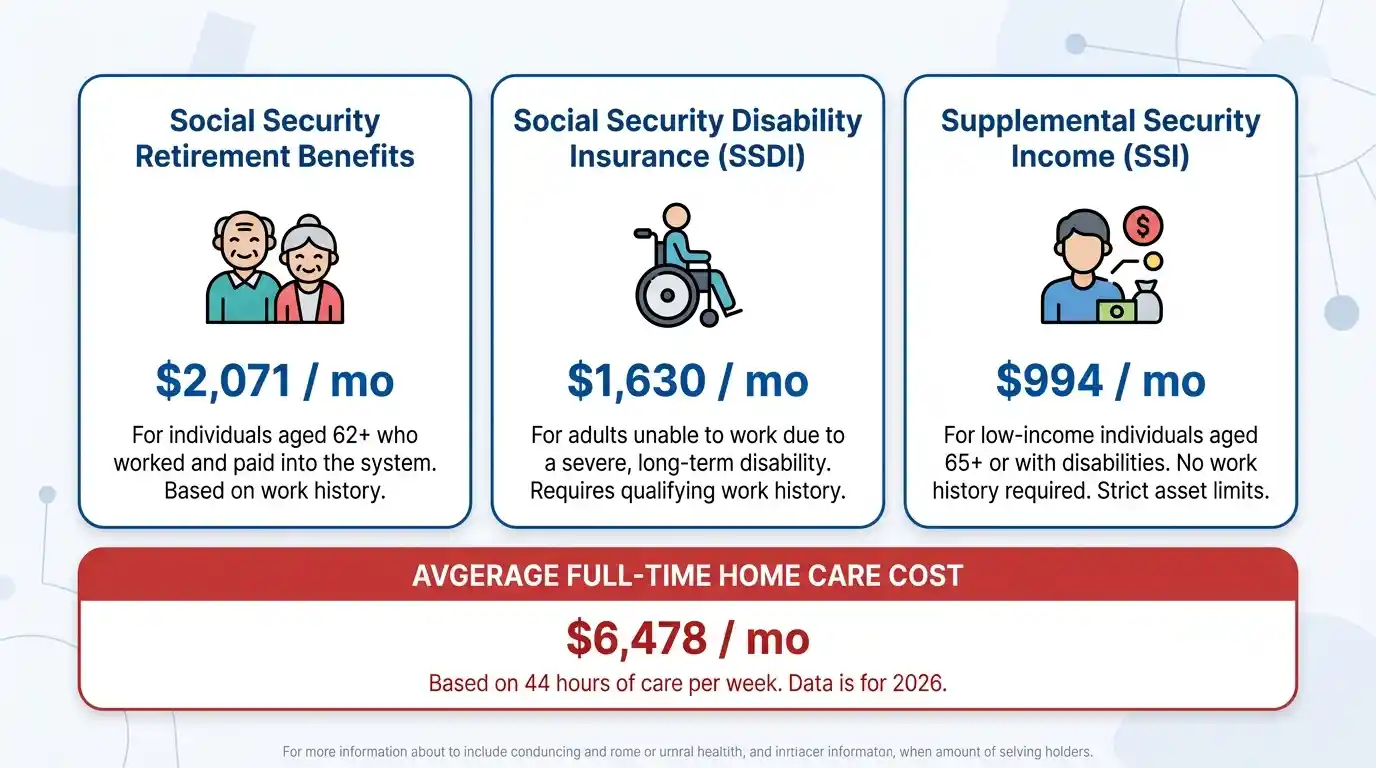
The practical reality is that many seniors and disabled individuals use their Social Security income to pay for home care services. Whether that means hiring a professional aide, covering household help, or paying a family member informally, the money is theirs to use.
Here’s a real picture of the numbers:
- In 2026, the average monthly Social Security retirement benefit is approximately $2,071
- The average monthly SSDI payment is around $1,630
- The maximum monthly SSI payment is $994
Meanwhile, the median cost of a home care professional runs about $34 per hour. Full-time home care at 44 hours per week costs roughly $6,478 per month. (Source: Genworth Cost of Care Survey)
That gap is significant. Social Security benefits alone won’t cover full-time care for most people. That’s why most families combine Social Security income with other resources like Medicaid, veterans benefits, or long-term care insurance.
Financial Support for Caregivers
Beyond Medicaid, there are several other financial resources that can help offset caregiving costs:
The National Family Caregiver Support Program (NFCSP), administered through the Administration on Aging, provides grants to states to fund services like respite care, caregiver training, and supplemental services. This program is specifically for family caregivers and doesn’t require the person receiving care to be on Social Security.
Veterans Benefits are separate but worth mentioning. If the person needing care is a veteran, VA programs like the Aid and Attendance benefit and the Program of Comprehensive Assistance for Family Caregivers (PCAFC) can pay a family caregiver a monthly stipend. For veterans, this can be more accessible than Medicaid.
Tax deductions are another form of financial relief. If you’re paying for a caregiver out of pocket, you may be able to claim the Dependent Care Tax Credit or deduct medical expenses, including caregiver wages, as an itemized deduction. Talk to a tax professional to see what applies to your situation.
Social Security Disability and Caregiver Pay
For families managing a loved one’s disability, SSDI combined with Medicaid often forms the financial backbone of a home care plan. SSDI covers basic living costs, while Medicaid can fund the actual caregiving hours.
There’s also the Program of All-Inclusive Care for the Elderly (PACE), which serves people 55 and older who qualify for nursing home-level care but want to stay at home. PACE coordinates medical care, social services, and personal care in one program, and it works alongside Medicare and Medicaid.
Another option worth knowing: if a family caregiver has their own medical condition or disability, they may be eligible for SSDI benefits independently. This doesn’t pay them as a caregiver, but it provides personal income stability while they’re in the caregiving role
Special Needs Home Care
For children and adults with developmental disabilities, intellectual disabilities, or complex medical needs, there are additional layers of support beyond standard Medicaid.
Many states have specific HCBS waivers designed for people with intellectual and developmental disabilities (I/DD waivers). These can fund intensive in-home support, behavioral assistance, and family caregiver stipends. Eligibility is typically based on diagnosis and functional need, not just income.
If the individual is under 18, check with your state’s Medicaid agency about whether EPSDT (Early and Periodic Screening, Diagnostic, and Treatment) services apply. This provision requires Medicaid to cover any medically necessary service for children, which sometimes includes home nursing or therapeutic services not typically covered for adults.
Using Social Security Retirement Benefits for Home Care
Yes, Social Security retirement benefits can be used to pay for home care. The SSA sends monthly payments directly to the recipient, who can spend that money on anything, including hiring in-home help, paying a family caregiver, or covering home health services.
To qualify for retirement benefits, a person must be at least 62 years old and have worked long enough to earn the required Social Security credits. The monthly amount depends on their lifetime earnings and when they claim benefits.
For older adults who need consistent care support, retirement benefits often become a piece of a larger puzzle. A senior receiving $2,071 a month might use that toward part-time help, while Medicaid or savings covers the rest. It’s not a perfect solution, but it’s a starting point.
Breaking Down Social Security Income vs. Actual Home Care Costs
Relying entirely on a monthly government check to fund professional home care often reveals a steep financial deficit. Let’s look at the real numbers across the three main branches of the system to see how far the money goes.
| Program Type | Average Monthly Benefit (2026 Data) | Average Full-Time Home Care Cost | Potential Monthly Shortfall |
| Social Security Retirement | $2,071 | $6,478 | $4,407 |
| Social Security Disability (SSDI) | $1,630 | $6,478 | $4,848 |
| Supplemental Security Income (SSI) | $994 | $6,478 | $5,484 |
Other Programs That Directly Pay Family Caregivers
Social Security is part of the picture, but several other federal programs pay caregivers more directly.
Veterans Benefits Veterans can access the Veteran-Directed Home and Community-Based Services program, which provides a flexible budget to hire personal care aides. Family members typically qualify. The VA Aid and Attendance benefit, connected to the VA pension, also provides payments that can cover caregiver costs. Contact your regional VA Pension Management Center to apply.
Long-Term Care Insurance If your loved one has a long-term care insurance policy, it likely covers home care services. Some policies exclude caregivers who live in the same home, so review the policy carefully. The insurance company can walk you through what’s covered.
State-Funded Caregiver Programs Beyond Medicaid, many states offer their own caregiver support programs with direct payments, respite care, or stipends. Search your state’s Department of Health or Aging Services website for current options.
Tips for Navigating Caregiving Costs with SSI
SSI helps low-income individuals who are 65 or older, blind, or disabled, regardless of work history. In 2026, the maximum monthly SSI payment is $994. While this amount is modest, it can contribute toward basic home care costs when combined with other assistance programs.
If someone you’re caring for receives SSI, here are practical ways to make the most of it:
- Check Medicaid eligibility first. Most SSI recipients automatically qualify for Medicaid in most states, which opens the door to home care services at little or no cost.
- Ask about your state’s personal care attendant program. Many states offer programs where a family member can be a paid caregiver through Medicaid.
- Contact your local Area Agency on Aging. They connect families with local resources, including free or low-cost services.
- Look into SNAP and housing assistance. Reducing other monthly expenses frees up SSI funds for care.
SSI alone is tight. The key is stacking multiple programs together.
Choosing a Care Provider
When considering a caregiver for special needs home care, look for:
- Experience in the specific condition or disability
- Proper certification and training
- Flexibility to work with the family’s schedule and needs
Castle Pine Home Care specializes in connecting families with qualified caregivers and helping navigate these funding options.
Financial Planning Tips for Caregivers
Families should consider multiple strategies when planning care funding:
- Budget Social Security Benefits Wisely: Determine how much of the benefit can be allocated to caregiving.
- Explore Medicaid Waivers: Many states have programs specifically for in-home caregivers.
- Check for Veteran Benefits: Veterans and their spouses may qualify for additional funding.
- Look Into Nonprofit Grants: Organizations sometimes provide support for families in need.
By combining resources, families can ensure caregivers are compensated fairly and care recipients receive the attention they need.
Castle Pine Home Care: How We Help
Castle Pine Home Care provides guidance for families seeking caregivers for:
- Elderly care
- Special needs home care
- Respite care support
Our team helps families navigate Social Security, Medicare, and other funding programs, ensuring caregivers are qualified and the care recipient’s needs are met.
Conclusion
If you’re in the Denver metro area and trying to make sense of what programs you qualify for, you don’t have to figure it out alone. Castle Pines Home Care offers professional home care services in Denver and the surrounding communities. Our team can help connect you with the right resources, explain how Medicaid and other programs may apply to your situation, and provide quality in-home support if private care is the right fit for your family.
Knowing the options is one thing. Having someone in your corner to help you act on them is another. Reach out to Castle Pines Home Care to talk through what’s possible for your situation.
FAQs
Can a family member be paid as a caregiver?
In limited cases, yes. Certain state programs or Medicaid waivers may allow payment to family members providing care.
How does respite care work with Medicare?
Medicare covers short-term medical services, not long-term daily caregiving. Respite care may be partially covered if it’s part of a medical plan.
What is the difference between SSI and SSDI for caregiver funding?
SSI supports individuals with limited income, while SSDI supports those who are disabled but have a work history. Both can indirectly fund caregiver services.
Are there alternatives to Social Security for paying caregivers?
Yes. Medicaid programs, veteran benefits, local grants, and nonprofit support are often used alongside Social Security to fund caregivers.