

Taking care of someone you love can feel like trying to hold up the sky with your hands. It’s rewarding, very personal, and sometimes tiring. If you’ve been searching for what is respite care services, the quick answer is that they are temporary care that lets the main caregiver take a break while making sure that a loved one keeps getting safe and reliable help.
A lot of families get to a point when the days start to blend together, they don’t get enough sleep, and tension builds up like laundry in the corner. This guide tells you what respite care is, how it works, how much it costs, who it benefits, and where to obtain reliable help so you can make a clear and useful choice.
What Is Respite Care?
Respite care is a temporary care arrangement that gives primary caregivers a planned break from their duties. A professional caregiver, trained volunteer, or family member steps in to care for the person in need whether that’s an older adult, someone with a disability, or a child with complex medical needs. The break can range from a few hours to several weeks.
“Respite” means a short break from anything hard. That’s how it works in caregiving.
Even the most determined pilot can’t fly a plane forever without taking a break. The same goes for caregiving. Respite care is available because the person giving care is just as important as the one receiving it.
In basic terms, what are respite care services? It’s a safety net. It makes sure that your loved one gets good, regular care while you take the time you need to keep healthy in body and mind.
Types of Respite Care Services
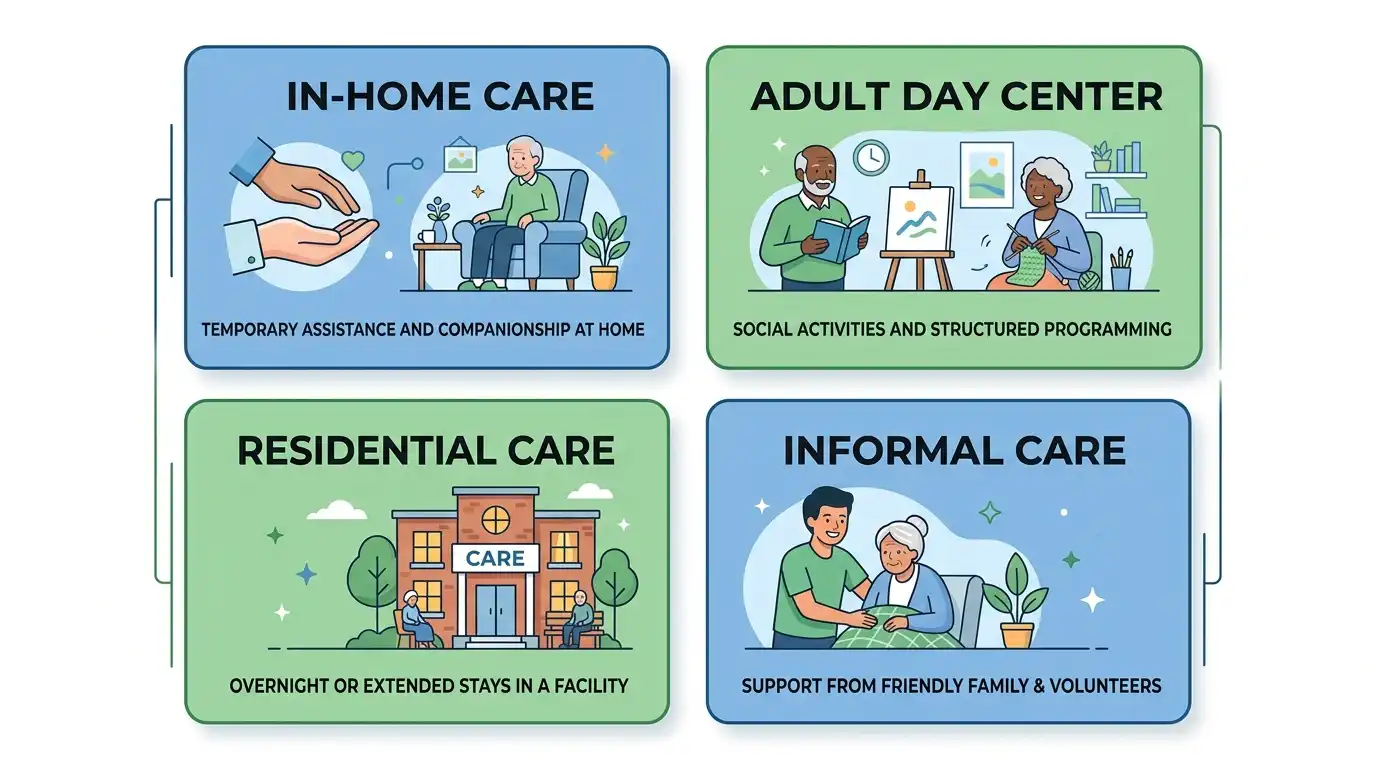
Not all respite care looks the same. The right option depends on your situation, your loved one’s needs, and how long you need a break.
In-Home Respite Care
This is where a professional caregiver comes directly to your home. Your loved one stays in a familiar environment, which is especially helpful for people with Alzheimer’s or dementia who respond poorly to change. In-home respite care providers can help with personal care tasks like bathing, dressing, and medication management.
Adult Day Care Centers
These are community-based centers where your loved one spends the day in a safe, social setting. They receive supervision, meals, recreational activities, and basic health monitoring. This option works particularly well for caregivers who work during the day.
Residential / Facility-Based Respite Care
This involves a short-term stay at an assisted living facility or skilled nursing facility. It’s ideal when a caregiver needs several days or weeks away for a medical procedure, a family trip, or simply a longer period of recovery.
Informal Respite Care
Friends, neighbors, or other family members can step in at no cost. This is the most common form of respite care for families with a strong support network, though it requires clear communication and planning.
Why Is Respite Care Important?
Caregiver burnout is real and the numbers back it up. According to the Family Caregiver Alliance, roughly 20% of family caregivers suffer from depression. Many more experience chronic fatigue, sleep problems, and neglect their own medical needs.
When a caregiver breaks down, the person they care for also suffers. That’s the quiet truth nobody talks about enough.
Respite care for caregivers isn’t a luxury. It’s a maintenance requirement the same way a car needs oil changes to keep running. Skipping it doesn’t make you stronger. It just shortens how long you can keep going.
The Benefits of Respite Care for Your Family
Using respite care for elderly relatives or children with disabilities creates a healthier environment for everyone in the house. It’s a common misconception that the person receiving care will feel abandoned. In reality, meeting new people and participating in different activities can be very stimulating for them.
- Fresh Perspectives: A professional caregiver might notice small changes in health or behavior that you’ve become accustomed to.
- Social Engagement: If your loved one attends an adult day center, they get to interact with peers, which reduces the feelings of isolation that often come with aging or chronic illness.
- Strengthened Relationships: When you aren’t constantly stressed, the time you spend with your loved one becomes more meaningful. You can go back to being a son, daughter, or spouse rather than just a “manager of tasks.”
What Happens at Respite Care?
A lot of new people ask, “What will they really do while I’m gone?” The answer is: do what you always do. An expert comes to your house (or picks up your loved one in a facility) and follows the regimen you’ve set up. Respite care services help with everyday duties, including showering, cooking, and taking care of medications. They also keep the person company and keep an eye on their safety, making sure that their physical and emotional requirements are satisfied while the main caregiver is away. They don’t just sit and watch. They get involved. This could be playing cards, going on a short walk, or just talking over tea. It’s not only “babysitting”; it’s about keeping a high quality of life. Respite care for caregivers includes particular safety measures to keep people with more severe requirements, including advanced dementia, from wandering or getting upset.
What to Know About the Costs of Respite Care
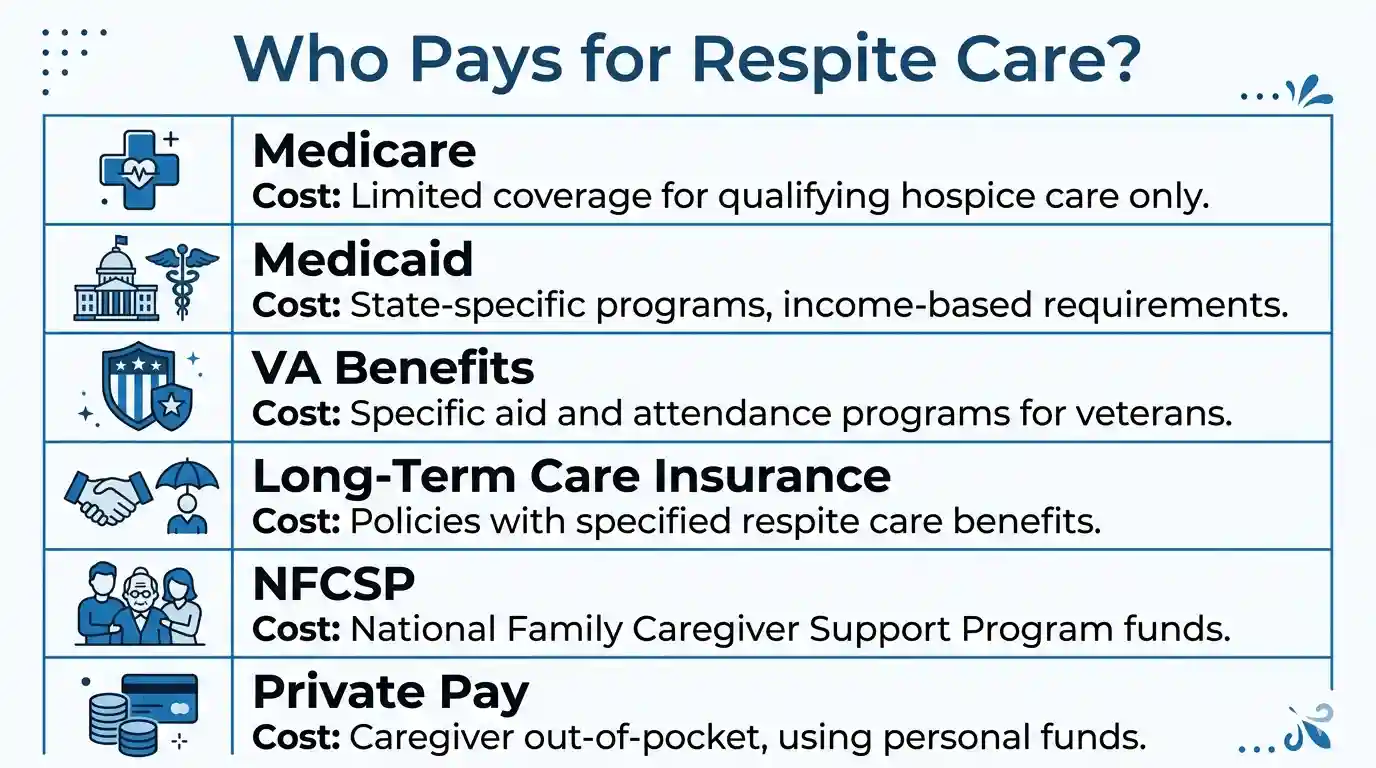
Cost is one of the first questions families ask. And it varies quite a bit depending on the type of care and location.
(Suggest adding a data table here with approximate costs: e.g., “In-home respite care: $20–$40/hour | Adult day center: $70–$100/day | Residential respite: $150–$300/day” cite a source like Genworth Cost of Care Survey.)
Here’s a breakdown of payment options:
Medicare: Original Medicare only covers respite care under the Part A hospice benefit. It covers up to five consecutive days in a hospital or skilled nursing facility for those receiving end-of-life care. Some Medicare Advantage (Part C) plans include respite care as a supplemental benefit so check your plan directly.
Medicaid: Respite care isn’t a standard Medicaid benefit, but many states offer waiver programs that include coverage. Eligibility requirements vary by state.
Veterans Affairs (VA): If your loved one is a veteran, the VA may cover up to 30 days of respite care annually in a VA facility. The VA Aid and Attendance benefit can also help offset costs.
Long-Term Care Insurance: If your family member holds a long-term care insurance policy, respite services may fall under covered benefits. Review the policy carefully.
National Family Caregiver Support Program: Administered through your local Area Agency on Aging (AAA), this federally funded program may provide financial help or free respite services in your area.
Private Pay / Out-of-Pocket: Many families pay directly. While costs add up, short-term respite care is often more affordable than long-term residential care.
How Can Respite Care Help Family Caregivers?
Respite care for caregivers does more than just give you a few free hours. It actively protects your health.
Research consistently shows that caregivers who take regular breaks are less likely to develop depression, anxiety, and chronic physical illness. They also provide better care when they return.
Think of respite care as preventive medicine for the caregiver. The goal isn’t to replace your role. It’s to make sure you can keep fulfilling it.
If you’re a non-primary caregiver trying to help a spouse or sibling who carries most of the caregiving load, offering to arrange respite care is one of the most practical things you can do. Offer a specific time slot. Book the service. Make it easy for them to say yes.
Who Is Respite Care Best Suited For?
Respite care is best suited for primary family caregivers who provide daily or near-daily support to a loved one with a chronic illness, disability, or age-related condition. It’s also appropriate for caregivers preparing for surgery, travel, or any situation requiring temporary absence. There’s no strict eligibility rule if you’re a caregiver, you qualify for support.
Specifically, short-term respite care works well for:
- Caregivers of elderly parents dealing with mobility issues, dementia, or post-surgery recovery
- Parents of children with disabilities who need medical or behavioral support
- Spouses caring for a partner with a chronic or terminal illness
- Working caregivers who need daytime coverage during work hours
- Caregivers in crisis who need emergency, unplanned support
Respite care for elderly loved ones is particularly common, as the aging population continues to grow. According to the U.S. Bureau of Labor Statistics, demand for home health and personal care aides is expected to grow by 21% through 2033.
Where Do I Find Respite Care Services?
Finding quality respite care doesn’t have to be overwhelming. Here are the most reliable starting points:
ARCH National Respite Locator: The ARCH National Respite Network offers a free online tool to search for local respite programs by ZIP code. It covers state-sponsored programs, adult day care centers, and veteran services.
Area Agency on Aging (AAA): Every community in the U.S. has a local AAA. They maintain lists of approved providers and can connect you with financial assistance programs.
National Adult Day Services Association: Their website includes a nationwide directory of adult day centers, searchable by location.
Your Loved One’s Healthcare Provider: Doctors and social workers often have referrals to trusted local respite providers.
Respite Care vs. Long-Term Care: What’s the Difference?
This is a question that comes up often, and it’s worth addressing directly.
Respite care is temporary by design. It steps in for hours, days, or a few weeks then the primary caregiver resumes their role. Long-term care, on the other hand, is an ongoing arrangement where a professional or facility takes over care responsibilities indefinitely.
Define respite care this way: it’s a bridge, not a destination. It keeps the caregiving relationship intact while giving everyone involved the space to recover.
How to Choose the Right Respite Care Provider
Neither competitor covers this and it’s one of the most practical things a family needs to know.
Before selecting a provider, consider these questions:
- Is the provider licensed and insured in your state?
- Do they have experience with your loved one’s specific condition (dementia, disability, etc.)?
- What is their staff-to-client ratio?
- Can you do a trial run before committing to longer care?
- Are background checks conducted on all caregivers?
Ask for references. Visit the facility if it’s a residential option. Trust your gut and your loved one’s reaction during an introductory visit.
Personal Care Support at Home
If you’re looking for reliable in-home support for a family member, professional personal care services can make a significant difference in day-to-day quality of life. Castle Pines Home Care offers trusted home care services in Denver, providing compassionate, trained caregivers who assist with daily living tasks, companionship, and short-term respite coverage. Whether you need a few hours of relief per week or more consistent support, having a dependable local team matters.
Final Thoughts
Taking care of someone you love is one of the most important things you can do for them. But it was never designed to be done alone, without breaks, or without help.
What are respite care services, in their most basic level? It’s okay. You have permission to take a break, take care of yourself, and come back to your loved one as the greatest version of yourself, not a tired one.
Respite care is there to help both you and your loved one, whether you need a few hours a week or a scheduled two-week break. The first step is to admit that you need it.
Contact us today to talk through your caregiving situation and find the right respite care solution for your family. You can reach our team directly through our website or by phone. We’re happy to answer questions, walk you through available services, and help you take that first step toward getting the relief you deserve.
Frequently Asked Questions
How long can respite care last?
Respite care can last anywhere from a few hours to several weeks. The duration depends entirely on the caregiver’s needs and the type of respite arrangement chosen.
Is respite care covered by Medicare?
Original Medicare only covers respite care under the Part A hospice benefit up to five consecutive days in a qualified facility. Some Medicare Advantage plans offer additional respite benefits.
Can a family member provide respite care?
Yes. Informal respite care provided by a family member, friend, or neighbor is common and often costs nothing. However, it requires clear planning and communication.
What is the difference between respite care and regular home care?
Regular home care is ongoing. Respite care is specifically designed as a short-term relief service so that primary caregivers can take a break.
How do I know if my loved one is ready for respite care?
That’s a symptom that you’re burned out, tired, or stretched too thin. You don’t have to wait till things are really bad. Even a few hours a week can make a big difference.
Is respite care only for elderly people?
No. Respite care services support families caring for people of all ages including children with disabilities or complex medical needs, adults with chronic illness, and veterans recovering from injury.