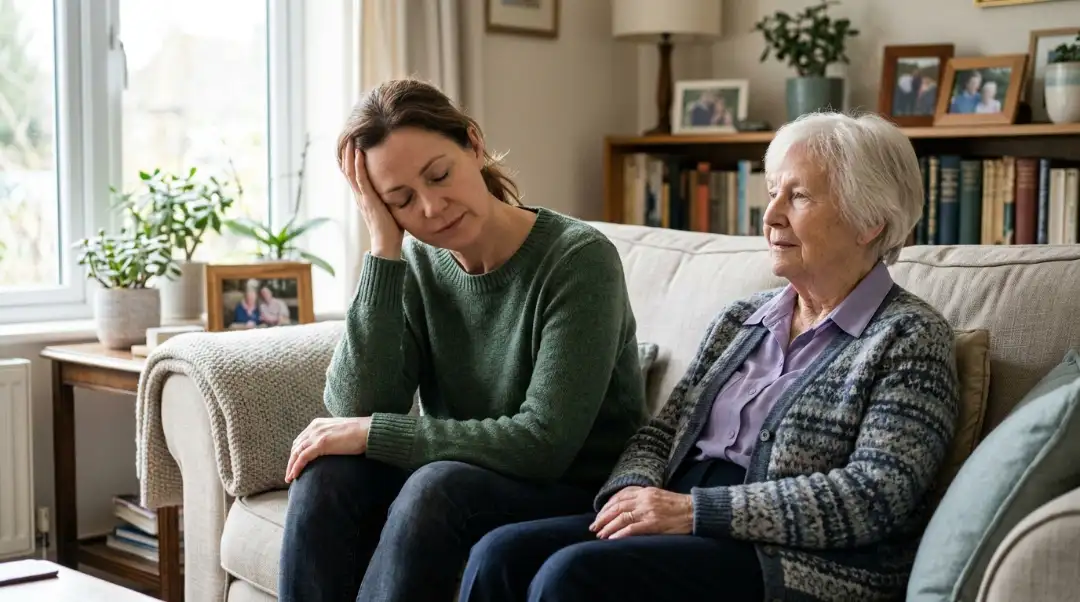
There is a certain type of dread that comes from watching a parent stumble up the stairs, forget a medicine, or halt driving to the grocery store. You begin to look online and each site has different terms: home health, personal care, companion care. It is complicated and you want a simple response.
Non-medical home care is assistance with activities of daily living such as bathing, meals and errands from a qualified carer who is not a nurse. That’s the short of what non-medical home care is about and by the conclusion of this post you will know exactly what it is, what it costs and how to determine if it is the appropriate fit for your family.
What Services Are Included in Nonmedical Home Care?
Non-medical home care focuses on non-clinical assistance that keeps a person safe, comfortable, and well-supported at home. These non medical home care services cover two main areas: basic day-to-day physical needs and household management tasks.
Personal Care Services (ADLs)
Personal care covers physical support with Activities of Daily Living (ADLs). As adults age or cope with physical limits, routine hygiene tasks become difficult or risky.
- Bathing and Showering: Assistance with getting in and out of the tub safely, washing, and drying.
- Dressing and Grooming: Help with buttons, zippers, hair brushing, shaving, and daily oral care.
- Toileting and Incontinence Care: Respectful help with bathroom visits, changing briefs, and maintaining hygiene.
- Mobility and Transferring: Assistance with standing up, sitting down, or moving between a bed and a wheelchair.
- Feeding Assistance: Direct help with eating during mealtime for those with dexterity or hand tremor issues.
Homemaker Services (IADLs)
Homemaker services focus on Instrumental Activities of Daily Living (IADLs). These chores keep the living environment safe, clean, and organized.
- Meal Preparation: Cooking nutritious meals tailored to dietary requirements and stocking fresh groceries.
- Light Housekeeping: Dusting, sweeping, vacuuming, washing dishes, and taking out the trash.
- Laundry and Linen Changes: Washing, folding, and storing clothes and changing bed sheets regularly.
- Shopping and Running Errands: Picking up groceries, household supplies, or dry cleaning.
- Transportation: Driving to doctor visits, social gatherings, religious services, or community events.
Companion Care and Emotional Well-Being
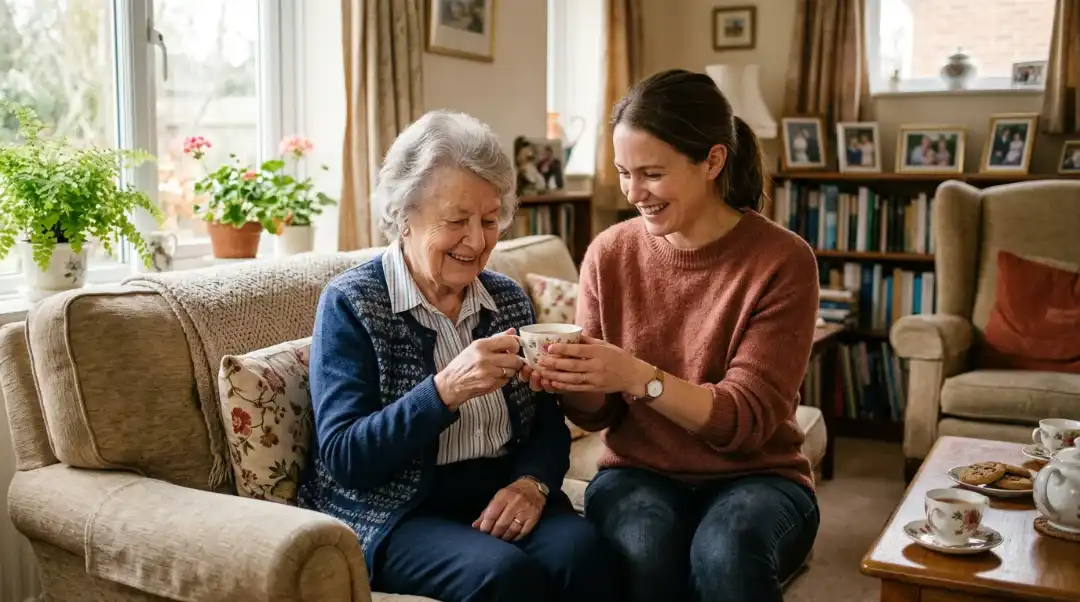
Isolation poses serious health risks for seniors living alone. Companion care brings friendly conversation, shared hobbies, reading, card games, and walks around the neighborhood. A regular non medical caregiver offers steady human interaction that brightens the day and keeps minds active.
Non-Medical Home Care vs. Home Health Care: What’s the Difference?
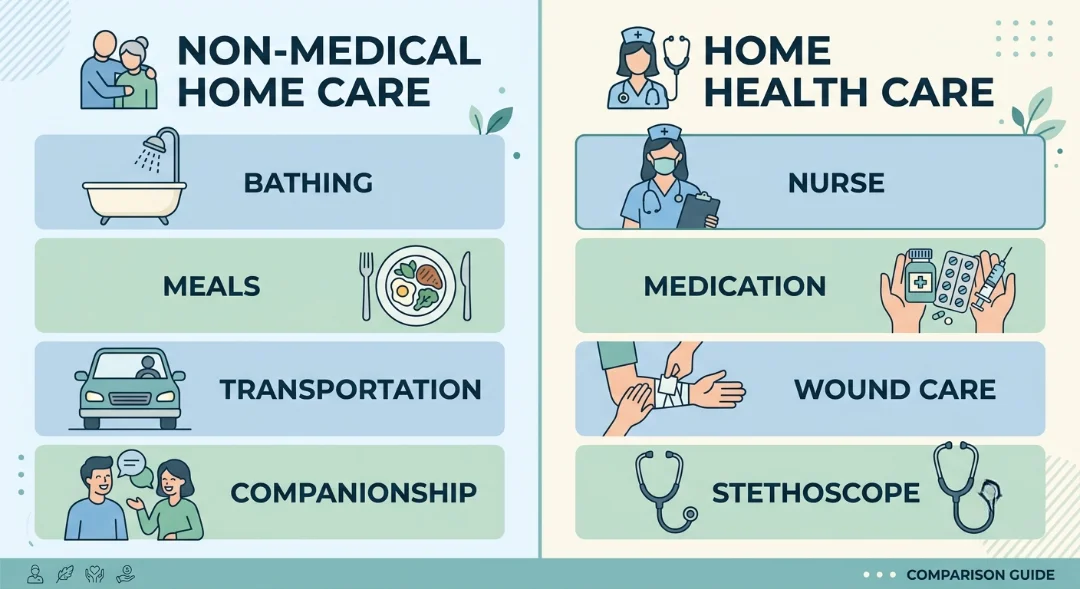
Is nonmedical home care the same as home health care? Non-medical home care provides supportive daily living assistance from trained aides without requiring a doctor’s prescription. Home health care provides skilled clinical medical treatment from licensed nurses or therapists under direct physician orders to manage acute medical conditions, complex wounds, or post-surgical recovery.
Understanding this division prevents costly care mistakes and ensures your loved one receives the correct level of care.
| Feature | Non-Medical Home Care | Home Health Care |
| Primary Focus | Daily living help, personal care, and housekeeping | Clinical medical treatment and physical rehabilitation |
| Care Providers | Personal Care Assistants (PCAs), CNAs, Companions | Registered Nurses (RNs), LPNs, Physical Therapists |
| Doctor’s Order Required? | No prescription required | Yes, requires a formal doctor’s order |
| Visit Duration | Hourly shifts (e.g., 4 to 24 hours per day) | Intermittent visits (e.g., 45-minute clinical sessions) |
| Medicare Coverage | Not covered by traditional Medicare | Covered 100% by Medicare for eligible patients |
| Main Goal | Promoting aging in place and safety | Medical recovery, wound management, and rehabilitation |
Clinical Medical Care vs. Daily Living Assistance
Home health care acts as an extension of a medical clinic or hospital. A registered nurse visits to check surgical incisions, administer intravenous drugs, or change complex dressings. A physical therapist visits to guide rehabilitation exercises after a joint replacement.
Non-medical in home care handles everyday lifestyle support. A non medical caregiver helps your parent get out of bed, prepares breakfast, washes dishes, and makes sure they don’t slip on the floor.
Caregiver Credentials and Qualifications
Home health care workers must be licensed by the state as a nurse or therapist. They are answerable to tough medical boards . They operate within medical protocols .
Other names for non-medical carers are Personal Care Assistants (PCA) or Certified Nursing Assistants (CNA). They are not allowed to do medical jobs, but good organisations do teach them about infection control, fall prevention, emergency procedures and dementia management.
Is Nonmedical Home Care Right for My Loved One?
Non-medical home care is right for seniors who can live at home with daily assistance but do not require round-the-clock clinical nursing. It works best for individuals needing help with hygiene, cooking, transportation, mobility, or housekeeping, or for families needing temporary respite from caregiving duties.
Look out for these common warning signs that suggest home care non-medical services are needed:
- Unexplained Physical Bruising: Cluttered rooms or weak balance cause hidden slips and stumbles.
- Spoiled Food in the Fridge: Forgetfulness leads to missed meals or eating expired items.
- Declining Personal Hygiene: Wearing dirty clothing or skipping showers due to fear of falling.
- Unopened Mail and Unpaid Bills: Disorganization creeps in when managing tasks gets overwhelming.
- Social Withdrawal: Refusing to leave the house or stopping former hobbies out of fatigue.
- Weight Loss or Nutritional Drops: Skipping cooking due to difficulty standing at the stove.
State Regulations, Medication Support, and Caregiver Scope
State regulations tightly define what a non medical caregiver can and cannot do. A clear understanding of these boundaries protects client safety and keeps expectations clear.
Medication Reminders vs. Medication Administration
A non-medical worker cannot administer medication. They cannot measure out liquid doses, give injections, or place pills directly into a client’s mouth.
They can, however, provide medication reminders. They remind clients when it’s time to take pre-sorted pills from a pillbox, bring a glass of water, and log the time the pill was taken.
Direct Physical Assistance Limitations
A non-medical helper assists with physical transfers using basic techniques and gait belts. However, if a client needs complex medical machinery like a ventilator or sterile catheter care, a licensed home health nurse must handle those tasks.
Who Qualifies and Who Benefits Most?
Anyone can hire non-medical home care directly because qualification does not depend on medical conditions or insurance approvals. Seniors aging in place, individuals recovering from hospital stays, adults with chronic conditions, and family caregivers seeking respite benefit the most from these supportive services.
Let’s look closely at the specific groups that gain the highest value from non-medical home care services:
1. Seniors Wanting Aging in Place
Most older adults prefer staying in their familiar neighborhood rather than moving to an assisted living facility. Home care supplies the extra set of hands necessary to keep the household running safely.
2. Family Caregivers Facing Burnout
Caring for an aging parent alongside a job and children leads to mental and physical fatigue. Respite care for family caregivers offers temporary relief, allowing primary family members to rest, travel, or attend to personal health without feeling guilty.
3. Patients Returning Home After Surgery
Recovering from surgery leaves individuals weak and prone to re-injury. While home health handles incision checks, a non-medical worker manages daily cooking, laundry, and bathroom safety while the patient recovers strength.
4. Adults Living with Chronic Illness or Dementia
Conditions like Parkinson’s disease, arthritis, or Alzheimer’s make daily tasks frustrating. Dedicated caregivers create steady daily routines, offer cognitive engagement, and keep environments free of trip hazards.
Transitioning Care & Hybrid Models
Care needs don’t stay static. Over time, physical or cognitive conditions change, requiring a smooth shift in home support.
The Hybrid Care Model
Families often combine home health care and non-medical support simultaneously.
For instance, after hip replacement surgery, a home health physical therapist visits three times a week for rehabilitation. Meanwhile, a non-medical aide stays four hours every morning to help the client shower, get dressed, and prepare lunch. Combining both services covers clinical recovery and daily lifestyle needs at the same time.
How Care Needs Shift Over Time
As health conditions progress, care hours can adjust gradually. A senior might start with four hours of companion care twice a week. Later, they may add personal care support, eventually expanding to daily visits or 24-hour private duty care.
How Much Does Non-Medical Home Care Cost?

Non-medical home care costs between $28 and $38 per hour on average across the United States. Monthly costs range from $1,500 for part-time visits to over $5,000 for full-time daily care, depending on your geographic location, required hours, and specialized skill needs.
Rates vary significantly based on where you live and the level of care required.
Primary Payment Methods
1. Out-of-Pocket / Private Pay
Most families cover non-medical care using private savings, retirement funds, pensions, or family contributions.
2. Long-Term Care Insurance (LTCI)
Private long-term care insurance policies usually cover non-medical personal care once a policyholder requires help with two or more ADLs. Check your policy’s elimination period and daily benefit limits.
3. Veterans Aid and Attendance Benefit
Eligible veterans and surviving spouses can receive monthly tax-free pensions from the VA to help pay for home care assistance. Qualification depends on military service history, financial need, and documented ADL requirements.
4. Medicaid Waivers
While traditional Medicare does not cover non-medical home care, state Medicaid Home and Community-Based Services (HCBS) waivers help low-income seniors fund in-home assistance to prevent nursing home placement.
How to Choose the Right Non Medical Home Care Agency
Choose an organization that’s certified and insured, does background checks on every caregiver, has backup coverage, and allows you see the caregiver before care starts. Learn how they handle emergencies, and whether you’ll be seeing the same carer each time. A good non medical home care agency will answer these questions without batting an eye.
Start with the basics: Is the firm licensed in your state and are they insured against liability should something go wrong in your home? If an agency comes across this issue, run away.
Ask them about their hiring process. A good non medical carer will have a background check, reference check and some type of training before they even meet a client. ‘Ask them what they do if a carer rings in sick. A proper backup strategy matters more than a fancy website.
Also, personality match is important. “You’re inviting someone into a private space, often when they’re in a vulnerable time. Nothing can compare to a quick meet-and-greet before the first shift tells you more than any pamphlet ever could.
Final Thoughts on In-Home Support
Finding dependable care brings peace of mind to the entire family. By understanding what is non-medical home care, you can arrange the right mix of personal assistance, safety support, and companionship for your aging relative.
If you need compassionate, top-rated home care services in Denver, our team at Castle Pines Home Care is ready to help. Contact us today to schedule a free care consultation and build a personalized care plan for your family.
Frequently Asked Questions
What is non-medical home care exactly?
It’s non-clinical, in-home support with daily living tasks like bathing, dressing, meal preparation, light housekeeping, transportation, and companionship. It’s provided by a trained caregiver rather than a nurse, and it’s meant for people who are safe at home but need regular help getting through the day.
Does Medicare cover non-medical home care?
No. Medicare generally does not cover non-medical home care, since it’s designed to pay for short-term, skilled medical treatment rather than ongoing help with daily tasks. Some Medicare Advantage plans now offer limited coverage as a supplemental benefit, so it’s worth checking a specific plan’s details directly.
What’s the difference between a caregiver and a CNA?
A non-medical caregiver focuses on daily living tasks like bathing, meals, and companionship, with no medical training required. A certified nursing assistant (CNA) has additional training and can perform some basic medical tasks under a nurse’s supervision. Many home care agencies employ both, depending on the client’s needs.
How many hours of care do most families start with?
Most families start with 3 to 4 hours a day, a few days a week, and adjust from there based on how the situation changes. Some begin with just a few hours of companionship and later increase to daily visits or live-in care as needs grow. There’s no fixed starting point that fits everyone.
Can non-medical home care help with dementia?
Yes, in the earlier stages. Non-medical caregivers can offer supervision, routine, companionship, and help with daily tasks for someone with mild to moderate dementia. As the condition progresses and safety or medical needs increase, families often need to add specialized memory care support or a higher level of supervision.