

For elders, family caregivers or anybody dealing with a chronic ailment, managing prescription habits can rapidly become daunting. It’s a lot of work to sort through a handful of pills each morning, keep track of refills and worry about how different prescriptions work together. This is a frequent difficulty and there are ways of getting structured expert guidance to make the process bearable and to carefully balance these elements.
A clinical review program allows patients to safely arrange, comprehend and optimize their daily medications. “So what is drug therapy management? Medication treatment management is a one-of-a-kind medical service offered by skilled pharmacists to examine all prescriptions, over-the-counter pills and supplements a person takes to guarantee safety, cut down on out-of-pocket charges and repair harmful medication interactions. This concept turns the typical pharmacy visit into an active partnership for care customized to each patient’s needs.
What Does Medication Therapy Management Actually Include?
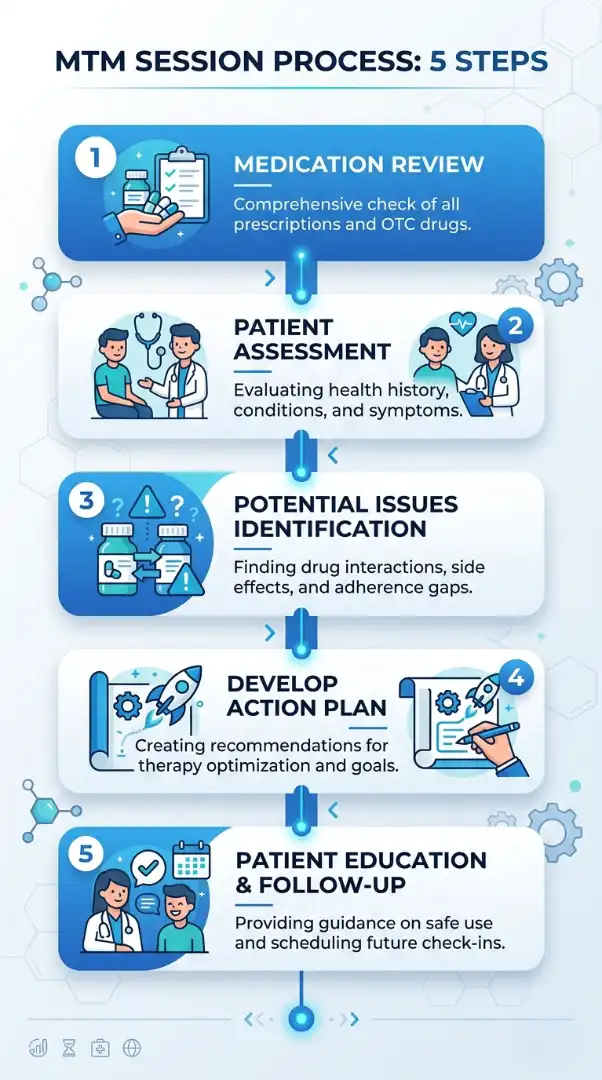
A formal medication therapy management program includes five core elements: a comprehensive review of all current prescriptions, an action plan for daily dosing, a personal record of every drug, direct coordination with your doctors, and continuous follow-up documentation. These specific components ensure your treatment remains safe and effective over time.
1. The Comprehensive Medication Review (CMR)
This serves as the foundation of the service. Once a year, you meet one-on-one with a clinical professional to discuss every single substance you consume. This includes brand-name prescriptions, generic drugs, over-the-counter pain relievers, vitamins, and herbal supplements. The goal is to uncover hidden duplications or dangerous drug combinations.
2. A Personal Medication Record (PMR)
You receive a standardized, easy-to-read document listing everything you take. It clarifies the precise reason for each pill, the exact time to take it, and the proper dosage. This portable document serves as an essential tool during unexpected hospital visits or routine specialist appointments.
3. The Medication-Related Action Plan (MAP)
This document provides a clear, step-by-step checklist for the patient or family caregiver. It highlights necessary adjustments, such as switching a pill from morning to night to maximize absorption or avoiding certain foods that cause negative side effects.
4. Intervention and Referral
If your reviewer uncovers a severe problem, like two different specialists accidentally prescribing identical therapies under different brand names, they step in immediately. They contact your primary physician to resolve the conflict without causing any disruption to your daily care.
5. Documentation and Ongoing Follow-Up
Your health needs naturally shift over time. The professional logs each intervention and schedules regular touchpoints throughout the year. These checks ensure that any new prescriptions added by your care team still align with your existing daily routine.
Who Is Eligible for Medication Therapy Management?
Patients enrolled in Medicare Part D who have multiple chronic conditions, take multiple Part D-covered drugs, and are likely to incur high medication costs are typically eligible for a medicare medication therapy management program. Insurance plans identify and enroll qualifying members automatically.
Most Medicare Part D plans are required to offer MTM programs to members who meet specific criteria. According to the Centers for Medicare & Medicaid Services (CMS), eligible patients generally must have two or more chronic conditions (such as diabetes, asthma, hypertension, or heart failure), take eight or more Part D-covered medications, and be likely to incur annual drug costs above a certain threshold typically around $4,000 or more.
You don’t have to seek this out on your own. If you qualify, your Part D plan will reach out and enroll you. That said, even patients outside of Medicare can access MTM services. Many private insurance plans, Medicaid managed care plans, and employer health programs offer similar medication review services. It’s worth calling your insurance provider directly to ask.
Caregivers, take note. If you’re managing medications for an aging parent or a family member with a disability, you can often participate in the MTM session on their behalf. Some programs also extend eligibility to patients with high-risk medications like blood thinners or seizure drugs regardless of how many total prescriptions they take.
Who Provides MTM Services?
The preponderance of drug treatment management services is provided by licensed clinical pharmacists, however in some health networks, qualified nurse practitioners and registered physicians also conduct these consultations. These practitioners undergo intensive clinical training that is solely geared at recognizing adverse reactions, complex drug interactions and cost-effective therapeutic options.
A pharmacist may be imagined as a person who just hands you medicines at a retail counter, but these experts are far from that. Many want to become a certified pharmaceutical therapy management pharmacist to give this specialized care. This advanced certificate prepares students to assess the biological impact of complex, multi-drug regimens on the human body.
These consultations take place in a variety of comfortable, accessible settings:
-
Private consultation rooms inside community retail pharmacies
-
Outpatient clinics alongside primary care doctors
-
Secure telephone or video telehealth sessions from your living room
-
Dedicated senior community centers and managed care facilities
Who Qualifies for Medication Therapy Management?
Individuals qualify for a formal medication therapy management program if they manage multiple chronic illnesses, take several distinct maintenance drugs simultaneously, and incur annual prescription expenses that cross a specific financial threshold set by federal guidelines. These parameters specifically target people facing the highest risk for adverse events.
Eligibility criteria remain strictly structured to protect vulnerable individuals. The specific qualifying rules look like this:
Multiple Chronic Health Conditions
Most programs require a diagnosis of at least two or three long-term illnesses. Common target areas include diabetes, chronic heart failure, high blood pressure, respiratory diseases like COPD, and high cholesterol.
High Number of Daily Maintenance Medications
You generally need to take a minimum of seven or eight distinct prescription drugs every single day. Managing this high volume increases the likelihood of accidental dosing errors or subtle, toxic drug-to-drug interactions.
Significant Annual Drug Spending
The total cost of your prescriptions must meet or exceed a set dollar amount determined each year by the Centers for Medicare & Medicaid Services (CMS). For many families, this financial pressure makes finding alternative options absolutely vital.
MTM vs. Prescription Dispensing vs. Disease Management
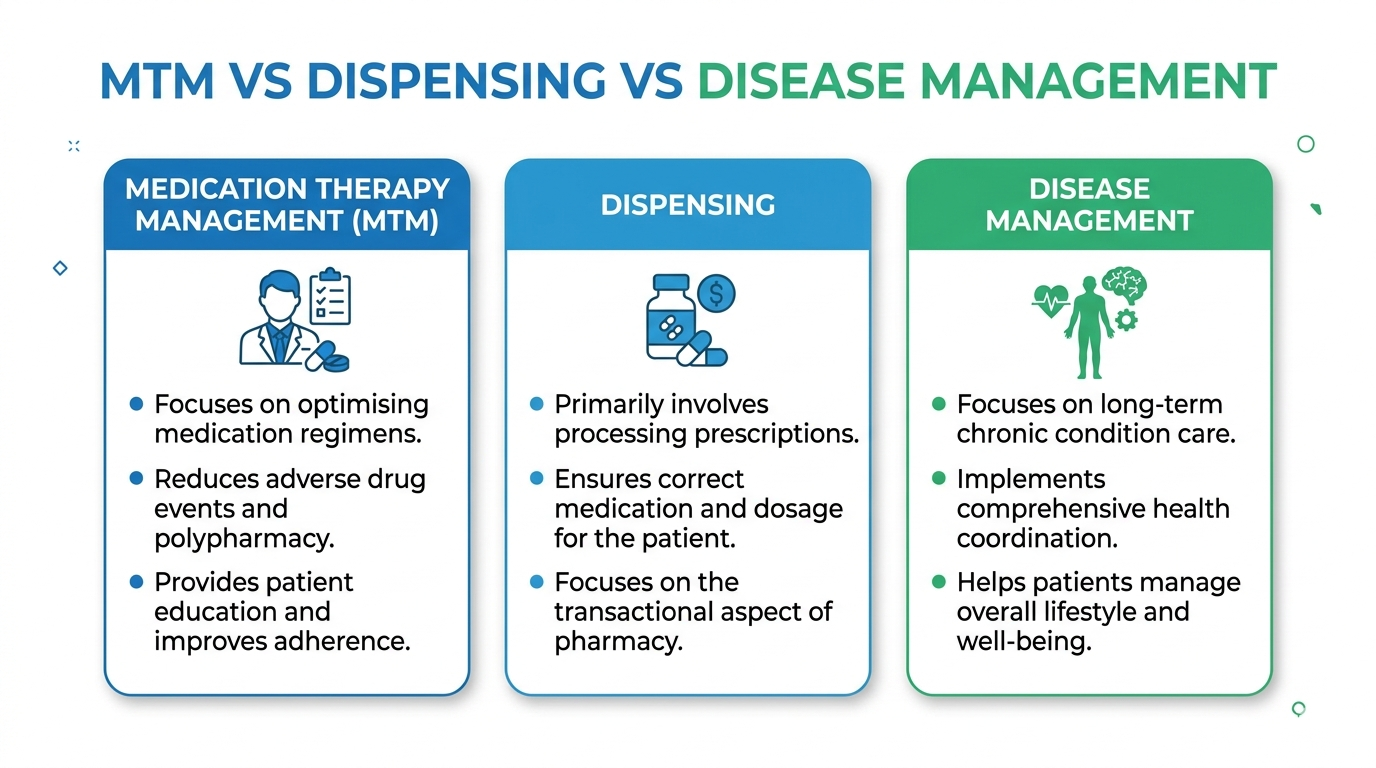 Medication therapy management focuses on the total safety and clinical alignment of a person’s entire multi-drug regimen, whereas prescription dispensing is the mechanical fulfillment of a single order, and disease management centers narrowly on controlling one specific illness. Understanding these core differences helps families request the precise level of help they need.
| Clinical Feature | Prescription Dispensing | Disease Management | Medication Therapy Management |
| Primary Scope | Fulfilling a single bottle of pills | Tracking one illness (like diabetes) | Assessing every drug, vitamin, and supplement together |
| Provider Focus | Speed, accurate labels, and basic warnings | Lab values and specific disease symptoms | Overall drug safety, side effects, and out-of-pocket costs |
| Meeting Style | Brief chat at a retail register counter | Standard clinical checkup in a medical office | An unhurried, comprehensive 30-to-60 minute review |
Think of prescription dispensing as checking a single part of your car during an oil change. Disease management is like fixing only the air conditioning system. A medication therapy management program acts like a master mechanic inspecting how every moving part operates together to ensure the entire vehicle runs safely.
Real Benefits Backed by Real Evidence
Peer-reviewed clinical evidence proves that structured medication reviews lower hospital readmission rates by up to 80 percent, boost daily treatment adherence by over 51 percent, and save hundreds of dollars in unnecessary medical expenses. These outcomes show that organized oversight dramatically improves daily safety.
Consider these concrete medication therapy management examples of how this service alters a family’s daily health trajectory:
The Cost-Saving Swap: An analyst reviews an older adult taking an expensive brand-name blood pressure pill. By coordinating with the physician, they substitute a lower-cost generic equivalent, dropping the out-of-pocket family expense from $140 monthly down to just $12.
The Silent Interaction Fix: A caregiver brings a loved one’s pill collection to a consultation. The specialist notices that an over-the-counter herbal supplement for sleep is actively canceling out a prescribed blood thinner, creating an immediate stroke risk. The specialist removes the supplement, instantly protecting the patient.
Data from the Journal of the American Pharmacists Association confirms that for every dollar invested in these comprehensive reviews, health systems realize significant savings by preventing emergency room visits, falls caused by dizziness, and accidental double-dosing.
MTM and Medicare Part D: What You Should Know
Medicare medication therapy management is a completely free, required benefit available through all Medicare Part D prescription drug plans for beneficiaries who qualify for the annual eligibility requirements. Insurance providers are not permitted to impose any copays, deductibles or additional charges to provide these comprehensive clinical reviews. If you are eligible, your insurance plan will send you an official letter inviting you to enroll. Many seniors are discarding these letters thinking they are junk mail or regular marketing material. Keep in mind that this service is an authorized clinical benefit that you have already paid for through your regular monthly insurance premium.Even if you don’t qualify under the strict federal guidelines for the mandatory program, many Medicare Advantage plans have open-access options. Always a good idea to call the member services phone number on the back of your insurance card and ask directly for a comprehensive review session.
How to Access MTM Services
You can use these clinical review services by contacting your current insurance plan provider, asking your local retail pharmacist to set up an appointment, or by requesting an official referral from your primary family doctor. This step will make your daily care routine easier and give your family instant peace of mind.
Denver combines clinical medication reviews with professional home care services to provide a powerful safety net for you or family members who need extra help with daily routines at home. Castle Pines Home Care and other trusted agencies provide non-clinical caregivers who provide much needed daily supervision.
These in-home caregivers don’t prescribe or change doses, but they’re great at opening pill organizers, giving timely reminders and looking for unexpected side effects. This collaboration makes sure that the personalized plan created during your clinical consultation is implemented exactly every single day.
How Castle Pines Home Care Supports Medication Management at Home
For seniors and adults with chronic conditions receiving care at home, medication management doesn’t stop at the pharmacy. Staying on track with complex medication schedules is one of the most common challenges families face.
At Castle Pines Home Care, our caregivers support clients in managing daily routines, including medication reminders and coordination with healthcare providers. We work alongside families to make sure nothing falls through the cracks.
If you’re exploring home care services in Denver for yourself or a loved one, we’re here to help with the practical, day-to-day side of care that makes a real difference.
Final Thoughts
Taking care of your medicines doesn’t have to be scary or hard. It gets more organized and easier to deal with with the correct help. Medication therapy management can assist in cutting down on mistakes, make it easier for people to stick to their medications, and make complicated routines clearer, especially when there are more than one prescription involved.
Don’t hesitate to get in touch if you have questions or want to learn more about your care options. Contact Castle Pines Home Care today to talk about your needs and get the proper amount of help for you.
Frequently Asked Questions
Is MTM the same as a medication review?
A medication review is part of MTM, but MTM is broader. It includes a review plus documentation, a personal medication list, an action plan, and ongoing coordination with your care team.
Is MTM covered by insurance?
If you’re on Medicare Part D and meet eligibility criteria, MTM is covered at no extra cost. Private insurance coverage varies, so check your specific plan.
How long does an MTM session take?
A Comprehensive Medication Review typically runs 30 to 60 minutes. Targeted reviews are shorter and focus on specific medication concerns.
Can I get MTM if I’m not on Medicare?
Yes. Many private insurers, employers, and community pharmacies offer MTM services independently of Medicare. Ask your pharmacist or insurer directly.
What should I bring to an MTM appointment?
Bring every medication you take, including prescriptions, OTC drugs, vitamins, and herbal supplements. A list of all your doctors and current health conditions is also helpful.