

If your loved one needs help at home and you don’t have a lot of money, the first question most families ask is a simple one: Does Medicaid cover home care? Yes, but how much it covers, what kind of care is covered, and whether you qualify depends a lot on where you live and your situation. This book makes everything clear so you can stop guessing and start planning.
What Is Medicaid Home Care?
Medicaid home care refers to a range of services that allow eligible individuals to receive care in their own homes rather than in a nursing facility. These services are funded through federal and state Medicaid programs and typically include personal care, home health aide visits, nursing support, and therapy. Eligibility is based on both medical need and financial criteria.
Think of Medicaid home care as the bridge between “needing help” and “having to move to a nursing home.” The goal of these programs is to keep people in familiar surroundings while still getting the support they need.
There are two main types of services most people are asking about:
Home Health Care This is medical in nature. It includes skilled nursing visits, wound care, medication management, physical therapy, occupational therapy, and speech therapy. Medicaid is required by federal law to cover basic home health services for eligible individuals.
Personal Care / Non-Medical Home Care This includes help with bathing, dressing, grooming, meal preparation, light housekeeping, and mobility. Coverage for these services varies widely by state and is often provided through HCBS (Home and Community-Based Services) waivers.
Types of In-Home Care Covered by Medicaid
Medicaid provides several in-home care services depending on your eligibility and state-specific rules. Common types include:
- Personal Care Assistance – Help with daily living activities such as bathing, dressing, toileting, and mobility.
- Skilled Nursing Care – Medical services such as medication management, wound care, or monitoring chronic conditions.
- Therapy Services – Physical, occupational, or speech therapy delivered at home.
- Home Health Aides – Supervised care that assists with both personal care and light household tasks.
Understanding these distinctions helps families plan effectively and ensures that loved ones receive the care they need.
Eligibility Requirements
Not everyone qualifies for Medicaid in-home care. Eligibility is determined by several factors:
- Income Limits: Most states have strict income thresholds that applicants must meet. Some states also consider assets like savings or property.
- Medical Requirements: A medical assessment often determines whether an individual requires in-home services rather than institutional care.
- Age and Disability Status: Seniors, adults with disabilities, and some children may qualify depending on state guidelines.
- State Variations: Each state administers its own Medicaid program, so requirements and available services differ.
If you’re a family member trying to figure out who can get Medicaid home health care, the most important thing to do is check both medical and financial eligibility in your state. Talking to a Medicaid planner can make this process easier.
Home Health vs. Home Care What’s the Difference?
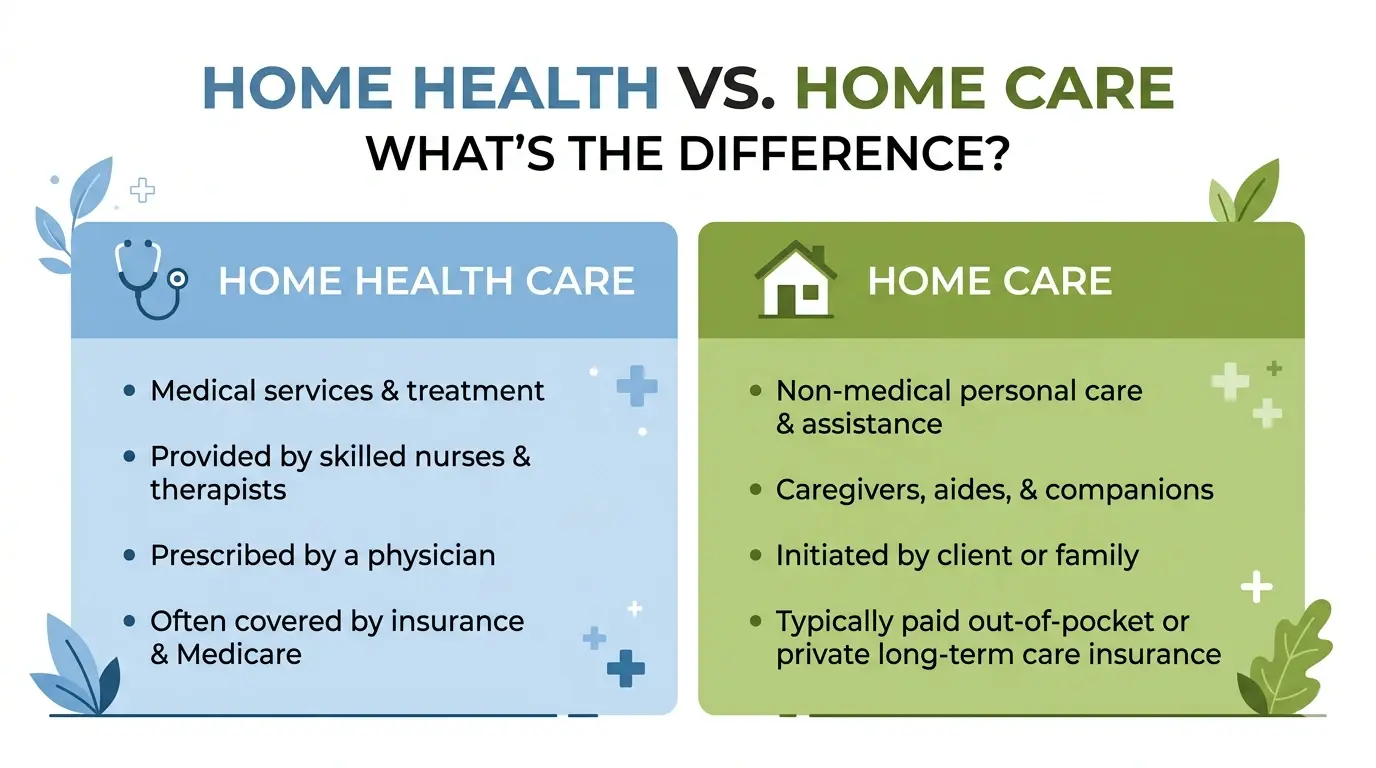
These two terms are used interchangeably all the time, but they mean different things — and the difference matters for Medicaid coverage.
Home Health Care is medical. It’s provided by licensed professionals (nurses, therapists) and typically follows a doctor’s orders. It’s short-term, goal-oriented, and covered by Medicaid when medically necessary. Medicare also covers home health, which is why many dual-eligible individuals access it through both programs.
Home Care (or personal care) is non-medical. It’s about day-to-day support — bathing, dressing, meal prep, companionship. Coverage depends on state Medicaid programs, usually through HCBS waivers or personal care state plan benefits.
Why does this matter? Because if you ask for “home health care” and what you need is “home care,” you might be directed to the wrong program and miss out on coverage you actually qualify for.
How Medicaid Pays for In-Home Care
Understanding Medicaid payments for in-home care means understanding how the money actually flows. There are two main delivery models:
Agency-Based Care Medicaid pays a licensed home health agency directly. The agency then assigns a caregiver to the individual. This is the most common model and the easiest to start with.
Self-Directed / Consumer-Directed Care The individual acts as the employer. They choose, hire, and manage their own caregiver including, in many cases, a family member. Medicaid funds are managed through a Financial Management Service (FMS) vendor.
How much does Medicaid pay for home health care? Rates vary by state, service type, and delivery model. In Colorado under the CDASS (Consumer Directed Attendant Support Services) program, caregiver pay generally ranges from $17 to $20 per hour as of 2025, depending on location and qualifications. Denver rates run higher due to the county’s minimum wage ordinance.
Without Medicaid, home care typically costs $25 to $50 per hour or more depending on the level of care and your location. For families using medicaid for home care, most or all of those costs are covered — provided the individual meets eligibility requirements.
Can Family Members Get Paid as Caregivers Through Medicaid?

Yes, in many states Medicaid can pay family members including adult children, siblings, grandchildren, and in some cases spouses to provide in-home care. This is done through self-directed programs or consumer-directed models that give the care recipient control over who they hire. The family member must be approved, and wages are set within state-authorized limits.
This is one of the most common questions we hear, and the answer often surprises people. Will Medicaid pay for home health care by family members? In many cases, yes.
In Colorado specifically, the CDASS program and the Community First Choice (CFC) option (launched July 1, 2025) both allow eligible individuals to hire family members as paid caregivers. The care recipient acts as the employer and manages the caregiver’s hours and schedule through a Financial Management Services vendor (currently Public Partnerships LLC / PPL in Colorado).
Who can be paid? Adult children, siblings, nieces, nephews, friends, and in certain circumstances, spouses. The family caregiver does not always need to be a Certified Nursing Assistant (CNA), though becoming one opens up additional options and typically higher pay rates.
One practical note: the person receiving care must first be enrolled in a qualifying Medicaid program and have an approved care plan. A county case manager or Single Entry Point agency handles the assessment.
Does Medicaid Cover Non-Medical Home Care?
Yes, in most states Medicaid does cover non-medical home care, but not automatically. Non-medical home care help with daily tasks like bathing, dressing, meal prep, and housekeeping is covered through optional programs like HCBS waivers or state plan personal care services. Coverage depends entirely on the state and the individual’s assessed needs.
A lot of families get confused here. They think that “home care” means Medicaid won’t pay because there isn’t a doctor involved. That’s not right.
Non-medical care is covered if it is linked to a functional requirement that has been evaluated. Medicaid will typically pay for non-medical personal care as part of an approved plan if a state decides that someone requires help with three or more ADLs to safely stay at home.
Medicaid usually covers non-medical home care services, including helping with personal hygiene, getting dressed, moving around, transferring, cooking meals, reminding people to take their medications, and light housekeeping.
Even with HCBS waivers, Medicaid does not pay for room and board, rent, mortgage payments, utility bills, or food costs.
Application Process & Tips
Applying for Medicaid in-home care can feel overwhelming, but breaking it down step by step helps:
- Check State Eligibility Requirements: Each state has different income, asset, and medical requirements.
- Gather Documentation: Income statements, medical records, and personal identification are often required.
- Submit an Application: Applications can typically be submitted online, by mail, or in person at your local Medicaid office.
- Assessment & Approval: A state representative or nurse may visit the home to assess care needs.
- Choose a Care Provider: Once approved, families can select a Medicaid-approved home health agency or caregiver.
Cost Comparison
Without Medicaid, in-home care can be expensive, often ranging from $25 to $50 per hour depending on services and location. Medicaid can significantly reduce out-of-pocket costs:
- Medicaid Coverage: For eligible individuals, Medicaid can cover most or all costs associated with in-home care services, including nursing visits, therapy, and personal care assistance.
- Private Pay: Families not eligible for Medicaid must cover costs themselves, which can add up quickly for long-term care.
By comparing costs, families can plan budgets and avoid financial strain while ensuring high-quality care.
Home Care in Denver How Castle Pines Home Care Can Help
If you’re in the Denver area and exploring your options for Home Care in Denver, navigating Medicaid programs alone can feel like reading a foreign language. Castle Pines Home Care works with families throughout the Denver South region to provide personal, dependable home care tailored to each individual’s needs.
Whether your loved one qualifies for Medicaid or needs private care while waiting for approval, the team at Castle Pines can walk you through the options, help you understand what programs may apply, and make sure no one slips through the cracks.
Getting the right care shouldn’t require a law degree. Reach out and let’s talk through your situation.
FAQs
Will Medicaid pay for 24-hour home care?
Some states allow extended hours if medically necessary, but it is not guaranteed. Evaluations are done on a case-by-case basis.
How many hours of home health care does Medicaid cover?
Coverage depends on medical necessity and state guidelines. Some states cap hours, while others allow flexible schedules based on assessment.
Does Medicaid cover home health?
Yes, Medicaid often covers home health care, including nursing and therapy, for eligible individuals.
Will Medicaid pay for home health care by family members?
Certain states permit payments to qualified family members, providing an affordable and familiar caregiving option.
How much does Medicaid pay for home care?
Payment amounts vary based on services provided, state regulations, and whether care is delivered by a professional agency or a family member.