
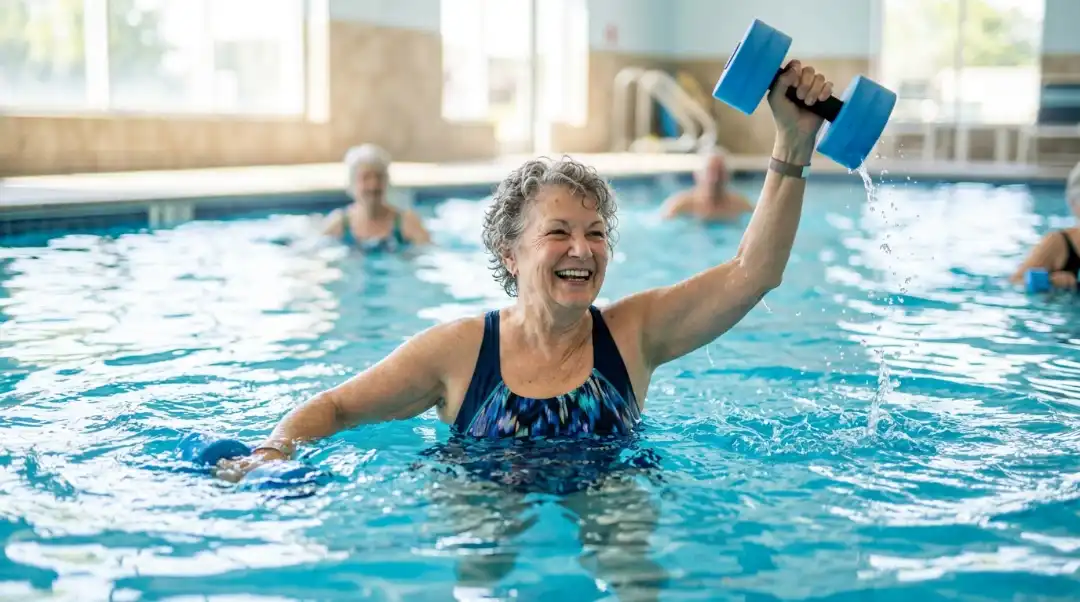
It may feel simpler for older folks to do water exercise since the water supports the weight of the body and provides gentle resistance. The pool is therefore a good area to concentrate on strength, balance, flexibility and cardiovascular fitness without the same impact as many land-based workouts.
If you’re wondering what is the finest water workouts for seniors, start with easy movements such as water walking, marching in place, calf raises, leg lifts, arm curls and wall push-ups. Choosing the proper ones depends on mobility, fitness, comfort in the water and health concerns. I’ll walk you through helpful options, how to do them, how to develop a routine, and how to be safe.
Why Water Exercises Are Ideal for Seniors
Water changes the rules of exercise. Standing in chest-deep water takes a large share of body weight off the hips, knees, and spine, which is why pool workouts work so well for anyone dealing with arthritis, stiffness, or recovery from joint surgery. On land, every step sends impact straight through the joints. In water, that impact mostly disappears.
Heart Health and Circulation
Moving through water raises heart rate without the pounding that comes from running or jumping on pavement. The water’s natural pressure also supports blood flow back toward the heart, which is one reason cardiologists often list swimming and water aerobics among the safer cardio options for older adults with blood pressure concerns.
Joint Relief Through Buoyancy
Buoyancy is the real hero of pool exercise. Water supports a large portion of body weight, so joints absorb far less stress than they would walking the same distance on concrete. That’s why physical therapists frequently recommend aqua exercises for seniors recovering from hip or knee replacement.
Balance and Bone Support
Water breaks a fall. If your foot slips, the water offers you a little extra time to get your footing back that dry ground wouldn’t. For anyone concerned about falling at home, that little delay is more important than most realize. Falls are one of the main causes of injury for older adults living alone. Water exercise that involves weight-bearing is also beneficial for bone density and is a sensible addition to a program for persons managing osteoporosis, along with conventional medical care and a doctor’s direction.
Mental Health and Motivation
There’s a mental side to this that doesn’t get enough credit. Many seniors say a pool session feels less like a workout and more like a weekly reset they actually look forward to. That shift in attitude is often the difference between quitting after two weeks and sticking with a routine for years.
Top 10 Water Exercises for Seniors

The following pool exercises for seniors require no special skills. You can perform them in the shallow end where the water reaches your waist or chest. Start slowly and focus on keeping your posture straight.
1. Water Walking and Jogging
Water walking is the safest foundational movement for building leg strength and aerobic stamina in a pool. It allows you to practice a full heel-to-toe gait pattern without the joint shock experienced on asphalt sidewalks.
-
Stand tall in chest-deep water with your posture straight and shoulders back.
-
Walk forward using a full stride, landing on your heel and rolling off your toes.
-
Swing your arms through the water to increase core engagement and balance.
-
Transition into water jogging across the shallow end as your heart rate adapts.
2. Calf Raises
Hold the pool wall for support, feet flat on the floor. Rise slowly onto your toes, pause for two seconds, then lower. Calf raises build the lower-leg strength that keeps you steady on stairs and uneven ground.
3. Marching in Place
Stand at ease in shallow or waist deep water. March on the spot, bring one knee up, drop it, then bring the other knee up. Keep your upper body erect and utilize your arms to balance.
Try 30 to 60 seconds, then take a small break. This exercises legs and core and gets the heart rate up.
4. Hamstring Curls
Facing the wall, bend one knee and bring your heel toward your glutes, then lower it back down. Switch legs after ten repetitions. This loosens the back of the thigh, an area that tightens fast with age.
5. Leg Lifts (Hip Abduction)
Leg lifts build outer hip strength and lateral balance to prevent sideways trips and falls. Moving your leg through water resistance activates the gluteal muscles responsible for hip stability.
-
Stand sideways to the pool wall and hold the edge with your inside hand.
-
Keep your torso upright and lift your outer leg out to the side in a smooth motion.
-
Hold for a brief pause, then bring the leg back past your standing foot.
-
Switch sides after ten repetitions to work the opposite hip evenly.
6. Chest Fly
Stand in chest-deep water with your feet staggered for a sturdy base. Extend both arms straight out to your sides, keeping your hands flat. Bring your hands together in front of your chest, pushing against the water. Turn your palms outward and pull your arms back to the start.
7. Torso Twists
Place your feet widely apart and dip your shoulders into the water. Press your hands together and extend your arms forward. Rotate your upper body from left to right while keeping your hips facing front. This exercise is a great way to make your spine more flexible.
8. Wall Push-Ups
Face the pool wall and place your hands slightly wider than your shoulders. Keep your feet stable, bend your elbows as you lean toward the wall, then push yourself back.
Do 6 to 10 slow repetitions. Keep your elbows slightly bent rather than locked. This works the chest, shoulders, and arms.
9. Flutter Kicks
Hold onto the edge of the pool with your arms extended. Let your legs float up behind you until your body is parallel to the water surface. Move your legs up and down from your hips in small, quick motions. Keep your knees slightly straight to maximize core engagement.
10. Gentle Water Cycling
Hold the pool edge with arms extended, let your legs float up behind you, and kick in small, quick motions from the hips. This works the core and legs at once and is a common finisher in most water aerobics exercises for seniors.
Safety Tips Before Starting Pool Exercises

Safety must come first when starting an aquatic routine. Check in with your primary care provider or physical therapist before using public or home pools.
-
Check Water Temperature: Target pools heated between 83°F and 86°F (28°C to 30°C). Cold water tightens stiff joints, while excessively hot water causes fatigue and sudden blood pressure drops.
-
Wear Water Shoes: Wear rubber-soled water shoes from the locker room to the pool floor. Pool decks, steps, and concrete floors get slippery, and extra foot traction prevents dangerous slips.
-
Use the Handrails: Use pool ramps, sloped entries, or sturdy stair handrails when stepping into the pool. Avoid using vertical ladders if you have weak knees or balance issues.
-
Hydrate Regularly: Keep a water bottle at the edge of the pool. Swimming masks sweat, but your body loses fluids during water workouts just as it does on land.
Arm Exercises Using Water Weights
Adding specialized foam dumbbells to your routine can significantly boost your upper body strength. These weights do not feel heavy when you lift them out of the water, but they offer immense resistance when you push them under the surface.
Bicep Curls
Stand in chest-deep water with your feet spaced shoulder-width apart. Hold a foam dumbbell in each hand with your arms extended toward the pool floor. Keep your elbows tucked close to your ribs as you curl the weights up toward your shoulders. Slowly push them back down against the natural buoyancy of the water.
Lateral Arm Raises
Start with your arms resting flat against your outer thighs while holding your water weights. Slowly raise both arms out to the sides until they rest just below the surface of the water. Pause briefly, then use your shoulder and back muscles to press the weights back down to your sides.
Equipment That Makes a Difference
You don’t need a lot of gear, but the right tools do help.
| Equipment | Purpose |
| Pool Noodles | Balance support and leg resistance exercises |
| Water Weights (Foam Barbells) | Upper body strength training |
| Hand Webs / Hand Paddles | Increase arm resistance in water walking |
| Kickboard | Upper and lower body resistance work |
| Flotation Belt | Deep water safety and support |
| Water Shoes | Traction and ankle support |
| Ankle Weights | Added resistance for leg lifts and kicks |
Most of these are affordable and available at sporting goods stores. Many community pools and YMCAs also provide equipment for free during aqua aerobics classes.
How Often Should Seniors Do Water Exercises?
Most seniors benefit from two to three water workouts a week, each lasting 30 to 45 minutes. That frequency builds strength, balance, and mobility at a steady pace while giving the body enough recovery time between sessions, which matters more with age than it did at 30.
Anyone brand new to exercise should start smaller, maybe 15 minutes twice a week, and build from there. Consistency beats intensity here every time. The U.S. Centers for Disease Control and Prevention recommends about 150 minutes of moderate activity a week for older adults, and a steady pool routine fits neatly into that target without feeling like punishment.
Integrating Pool Exercises Into Your Routine
When creating a long term habit, consistency matters more than intensity.
Try to do two or three 30-minute sessions in the pool per week, with a day off in between to let your muscles recover.
Begin each workout with five minutes of gentle water walking to warm up your muscles and naturally increase your heart rate. Finish with 5 minutes of easy stretching while your body is still warm and supported by the water.
When to Consider Professional Help or Classes
Or attend group water aerobics courses. These are organized, social and led by trained instructors. These classes adapt motions for different levels of fitness, allowing you to move at your own speed with others.
Physical therapists provide individualized, one-on-one aquatic treatment for persons recuperating from joint replacement or who have severe arthritis. When you work with a professional, they will tailor your motions to your individual medical needs and mobility goals.
Community pools, YMCAs, and senior centers often run water aerobics exercises for seniors as part of their regular schedule, sometimes at reduced rates for older adults. Checking local listings is usually the fastest way to find a class nearby.
Caring for Seniors Beyond the Pool
Staying active in the water is one piece of the puzzle. Seniors who live independently or with family often benefit from additional daily support too.
If you or a loved one needs help with daily activities alongside staying fit, Castle Pines Home Care provides trusted, personalized support right at home. From assistance with mobility to companionship and wellness routines, the team is built around what seniors actually need.
For families exploring Home Care in Denver, Castle Pines Home Care offers flexible care plans tailored to individual health goals, including supporting active, healthy lifestyles for older adults.
Ready to get started or have questions about senior care? Contact us Castle Pines Home Care team today. Whether you’re looking for part-time help or full-time support, they’re happy to walk you through your options. Visit the website or call directly to speak with a care specialist who understands what your family needs.
Frequently Asked Questions
How often should seniors do water exercises?
Three times per week is the general recommendation for most seniors. Each session should last 30 to 45 minutes. Start with two days per week if you’re new to aqua exercises for seniors and gradually increase.
Are water exercises safe for seniors with arthritis?
Yes. Doctors often advocate water workouts for seniors with arthritis as one of the best solutions. The buoyancy takes pressure off the joints, and the resistance keeps the muscles around the joints strong. Always talk to your doctor before you start.
Do I need to know how to swim?
No. Most exercises are done in shallow or waist-high water. For deep water activities, a flotation belt keeps you safe. Elderly swimming workouts don’t require any swimming skills at all.
What’s the best time of day for pool exercise?
Morning sessions work well for most seniors because energy levels are higher and pools are less crowded. However, the best time is simply whenever you can commit to it consistently.
Can water exercises help with weight loss?
Yes, though results vary. Swimming workouts for seniors burn calories while being gentle on the body. Combined with a balanced diet, regular aqua exercise can support healthy weight management over time.
How deep should the water be for these exercises?
Most exercises work best in waist-to-chest-high water. Waist-high water offers more stability, while chest-high water provides more resistance and buoyancy.