

It can be hard to choose the correct kind of care for a loved one, especially when you’re already worried and don’t have much time. Most families don’t grasp the difference between short-term and long-term care until they’re at a meeting to talk about leaving the hospital and someone asks, “What’s next?” It’s too late to start looking into things at that time. Short-term care is help with rehabilitation after an illness or surgery, whereas long-term care is help that lasts for those with chronic ailments or impairments that won’t go away.
It’s not just interesting to know the difference between short-term and long-term care. It affects how you arrange your money, what kind of insurance you buy, and how well your loved one lives. This page makes it apparent what each type is, so you can make the appropriate choice without having to think twice.
What Is Short-Term Care?
Short-term care is temporary medical or rehabilitative support provided after a surgery, injury, illness, or hospitalization. It typically lasts a few days to several months, with the primary goal of helping a person regain independence and return home as quickly as possible.
Think of it as a bridge. You or your loved one had a hip replacement, suffered a stroke, or recovered from a serious infection. Short-term care carries you from the hospital back to your normal life. Services are usually provided in skilled nursing facilities (SNFs), rehabilitation centers, or at home through home health aides.
Common short-term care services include:
- Physical therapy to restore movement and strength
- Occupational therapy to relearn daily tasks like dressing and cooking
- Speech therapy after a stroke
- Wound care and medication management
- Help with bathing, eating, and mobility during recovery
The key word here is goal-oriented. Every service points toward one outcome: getting the patient back to independent living.
Data Suggestion: Include a stat like “According to Medicare, approximately 1.5 million Americans use skilled nursing facility care annually for short-term recovery.” Source: Medicare.gov or CMS data.
What Is Long-Term Care?
Long-term care is ongoing assistance for people who can no longer perform basic activities of daily living (ADLs) on their own due to chronic illness, cognitive impairment, disability, or aging. Unlike short-term care, there’s no defined end date. The goal is comfort, safety, and quality of life, not recovery.
Conditions that commonly require long-term care include Alzheimer’s disease, Parkinson’s disease, dementia, permanent physical disabilities, and debilitating strokes. In many cases, a person’s condition will not improve. What they need is consistent daily support, not rehabilitation.
Long-term care can be provided in several settings:
- Nursing homes or skilled nursing facilities
- Assisted living communities
- Memory care units for dementia patients
- Private homes with professional caregivers or home health aides
If you’re watching a parent slowly lose their ability to manage on their own, this anticipatory grief and caregiver anxiety is real. Knowing what long-term care actually involves helps you plan ahead rather than react in a crisis.
Data Suggestion: “The U.S. Department of Health and Human Services estimates that 70% of people turning 65 today will need some form of long-term care in their lifetime.” Great stat to include here.
Difference Between Short-Term Care and Long-Term Care
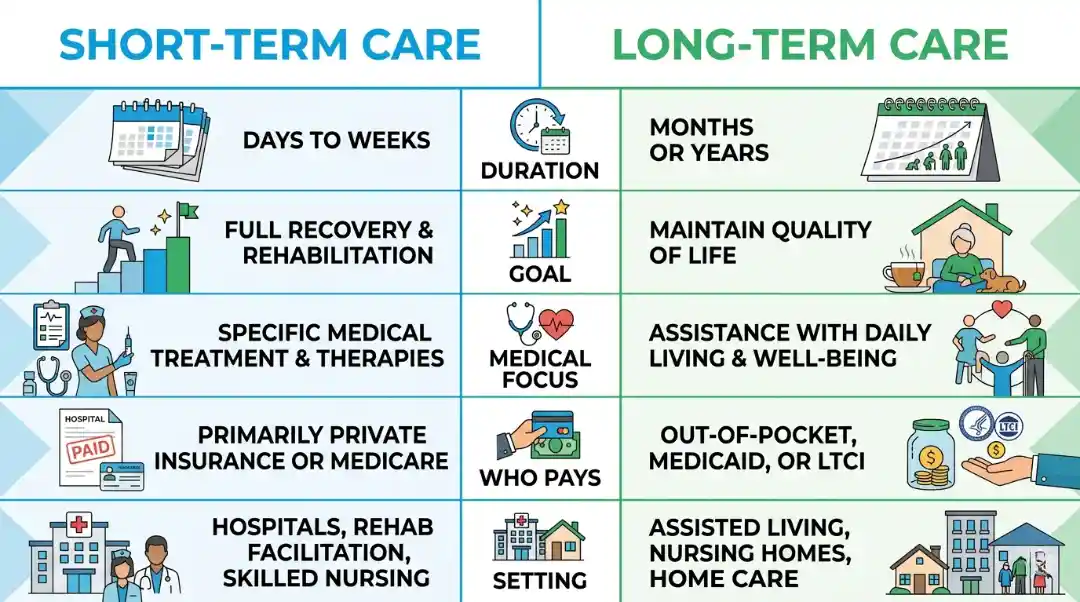
Here’s a side-by-side look at both:
| Factor | Short-Term Care | Long-Term Care |
| Duration | Days to months | Months to years (indefinite) |
| Goal | Recovery and independence | Ongoing comfort and safety |
| Medical focus | Intensive, supervised | Custodial, maintenance-based |
| Common settings | SNF, rehab centers, home | Nursing homes, assisted living, home |
| Who pays | Medicare, health insurance | Medicaid, LTC insurance, private pay |
| Typical patient | Post-surgery, injury recovery | Chronic illness, dementia, disability |
Short-Term Care Is Temporary
Short-term care has a finish line. A patient recovering from knee replacement surgery, for example, will complete a patient recovery timeline set by their care team. Progress is measured weekly. When goals are met, care ends. That clear endpoint is actually a relief for families dealing with caregiver anxiety.
Long-Term Care Provides Skilled Nursing Services Indefinitely
Long-term care facilities are staffed around the clock by licensed nurses and trained caregivers. There’s no discharge plan because the care is the plan. For someone living with Parkinson’s disease or advanced dementia, 24/7 medical supervision isn’t optional. It’s essential.
Long-Term Care Offers Comprehensive Treatment
Long-term care goes beyond just clinical needs. Reputable facilities offer social activities, salon services, emotional and psychological support, and transportation. Because residents may live there for years, the goal is to create a life, not just manage a condition. That’s a meaningful distinction.
When Does Short-Term Care Transition to Long-Term Care?
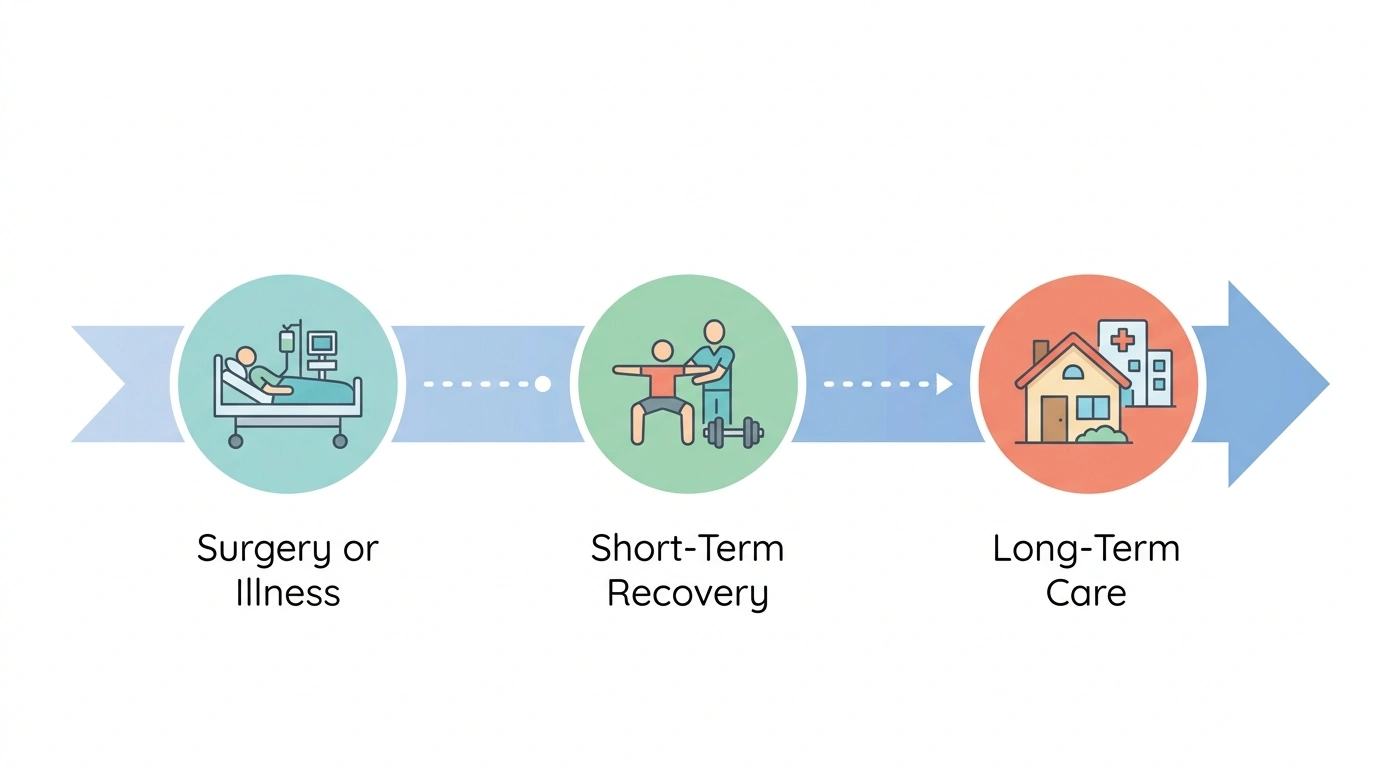
This is the question families don’t know to ask until they’re already in it. Sometimes a person enters a skilled nursing facility expecting short-term recovery-focused care, and then the condition doesn’t improve. At that point, the care team, family, and physician reassess and may recommend transitioning to long-term care.
Signs that short-term care may be shifting to long-term care:
- The patient is not meeting recovery milestones
- A new diagnosis like dementia surfaces during recovery
- The patient can no longer safely live alone or with family
- Care needs exceed what family members can provide at home
Having this conversation early, before a crisis, is always better than scrambling after one.
Cost Comparison: Short-Term Care vs Long-Term Care
Money matters here, and nobody should be blindsided by care costs.
Short-term care is often covered by Medicare Part A, but with conditions. Medicare typically covers up to 100 days in a skilled nursing facility following a qualifying hospital stay of at least 3 days. Days 1-20 are fully covered. Days 21-100 require a daily co-pay (around $200 in 2024). After day 100, coverage ends.
Long-term care is a different story. Medicare does not cover custodial long-term care. The main payment options include:
- Medicaid (for those who meet income and asset eligibility)
- Long-term care insurance (must be purchased before a diagnosis)
- Private pay / personal savings
- Veterans Administration benefits for qualifying vets
Early financial planning for long-term care isn’t pessimistic. It’s practical.
How to Choose Between Short-Term and Long-Term Care
Ask yourself these questions:
- Is this condition expected to improve with treatment?
- Can the person return home with some support after recovery?
- Does the person need 24/7 medical supervision?
- Are family members able to safely provide care at home?
- What does the physician recommend for next steps?
If recovery is the realistic goal, short-term care is the right fit. If ongoing daily assistance is the reality, long-term care planning needs to start now.
The emotional burden of caregiving is real. Many families delay this decision out of guilt or denial, especially when grieving a living parent who is losing independence. But delaying a care decision doesn’t improve the outcome. Getting the right level of care at the right time protects both the patient and the family.
Finding the Right Care Support at Home
For families who want professional support without moving a loved one out of their home, in-home care is worth exploring. If you’re based in Colorado, Castle Pines Home Care offers trusted, compassionate home care services in Denver and surrounding areas. Whether you need short-term recovery care after a hospital stay or ongoing daily assistance for a loved one with chronic needs, having the right team makes all the difference.
Frequently Asked Questions
Does Medicare pay for long-term care in a nursing home?
Medicare doesn’t pay for long-term custodial care in a nursing home. It only pays for short-term skilled nursing care after a qualifying hospital stay, and only for up to 100 days under certain conditions.
What’s the difference between a skilled nursing facility and long-term care?
A skilled nursing facility (SNF) can provide both short-term rehabilitation and long-term care. The difference is the type of services being provided. Short-term SNF care is recovery-focused; long-term SNF care is maintenance and daily assistance.
Can a person receive long-term care at home?
Yes. Many people receive long-term care in their own home through professional caregivers, home health aides, or family members supported by care planning professionals.
How long does short-term care typically last?
Short-term care usually lasts anywhere from a few days to three months, depending on the condition being treated and the patient’s recovery progress.
What conditions typically require long-term care?
Conditions like Alzheimer’s disease, Parkinson’s disease, dementia, permanent physical disabilities, and degenerative neurological conditions most commonly require long-term care.
Is long-term care insurance worth it? Long-term care insurance can significantly reduce out-of-pocket costs for extended care needs. It’s most valuable when purchased before age 60 and before any diagnosis that could disqualify coverage.