
If you’ve ever stood before a kitchen counter heaped with pill bottles trying to recall which ones your mom takes in the morning and which ones come at night, you already know how confusing this gets. Managing multiple medications for yourself or a loved one can be one of the hardest parts of caregiving, and every time a doctor adds a new prescription to the pile, it just gets harder. We understand, and that’s why we created this guide.
By the end of this article, you’ll find out what medication management is, why it’s so important for seniors and people with chronic conditions, and what a good routine at home actually looks like. We’ll also talk about the most common mistakes families make, types of support available, and how reminder tools can take the guesswork out of daily doses. Let’s begin with an easy answer to the question many people are looking for – what is medication management?
Understanding Medication Management
Medication management is the ongoing process of organizing, reviewing, and taking medications correctly and safely, including prescriptions, over the counter drugs, and supplements. It covers dosage timing, refill tracking, side effect monitoring, and coordination between doctors and pharmacists. The goal is simple: the right medication, the right dose, at the right time, every time.
That definition sounds simple on paper. In practice, it’s a daily juggling act, especially for older adults managing three, five, or ten different medications at once. Patient medication management isn’t a one time task you finish and forget. It’s a routine that needs checking and rebuilding every time a doctor changes a dose or adds something new.
Think of it like running a small pharmacy out of your kitchen cabinet. You’ve got labels to read, times to track, and a list that never stays the same for long. Managing your medicines well means you always know what you’re taking, why you’re taking it, and what happens if you miss a dose.
How Is Medication Management Handled?
Medication management is usually addressed with a combination of medication lists, scheduled reviews and support from a pharmacist, doctor or caregiver. It starts with a complete list of all the medications a person takes and a clear schedule for doses, refills and check ins. By monitoring on an ongoing basis you can catch problems early.
Usually the first step is medication reconciliation, which is just a fancy way of saying you list everything you take. This includes prescriptions, vitamins, herbal supplements and anything picked up off a pharmacy shelf without a script. If you miss even one thing on the list, a dangerous interaction can be hidden.
From there a pharmacist or doctor reviews the list for duplicates, conflicts and doses that no longer make sense. Sometimes this process is called medication therapy management, or MTM, and is often covered by Medicare Part D for those who qualify. If you’re on multiple medications for a chronic condition, it’s worth asking your provider if you qualify.
Meds management is a daily routine for the most part. Doses that are linked to daily routines, such as breakfast or brushing your teeth, are much easier to remember than doses linked to a clock on the wall. A pill organizer with day and time compartments also eliminates a lot of the mental math.
Why Is Medication Management Important?
Medication management is crucial since errors involving prescriptions are prevalent, costly and generally preventable. Hundreds of thousands of individuals go into the hospital every year because of missed doses, triple doses and drug interactions. Older adults are at most risk because they often take the most prescriptions.
Research into drug non-adherence suggests that it is a truly massive problem. Hospital admissions among older persons are estimated to be caused by a significant proportion of missed or wrong doses, with the associated healthcare expenses costing billions each year. Each of those statistics is an individual who just lost track of things, misread a label or didn’t know that two prescriptions shouldn’t be taken together.
Who Is a Good Candidate for Medication Management?

Good candidates for medication management include elderly, persons managing chronic diseases, anyone using 5 or more drugs, and people recovering from a hospital stay or recent diagnosis. Complexity is the common denominator . The more medications , ailments , and providers involved , the more likely something will go between the cracks without a system for that .
Seniors are at the top of the list, mainly because the older you become, the more prescriptions you tend to have. If you have chronic diseases such as heart disease, COPD or type 2 diabetes, you likely have several medications to take each day at specific times, and missing or increasing a dose could be dangerous. People with memory problems, particularly early cognitive decline, are at much greater risk as forgetting is part of the underlying disorder itself.
It’s also worth mentioning folks who don’t match the “elderly” label. Adults with disabilities, adults on psychiatric medication for mental health disorders, and individuals just released from surgery all face the same basic challenge: too many moving pieces, not enough built-in structure. If a home has more than two prescriptions running simultaneously, it is better having a proper system than trying to keep them in your head.
What Are the Benefits of Professional Medication Management?
Professional medication management reduces errors, improves treatment outcomes, and gives patients and families peace of mind. A trained professional reviews your full medication list, monitors for side effects, and makes sure each drug is doing what it’s supposed to do.
Here’s what consistent, professional oversight actually looks like in practice:
- Fewer drug interactions A pharmacist or provider catches dangerous combinations before they cause harm
- Better dosage tracking Ensures you’re taking the right amount at the right time
- Improved patient compliance Regular check-ins make it less likely you’ll skip doses
- Smarter refill reminders No more running out mid-week because you forgot to call the pharmacy
- Clear communication Your providers stay on the same page, which leads to better care
How to Build Your Medication Management Plan (Step-by-Step)
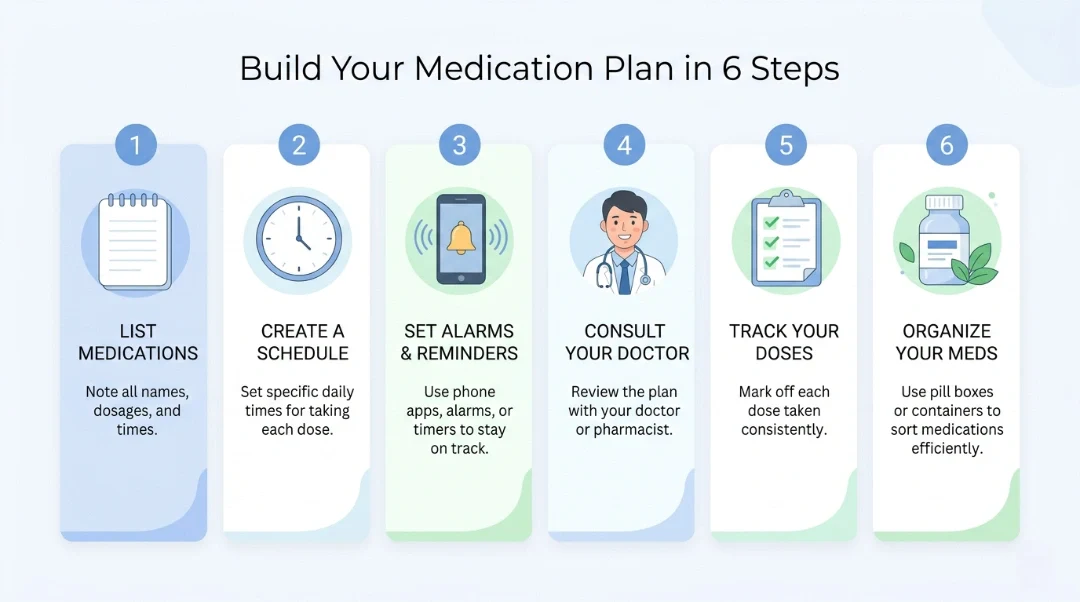
Building a plan doesn’t require special training, just a system that’s easy to repeat every day.
- List everything. Write down every prescription, over-the-counter drug, vitamin, and supplement, including dosage and timing. Bring this list to every doctor visit.
- Get a pharmacist review. Ask a pharmacist to check the full list for interactions at least once a year, or any time a new medication is added.
- Set up a physical system. A weekly pill organizer with morning, afternoon, and evening slots removes most guessing. Label it clearly if vision is an issue.
- Add reminders. Phone alarms, smart pill dispensers, or a simple wall calendar all work. Pick whatever the person will actually use consistently.
- Track side effects. Keep a short notebook or notes app log of any new symptoms after starting a medication, and note the date it began.
- Schedule regular check-ins. A quarterly review with the primary doctor, even a quick one, catches problems before they compound.
- Loop in a caregiver. If daily oversight isn’t realistic for family, a home care aide can take on doses, reminders, and monitoring as part of their visit.
Goals of Medication Management
Good medication management has a short list of goals, and they all point back to one thing: keeping a person safe while respecting how they want to live. Here’s what those goals usually look like in practice.
- Take medications correctly. The right dose, at the right time, in the right way, every single day.
- Prevent missed doses. A consistent routine and simple reminders cut down on gaps in treatment.
- Catch drug interactions early. One updated list, shared with every provider, closes the gaps between specialists.
- Reduce medication errors. Clear labeling, organized storage, and a second set of eyes when needed.
- Support independence. Staying safely at home rather than moving into a higher level of care sooner than necessary.
- Keep costs manageable. Asking about generic medications and assistance programs when a prescription gets expensive.
None of these goals require complicated systems. They require consistency, a bit of organization, and someone paying attention when things start to slip.
Types of Medications Used
Not every household needs the same level of help, and it helps to know what’s actually out there. A few common types of support cover most situations families run into.
Clinical medication therapy management, usually run through a pharmacy or primary care office, involves a formal review of every medication with a licensed professional. Pharmacy based support offers a lighter touch, such as blister packs, refill syncing, and quick consultations at pickup. Home caregiver support brings a trained person into the house to handle reminders, organize pill boxes, and flag concerns in real time. App based tools work well for tech comfortable seniors who just need a nudge at the right hour.
Most families end up mixing two or three of these together. A pharmacist handles the formal review, an app sends the daily reminder, and a family member or caregiver checks in to make sure everything actually got taken.
Essential Tips for Effective Medication Management
A few habits make the biggest difference over time.
- Keep one master list, updated after every doctor visit, not a mental note.
- Use the same pharmacy for every prescription so pharmacists can catch interactions automatically.
- Never adjust a dose without talking to the prescriber first, even if a symptom seems to improve.
- Store medications away from heat and moisture, not in a bathroom cabinet.
- Ask about generic alternatives at every refill; prices shift more often than people expect.
- Review the full list every three to six months, since conditions and needs change.
Common Medication Management Mistakes to Avoid
Even careful families slip up here, usually not from a lack of care but from a lack of a system. A few mistakes show up again and again, and most are easy to fix once you know to watch for them.
Keeping medications in more than one place.
Pills in the kitchen, the bathroom, and a purse make it nearly impossible to track what’s actually been taken. One location and one list works far better than three scattered ones.
Skipping the reason behind each medication.
If you don’t know what a pill is for, it’s harder to notice when something feels off. Ask your provider or pharmacist to explain the purpose of every item on the list.
Ignoring expired medications.
Old pills lose potency and can occasionally become unsafe. Check bottles regularly and use a local drug take back program to dispose of anything expired or no longer needed.
Not updating the list after a hospital visit.
Discharge instructions often change doses or add new prescriptions. If the master list doesn’t get updated right away, old and new instructions can conflict with each other.
Assuming supplements are automatically safe.
Herbal supplements and vitamins can interact with prescription drugs just as seriously as two prescriptions can interact with each other. Every supplement belongs on the same list as everything else.
Medication Reminder Support for Seniors at Home
If you or a loved one is managing several medications and struggling to keep up, you don’t have to figure it out alone. At Castle Pines Home Care, we provide trusted home care services in Denver that include hands-on support with daily routines, including our Medication Reminder Services for Seniors.
Our caregivers help ensure that medications are taken on time, every time, without the stress of doing it solo. It’s practical, caring, and exactly the kind of support that makes staying home safely possible.
Frequently Asked Questions
What is medication management in simple terms?
Medication management is the process of organizing, tracking, and monitoring your medications to make sure they’re taken correctly and safely. It involves prescription tracking, dosage scheduling, side effects monitoring, and regular communication with your healthcare providers.
What does medication management mean for mental health patients?
In mental health, medication management in mental health involves ongoing monitoring of psychiatric medications to evaluate their effectiveness, manage side effects, and adjust dosages as needed. A psychiatrist or licensed prescriber typically oversees this process.
What is assisted living medication management?
Assisted living medication management refers to the structured support provided in residential care settings where trained staff help residents take medications correctly, on schedule, and in the right doses.
How is medication management different from medication therapy management (MTM)?
MTM is a specific clinical service provided by pharmacists that reviews all of a patient’s medications in detail. General medication management is broader and includes daily habits, caregiver support, and provider communication, not just pharmacy review.
Can a caregiver help with medication management at home?
Yes. A caregiver can provide reminders, help organize medications, and track side effects. However, they cannot administer prescription medications unless specifically trained and authorized to do so.