
Managing daily prescriptions for an aging relative often feels like a full-time job. You want your loved one to stay healthy and independent, but worrying about a missed dose or accidental double-dosing can keep you up at night. Fortunately, implementing structured strategies and simple systems can completely take the stress out of daily routines.
Learning how to remind seniors to take medication comes down to pairing the right technology, daily habits, and communication methods with your loved one’s specific needs. Whether you choose low-tech pill organizers, automated phone alerts, or pre-sorted pharmacy packs, building a consistent system prevents dangerous health complications while protecting your parent’s dignity.
Why Seniors May Struggle with Medication Management
Before jumping to solutions, it helps to understand the root of the problem. Medication non-adherence in older adults isn’t usually about laziness or carelessness. It’s often tied to real, physical and cognitive barriers.
Here’s what makes it harder:
- Memory loss or cognitive decline. A senior with early dementia may genuinely not remember whether they took their morning pill or they may take it twice.
- Vision problems. Small print on medication bottles, similar packaging, and poor lighting can cause dangerous mix-ups.
- Complex schedules. Morning, afternoon, and bedtime doses with different dosage instructions it’s a lot to track without a system.
- Side effects that discourage compliance. If a medication causes nausea or dizziness, seniors sometimes stop taking it without telling anyone.
- Physical limitations. Arthritis, tremors, or weakness can make opening a child-resistant pill bottle feel impossible.
Understanding these barriers is the first step toward building a medication management plan that actually holds up in real life.
Why Seniors Often Forget Their Medication
Seniors struggle with medication management because age-related vision changes, memory loss, complex dosing schedules, arthritis, and unwanted side effects make reading, opening, and tracking multiple prescriptions difficult. These physical and cognitive barriers often lead to accidental missed doses or intentional medication skipping.
Understanding these underlying causes helps you pick the most effective strategy rather than getting frustrated.
-
Cognitive Fatigue & Memory Loss: Conditions like early-stage dementia or mild cognitive impairment cause individuals to forget if they took a pill five minutes ago.
-
Complex Schedules & Polypharmacy: According to the Centers for Disease Control and Prevention, over 40% of older adults take five or more prescription drugs monthly. Managing different times, food requirements, and pill counts easily creates confusion.
-
Physical & Sensory Challenges: Small print on a prescription label is tough to read with poor eyesight. Likewise, stiff fingers from arthritis make childproof safety caps nearly impossible to twist open.
-
Fear of Side Effects: If a specific pill causes dizziness or nausea, a senior might silently skip it without telling their physician.
The Best Ways to Remind Seniors to Take Medication
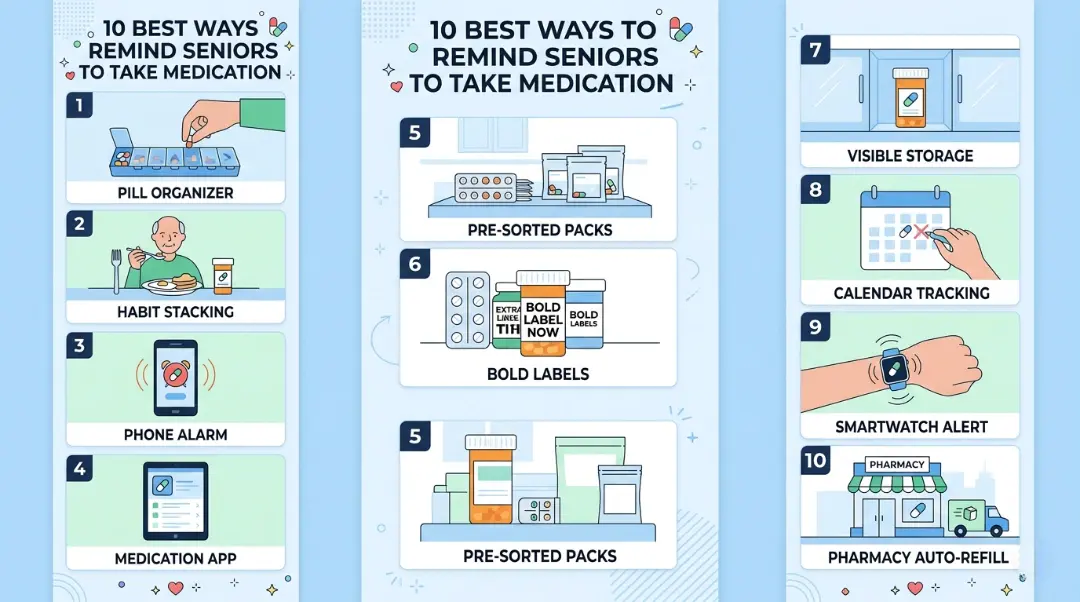
There’s no single fix that works for everyone when figuring out how to remind seniors to take medication. The goal is layering a few simple habits so one reminder backs up another.
Build a Simple Daily Routine
Pairing pills with something the person already does, like brushing their teeth or eating breakfast, works better than any app. It’s called habit stacking, and it leans on patterns the brain already has instead of a brand-new task to remember.
Keep the medication in the same visible spot every day. A kitchen counter near the coffee maker often works better than a bathroom cabinet nobody opens until night.
Use Medication Reminder Apps and Alarms
Phone alarms are free and already sitting in most people’s pockets. Apps like Medisafe, MyTherapy, and CareZone go a step further, sending alerts and letting family members check in remotely if a dose gets skipped.
These apps aren’t a replacement for a caregiver’s attention, but they catch gaps a busy week creates.
Try Pill Organizers and Automatic Dispensers
A weekly pill organizer with a slot for each day still beats most high-tech options for cost and simplicity. For someone who needs more structure, automatic dispensers like Hero or MedMinder lock pills until the scheduled time and send an alert if a dose is missed.
These devices cost more upfront, but they’re worth it for a senior living alone with a complicated schedule.
Set Up Smart Home Voice Reminders
Amazon Alexa and Google Home can announce, “It’s time for your afternoon medication,” at the same time every day. It’s a small thing, but a voice reminder feels less like a chore and more like a nudge from a person.
Keep a backup reminder in place too. Wi-Fi outages happen, and a smart speaker alone shouldn’t be the only line of defense.
Ask About Pre-Sorted Pharmacy Packs
Many pharmacies now offer pre-sorted packs, similar to PillPack, where each dose comes in its own labeled pouch by date and time. This removes the sorting step entirely, which matters a lot for someone with arthritis or shaky hands.
Ask the pharmacist directly. Not every pharmacy advertises this service, but most can set it up on request.
Keep a Written Medication List
A simple medication list, kept on paper or in an app, should include the drug name, dosage, and what it’s for. Bring it to every doctor visit and update it after any prescription change.
This list also matters when checking for drug interactions between a new prescription and something already being taken.
Medication Reminder Tips for Seniors With Dementia

For seniors with dementia, standard reminder methods often fall short. The most effective approach combines routine, visual cues, and caregiver oversight not relying on the senior to self-manage.
Dementia affects memory and judgment in ways that go beyond ordinary forgetfulness. A senior with Alzheimer’s disease may refuse medication because they don’t believe they need it, or may become frightened or confused by unfamiliar pills.
Here are strategies that tend to work:
- Color-coded systems. Use colored tape or labeled containers blue for morning, red for evening. Color is easier to process than text for many dementia patients.
- Caregiver-assisted administration. At moderate-to-advanced stages, a caregiver should be present at dose time, not just setting out pills and hoping for the best.
- Crushed or liquid medications. Ask the doctor or pharmacist if medications can be crushed or given in liquid form. Some can be mixed into food or drink.
- Consistent timing and environment. Give medications at the same time, in the same room, with the same verbal prompt every day. Routine reduces resistance.
- Stay calm. If a senior with dementia refuses, don’t force it. Note the refusal, try again in 15-20 minutes with a calm explanation, and contact the doctor if refusals become frequent.
How Family Caregivers Can Monitor Missed Doses
When a senior refuses medication, stay calm, identify the root cause like fear or swallowing difficulties, offer simple choices, and never force or argue. Consulting a doctor or pharmacist to adjust pill size, taste, or administration times often resolves the underlying issue.
Resistance usually stems from a loss of control, confusion, or physical discomfort rather than pure stubbornness.
-
Investigate Physical Discomfort: Ask if the pill is too large to swallow comfortably or if it upsets their stomach. A doctor can often substitute liquid forms, crushable tablets, or smaller pills.
-
Simplify the Choice: Avoid open-ended demands like “You need to take your pills now.” Instead, offer minor control: “Would you like your water cold or at room temperature with your pill today?”
-
Review Side Effects with a Pharmacist: If a drug causes fatigue or dry mouth, schedule a comprehensive review with a pharmacist. Adjusting the time of day a pill is taken can minimize unpleasant side effects.
-
Address Memory Resistance: For adults living with dementia who believe they’ve already taken their medicine, avoid arguing. Validate their feelings, step away briefly, and re-approach five minutes later with a calm, reassuring tone.
Tactical Safety Tips for Managing Prescriptions
Safety Strategy Implementation Method Main Benefit Maintain a Master Medication List Keep a printed sheet in their wallet listing every drug, dosage, purpose, and doctor name. Prevents dangerous drug interactions during emergency room visits. Upgrade to Smart Dispensers Use automated locking dispensers like Hero or MedMinder. Automatically unlocks only the correct dose at the right time to prevent double-dosing. Proper Storage Conditions Store prescriptions in a cool, dry area away from bathroom moisture or kitchen stoves. Preserves drug potency and keeps dangerous substances out of reach of visiting children.
What to Do When a Senior Refuses to Take Medication
When a senior refuses medication, the first step is to understand why not to push harder. Refusal is often a signal of a side effect, fear, confusion, or a desire to maintain control over their own health decisions.
This situation is more common than most families expect, and it carries real emotional weight. The anticipatory grief and caregiver anxiety that comes with watching a loved one resist their own treatment plan is exhausting and scary.
Start here:
- Ask, don’t tell. “I noticed you didn’t take your blood pressure medication today. Is something wrong with it?” goes further than “You have to take your pills.”
- Check for side effects. Nausea, dizziness, or fatigue are common reasons seniors stop taking medications without telling anyone. Ask the doctor about alternatives.
- Review the medication list. Sometimes older prescriptions are no longer necessary, or dosage adjustments can reduce side effects. A formal medication review with the prescribing doctor can help.
- Involve the doctor. Seniors often respond better when guidance comes from their physician rather than a family member. Ask the doctor to address the importance of adherence directly.
- Don’t escalate. Forcing or shaming leads to conflict and deeper resistance. Calm, consistent conversations work better over time.
If refusal is persistent and puts the senior’s health at serious risk, a geriatric care manager or social worker can help mediate and find solutions the family hasn’t considered.
When to Consider Professional Support
If a senior is consistently missing doses despite all the reminder systems in place, it may be time to bring in professional help. This isn’t a failure, it’s a practical decision.
Professional caregivers can:
- Set up and refill pill organizers weekly
- Provide hands-on medication reminders at each dose time
- Monitor and report side effects to the family or doctor
- Communicate medication changes to healthcare providers
Home care aides are especially valuable for seniors with polypharmacy, dementia, or those recovering from a hospitalization when medication schedules often change.
Find the Perfect Caretaker For Your Loved One in Denver CO
If you’re looking for trusted Medication Management for Seniors in Denver, Castle Pines Home Care provides professional in-home caregivers who specialize in daily medication support, safety monitoring, and personalized senior care. Whether your loved one needs occasional check-ins or full-time assistance, the team at Castle Pines Home Care is here to help families across the Denver area feel confident their loved ones are cared for.
Ready to get started? Contact us today to speak with a care specialist and find the right support plan for your loved one. Reaching out takes just a few minutes and it could make all the difference in their safety and quality of life.
Frequently Asked Questions
What is the best medication reminder for elderly adults?
The greatest way to remind someone to take their medicine depends on what they require. Apps like Medisafe or MyTherapy perform well for seniors who are familiar with technology. A simple pill organizer with a phone alarm or smart speaker works quite well for people who don’t use technology very much.
How do I get my elderly parents to take their medicine?
To begin, you need to know why people are resistant. Common explanations include side effects, confusion, or feeling like you are taking too many medications. Talk to their doctor about the regimen, make it as simple as possible, and link taking the pills to something they already like doing every day.
What app reminds seniors to take medication?
Medisafe, MyTherapy, CareZone, and Dosecast are among the most reliable options. Medisafe is particularly popular because it supports caregiver notifications and visual pill identification.
Can Alexa remind seniors to take medication?
Yes. Amazon Alexa can be programmed with recurring daily voice reminders at specific times. It’s a hands-free, easy-to-set-up option that works well for seniors who are comfortable with smart home devices.
How often should a senior’s medications be reviewed?
The National Institute on Aging recommends scheduling a medication review with a doctor or pharmacist at least once a year and after any hospitalization, new diagnosis, or prescription change. Regular reviews reduce unnecessary medications and lower the risk of dangerous drug interactions.