It’s hard to sit with when you see a parent forget to take a pill, ask the same question twice, or have trouble getting up from a chair. You start looking it up online around midnight, and the question keeps coming back to one basic line: what is elder care? Here’s the short version. Elder care is any paid or unpaid help that assists an older senior in securely managing everyday life, whether that assistance occurs at home, in a day program or within a full-time facility.
By the end of this essay, you’ll know exactly what elder care is, how much it costs, who pays for elder care, and how to choose the perfect option for your family. We’ll talk about the types of care available, the true figures behind the price tag, what insurance and benefit programs are worth knowing about and an easy technique to figure out what your loved one really needs. No jargon. No fluff. Just what you came for.
Understanding the Process of Eldercare
There is no schedule for growing old. Some people stay sharp and solid into their eighties. Some people need help with the basics in their early seventies. That’s why the care each family gives to the older adult is not the same.
Fundamentally, eldercare is the services and support that aid seniors with what specialists refer to as activities of daily living, or ADLs. These include bathing, dressing, eating, using the bathroom and moving around safely. When someone begins to struggle with two or more of these, that’s usually where families start to ask what is elder care supposed to look like day to day, and what is caring for the elderly meant to cover in practice.
Care may be provided by a relative, a hired aide or a registered nurse. It might happen at home or in a facility built for the purpose. Memory loss frequently alters the view as well. Sometimes you need a little push. Someone who forgets to take a medicine now and then. If somebody leaves the stove on for hours, they need someone who pays better attention. The degree of care always matches the level of need, not the other way around.
Who Needs Elder Care?
Elder care becomes necessary when an older adult can no longer safely manage daily tasks like bathing, cooking, taking medication, or getting around the house without help. It’s also needed after a hospital stay, a fall, a memory diagnosis, or a chronic illness that limits mobility or independence. Age alone isn’t the deciding factor. Function is.
Some seniors in their nineties still drive, cook, and manage their own finances. Others in their sixties need daily help after a stroke or a diabetes diagnosis. Elder care applies just as much to adults with disabilities or chronic conditions as it does to people who are simply getting old.
Signs a Loved One May Need Elder Care
A few warning signs tend to show up before a family reaches out for help. Watch for these:
- Unexplained weight loss or spoiled food left in the fridge
- Missed medications or duplicate doses
- Bruises, falls, or a fear of falling
- Unpaid bills or missed appointments
- A house that’s noticeably messier than it used to be
- Wandering, confusion, or repeating the same question
One or two of these might just be a bad week. A pattern is a different story. That pattern is usually the signal to start looking into home care or a care assessment.
What Does Eldercare Cost?
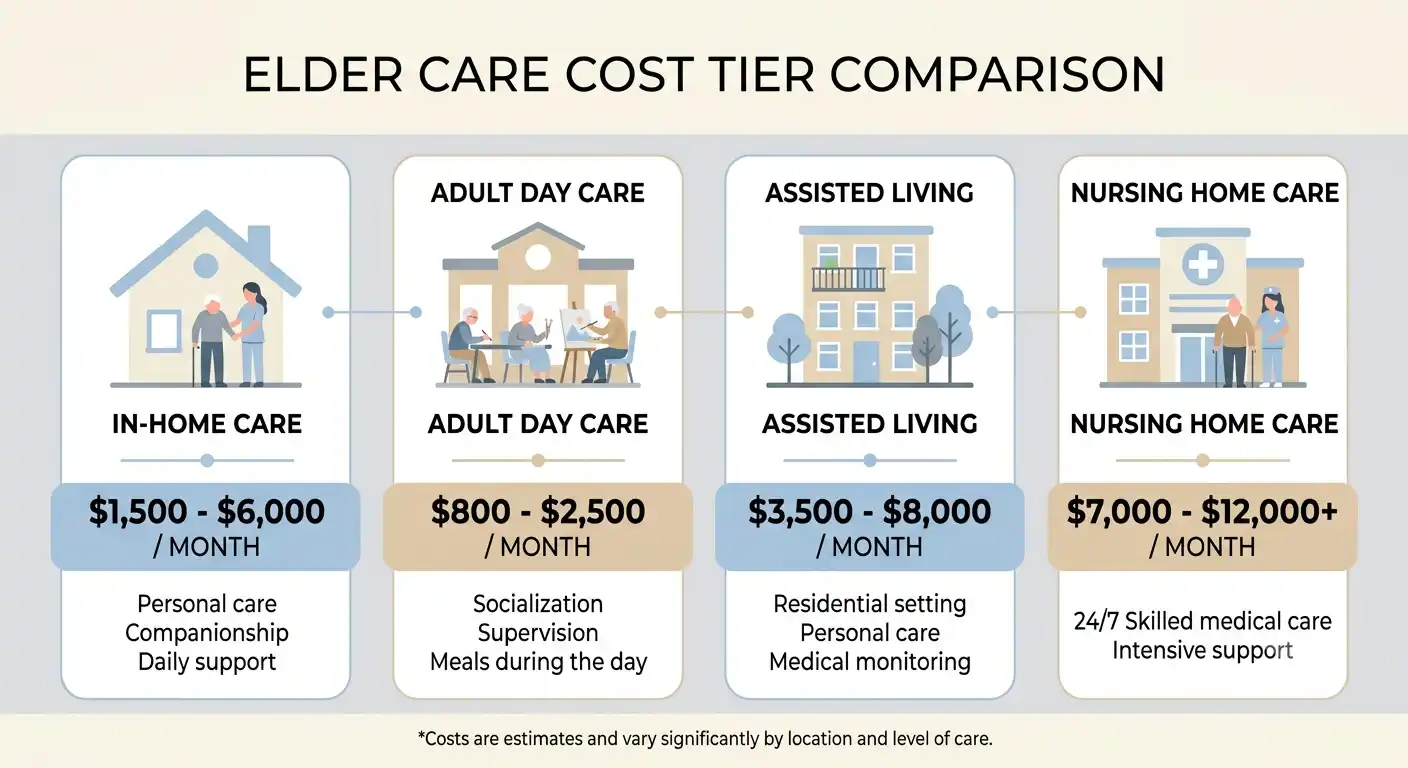
The price of securing assistance varies wildly based on where you live and the level of attention required. Most families start by providing unpaid help themselves. However, the emotional strain and lost wages from missing work often make professional assistance necessary.
If you choose to hire professional helpers to come into the home, you typically pay an hourly rate. These agencies send trained workers to assist with meals, cleaning, and personal hygiene. The national average hourly rate hovers around $27 to $35 per hour. If you need help for twenty hours a week, you can expect to spend roughly $600 to $700 weekly.
When a senior can no longer stay at home, the financial landscape changes dramatically. Residential facilities charge monthly fees that cover housing, food, and basic care. The costs escalate based on the medical needs of the resident. Here’s a realistic breakdown of monthly national averages:
- Adult Day Care Services: Ranging from $1,600 to $2,200 per month for daytime supervision.
- Assisted Living Communities: Averaging $4,800 to $5,800 per month for a private apartment with basic help.
- Nursing Home Care: Costing $8,000 to over $10,000 per month for a semi-private room with 24-hour nursing support.
These high numbers show why early planning is absolutely vital for every family. Waiting for an emergency medical event forces you to make quick choices under intense pressure. Those sudden choices often result in choosing the most expensive options available.
Insurance Coverage for Eldercare
Most standard health insurance doesn’t cover long-term custodial care, which surprises a lot of families the first time they check. Medicare only pays for eldercare when it’s medically necessary, such as short-term skilled nursing after surgery or a hospital stay. It won’t cover help with bathing or housekeeping if that’s the only support someone needs.
Medicaid works differently. It’s a joint federal and state program for people with limited income and assets, and it covers a wider range of long-term care once someone qualifies. Coverage rules change by state, so it’s worth checking with your state’s Medicaid office or a State Health Insurance Assistance Program before assuming what’s covered.
Veterans and their spouses may qualify for additional help through VA benefits, including pension programs for those who need daily assistance. Private long-term care insurance is another option, though it only helps if it’s purchased before care becomes necessary. Premiums rise fast with age, so waiting too long often prices people out.
Legal Planning Worth Doing Early
Elder care is not just a medical or financial question. Legal paperwork matters too, and it’s easy to miss until a crisis forces the issue. A durable power of attorney lets a trusted person handle finances and health decisions if your loved one can’t manage them anymore. An advance directive specifies out medical preferences ahead of time, so nobody has to guess during an emergency.
Guardianship is a distinct, more formal process when a court appoints someone to handle a person’s affairs, usually only when there’s no power of attorney in place and the person can no longer make decisions safely. It’s worth setting up the papers while your loved one is still able to weigh in on it. If you wait until a health crisis happens, you might have a judge making decisions for you, not your family.
Types of Elder Care Services
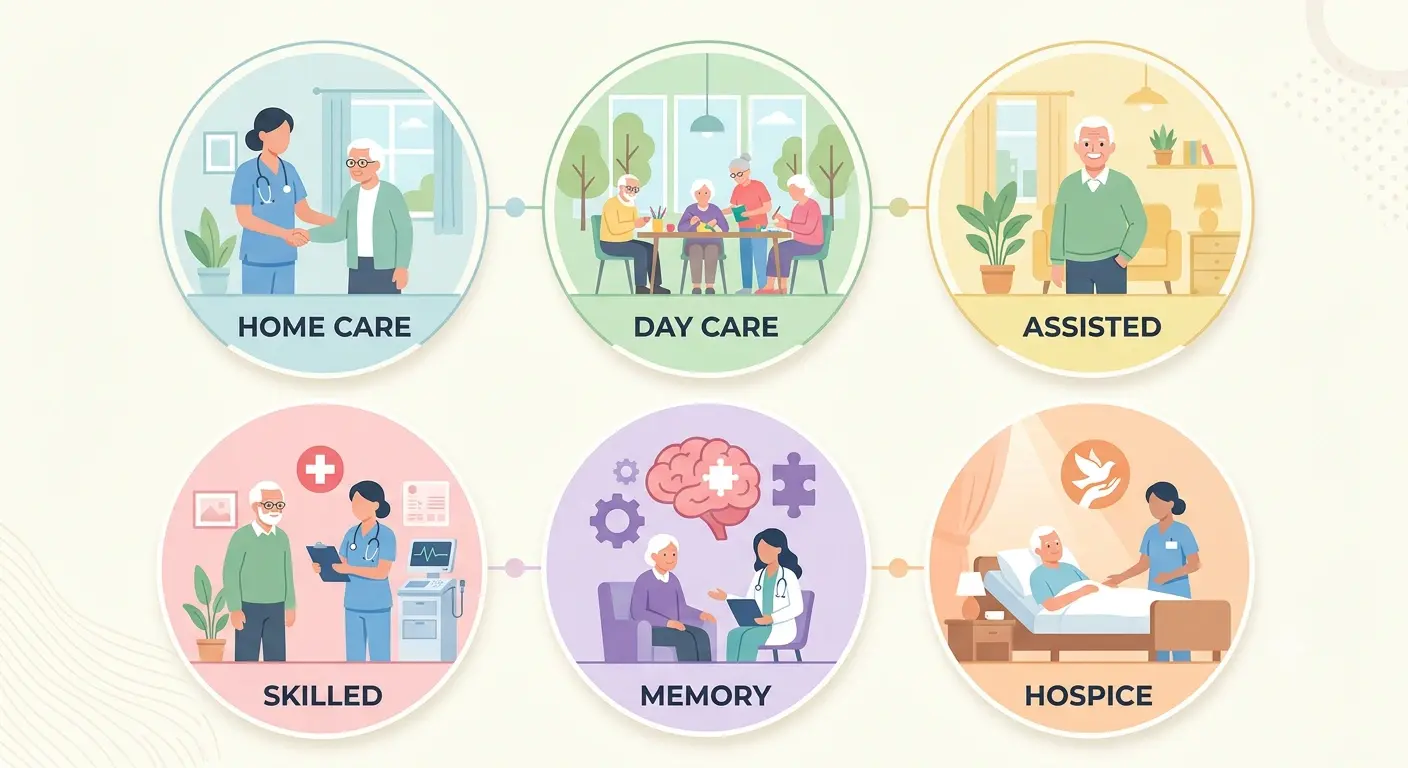
To find the right fit, you must understand the distinct types of care available today. Every option serves a specific level of need and fits a different family budget. You don’t have to jump straight to a full residential facility if small adjustments at home can solve the current safety issues.
In-Home Care Support
This option allows your relative to maintain their familiar routine while getting regular assistance. It focuses heavily on helping seniors age in place safely without leaving their neighborhood. The services split into non-medical help and skilled medical care. Non-medical workers handle cooking, light cleaning, and driving to the local grocery store.
Skilled home health care involves licensed nurses or physical therapists visiting the property. They handle wound care, manage complex IV medications, and run physical rehab sessions. This setup provides a safe middle ground for seniors recovering from major hospital stays.
Adult Day Health Services
If you work during the day, adult day care centers offer a safe place for your parent. These facilities operate during standard business hours and provide meals, social activities, and basic medical monitoring. It keeps seniors active while giving family caregivers a needed break to hold down a job. It’s one of the most affordable ways to get professional supervision without moving a parent out of their home.
Respite Care Programs
This service is built specifically to protect the health of the primary family caregiver. It provides short-term relief by bringing a professional into the home for a few days, or by placing the senior in a facility for a weekend. Using this option prevents caregiver burnout and ensures your relative stays safe while you rest or handle personal business.
Memory Care Facilities
When dealing with advanced dementia care, standard home care or basic assisted living is rarely enough. Specialized memory care units offer secure environments built to prevent wandering. The staff receives specific training to handle the behavioral changes and confusion tied to Alzheimer’s. The physical layouts use simple designs to minimize anxiety for the residents.
Residential Skilled Care
A traditional skilled nursing facility provides the highest level of daily medical oversight available. These spaces operate exactly like long-term medical wards, with registered nurses on duty around the clock. They’re built for seniors bedridden by chronic illnesses or those needing intense physical rehabilitation.
Elder Care Benefits for Families and Seniors
Good elder care does more than fill a gap. It reduces the odds of a fall or missed medication, it gives seniors a chance for real social contact instead of isolation, and it takes pressure off family members who were trying to do it all alone. Adults with disabilities and chronic conditions see similar gains when the right support is in place early rather than after a crisis.
There’s also a financial upside families rarely think about. Planned care, chosen calmly, almost always costs less than a rushed decision made after a hospital discharge or an emergency. A little planning goes a long way here.
How to Choose the Right Elder Care Option
Begin with a real picture of daily operation. Can your loved one securely bathe, cook and handle medication? what they can do and what they can’t do. And that list is the starting point for every decision thereafter.
Then consider need vs cost. A few hours a week of in-home support is much less expensive than assisted living and may be all that is needed at this time. Don’t spend too much money on services nobody needs yet, but don’t wait so long that a minor condition ends up in the emergency department.
Ask about staff training, especially in the areas of memory care and skilled nursing. Ask about their policy for falls, medication errors or a wandering resident. If you’re looking into a facility, stop by in person, preferably when there isn’t a scheduled tour. A quiet Tuesday afternoon says more than a fancy Saturday open house.
Finding Elder Care Close to Home
Every family’s situation looks a little different, and the right fit usually comes down to a real conversation about daily needs, budget, and what your loved one actually wants. If you’re looking into home care services in Denver, a local conversation beats a generic checklist every time, since state rules, staff availability, and local costs all change the picture from one city to the next.
Final Thoughts
So, what is elder care, really? It’s a wide range of support, from a few hours of help each week to full-time nursing care, and the right choice depends entirely on the person needing it. Start with an honest assessment, check what insurance and benefits actually cover, and don’t wait for a crisis to make the call. If you’d like help figuring out what fits your family, Castle Pines Home Care is happy to talk it through. Contact us whenever you’re ready.
Frequently Asked Questions
What is the eldercare meaning in simple terms?
The eldercare meaning refers to a wide range of support services built to help older adults live safely and maintain their independence when physical or mental health challenges make daily tasks difficult.
What is caring for the elderly on a daily basis?
Caring for the elderly involves assisting with personal hygiene, managing daily medications, preparing nutritious meals, providing safe transportation, and offering consistent social companionship to prevent isolation.
How do you define elder care versus standard home health?
To define elder care properly, look at the overall scope of help. Elder care includes both non-medical personal help and social support, while home health focuses strictly on short-term medical treatments ordered directly by a doctor.
What are the primary elder care benefits for a family?
The core elder care benefits include improved daily safety for the senior, professional health monitoring, reduced risks of dangerous household falls, and essential emotional relief for the primary family caregivers.
What is aged care in the broader healthcare industry?
The term what is aged care describes the global system of public and private services, residential communities, and financial assistance programs designed specifically to meet the unique needs of the aging population.