There are many considerations about safety, comfort and monthly budgets while choosing the type of home and daily help for an aging parent or family member. You love them and you want a safe, comfortable place for them to be, yet terminology like assisted living, skilled nursing and personal care can be intimidating. Personal care homes are small residential facilities that provide 24-hour, nonclinical, nonhospital-like, home-like assistance to persons who need support with activities of daily living.
If you’re looking for a comprehensive analysis of what these homes offer, how they differ from nursing institutions and what they cost, you’re in the correct spot. What is Personal Care Home Definition? A licensed residential care home offering 24-hour supervision, daily help and non-medical custodial care in a comfortable, neighborhood-style home.
What Is a Personal Care Home?
Personal care homes are small residential homes, usually serving 5-20 residents, who provide assistance with activities of daily living including bathing, dressing, meals and medicine reminders. It’s not medical, it is licensed, and it is constructed with a home like environment, not a clinical environment.
It’s like the difference between being able to live on your own, and needing 24 hour medical attention. On-site staff are available to aid with activities of daily living, or ADLs, such as grooming, toileting and mobility. They also aid with instrumental activities of daily living (IADLs) such as preparing meals, light housekeeping and keeping track of medication schedules.
Difference Between Personal Care and Assisted Living
Personal care homes and assisted living communities both support seniors with daily tasks, but they’re not the same thing. Personal care homes are typically smaller, more affordable, and offer basic ADL support. Assisted living communities are larger, often more regulated, and may include a broader range of services, amenities, and on-site programming.
The easiest way to think about it: a personal care home is like a family house with a caregiver. Assisted living is more like a small hotel with a care team.
Personal care homes usually house fewer than 20 residents. That smaller ratio means more one-on-one attention, which many families actually prefer. Assisted living often has more structure, memory care units, and therapy options, but also a higher price tag.
If the person needing care is relatively mobile, socially independent, and mainly needs help with personal hygiene or medication management, a personal care home is often the better fit.
Personal Care Home vs. Nursing Home
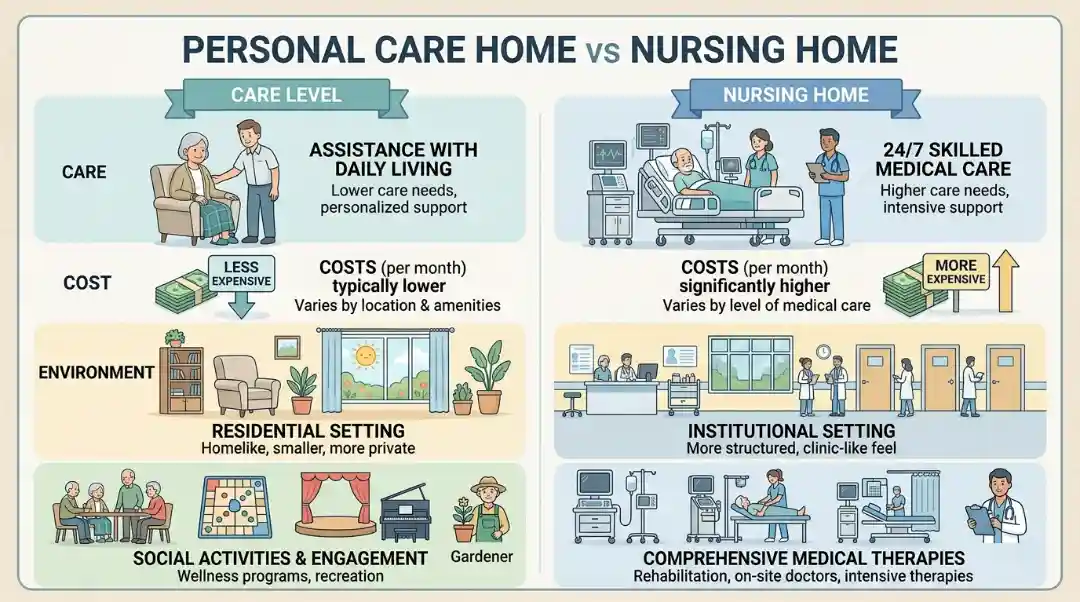
Choosing the right facility comes down to evaluating the level of care your family member requires every day. Understanding these distinctions helps you match their health status with the proper environment.
Care Level and Medical Oversight
Personal care homes concentrate on non-medical care and custodial care. Staff members assist residents with personal care tasks, medication administration tracking, and general safety. They do not maintain registered nurses on duty 24/7. In contrast, a nursing home operates under a clinical model. Registered nurses and licensed practical nurses provide continuous medical supervision, wound care, ventilator support, and physical therapy.
Environment and Community Size
A personal care home is usually a traditional single-family house converted to host 5 to 15 residents. This layout creates an intimate residential care setting where staff and residents get to know each other personally. A personal care nursing center or nursing home operates much like a medical building, hosting 50 to 100+ beds with wide corridors, medical equipment, and structured shift rosters.
Cost and Financial Structure
Because personal care homes do not maintain round-the-clock clinical medical staff, their monthly operating costs remain much lower than nursing facilities. Families pay private room-and-board rates or use specific state assistance programs. Nursing facilities charge higher monthly fees because of their intensive medical infrastructure and specialized nursing staff.
Is Assisted Living Considered Long-Term Care?
Yes. Is assisted living considered long-term care? In most cases, yes, because it supports individuals who need ongoing assistance with daily tasks. Personal care homes also fall under this long-term care umbrella.
In short, personal care homes are best for individuals who enjoy a home-like setting and need modest levels of daily support. Assisted living suits those who want a larger environment with more services.
Services and Amenities to Expect
Personal care homes typically provide help with bathing, dressing, medication reminders, meals, housekeeping, and transportation. Most also offer basic health monitoring and social activities, though the exact services depend on the state’s licensing rules and the individual home.
Here’s what you’ll commonly find on the service list:
- Assistance with bathing, grooming, and dressing
- Medication management and reminders
- Prepared meals, often three times a day plus snacks
- Housekeeping and laundry
- Transportation to appointments or errands
- Basic health monitoring, like blood pressure checks
- Social and recreational activities, such as games or outings
Not every home offers every item on this list, so ask directly during your visit. Some homes specialize further, offering memory care support for residents with dementia, while others stick to general custodial care. It’s worth asking about staff-to-resident ratios too, since that number tells you a lot about how much individual attention your loved one will actually get.
Who Actually Needs a Personal Care Home?
A personal care home fits someone who needs daily help but not medical treatment, someone who struggles with tasks like bathing or meal prep but can still manage some independence. It’s also a solid option for family caregivers who can no longer provide safe, consistent support alone.
A few common signs it’s time to consider one: your loved one has had a fall, they’ve stopped taking medication correctly, the house isn’t being kept clean anymore, or they seem isolated and withdrawn. None of these mean something is wrong with them. It just means the level of support at home isn’t matching what they need day to day.
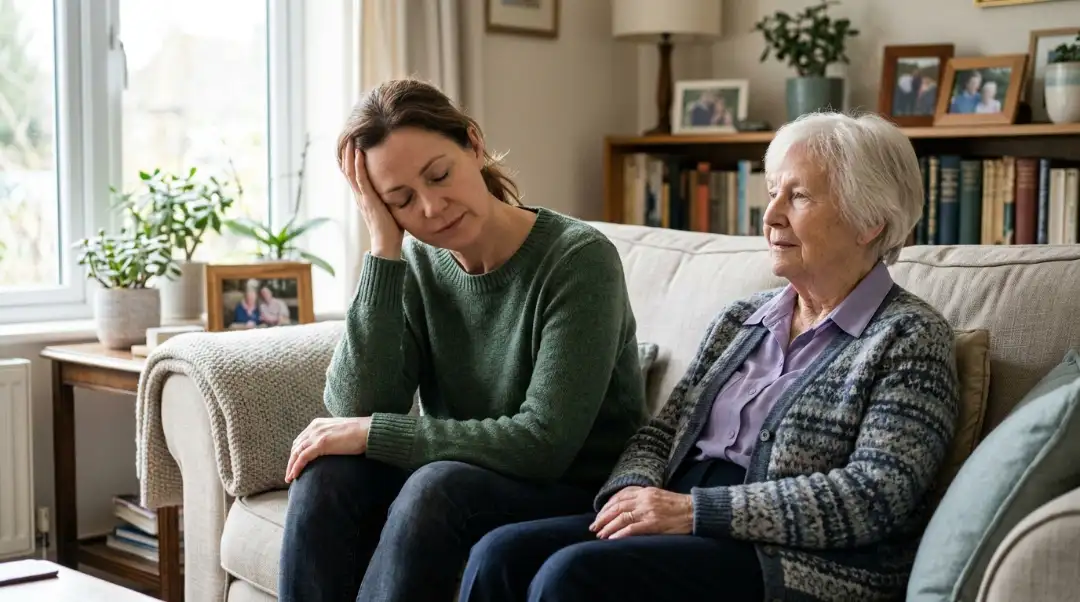
Caregiver burnout is a real factor here too. If you’re the one providing that support and you’re running on empty, that’s worth taking seriously. A personal care home can lift that daily weight while still keeping your loved one close, safe, and cared for by people who do this work full time.
Benefits and Drawbacks of Personal Care Homes
What are the primary advantages and disadvantages of a personal care home? The main benefits include an intimate home-like setting, lower costs, and a high staff-to-resident ratio, while the main drawbacks are limited medical staff and fewer large-scale recreational facilities.
Evaluating both sides of this care option ensures you make a choice that aligns with your family member’s current needs and future expectations.
Benefits
-
Intimate Environment: A smaller headcount means residents enjoy a quiet environment rather than noisy facility hallways.
-
High Staffing Ratio: Caregivers manage fewer residents at once, allowing them to provide prompt attention and customized care.
-
Strong Social Connections: Living with a small group of peers encourages meaningful friendships and reduces isolation.
-
Affordable Support: Provides continuous care at a price point noticeably lower than larger assisted living or skilled nursing facilities.
Drawbacks
-
Limited Clinical Services: If a resident develops complex medical needs, they may eventually need to move to a medical facility.
-
Fewer On-Site Amenities: These houses typically do not feature large swimming pools, fitness centers, or daily field trips found in larger complexes.
-
Variable State Licensing: Regulations vary depending on where you live, meaning care standards can differ between jurisdictions.
Cost of Personal Care Homes
The cost of what is personal care at home versus a residential setting is one of the first questions families ask. Personal care homes typically run between $1,500 and $5,000 per month depending on location, room type, and care level.
Most costs are paid out-of-pocket. Medicare generally does not cover long-term personal care home stays. Medicaid may cover some costs depending on the state. Long-term care insurance is another option worth exploring early.
Here’s a rough cost breakdown to keep in mind:
- Basic room and care: $1,500 to $3,000/month (small or rural homes)
- Mid-range facilities: $3,000 to $4,500/month
- Premium or urban locations: $4,500 to $6,500/month
Always get a detailed contract that spells out exactly what’s included and what costs extra.
Does Insurance Cover Personal Care Homes?
Most personal care homes are private-pay. Long-term care insurance may provide coverage, depending on the policy details. Medicaid coverage varies by state and is generally limited.
How to Choose a Good Personal Care Home
A good personal care home has a valid state license, a reasonable staff-to-resident ratio, clean and safe facilities, and a warm relationship between staff and residents. Visiting in person, asking direct questions, and checking inspection records are the best ways to confirm all of this.
Start by checking the home’s license status through your state’s health department. Then schedule a visit, ideally at different times of day, so you can see how staff interact with residents during meals, activities, and quiet hours. Watch how residents seem: relaxed and involved, or isolated and unattended.
Ask specific questions. What’s the staff-to-resident ratio at night? What happens in a medical emergency? How are medications tracked? What’s included in the monthly fee, and what costs extra? Don’t be shy about asking to see a sample care plan or speaking with a current resident’s family if that’s an option.
Conclusion
Families may make smart, confident choices regarding long-term care if they know what a personal care home is. These homes provide a warm, homey atmosphere, one-on-one care, and help with everyday tasks. They are great for those who want to be safe, comfortable, and independent without the stress of medical care.
When picking a home, think about how much care is needed, the mood, the number of staff members to residents, and the rules set by the state. Always believe your gut; your loved one’s comfort and dignity are the most important things.
Castle Pine Home Care is here to help you find Personal Care Services in Denver South. They will take you through every step of your search with care, knowledge, and a promise of great service.
FAQs
What does a personal care home provide?
A personal care home provides non-medical help with daily activities like bathing, dressing, meal preparation, and medication reminders. It’s designed for adults who need regular assistance but don’t require skilled nursing care.
Is a personal care home the same as a nursing home?
No. A nursing home provides 24-hour medical supervision for complex health needs. A personal care home focuses on daily living support for adults who are medically stable.
Who pays for personal care homes?
Most costs are private pay. Medicaid may cover some expenses depending on your state. Medicare generally doesn’t cover long-term stays in personal care settings.
How do I know if a personal care home is licensed?
Each state maintains a public registry of licensed facilities. Contact your state’s Department of Health or use tools like the Eldercare Locator to check licensing and inspection history.
What’s the difference between personal care at home and a personal care home?
What is personal care at home refers to a caregiver coming into someone’s private residence to help with daily tasks. A personal care home is a shared residential facility where multiple residents receive care in one location.
Can someone with dementia live in a personal care home?
Some personal care homes accept residents with mild to moderate dementia. However, advanced dementia often requires a memory care unit or nursing facility with more specialized staff training and security measures.