Walking into a doctor’s office can raise a simple question: who’s checking your blood pressure, updating your medical history, and helping the doctor prepare for your visit? What Does a Medical Assistant Do? In simple terms, a medical assistant supports patients and healthcare providers with a mix of basic clinical tasks and office work.
The role is broader than many people expect. This guide explains what medical assistants do in clinics, which duties are clinical or administrative, how their role differs from nurses and nursing assistants, where they work, and what training the job requires. It also explains an important point for families: a medical assistant isn’t the same as a non-clinical home care worker.
What Is a Medical Assistant?
A medical assistant is a versatile healthcare professional who supports doctors, nurses, and patients by managing clinical and administrative duties. They handle patient check-ins, record vitals, organize medical charts, and assist with basic medical exams.
Medical assistants serve as a bridge between patients and clinicians. They keep office workflows steady so doctors can focus on diagnostic care.
They do not diagnose illnesses or prescribe medication. Instead, they handle routine care tasks to keep visits efficient and safe.
A Day in the Life of a Medical Assistant
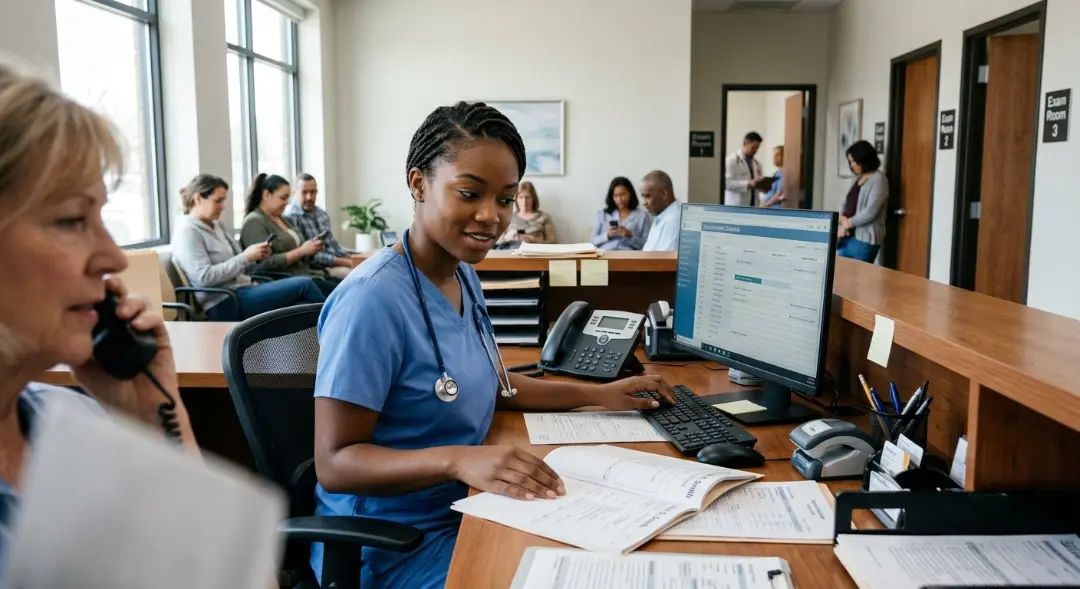
No two days look identical, but most follow a similar rhythm. A medical assistant usually opens the clinic, checks the schedule, and preps exam rooms before the first patient walks in.
Once patients start arriving, the pace picks up fast. One minute you’re rooming a patient and recording their weight and blood pressure, the next you’re on the phone confirming tomorrow’s appointments. It’s less like a single job and more like three part-time jobs stitched into one workday.
Here’s a rough sketch of what that looks like in a typical outpatient office:
- Morning: Open the clinic, stock supplies, review the schedule, and prep exam rooms.
- Mid-morning: Room patients, record vitals, update charts in the electronic health record.
- Midday: Assist with procedures, collect lab samples, return phone calls, and confirm appointments.
- Afternoon: Continue rooming patients, administer vaccines, coordinate referrals, and finish documentation.
- End of day: Clean rooms, restock, and prep the office for the next morning.
The pace also changes with the setting. A busy family practice on a Monday morning can feel like a sprint, with a full waiting room and a phone that won’t stop ringing. A smaller specialty office might move at a walk, with more time between patients to catch up on charting. Either way, the underlying job is the same: keep patient care moving and keep the paperwork from piling up behind it.
Medical Assistant Duties: Administrative vs. Clinical
Medical assistant responsibilities fall into two core categories: clinical tasks and administrative support.
Administrative Responsibilities
Front-desk operations rely heavily on medical assistant skills. They greet patients, answer phones, and handle medical scheduling.
-
Scheduling specialist appointments and follow-up care
-
Billing insurance companies and processing co-pays
-
Maintaining accurate electronic health records
-
Managing office correspondence and lab requests
Clinical Responsibilities
Back-office care keeps examinations moving safely. Clinical tasks depend on state regulations and facility guidelines.
-
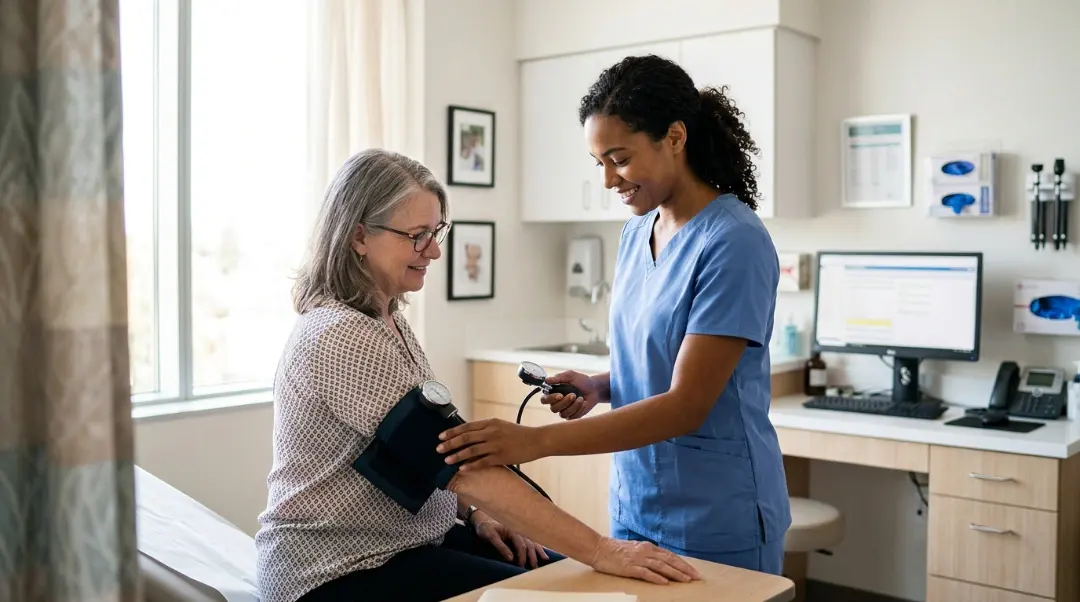
Measuring height, weight, blood pressure, and temperature
-
Preparing patients for physical examinations
-
Sterilizing medical tools and setting up exam trays
-
Drawing blood samples and collecting laboratory specimens
Medical Assistant vs. Other Healthcare Roles
Understanding job boundaries prevents confusion when arranging health services. Medical assistants work alongside certified nursing assistants (CNAs), registered nurses (RNs), and physician assistants (PAs).
| Job Title | Education Level | Primary Work Focus | Can Diagnose? |
| Medical Assistant | Certificate / Diploma (1-2 yrs) | Administrative & basic clinical tasks | No |
| Certified Nursing Assistant (CNA) | Certificate (4-12 weeks) | Personal hygiene & daily mobility support | No |
| Registered Nurse (RN) | Associate / Bachelor Degree (2-4 yrs) | Complex clinical care & medication delivery | No |
| Physician Assistant (PA) | Master’s Degree (6+ yrs) | Advanced diagnostics & prescribing medicine | Yes |
A medical assistant focuses on clinical workflow and front-office organization. A CNA provides direct personal hygiene support, like bathing and feeding, while RNs and PAs handle advanced clinical management.
Where Do Medical Assistants Work?
Medical assistants work across diverse medical facilities. Their day-to-day duties adapt to the setting they serve.
Physician Offices and Outpatient Clinics
Most medical assistants work in primary care offices or group medical practices. Here, they manage patient flow, conduct intake assessments, and support routine health checkups.
Hospitals and Specialty Centers
In hospital settings, medical assistants often focus on specialized administrative or outpatient support. Specialty clinics like cardiology or dermatology practices—rely on them to prepare specialized tools and guide patient intake.
Urgent Care and Community Health Centers
Urgent care clinics demand fast-moving clinical support. Medical assistants in these settings quickly triage basic patient needs, clean minor wounds, and run fast diagnostic tests.
How to Become a Medical Assistant
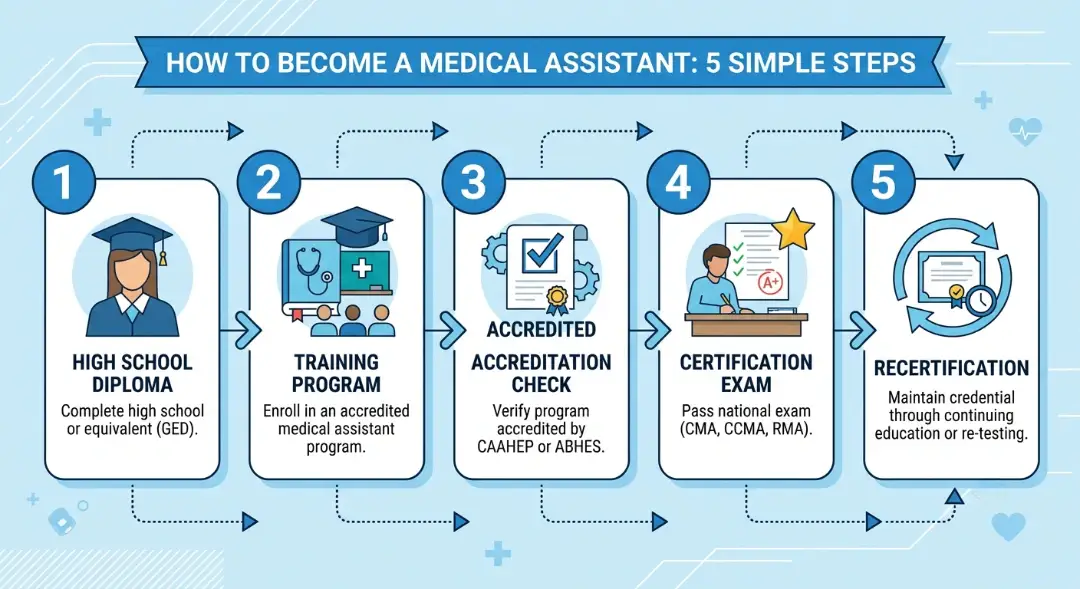
Education and Vocational Training
Most candidates complete a diploma or certificate program through a community college or vocational school. These courses usually take 9 to 12 months to complete.
Some students opt for a two-year associate degree. Training includes medical terminology, anatomy, phlebotomy, and office administration.
Certification Options
While certification isn’t strictly required in every state, most employers prefer certified job candidates.
-
Certified Medical Assistant (CMA) through the American Association of Medical Assistants
-
Registered Medical Assistant (RMA) through American Medical Technologists
-
Certified Clinical Medical Assistant (CCMA) through the National Healthcareer Association
State rules on what a medical assistant role can legally include vary quite a bit. Some states require extra training before a medical assistant can give injections or handle certain medications. It’s worth checking your state’s specific scope of practice rules before assuming every duty listed here applies everywhere.
Skills Needed to Succeed as a Medical Assistant
-
-
Clear Communication: Explaining medical steps to anxious patients takes patience and clarity.
-
Attention to Detail: Recording accurate vital signs and chart details prevents medical errors.
-
Organization: Juggling phone calls, room prep, and patient intake requires sharp time management.
-
Empathy and Compassion: Patients facing health concerns need a gentle, supportive presence.
Balancing medical tasks with human support requires a blend of soft skills and clinical training.
Meeting the Daily Needs of Your Family
-
When a family member faces a chronic illness or age-related physical challenges, routine clinic appointments are only part of the puzzle. The administrative and clinical support provided during an office visit helps manage medical tracking, but it does not address the hour-by-hour struggles at home. Many seniors need help maintaining their independence between doctor appointments.
If your aging relative struggles to remember complex pill schedules or manage daily home tasks, clinical staff cannot step in to help at home. Dedicated non-clinical care providers bridge this gap by providing practical assistance in the comfort of home. Professional caregivers help with light housekeeping, meal preparation, personal mobility, and vital daily routines.
For families navigating these care choices, Castle Pines Home Care offers reliable, non-clinical assistance tailored to your personal schedule. Our caregivers provide dedicated medication reminder services for seniors in Denver to ensure your loved one stays compliant with the doctor’s specific health instructions. We focus on daily safety and comfort so you can step away from caregiving stress and focus on enjoying time with your family.
If you need professional, compassionate support to keep an aging relative safe and independent, contact us today to discuss our personalized home care services in Denver.
Frequently Asked Questions
What is the average salary for this position?
According to the latest data from the U.S. Bureau of Labor Statistics (BLS), the median annual salary hovers around $42,000, which equals roughly $20.00 per hour. Actual pay scales vary based on your geographic location, your specific medical certifications, and the type of specialty clinic where you work.
Can these workers give injections?
Yes, they can administer specific vaccines and medications under the direct supervision of a licensed doctor or nurse. However, the exact tasks they are legally permitted to perform depend entirely on the specific scope of practice laws in your home state.
Is this field growing?
The job market for this profession is expanding much faster than average compared to other occupations. The BLS projects a 12% growth rate over the next decade, driven largely by an aging population that requires more preventive care at local doctor offices.
What is the main difference between a CMA and a RMA?
A Certified Medical Assistant (CMA) earns their credential through the American Association of Medical Assistants (AAMA) after completing accredited schooling. A Registered Medical Assistant (RMA) obtains their title through the American Medical Technologists (AMT), which sometimes accepts military training or alternative work experience.