Finding safe, effective solutions to keep your aging family member mobile can seem daunting. You want to keep them independent, yet you worry about slips, falls and joint pain. This is a perfectly natural feeling.” The good news? A planned physical program is the most potent thing you can do to help older individuals stay steady, smart, and self-reliant at home.
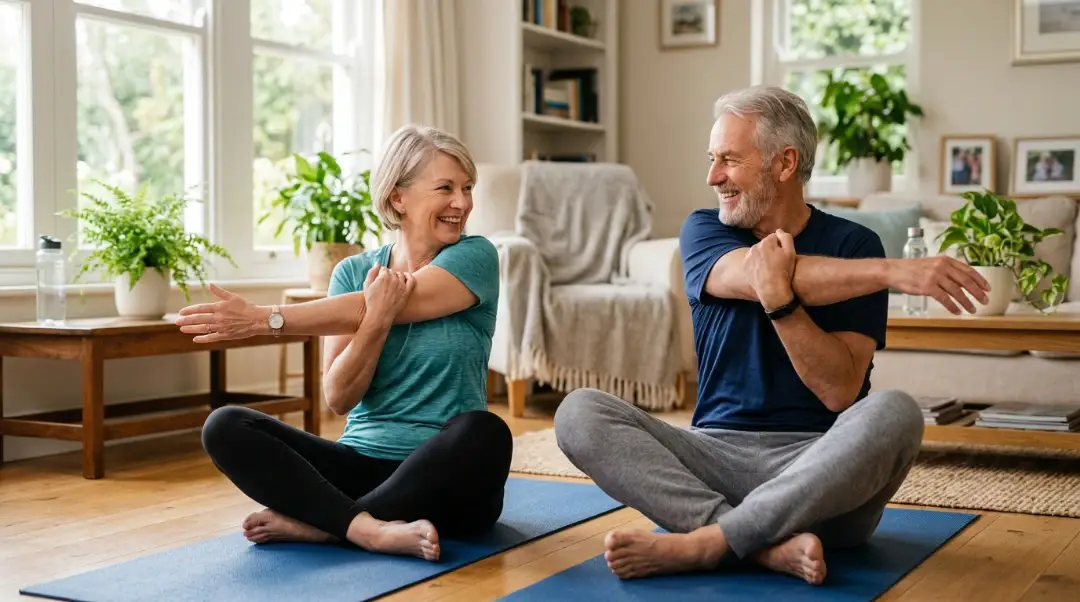
The fastest response to your question is simple: The best physical workout includes low-impact aerobic, functional strength work, balancing work, and gentle stretching. Good activities include brisk walking, chair yoga and resistance band routines that are good for the joints and promote core stability. By concentrating on these safe ways, you may help your loved one to be mobile and prevent damage. Let’s see how to develop this safe foundation precisely.
What Are the Most Beneficial Exercises for Seniors?
Walking, resistance training with light dumbbells or resistance bands, water aerobics, tai chi, and balance exercises like standing on one foot are the best workouts for older adults. These five types combined contribute to heart health, muscle and bone density, which reduces fall risk, and helps older persons stay independent longer.
None of these require special equipment or a personal trainer. A resistance band is less expensive than a huge coffee order, and it takes up almost no space in a drawer. You need a pair of supportive shoes and a sidewalk or mall or hallway for walking. It’s not about how hard it is. It’s consistent. A body that moves a bit each day hangs onto strength much better than one that moves a lot once a week.
The Health Benefits of Exercise in Older Adults
Keeping the body moving later in life delivers immediate, measurable changes that go far beyond weight management. Regular movement acts like a natural medicine for aging cardiovascular systems and joints. Here is what happens when older adults commit to a consistent routine:
- Protects Core Autonomy: Physical activity keeps your loved one capable of handling daily tasks like dressing, cooking, and bathing without needing constant assistance.
- Reverses Age-Related Muscle Loss: Known medically as sarcopenia, natural muscle wasting begins to accelerate after age 65. Targeted resistance training slows this process down, keeping limbs strong.
- Preserves Bone Mineral Density: Weight-bearing activities signal the body to keep bones dense and strong, which lowers the risk of severe fractures from minor trips.
- Lowers Blood Pressure: Consistent, light cardiovascular movement keeps blood vessels elastic, helping manage hypertension naturally.
Beyond the structural perks, movement is deeply tied to mental sharpness. When an older adult exercises, blood flow to the brain increases. Research from the National Institute on Aging shows that regular aerobic activity can slow down cognitive decline and help protect against conditions like dementia. It also triggers the release of natural mood-boosting hormones, which help clear away the fog of chronic stress and low energy.
Why Exercise Matters More As You Age
With age, the margin for error in the body reduces and so does what “staying active” means. 30 and miss a workout, it hardly matters. A lost season of activity at 75 can mean the difference between navigating stairs alone and needing a handrail every time.
Chronic conditions also add up. With each decade we have more arthritis, more high blood pressure, more type 2 diabetes, more osteoporosis, and exercise is one of the few strategies that helps control all of these at once without a prescription. That’s not a minor feat when someone’s already managing many drugs and visits.
Then there’s the independence aspect, which appears to matter more to seniors than a number on a scale. The ability to dress, wash, cook and get around without help frequently makes the difference between living at home and having full-time care. Regular movement, even light movement, preserves that independence longer than practically anything else that is in a person’s control.
The Best Exercises for Seniors
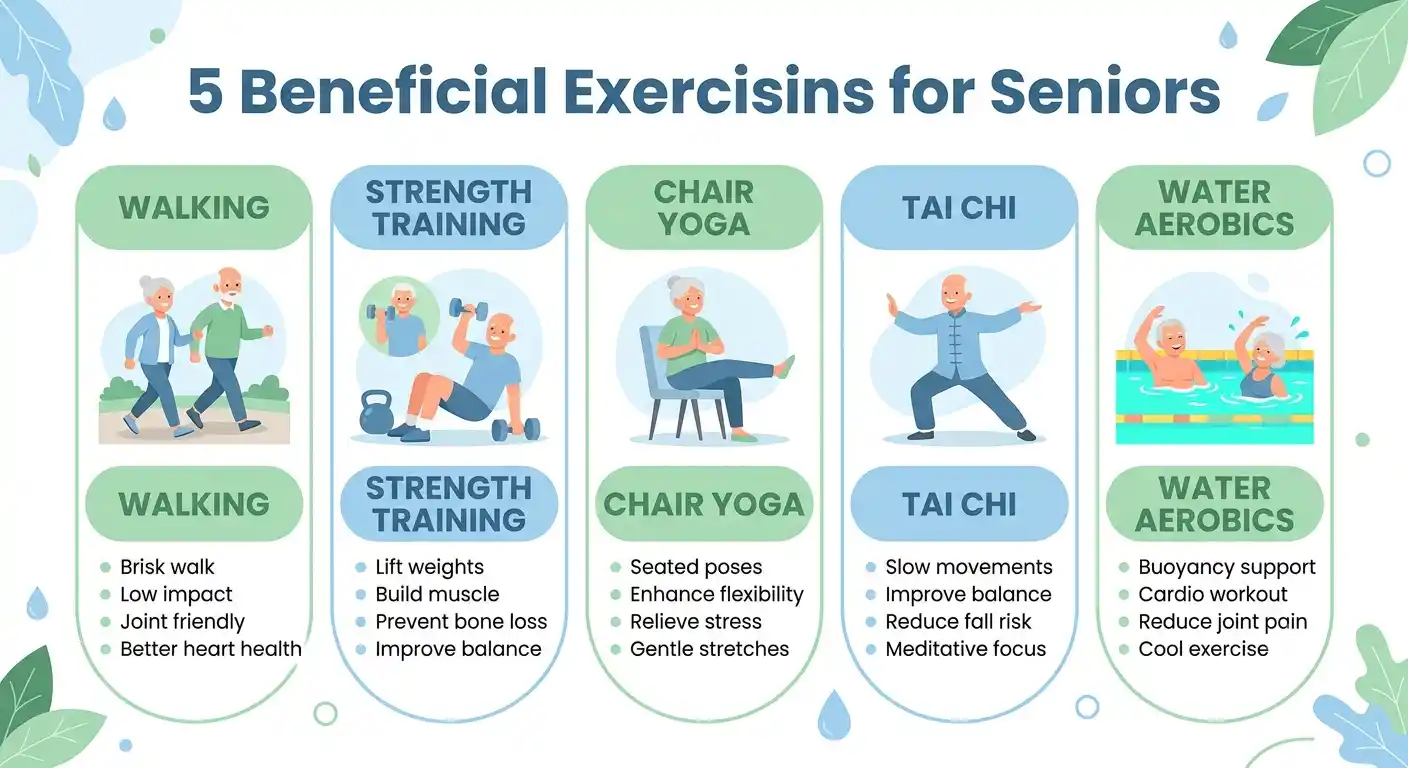
Starting a new routine can feel intimidating if your loved one hasn’t worked out in years. The secret is focusing on low-impact movements that don’t place sudden, harsh pressure on the spine or knees. Here are the top physical modalities that offer the highest health rewards with the lowest risk of strain.
1. Chair Yoga for Seniors
This approach modifies traditional poses by using a sturdy seat for total support. It targets tight muscles, poor posture, and stiff joints without forcing your loved one to get down on the floor. It’s an exceptional way to build total-body flexibility and quiet the nervous system.
- Seated Mountain Pose: Teaches spinal alignment and engages the deep abdominal wall.
- Overhead Stretch: Opens the ribcage and maintains shoulder mobility for reaching high objects.
- Seated Twist: Gently rotates the lower back to keep the spine flexible.
2. Tai Chi for Seniors
This slow, meditative practice focuses on deliberate weight shifts and controlled breathing. It acts as a powerful system for fall prevention because it forces the brain and feet to coordinate perfectly.
- Commencement Move: Uses slow arm rises to establish balance and calm breathing.
- Cloud Hands: Requires continuous, gentle weight shifting from one leg to the other, which builds deep ankle stability.
3. Resistance Band Exercises for Seniors
Elastic bands provide smooth, continuous tension throughout a movement without the joint strain caused by heavy iron dumbbells. They allow you to safely run through a senior strength workout right in the living room.
- Seated Rows: Wrapping the band around the feet and pulling toward the ribs strengthens the upper back and improves posture.
- Bicep Curls: Stepping on the band and curling the hands upward keeps arms strong enough to lift grocery bags comfortably.
4. Outdoor Walking
Walking remains the most accessible form of aerobic exercise for seniors. It strengthens the lower body, improves heart health, and keeps joints moving naturally.
When clients ask how many steps seniors should walk per day, the answer depends entirely on their current fitness level. While public health campaigns often push for 10,000 steps, modern research shows that hitting 6,000 to 8,000 steps daily offers massive protective health benefits for older adults. If mobility is limited, breaking this down into three short, 10-minute walks throughout the day is just as effective as one long stroll.
What Is the Best Water Exercises for Seniors?
The best water exercise for seniors is water aerobics, since the buoyancy of a pool supports body weight and removes pressure from the knees, hips, and spine while still building strength and cardiovascular endurance. Most community pools and senior centers run water aerobics for seniors classes specifically designed around joint safety and gradual pacing.
The water itself acts as natural resistance, so every kick and arm sweep works against something without needing dumbbells. This makes it an ideal option for anyone managing arthritis, recovering from a joint replacement, or simply nervous about falling on land. For families in Colorado exploring home care services in Denver, Castle Pines Home Care can help coordinate transportation to a local pool program and provide a caregiver to assist with getting in and out of the water safely.
Sample Weekly Workout Plan for Seniors
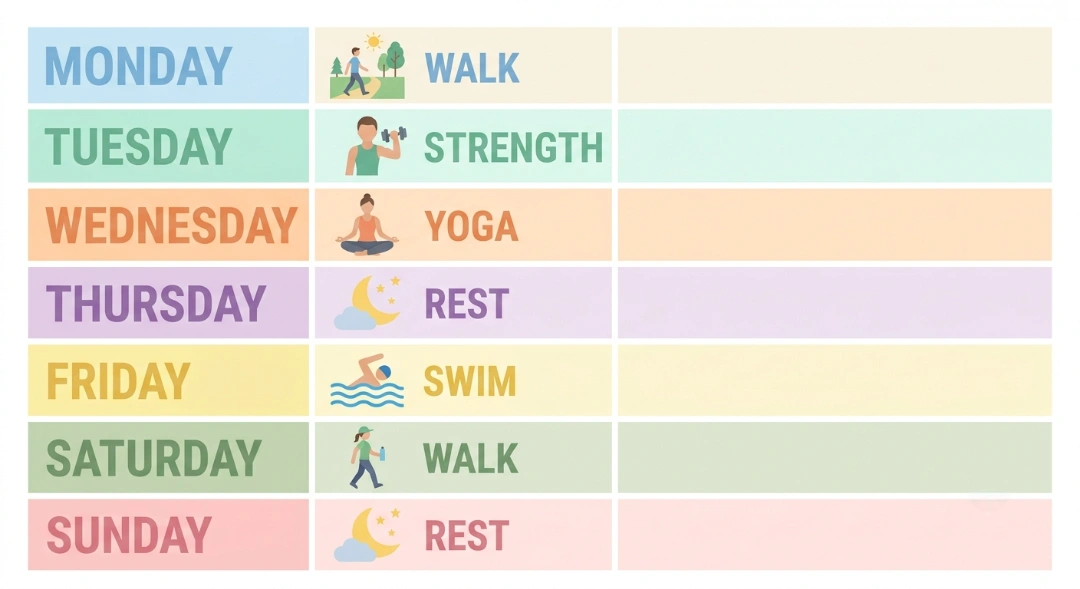
To meet federal health guidelines safely, an exercise workouts seniors routine should be spread out across the week. The federal recommendation states that older adults need 150 minutes of moderate aerobic activity weekly, paired with two days of strength training.
Here is a practical, balanced template showing how to organize these movements without overworking the body:
| Day | Primary Activity | Focus Area | Duration |
| Monday | Brisk Walking or Recumbent Cycling | Aerobic Endurance | 30 Minutes |
| Tuesday | Living Room Strength Routine | Resistance Bands | 20 Minutes |
| Wednesday | Gentle Chair Yoga / Balance Holds | Flexibility & Stability | 30 Minutes |
| Thursday | Brisk Walking or Pool Session | Low-Impact Cardio | 30 Minutes |
| Friday | Living Room Strength Routine | Upper & Lower Body | 20 Minutes |
| Saturday | Tai Chi Session | Balance Boosters | 30 Minutes |
| Sunday | Full Rest Day | Muscle Recovery | – |
You don’t have to complete a 30-minute block all at once. If your loved one has lower stamina, breaking it down into two 15-minute sessions yields the exact same physical benefits. Consistency matters far more than doing long, grueling sessions.
Step-by-Step At-Home Strength Movements
You don’t need a commercial gym membership to build functional strength. These simple exercises to prevent falls in elderly individuals can be done safely in the comfort of the living room using basic household furniture.
Wall Pushups
This movement targets chest, shoulder, and core strength without requiring your loved one to get down on the floor.
1.Find the right distance:Setup.
Stand facing a clear wall, about an arm’s length away, with your feet flat on the floor and shoulder-width apart.
2.Place your hands:Alignment.
Lean slightly forward and place your palms flat against the wall at shoulder height and shoulder-width apart.
3.Lower your body:The Eccentric Phase.
Slowly bend your elbows and lower your chest toward the wall, keeping your body in a straight line like a plank.
4.Push back safely:The Concentric Phase.
Press firmly through your palms to push your body back to the starting position. Repeat this movement 10 to 12 times.
Seated Heel Raises
This movement strengthens the calf muscles and improves blood circulation throughout the lower legs.
- Sit up straight in a firm chair with your feet flat on the floor.
- Keep your toes pressed firmly into the ground and slowly lift your heels as high as possible.
- Hold the top position for two seconds to contract the calves.
- Slowly lower your heels back to the floor. Complete 15 repetitions.
Single-Leg Balance Holds
This exercise targets the stabilizing muscles around the ankles and hips, which are crucial for steady walking.
- Stand tall behind a sturdy kitchen chair or next to a wall for physical support.
- Place one hand on the chair or wall to maintain total stability.
- Slowly lift your left foot a few inches off the floor, balancing entirely on your right leg.
- Hold this steady position for 10 to 20 seconds.
- Lower your foot and repeat the process on the opposite leg.
Exercises Seniors Should Avoid
A major mistake many families make is pulling a generic workout routine off the internet. Mainstream fitness trends are often built for younger bodies looking to burn calories fast. For someone over 65, those exact same movements can cause severe joint damage or lead to a dangerous fall.
- Weighted Squats: Placing a heavy barbell or heavy dumbbells on older shoulders compresses the spine and places immense stress on arthritic knees.
- Abdominal Crunches: Pulling the neck upward while forcing the lower back into the floor strains the cervical spine and worsens rounded shoulders.
- Traditional Deadlifts: Lifting heavy objects directly off the floor puts aging lumbar discs at high risk for severe strains or herniations.
- High-Intensity Interval Training (HIIT): These rapid, breathless workouts push heart rates up too quickly and increase the risk of sudden dizziness.
- Long-Distance Running: The repetitive, hard pounding on asphalt wears down thinning joint cartilage in the knees and hips.
Instead of these risky options, encourage your loved one to join an elderly exercise class focused specifically on older anatomy. These environments replace high-impact strains with smooth, controlled patterns that respect the body’s natural boundaries.
Safety Tips Before Starting an Exercise Routine
Before your loved one does a single heel raise, you must put a few household safety rules in place. Creating a secure physical environment is just as important as the movements themselves.
- Get Clear Medical Approval: Always speak with your family doctor first. Show them your proposed list of movements to ensure they align with your loved one’s specific medical history.
- Clear the Floor: Remove loose rugs, clutter, and electrical cords from the workout area to eliminate any hidden tripping hazards.
- Check the Footwear: Never let your loved one exercise in slippery socks or loose slippers. They need supportive, closed-toe sneakers with non-slip rubber soles.
- Use the Talk Test: To monitor cardiovascular exertion without complex heart monitors, use simple conversation. Your loved one should be moving fast enough to talk comfortably, but not fast enough to sing a song. If they can’t speak without gasping for breath, they need to slow down immediately.
Final Thoughts
There’s no single perfect workout that fits every senior, but the pattern that works is consistent: some walking, some strength work, some stretching, and some balance practice, spread across most days of the week. Start small, build gradually, and check in with a doctor before ramping up intensity.
If you’re a caregiver trying to fit exercise support into an already full plate of appointments, meals, and errands, you don’t have to figure it out alone. Contact us at Castle Pines Home Care to talk through what a safe, manageable routine could look like for your loved one.
Frequently Asked Questions
Can a senior build muscle after age 70?
Yes, older adults can absolutely build muscle tissue at 70 and beyond. Gentle resistance training stimulates muscle protein synthesis at any age, helping reverse natural muscle wasting.
What is the single best exercise for an elderly person?
Walking is widely considered the best overall exercise because it’s free, low-impact, and keeps the cardiovascular system healthy. However, it should be paired with basic balance holds for full fall protection.
How often should an 80-year-old exercise?
An 80-year-old should aim to move in some way every day. Breaking activity into brief 10 to 15-minute daily walks, combined with light stretching, keeps joints moving without causing physical exhaustion.
How many days a week should seniors exercise?
Most guidelines recommend movement most days of the week, with at least 150 minutes of moderate aerobic activity spread across the week, plus two strength sessions.
What is the safest exercise for seniors with bad knees?
Water aerobics and stationary cycling put the least pressure on the knees while still building strength and cardiovascular fitness.