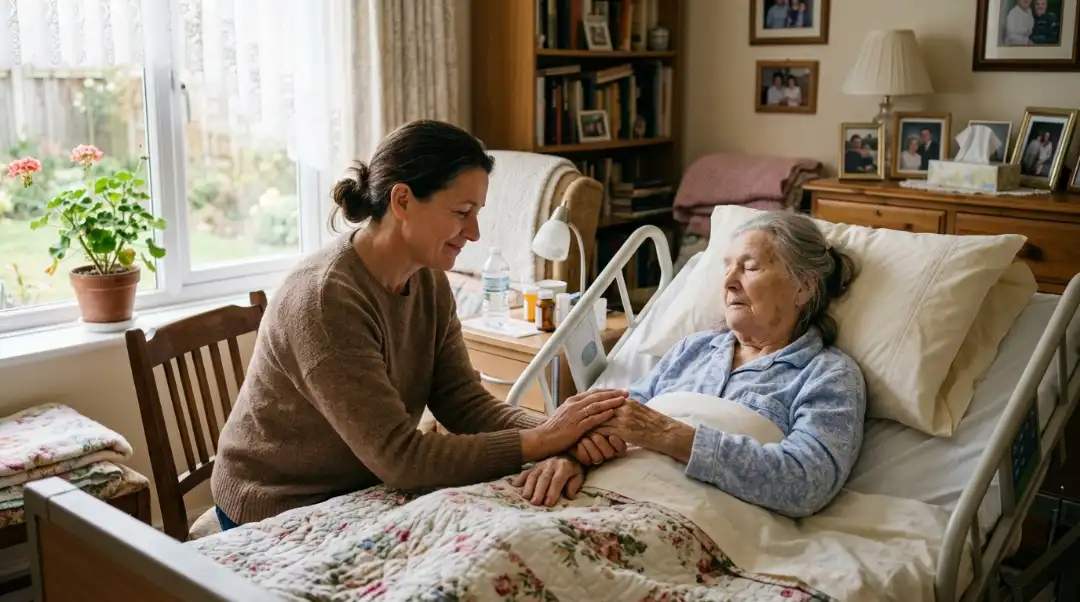
It’s difficult to sit and observe a parent or grandparent withdrawing from life. You see the missed calls, the empty chair at the dinner table, the hobbies that are gathering dust. You want to fix it, but you’re not sure where to start, and honestly, most people aren’t. Short answer: Helping a senior with depression is about listening without judging, ruling out medical explanations, recreating modest social contacts, and getting a doctor engaged early rather than waiting for things to get worse on their own.
This post will guide you through just that. I’m going to discuss the real signs of late-life depression, what really causes it, how to broach the subject without it being awkward, and what professional treatment looks like once you have that first conversation. If you’ve been looking for how to help a senior with depression and you’re getting vague advice, this is meant to be more direct than that.
Understanding Depression in Seniors
Depression in older adults isn’t a personality trait or a phase. It’s a medical condition, and it responds to treatment the same way high blood pressure or diabetes does. The idea that seniors are “just naturally sadder” is one of the more damaging myths out there, because it stops families from seeking help.
Late-life depression often looks different than it does in younger adults. Instead of crying or openly expressing sadness, an older person might complain about aches and pains, seem irritable, or simply go quiet. That’s part of why it gets missed so often, even by doctors during routine visits.
Signs and Symptoms of Depression in Seniors
The most common signs of depression in seniors include lasting changes in sleep patterns, a sudden loss of appetite, social withdrawal, and physical complaints like unexplained pain that does not respond to treatment. While younger people often show depression through obvious sadness or crying, older adults frequently display subtle, physical signs.
Sometimes these changes are mistaken for normal aging or the early stages of memory loss. To help you spot the differences, watch closely for these specific warning signs:
- Social Isolation and Loneliness: They consistently decline invitations, stop answering phone calls, and avoid spending time with their grandchildren or close neighbors.
- Drastic Energy Changes: They complain of feeling constantly exhausted, even after sleeping for eight or more hours, and find simple tasks like dressing or bathing overwhelming.
- Altered Sleeping Habits: They struggle to fall asleep at night, wake up frequently, or spend the majority of their day resting in bed because they lack the motivation to get up.
- Fluctuating Moods: You might notice sudden irritability, uncharacteristic anger, or a flat emotional state where nothing seems to make them happy or sad.
- Unexplained Aches: They frequently complain of stomach pain, headaches, or joint stiffness that doctors cannot link to a specific physical illness.
Depression vs. Normal Aging and Dementia
Depression is not the same as dementia, though the two can look alike from the outside and sometimes occur together. Dementia usually involves a steady decline in memory and reasoning that doesn’t improve, while depression tends to come with a noticeable drop in mood and motivation that can lift once treated.
A senior with depression might say “I don’t know” to questions because they’ve lost interest in answering, while someone with dementia genuinely can’t recall the information. Depression can also cause something doctors call pseudodementia, where memory and thinking problems show up because of low mood rather than actual cognitive decline. This is one reason a proper evaluation matters. Treating depression can sometimes clear up what looked like memory loss.
If you’re unsure which one you’re dealing with, don’t try to guess at home. A primary care doctor or geriatric specialist can run a short screening, sometimes using a tool called the Geriatric Depression Scale, to get a clearer picture.
What Causes Depression in Older Adults?
Depression in seniors is usually caused by a mix of factors, including the loss of a spouse or close friends, chronic illness, reduced independence, loneliness, and changes in brain chemistry that come with age. No single cause explains it for everyone, which is why treatment plans often need to address more than one issue at a time.
Grief plays a bigger role than people expect. Losing a spouse, siblings, or old friends one after another can pile up in a way that’s hard to process, especially without a strong support system. Retirement and role changes matter too. A senior who spent decades as a provider, a manager, or a caretaker for their own kids can feel adrift once that role disappears.
Health conditions are another major factor. Chronic pain, heart disease, and stroke are all linked to higher rates of depression, partly because of the physical toll and partly because of the loss of independence that often comes with them. Genetics play a role as well. A family history of depression raises the odds, even later in life.
How to Talk to a Senior About Their Depression
To talk to an elderly parent about depression, choose a quiet, private moment, express your concerns using observation-based “I” statements, and avoid clinical labels like “mental illness” or “depression” if those words cause them to shut down. Many older adults grew up in an era when mental health was not openly discussed, and they may feel deep shame or worry about being viewed as weak.
Scripting the Conversation (What to Say)
Instead of forcing a medical diagnosis on them, focus on the specific physical and behavioral changes you have noticed. This approach keeps the conversation supportive and collaborative.
| Avoid Saying This | Say This Instead | Why It Works |
| “I think you have clinical depression and need to see a therapist.” | “I’ve noticed you haven’t been sleeping well lately and seem really tired. I’m concerned about your energy.” | Focuses on physical comfort rather than applying a scary label. |
| “You need to get out of the house and stop isolating yourself.” | “I miss our weekly walks around the block. Would you feel up for a short stroll with me this afternoon?” | Offers a specific, low-pressure invitation instead of a demand. |
| “Just try to be positive, things aren’t that bad.” | “I know you’ve been dealing with a lot of pain lately, and it must be so hard. I am here to help you through this.” | Validates their real physical struggle and offers steady companionship. |
Keep your tone gentle and patient. If they refuse to talk or get defensive, do not push. Simply remind them that you love them and are always ready to listen, then try again a few days later when they are feeling more relaxed.
8 Ways to Help an Elderly Person With Depression
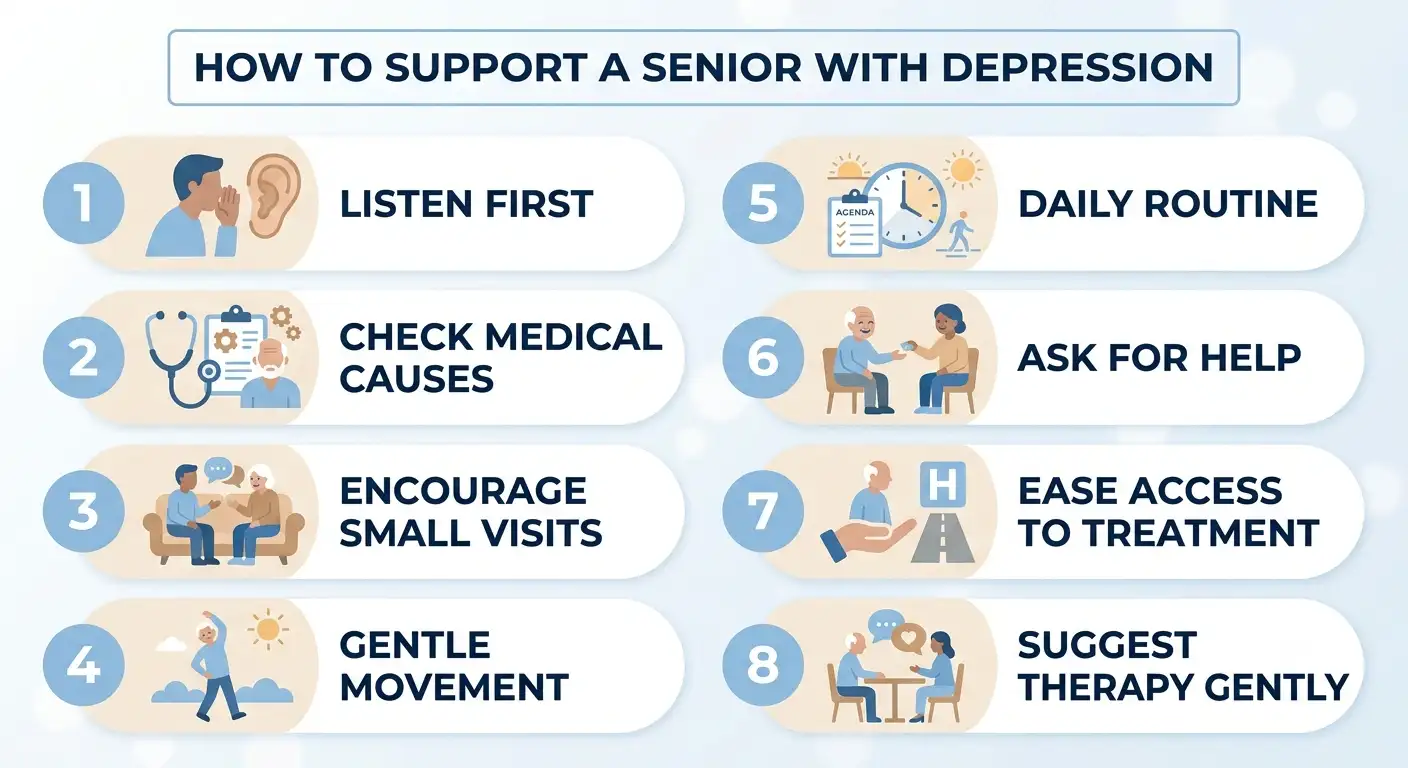
Knowing how to help a senior with depression starts with small, daily adjustments in how you interact and support them. You do not need to be a medical professional to make a profound difference in their comfort.
1.Listen without offering quick solutions:
Focus on presence.
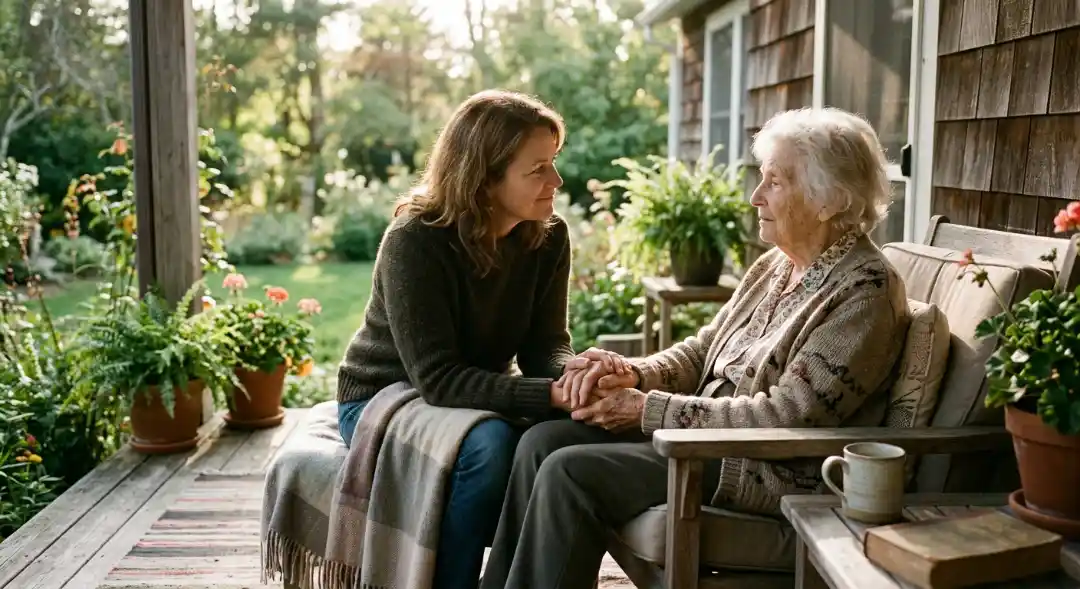
When your parent opens up, your instinct might be to solve their problems immediately. Avoid saying things like “look on the bright side” or “it could be worse.” Instead, sit with them, hold their hand, and let them talk about their feelings without any judgment. Simply hearing “I am here for you” can ease their deep sense of isolation.
2.Schedule a thorough medical checkup:
Rule out physical causes.
Many physical issues can mimic or trigger depressive symptoms. Schedule an appointment with their primary care physician to check their thyroid levels, vitamin D status, and overall physical health. Be sure to bring a complete list of their current medications, as some prescription drugs can cause mood drops as a side effect.
3.Introduce very gentle activities:
Rebuild daily physical movement.
Regular movement is a natural mood booster that helps stimulate the brain. You do not need an intense workout plan; instead, encourage them to join you for a brief walk down the driveway or some light stretching in a chair. Focus on making these moments enjoyable and stress-free rather than focusing on physical fitness.
4.Establish a simple, comforting routine:
Create structure for the day.
Depression makes the hours feel long and empty. Create a gentle daily rhythm with consistent times for waking up, eating meals, and winding down. Include one small, pleasant event each day, like sitting on the porch to watch the birds or reading a chapter of a book together.
5.Encourage gentle social connections:
Combat senior isolation and loneliness.
Loneliness feeds depressive thoughts, but large social gatherings can feel overwhelming to a senior who is struggling. Arrange low-pressure connections instead. Have a close friend stop by
6.Involve them in small, helpful tasks:
Restore their sense of purpose.
Depression often makes older adults feel like they are a burden on their busy families. Counteract this feeling by asking for their help with safe, simple tasks. Ask them to help you fold a basket of laundry, shell peas, or share their advice on a family recipe. This simple action reinforces that they are still needed.
7.Address real-world barriers to treatment:
Simplify the path to care.
Your loved one might want to seek help but feel overwhelmed by the logistics. You can offer practical support by researching local therapists, checking their insurance coverage, or driving them to their appointments. If mobility is an issue, look into telehealth options that allow them to speak with a professional from home.
8.Recognize crisis warning signs:
Keep safety absolute.
While not every senior with depression is in immediate danger, you must stay alert to signs of a crisis. If they start giving away cherished belongings, talking about death, or showing sudden, unexplained calm after a long period of deep despair, seek professional help immediately. Keep the 988 Suicide & Crisis Lifeline saved in your phone.
When to Get Professional Help
Professional help is worth pursuing once low mood, low energy, or withdrawal lasts longer than two weeks and starts affecting sleep, appetite, or daily function. A primary care visit is usually the easiest starting point, since many seniors already have a relationship with that doctor.
From there, a doctor can rule out physical causes and refer to a therapist or psychiatrist if needed. Treatment for depression in older adults typically combines talk therapy with medication when necessary, and for many seniors, this combination works better than either approach alone. Cognitive behavioral therapy in particular has a solid track record for late-life depression, since it focuses on practical thought patterns rather than years of unpacking the past.
Medication decisions need extra care in older adults. Seniors process medications differently than younger patients, and interactions with existing prescriptions are common, so dosing often starts low and adjusts slowly. If cost or access is a concern, ask directly about coverage. Many therapy sessions, including teletherapy, fall under Medicare Part B, which makes ongoing care more realistic for families working with a fixed budget.
Recognizing a Mental Health Crisis
Warning signs of a mental health crisis in a senior include talking about death, giving away possessions, sudden calmness after a period of deep sadness, or direct statements about wanting to disappear or not wake up. These signs call for immediate action, not a wait-and-see approach.
If you notice any of these signs, don’t leave the person alone. Call 988, the Suicide and Crisis Lifeline, or take them to an emergency room if you believe they’re in immediate danger. A sudden lift in mood after a long depressive stretch can be misread as good news, but it sometimes means a decision has already been made. Trust your instincts here over any urge to downplay what you’re seeing.
Taking Care of Yourself as a Caregiver
Caregiver burnout is real, and taking care of your own mental health directly affects how well you can support a depressed senior. Ignoring your own limits doesn’t make you a better caregiver. It usually makes you a more exhausted, less patient one.
Set boundaries on what you can realistically offer, and bring other family members into the rotation where possible. A short walk, a call with a friend, or even ten quiet minutes with coffee can reset your patience for the rest of the day. If you’re feeling stretched thin, a support group or your own therapist isn’t an indulgence. It’s part of keeping the whole situation sustainable long term.
Final Thoughts
Depression in seniors is treatable, and most families see real progress once they stop waiting for things to improve on their own. If you’ve been searching for how to help a senior with depression because someone you love is struggling, the steps above give you a real starting point, not just something to read and set aside.
For families in Colorado looking for extra support at home, in-home caregivers can make a real difference in reducing isolation and helping seniors stick to daily routines that support their emotional health. If you’re exploring home care services in Denver for a loved one dealing with depression, isolation, or general daily support needs, Castle Pines Home Care can help you figure out what kind of support actually fits your situation. Contact us to talk through your options.
Frequently Asked Questions
What’s the difference between sadness and depression in seniors?
Sadness usually passes within days and connects to a specific event. Depression lasts two weeks or longer, affects sleep and appetite, and interferes with daily function even when there’s no clear trigger.
Can depression in older adults be treated without medication?
Yes, in many mild to moderate cases, therapy alone, especially cognitive behavioral therapy, works well. Medication becomes more relevant for moderate to severe depression or when therapy alone isn’t enough progress.
Is loneliness the same as depression?
No, but senior isolation and loneliness are strong risk factors for depression. Someone can feel lonely without being depressed, though prolonged loneliness raises the odds of it developing over time.
How long does depression recovery usually take?
Recovery timelines vary, but many people notice improvement within six to eight weeks of starting therapy or medication. Full recovery and staying stable often takes several months of consistent treatment.
What if my loved one refuses all help?
Keep the door open without forcing it. Continue showing up, offer low-pressure invitations, and revisit the conversation periodically. Refusal today doesn’t mean refusal forever.