

If you’re sick and tired and numb about a job you used to love, you’re not messed up. You are human and what you are feeling is named. Most folks want one thing fast in the case of caregiver burnout vs compassion fatigue: a clear answer as to which one they have and what to do next. So here it is in plain terms. The term burnout is often used interchangeably with compassion fatigue, which is usually a quicker, more intense response to continuous exposure to the suffering of others, whereas burnout is a gradual accumulation of physical and emotional strain in caregivers. Both sap you. Both are curable. Neither indicates you are a failure as a care giver.
We wrote this because the environment of caring is strewn with ambiguous advice and clinical jargon that doesn’t help when you’re running on four hours of shuteye. What follows is a breakdown of both conditions, how to tell them differently and real strategies for rehabilitation, without the fluff. By the end you’ll know exactly what your situation is, why it happened and how to start feeling like you again.
What Is Caregiver Burnout?
Caregiver burnout is a state of physical, emotional and mental tiredness and may be accompanied by a change in attitude from positive caring to negative uncaring. It develops over months or years when the demands of caring outstrip your practical resources and this leads to frustration, persistent exhaustion and lack of personal achievement.
Caring for a chronically ill or disabled family member can be overwhelming. The daily tasks of caregiving can pile up. You may manage your home chores as well as prescriptions, cooking, personal hygiene and medical appointments. These jobs never really end thus your body is in a permanent state of low level stress.
That constant pressure eats away at your physical and mental reserves over time. Burnout is not the occasional tiredness, it does not disappear with a good night’s sleep. What was ten minutes can feel too much now.
Burnout is when the core desire to serve is there but your physical body and mental energy just can’t keep up. You still care a lot about your loved one’s comfort but you are totally drained by the amount of labor that is needed every day.
What Is Compassion Fatigue?
Compassion fatigue is a state of emotional and physical exhaustion that develops from repeated exposure to another person’s pain, trauma, or suffering. Unlike burnout, it can appear suddenly after one difficult event. It often leaves caregivers feeling numb or disconnected from the person they’re caring for.
Doctors and researchers sometimes call this secondary traumatic stress, because you’re absorbing trauma that isn’t technically yours. Nurses, hospice workers, and social workers have talked about this for decades, but family caregivers experience it too, especially those caring for a loved one with dementia, a terminal illness, or a severe chronic condition.
The tricky part is that compassion fatigue can chip away at empathy itself. You still love the person you’re caring for, but the well of patience and warmth feels dry. That’s not a character flaw. It’s what happens when the nervous system has been on high alert for too long.
Understanding Compassion Fatigue vs Burnout
Understanding how these conditions interact helps you select the right coping strategies. While both stem from the emotional toll of caregiving, their underlying mechanisms and psychological impacts differ significantly.
| Feature | Caregiver Burnout | Compassion Fatigue |
| Primary Origin | Relentless physical workload and environmental stress | Secondary exposure to trauma and suffering |
| Speed of Onset | Gradual onset vs. sudden onset (develops over time) | Rapid or sudden onset following stressful events |
| Capacity for Empathy | Empathy remains intact, though physical energy is gone | Empathy erosion / loss of empathy and emotional withdrawal |
| Dominant Feeling | Hopelessness, frustration, physical exhaustion | Emotional numbness / detachment and hypervigilance |
| Recovery Focus | Physical rest, respite care, workload reduction | Psychological processing, boundary setting, self-compassion |
Causes of Compassion Fatigue and Burnout
Caregiver burnout typically stems from a mix of practical and personal pressures. The most common causes include:
- Providing care with no consistent breaks or respite
- Financial strain from reduced work hours or caregiving costs
- Sleep loss from nighttime caregiving duties
- Isolation from friends, hobbies, and outside support
- Managing medical tasks without proper training
Compassion fatigue has a narrower but heavier set of triggers. It usually comes from:
- Repeated exposure to a loved one’s pain, confusion, or decline
- Witnessing traumatic medical events (falls, seizures, hospitalizations)
- Caring for someone with a terminal or progressive illness
- Carrying guilt over not being able to ease someone’s suffering
- A personal history of trauma that gets reactivated by caregiving stress
Professional caregivers, nurses, and social workers face compassion fatigue as a known occupational hazard, which is part of why hospitals now run peer support programs and mandatory debriefings after hard cases. Family caregivers rarely get that same structure, even though the emotional exposure is often just as intense, sometimes more, because the person suffering is someone they love.
Caregiver Burnout vs. Compassion Fatigue: Key Differences
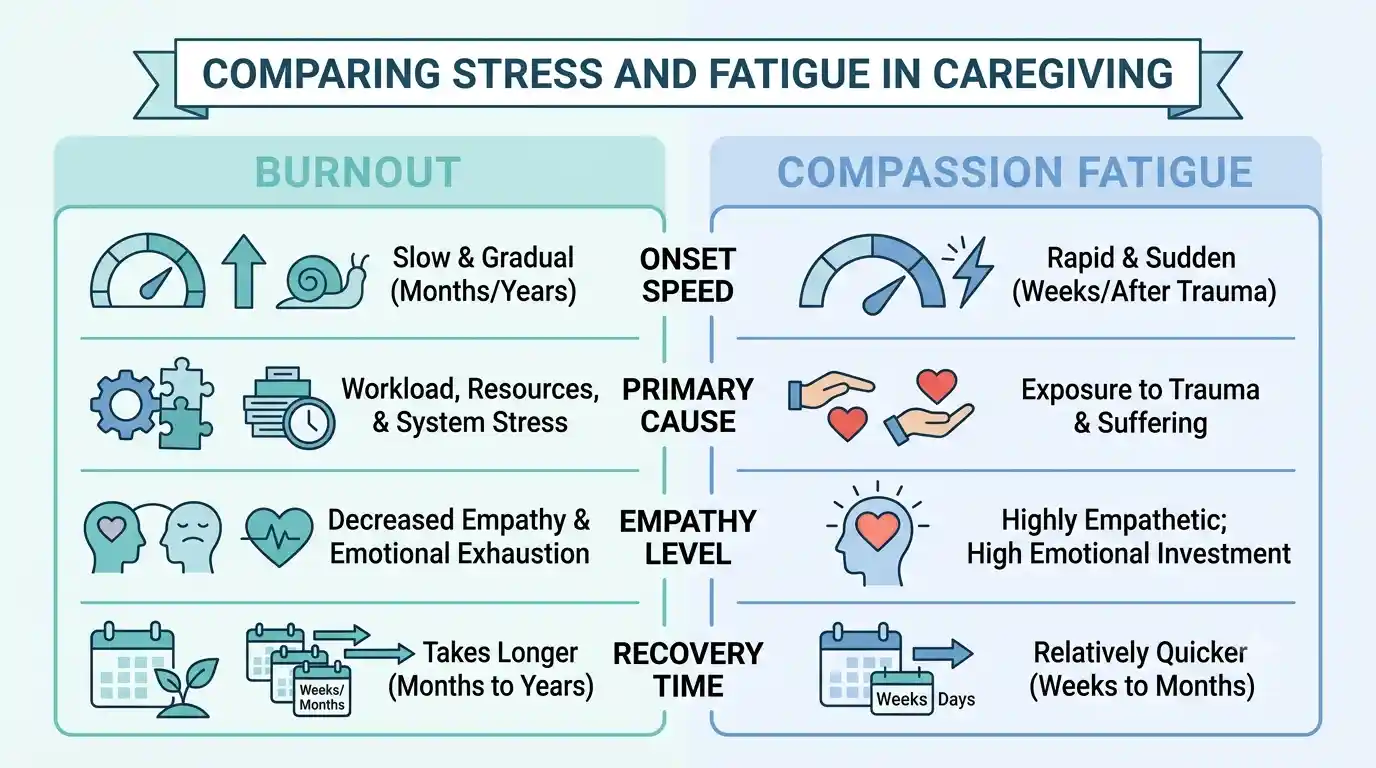
A side-by-side view makes the caregiver burnout vs compassion fatigue comparison easier to apply to your own situation.
| Factor | Caregiver Burnout | Compassion Fatigue |
| Onset | Gradual, builds over months | Can be sudden, tied to specific events |
| Root cause | Physical and logistical overload | Emotional exposure to another’s suffering |
| Empathy | Usually stays intact | Often reduced or numbed |
| Emotional tone | Frustration, exhaustion, resentment | Numbness, detachment, guilt |
| Recovery time | Slower, requires rebuilding energy | Can improve faster with the right support |
| Who’s affected | Anyone in a long-term caregiving role | Common in family caregivers, nurses, hospice staff, social workers |
Common Signs of Compassion Fatigue and Burnout
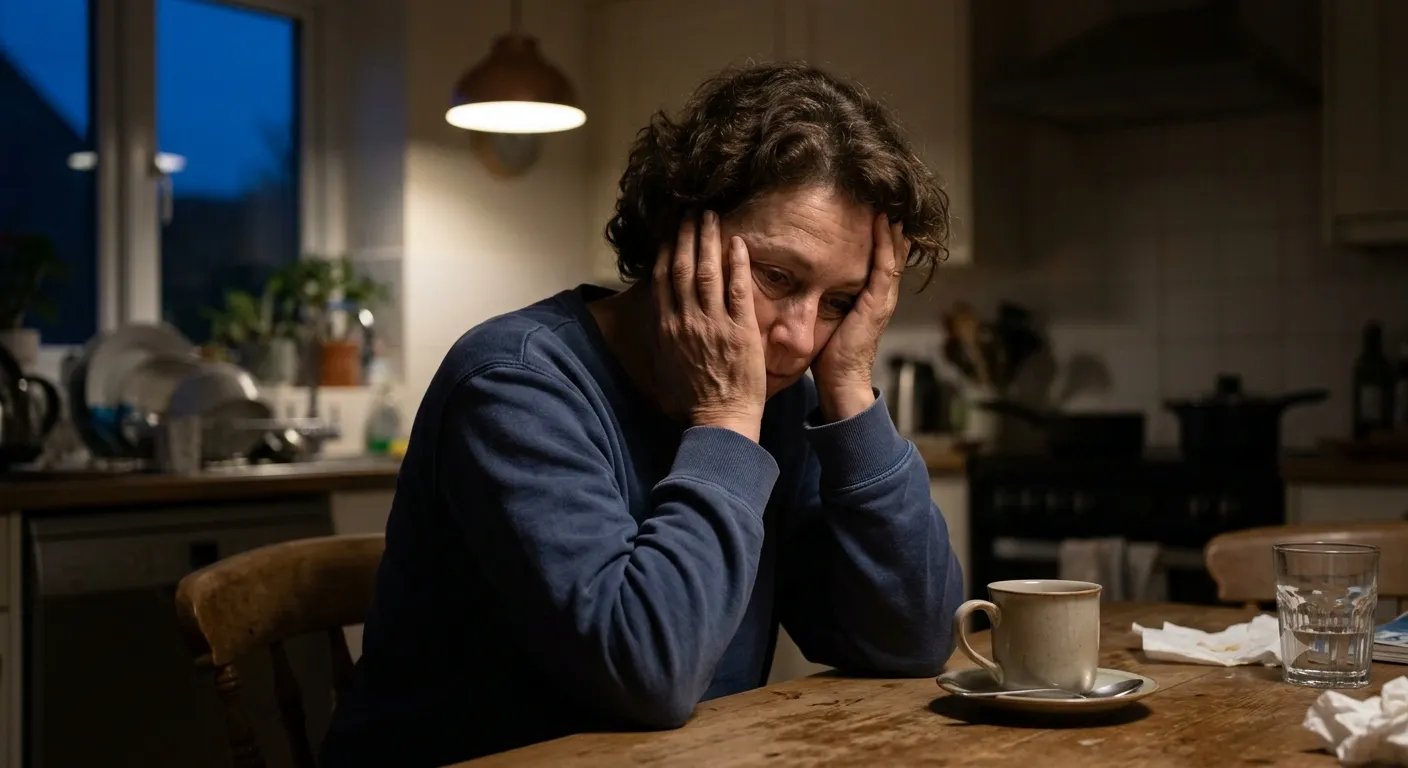
Recognizing the warning signs of caregiver exhaustion allows you to step in before health issues compound. Both conditions produce physical, emotional, and behavioral indicators.
Physical Indicators
Caregiving stress manifests directly through bodily reactions. Watch for these signals:
- Somatization: Persistent headaches, muscle stiffness, and gastrointestinal issues / somatization without clear medical cause.
- Sleep Disturbances: Difficulty falling asleep, waking up early with racing thoughts, or sleeping excessively without feeling rested.
- Weakened Immune Function: Catching frequent colds or taking longer to recover from minor illnesses.
Emotional and Mental Indicators
Mental strain changes how you process everyday interactions:
- Emotional Numbness: Feeling detached, flat, or unable to experience joy or sadness.
- Cynicism and Guilt: Harboring resentment toward your care duties, followed immediately by overwhelming guilt.
- Persistent Anxiety: Feeling on edge, anticipating the next medical crisis even during quiet moments.
How to Recover From Burnout
How to recover from caregiver burnout involves reducing your physical care workload, restoring your rest patterns, and establishing a sustainable routine through external care support.
When burnout takes hold, trying to tough it out only worsens physical exhaustion. True recovery demands practical changes to your caregiving framework:
- Arrange Temporary Respite Care: Contact organizations like the ARCH National Respite Network to find temporary care services. Having a trained caregiver step in for a few hours a week lets you rest without worry.
- Delegate Non-Essential Tasks: Ask family members or neighbors to assist with grocery shopping, meal preparation, or yard care. Focus your energy strictly on core priorities.
- Establish Clear Workload Limits: Set specific hours for care duties whenever possible. If you don’t live in the same house as your loved one, establish consistent times when you are off duty.
- Prioritize Basic Physical Rest: Focus on consistent sleep schedules, simple outdoor movement, and regular meals to rebuild your physical strength slowly.
How to Recover From Compassion Fatigue
Recovering from compassion fatigue requires processed emotional healing, nervous system regulation, and clear emotional boundaries.
Because compassion fatigue involves secondary trauma, rest alone won’t fully resolve the emotional numbness. Use these targeted recovery strategies:
- Practice Emotional Grounding: When care tasks feel overwhelming, use simple grounding techniques like box breathing or brief walks to calm your nervous system.
- Work With a Mental Health Professional: Consult a counselor or licensed social worker specializing in caregiver stress. Therapy offers a safe space to process trauma without fear of judgment.
- Set Healthy Emotional Boundaries: Remind yourself that you can offer compassionate support without taking on your loved one’s emotional pain as your own.
- Join Caregiver Support Groups: Connecting with peers through organizations like the Alzheimer’s Association lets you share feelings openly with people who truly understand.
When to Get Professional Help
If exhaustion has turned into thoughts of hopelessness, panic attacks, or an inability to function day to day, it’s time to bring in a professional rather than trying to push through. A therapist who specializes in caregiver stress or trauma can offer strategies that go beyond general self-care advice. This isn’t a sign of weakness. It’s the same instinct that leads you to call a doctor for a physical injury, applied to an emotional one.
Final Thoughts
Caregiver burnout vs compassion fatigue isn’t a competition to diagnose yourself correctly. It’s a starting point for getting the right kind of help. Whether your exhaustion comes from sheer physical overload or from the emotional weight of watching someone you love struggle, the fix usually involves the same core ingredients: rest, support, and permission to ask for help without guilt.
If you’re in the Denver area and need practical relief, home care services in Denver can take pressure off daily caregiving tasks so you can rest, work, or simply breathe. Castle Pines Home Care works with families who are stretched thin, providing trained in-home support so you’re not carrying the full weight alone. Contact us to talk through what your family needs and what respite or ongoing support could look like for you.
Frequently Asked Questions
Is compassion fatigue the same as burnout?
No. Burnout comes from prolonged physical and logistical stress, while compassion fatigue comes from repeated emotional exposure to someone else’s suffering. They share symptoms like exhaustion and irritability, but the root cause and the effect on empathy differ.
What are the early signs of caregiver burnout?
Early signs include trouble sleeping, irritability, headaches, and a growing sense of dread about caregiving tasks. Catching these early, before they turn into chronic fatigue or depression, makes recovery faster and easier.
Can you have both burnout and compassion fatigue at once?
Yes. Many caregivers experience overlapping symptoms of both, especially during a long caregiving stretch that includes a traumatic event. Treating both usually means combining rest and structure with emotional processing and support.
How long does it take to recover from caregiver burnout?
Recovery timelines vary, but most caregivers notice improvement within a few weeks of consistent rest, support, and boundary-setting. Full recovery often takes longer if burnout has gone unaddressed for months or years.
Does compassion fatigue go away on its own?
It can ease with reduced emotional exposure and support, but it rarely resolves completely without some form of active intervention, like counseling, peer support, or a change in caregiving responsibilities.