

You may be wondering if meal delivery is a viable option for an older parent or for yourself that will not make food shopping and cooking a daily struggle. Yes it works. And it’s one of the easiest improvements you can do to protect health and independence in your house. The short answer: Senior meal delivery services offer dietitian-reviewed cuisine right to your door, reduce the fall risk of kitchen tasks, and frequently cost less than customers assume.
What we’ll cover. We will talk about how these services function, what kinds there are, what they cost, whether Medicare covers any of it, and how to choose one that works for a real home, not a brochure. and in the end you will have a clear approach to compare possibilities instead of a guess.
What Are Meal Delivery Services for Seniors?
Senior meal delivery services are food delivery systems that send pre-cooked meals or easy-to-prepare kits directly to a person’s home. These specialty apps are unlike the regular restaurant take out apps. They are very targeted on balanced nourishment for aging bodies. They are made for certain health needs such as low sodium, heart healthy, diabetic friendly, soft or pureed.
These services remove the stress of preparing weekly menus, driving to congested stores and chopping ingredients with tired wrists. Many vendors offer flash-frozen meals that can last fresh in the fridge for 14 days or months in the freezer. Takes a couple minutes in the microwave or toaster oven.
Meals delivered to seniors’ homes do far more than simply provide simple convenience, they are crucial in maintaining independence. “Having regular access to nutritious food is essential to helping seniors stay strong, manage chronic health conditions and age comfortably in place for much longer.
How Much Does Meal Delivery for Seniors Cost?
Prices land in a fairly narrow range across the industry, usually between $7 and $13 per meal. A senior eating two delivered meals a day, with the third being something simple like toast or cereal, should budget roughly $250 to $450 a month. Community programs like Meals on Wheels cost far less, often nothing at all for qualifying households, because they run on a sliding scale tied to income.
Shipping fees change the math quickly. Some providers bundle free shipping into a subscription, while others tack on $10 to $20 per order for cold-pack delivery. Always check the per-order total, not just the per-meal price listed on the homepage, since that number rarely tells the whole story.
Types of Senior Meal Delivery Services
Not every service fits every household. The right type depends on mobility, appetite, cooking interest, and budget.
Ready-to-Eat and Heat-and-Serve Meals
These are fully cooked meals shipped frozen or chilled. Brands like Mom’s Meals and Magic Kitchen fall here, along with Silver Cuisine by bistroMD, which focuses specifically on older adults. Prices typically run $7 to $10 per meal. This category works best for someone who can’t stand at a stove for long, or who simply doesn’t want to anymore.
Medically Tailored Meals
These meals are built around a diagnosis, not just a preference. A dietitian sets the nutrition targets for conditions like kidney disease, heart failure, or diabetes, and the chef builds meals around those numbers. This is the category most likely to be covered by insurance, because it treats food as part of a treatment plan rather than a convenience purchase.
Meal Kits for Active Cooks
Services like HelloFresh or Blue Apron ship raw ingredients with instructions. This suits someone who still enjoys cooking but wants help with planning and grocery runs. It’s not the right fit for someone with limited mobility, memory changes, or arthritis that makes chopping painful.
Community and Nonprofit Programs
Meals on Wheels remains the largest nonprofit option, often on a sliding scale, and it adds a wellness check with every delivery. This matters for someone living alone, since the driver is frequently the only person who sees them that day.
Personal Chef Services
A chef cooks in the home, usually a few times a week. It costs more than packaged meals but adds social interaction and full customization. Families managing multiple dietary restrictions at once, such as a low-sodium diet plus a texture modification for swallowing difficulty, sometimes find this easier than piecing together packaged options.
None of these categories is objectively “best.” A retired teacher who still loves puttering around the kitchen will resent a frozen meal plan, even a good one. Someone recovering from hip surgery might see that same frozen meal as a lifeline. Match the type to the person, not the other way around.
Quick Comparison: Top Senior Meal Delivery Options at a Glance
| Service | Best For | Price Range | Delivery |
| Mom’s Meals | Medical diets, post-hospital recovery | $7.49–$9.49/meal | Frozen, nationwide |
| Meals on Wheels | Low-income, isolated seniors | Sliding scale, often free | Local, daily/weekly |
| Silver Cuisine by bistroMD | General senior nutrition | ~$9–$11/meal | Frozen, nationwide |
| Magic Kitchen | Flexible, no subscription required | ~$10–$13/meal | Frozen, nationwide |
| Factor | Fresh, never-frozen convenience | ~$11–$13/meal | Chilled, most regions |
Use this table as a starting point, not a final answer. Coverage areas, minimum order sizes, and dietary certifications change often enough that it’s worth confirming directly with each company before you commit.
Does Medicare or Insurance Cover Meal Delivery?
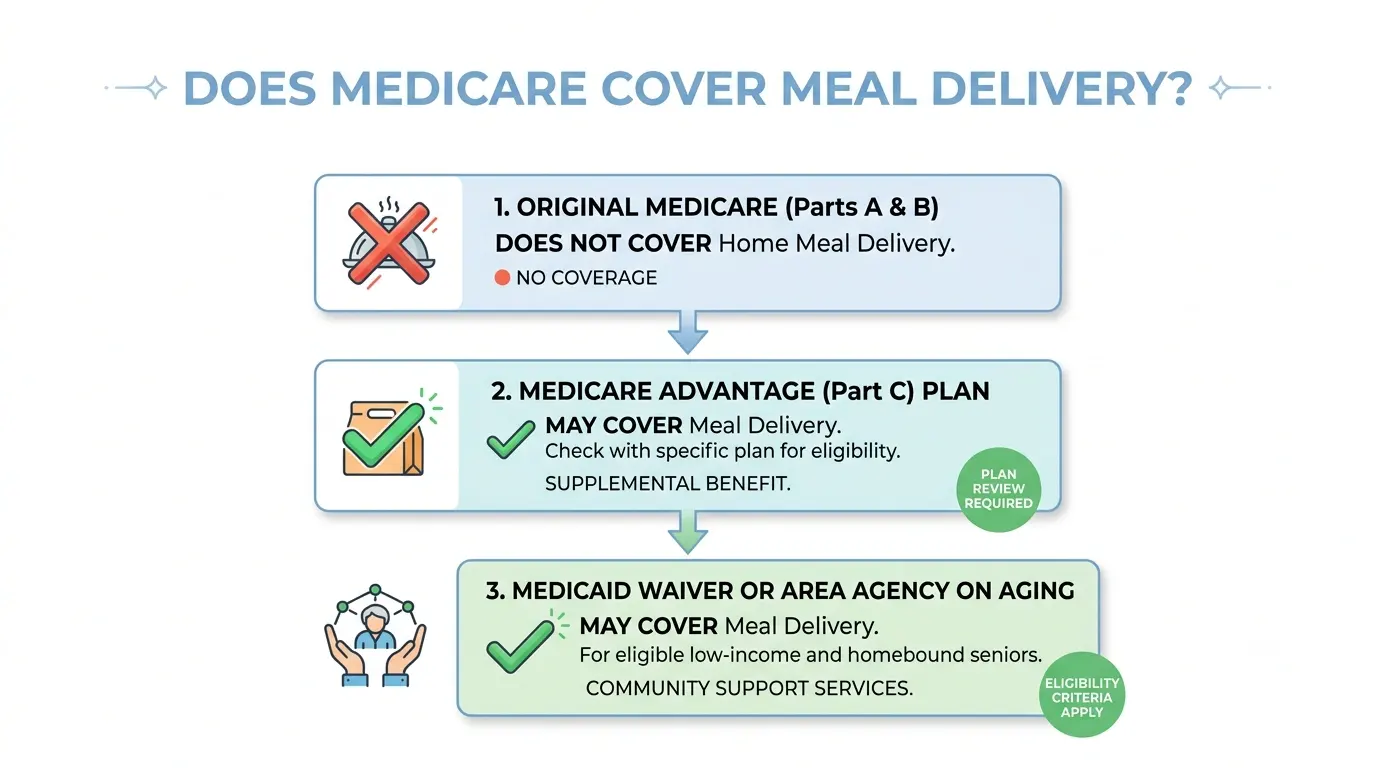
Original Medicare usually doesn’t pay for home-delivered meals for seniors but many Medicare Advantage plans offer this benefit. It’s often a supplemental benefit after a hospital stay or for people who have a qualifying chronic condition. Coverage varies widely from plan to plan . The only way to know for sure is to call the plan and inquire what is included .
Medicare.org cites evidence suggesting one in four persons over age 65 report poor dietary habits, and that risk increases dramatically following a hospital discharge. (A good opportunity to include a current number, with a direct source link, preferably from CMS or a recent Medicare Advantage benefits report, as coverage percentages change year to year.)
Some Medicare Advantage plans offer a “Flex Card” or shopping credit, allowing a member to purchase fresh food directly rather than pre-made meals. Plans for special needs, targeted at those with diseases such as diabetes or heart failure, are more likely than a typical plan to offer a meal benefit. If a plan will not cover, check if that benefit is available after discharge – many benefits have a recovery period specified, not a continuous period of coverage.
You don’t have to be on Medicare Advantage to receive meals. Meals are also available to low-income seniors through other programs, such as Medicaid waiver programs or Area Agency on Aging services. Don’t only think out-of-pocket is the only way, it’s worth looking into both.
Special Dietary Needs and Chronic Conditions
Meal preparation for seniors gets more complicated once a chronic condition enters the picture, and this is where a lot of generic meal kits fall short.
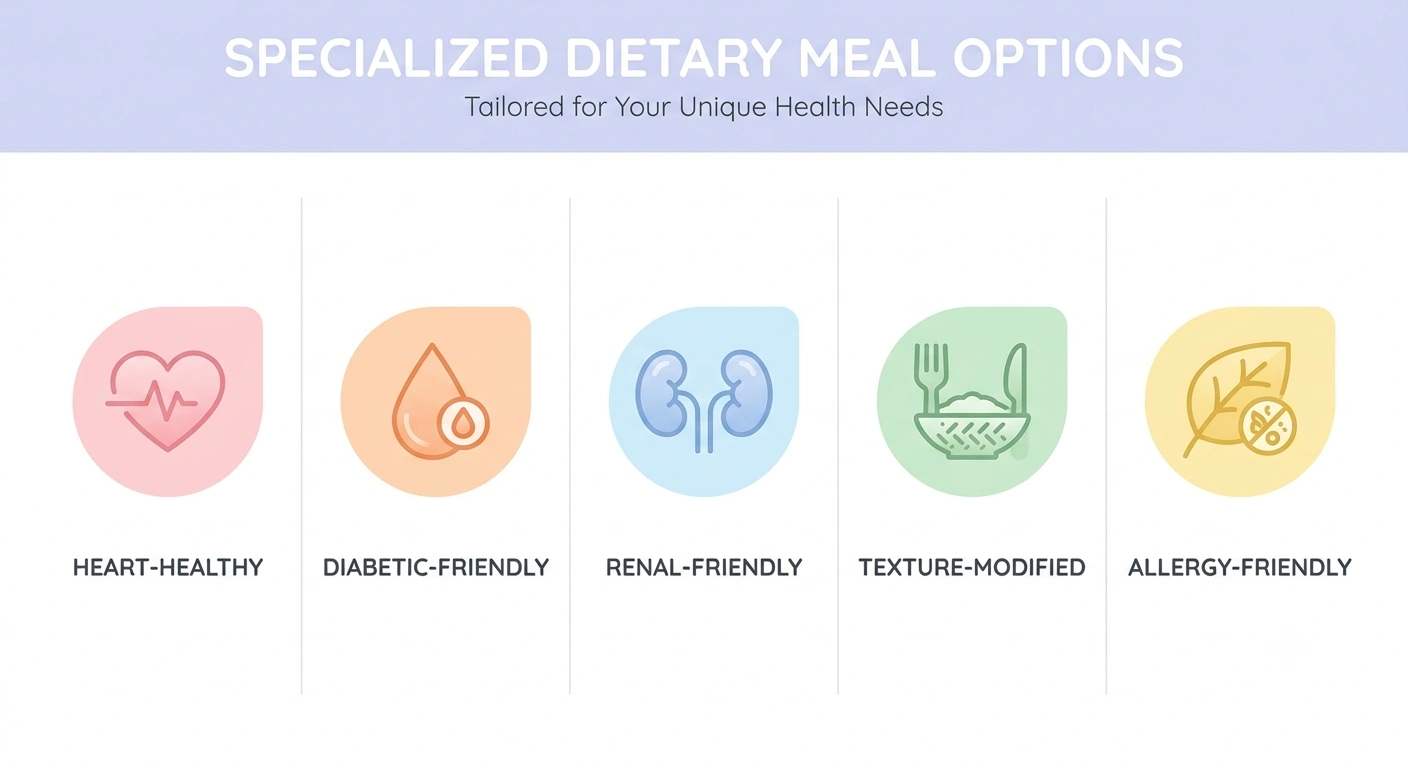
Heart-Healthy and Low-Sodium: Built for cardiovascular health, these meals typically cap sodium at 600–800mg per serving, well below a standard restaurant plate.
Diabetic-Friendly: Focused on blood sugar management through controlled carbohydrates and consistent portion timing, not just “sugar-free” labeling.
Renal and Kidney-Friendly: Manages potassium, phosphorus, and protein levels for people on dialysis or with reduced kidney function.
Texture-Modified: Pureed or soft-food options for people with swallowing difficulty, without sacrificing flavor the way hospital purees often do.
Allergy and Gluten-Free: Standard across most senior-focused providers now, though cross-contamination policies vary by company and are worth asking about directly.
If more than one condition applies at once, like diabetes and kidney disease together, look for a provider that lets a dietitian review the full picture rather than stacking two separate filters on a website.
Dietary preferences deserve the same respect as dietary restrictions. A senior who has eaten a certain way for eighty years isn’t going to suddenly love bland, one-size-fits-all health food just because a label says “senior-friendly.” The best providers ask about cultural background and personal taste, not just medical charts.
Pros and Cons of Meal Delivery for Seniors
Nobody selling these services will tell you the downsides, so here they are plainly.
Pros:
- Removes grocery shopping and stove time, cutting fall risk in the kitchen
- Supports aging in place by making daily nutrition manageable without help
- Portion control helps with weight management and chronic disease targets
- Many services adjust for dietary preferences without a phone call
Cons:
- Packaging waste adds up fast with weekly frozen shipments
- Some seniors dislike the taste or texture of reheated food long term
- Minimum order sizes can create a large freezer commitment before you know if someone likes it
- Delivery reliability drops in rural areas, and missed deliveries are stressful for someone living alone
Taste consistency is the complaint we hear most often from families. A meal that tastes fine on day one can feel repetitive by week three. Ordering a small trial pack before a full subscription solves most of this.
There’s also an emotional cost worth naming honestly. For some seniors, cooking was never a chore. It was a source of pride, a way of staying connected to a spouse who passed, or a daily routine that gave shape to the day. Replacing that with a delivered box can feel like losing something, even when it’s the safer choice. Acknowledging that loss, instead of brushing past it, tends to make the transition easier.
How to Choose the Right Senior Meal Delivery Service
Selecting the best food plan means balancing daily physical abilities with health mandates and real-world household budgets.
Evaluate Mobility and Packaging Ergonomics
Traditional food packaging can be surprisingly tricky for hands affected by arthritis or reduced grip strength. Pay close attention to how dishes are sealed. Look for easy-peel plastic films, lightweight trays, and clear, large-print heating labels.
Verify Health and Dietary Requirements
If managing cardiovascular health, kidney disease, or blood sugar levels, accurate nutrition labels are non-negotiable. Look for providers that let you filter menus by strict medical parameters, such as under 600mg of sodium per serving or controlled carbohydrate counts.
Review Shelf Life and Storage Space
Consider freezer and refrigerator storage capacity before committing to big shipments. Some services ship 14 chilled meals at once, which requires ample shelf space. If kitchen space is tight, look for flexible subscriptions that allow smaller weekly orders or dry, shelf-stable options.
What If a Senior Refuses Meal Delivery?
This comes up more than people expect, and it’s rarely about the food itself. Sometimes it’s pride, sometimes it’s a fear of losing independence, and sometimes the packaging just looks too clinical for someone who doesn’t see themselves as “a patient.”
Framing helps. Presenting it as a convenience rather than a medical necessity tends to land better. Letting the person choose their own meals from a menu, instead of having a caregiver order for them, also restores a sense of control that packaged food can otherwise strip away.
Finding Total Support for In-Home Living
Providing balanced meals is a huge step toward comfortable independent living, but daily nutrition is just one piece of the puzzle. Managing light housekeeping, personal mobility, hygiene care, and daily medication reminders can still prove challenging for aging loved ones and family caregivers alike.
When kitchen prep, meal preparation for seniors, and daily household chores become overwhelming, having a friendly, professional hand at home makes all the difference. Combining reliable senior meal delivery with compassionate non-medical care allows your loved one to enjoy their home safely and comfortably.
If you are looking for dedicated assistance tailored to your family’s routine, explore how personalized g home care services in Denver can support your loved one’s independence while giving you total peace of mind.
Final Thoughts
Meal delivery for seniors isn’t a single decision. It’s a series of small ones, starting with what someone can physically manage and ending with whether they’ll actually eat what shows up at the door. Start with a trial order, ask hard questions about insurance coverage before assuming there’s none, and revisit the choice every few months as needs change. If you’d rather talk through options for a specific situation, contact us at Castle Pines Home Care and we’ll help you figure out what actually fits.
Frequently Asked Questions
How much do meal delivery services for seniors cost per month?
Most services run $200 to $400 per month for two meals a day, depending on the provider and dietary complexity. Medically tailored plans tend to sit at the higher end because of the dietitian oversight involved.
Can I order meal delivery for a parent who lives in a different state?
Yes. Most national providers, including Mom’s Meals and Magic Kitchen, let a family member manage the account, delivery schedule, and payment remotely while the meals ship directly to the senior’s address.
What happens if no one is home for delivery?
Frozen and chilled meal services typically leave insulated packaging at the door, since most drivers don’t require a signature. Community programs like Meals on Wheels usually require someone to be present, since the visit doubles as a wellness check.
Are home delivered meals for seniors as nutritious as home-cooked food?
Reputable providers meet or exceed standard nutrition guidelines, often with more precise sodium and portion control than a typical home-cooked meal. The tradeoff is variety and freshness compared to same-day cooking.
Is home meal delivery for seniors covered by Medicaid?
Some state Medicaid waiver programs cover home-delivered meals for eligible low-income seniors, particularly those at risk of hospitalization or nursing home placement. Coverage rules differ by state, so checking with a local Area Agency on Aging is the fastest path to an answer.