
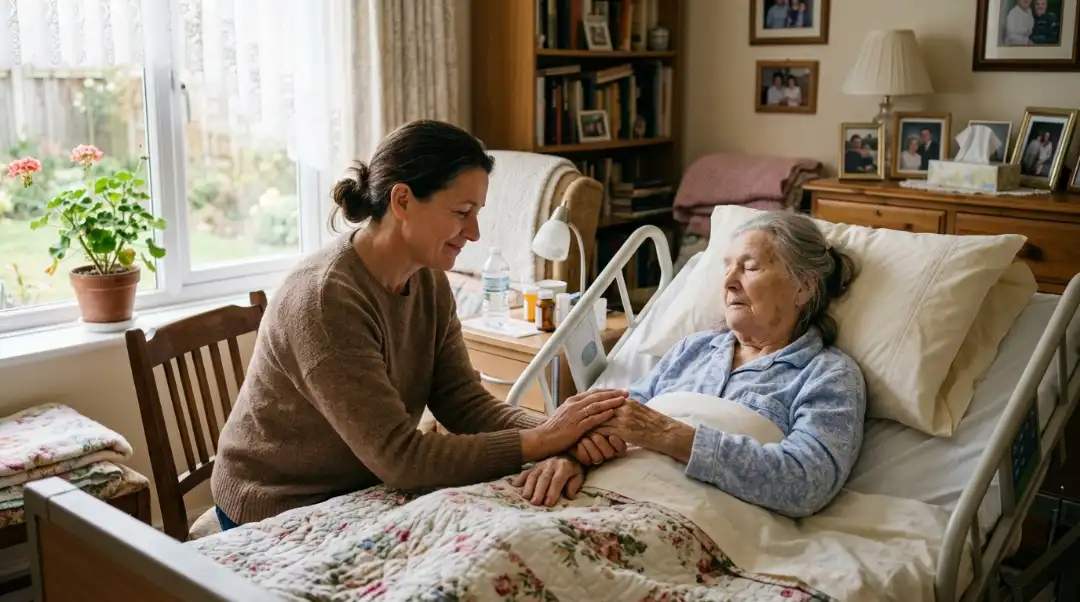
Caring for a bedridden elderly loved one at home is a challenge, but well-organized daily care will guarantee your family member’s safety and comfort. Gentle movement and regular feeding, together with attention to skin health and hygiene, helps minimize common consequences such as pressure sores and maintain their dignity.
If you are wondering how to take care of bedridden elderly at home, the most effective way is to establish a structured daily routine that includes repositioning every two hours, thorough hygiene care, safe handling, and proper nutrition.
What Does “Bedridden” Mean?
Bedridden means a person is confined to bed for most of the day because they cannot safely or independently move. This is often because of illness, injury, extreme frailty or a condition that has sapped their strength or coordination. It’s not like being tired for a day, or taking a break after a bad night. It’s part of the daily reality which structures how care is delivered.
Most conversations use the bed bound meaning interchangeably with bedridden but there’s a subtle difference I’ll cover in a minute. What is important at this time is this: If your loved one needs help with just about everything, washing, eating, using the restroom, you’re caring for a bedridden patient and that affects the whole care scenario.
Understanding Bedbound Care: Definition & Expectations
Bedbound care is the act of taking care of all physical, personal and emotional requirements from the bed itself. Caring for a loved member who is bed bound involves close attention to ordinary duties to prevent difficulties before they occur.
Home care of bedridden patients includes care of their daily hygiene, meals, hydration and physical adjustments. You will also have a duty to maintain their bedroom environment clean, brightly lit and well ventilated.
You should expect to do some physical caregiving activities, along with lots of emotional assistance. Lying in bed for long periods can make you feel lonely or frustrated. Normal conversation, familiar music and visits from relatives can assist keep your loved one’s mental health in shape.
Bedbound vs. Bedridden: Is There a Real Difference?
Bedbound usually means someone can still shift positions or sit up with help, while bedridden often means almost no independent movement at all. In practice, most caregivers and even some clinicians use the two terms the same way. The distinction matters mostly when you’re talking to a doctor about the level of assistance needed.
| Term | Mobility Level | Typical Care Needs |
| Bedbound | Some assisted movement possible | Daily support, occasional independence |
| Bedridden | Minimal to no mobility | Full-time hands-on care |
| Bedfast | Older clinical term, similar to bedridden | Full supportive care |
Knowing the difference between bedbound and bedridden helps you describe your loved one’s condition accurately when you’re talking to a home health nurse or physical therapist. Accurate language gets you the right kind of help faster.
Common Causes of Being Bedridden in Elderly Adults
Most seniors don’t become bedridden overnight. It’s usually the result of a stroke, advanced dementia, Parkinson’s disease, a hip fracture, or a chronic illness like heart failure or COPD that’s progressed. Some cases are temporary, following surgery or a hospital stay. Others are long-term and tied to a condition that isn’t going to reverse.
Knowing the cause matters because it shapes the care plan. A patient recovering from hip surgery needs a very different approach than someone with late-stage Parkinson’s. Ask the doctor directly what the expected trajectory looks like. It’s not a fun conversation, but it saves you from guessing.
Essential Daily Care Checklist for Bedridden Elderly
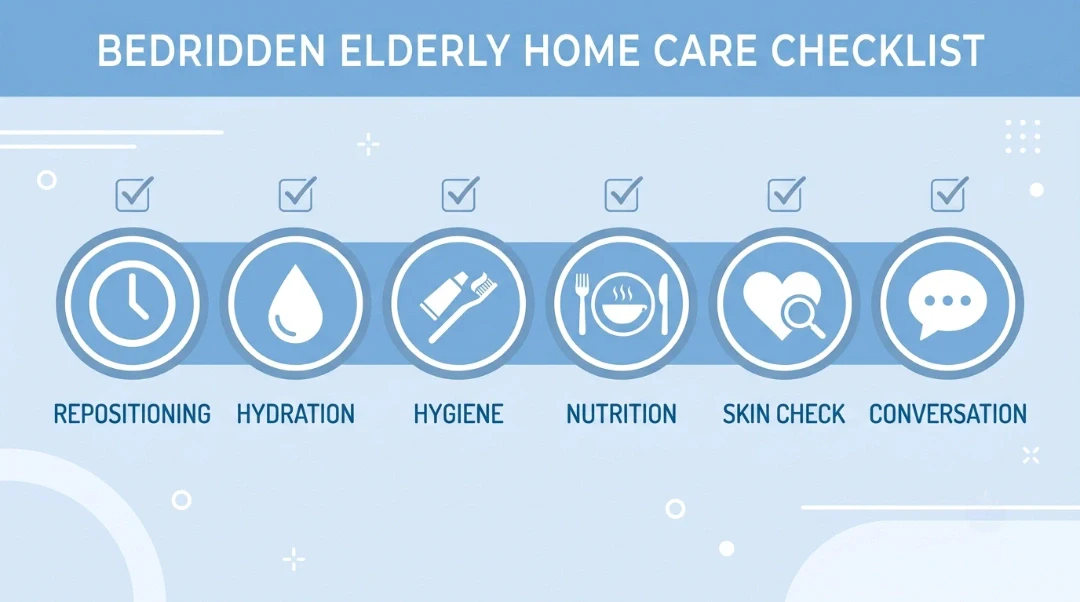
Keeping a daily schedule keeps your caregiving efforts organized and ensures no critical health checks get skipped.
Morning Care
- Conduct a full body skin inspection during the initial morning check.
- Provide a complete sponge bath, perineal cleaning, and fresh clothing.
- Perform oral hygiene care using a soft toothbrush or swabs.
- Gently turn the person and smooth out all bed sheet wrinkles.
- Serve a high-protein breakfast and track total fluid intake.
Afternoon Care
- Continue repositioning every two hours to relieve pressure points.
- Offer water, juices, or broth to support hydration.
- Carry out passive range-of-motion exercises for the arms and legs.
- Assist with toileting or change adult underpads promptly after use.
- Provide mental stimulation through reading, television, or quiet conversation.
Evening & Night Care
- Perform evening oral hygiene and clean hands and face.
- Apply moisture control barrier cream to high-risk skin areas.
- Change bed linens if they are damp or soiled.
- Set up extra pillow support for overnight comfort.
- Check room lighting and ensure a call bell or chime is within reach.
Preventing Complications: Skin Care & Bedsores
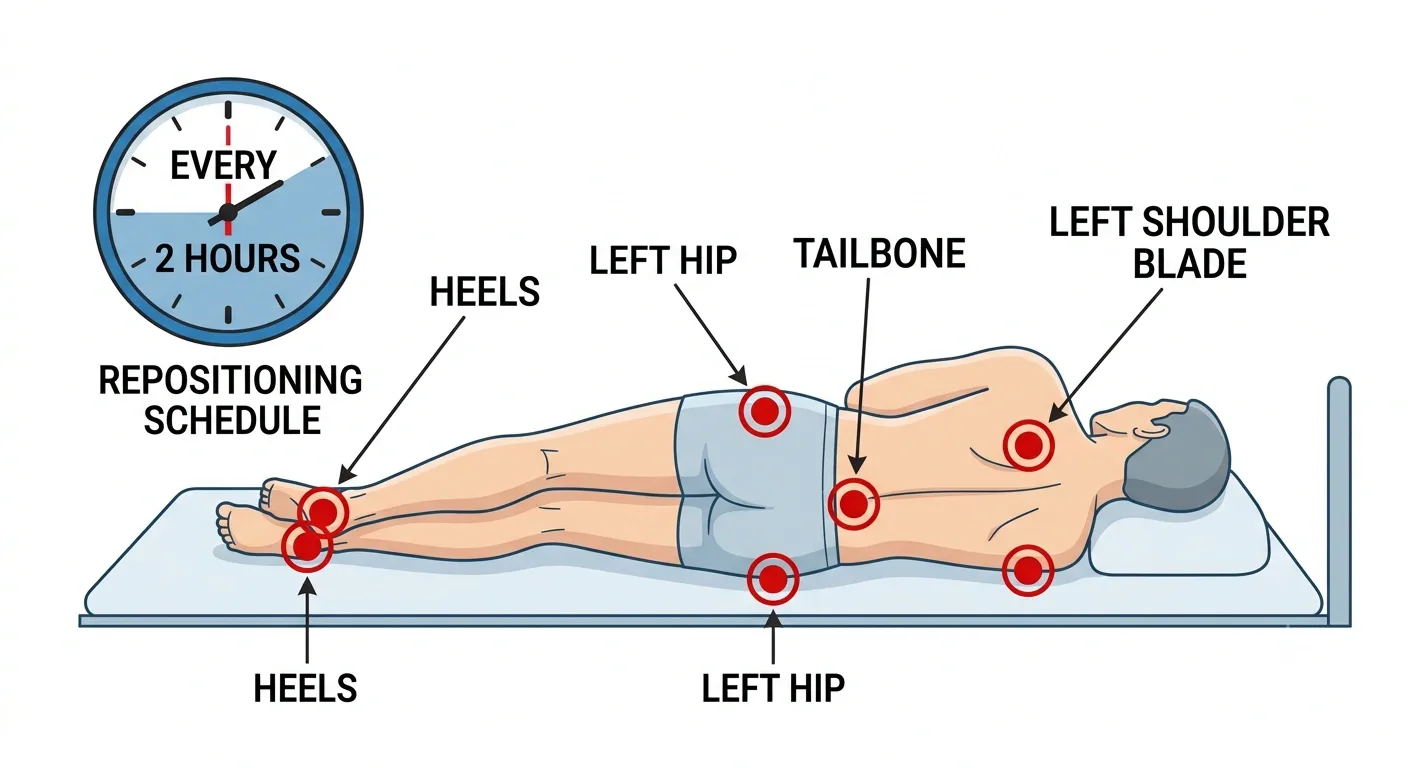
The best way to prevent bedsores is repositioning every two hours combined with daily skin inspection at pressure points. Pressure sores form when skin sits under sustained weight, usually at the heels, hips, tailbone, and shoulder blades. Once the skin breaks down, healing takes weeks and sometimes requires wound care from a nurse. Prevention is genuinely easier than treatment here.
Pressure reduction beds and heel protectors help but are no substitute for a hands-on turning regimen. Moisture control is important too. Skin that is moist from sweat or incontinence is more likely to break down than dry skin. Keep linens clean, change as soon as soiled, and apply moisturizer to areasprone to dryness.
According to the Mayo Clinic, the three main drivers of skin degradation in bedridden individuals are prolonged pressure, friction and dampness. Look for redness that persists as you move, as well as warmth or swelling. catching these early usually prevents a sore from
6 Tips for Caring for a Bedridden Family Member
Managing home care for bedridden patients requires a systematic approach to balance safety with personal dignity.
1. Master Safe Turning Techniques
Never pull a patient by their arms or legs when moving them, as friction can tear fragile skin. Use a thick draw sheet placed under their torso to turn or slide them smoothly. Keep your knees bent and hold the sheet close to your body to protect your back from strain.
2. Follow a Strict Hygiene Routine
Provide a daily sponge bath to keep skin clean without soaking the bed. Clean sensitive areas carefully from cleanest to dirtiest. Wash hair using no-rinse shampoo caps or portable basins to avoid unnecessary movement.
3. Maintain Oral Care
Oral health directly impacts overall health. Poor oral hygiene in bedridden adults can allow bacteria to enter the lungs, raising the risk of aspiration pneumonia. Brush their teeth twice daily or use dental sponges if they cannot tolerate a standard brush.
4. Practice Safe Feeding Practices
Always raise the head of the bed to a 45 to 90-degree angle during meals and keep them upright for 30 minutes afterward. This position prevents choking and stops food or liquids from entering the airway. Offer small, manageable bites and consider thickened liquids if swallowing is difficult.
5. Create a Comforting Bedroom Environment
Keep the room bright with natural sunlight during the day and lower the lights in the evening to maintain a natural sleep-wake cycle. Use a humidifier to prevent dry skin and keep breathable, soft cotton linens on the bed.
6. Prevent Caregiver Burnout
Caring for a bed bound loved one is physically and emotionally demanding. Share responsibilities with family members or arrange for professional respite care to take regular breaks and protect your own health.
Daily In-Bed Exercises & Mobility Preservation
Simple in-bed exercises like ankle circles, arm lifts, and assisted leg movement help preserve mobility and circulation in bedridden patients. These aren’t workouts. They’re small, repeated motions that keep joints from stiffening and blood from pooling. Five to ten minutes, two or three times a day, makes a real difference over weeks.
If your loved one had a stroke or has a condition affecting one side of the body more than the other, check with their doctor before starting any movement routine. Some conditions need a physical therapist’s guidance rather than a general exercise list. When in doubt, ask first and move second.
Equipment That Makes Home Care Easier
A hospital bed with adjustable height and head positioning changes the whole caregiving experience. Add a pressure-relief mattress, a slide sheet for repositioning, and bed rails for safety, and you’ve covered most of the physical strain that wears caregivers down. A bed alarm can also alert you if a confused or agitated patient tries to get up unsupervised.
None of this equipment is glamorous. It’s practical, and it’s the difference between a caregiver who lasts and one who burns out in three months.
When to Consider Professional Home Care
There’s a point where round-the-clock hands-on care becomes more than one person can safely handle, and that’s not a failure on your part. It’s simply the reality of physical limits. If transfers feel unsafe, if skin breakdown keeps happening despite your best efforts, or if you’re not sleeping, it’s worth bringing in outside support.
For families in Colorado looking into home care services in Denver, Castle Pines Home Care works directly with families managing bedridden loved ones, offering hands-on help with hygiene, mobility, and daily routines so you’re not doing this entirely alone.
Final Thoughts
Caring for a bedridden family member at home is hard, and it’s also one of the most meaningful things you’ll ever do for someone you love. Build your routine around repositioning, hygiene, nutrition, and connection, and you’ll avoid most of the serious complications that scare families early on. You don’t need to have this perfected on day one. Contact us if you’d like a hand figuring out what your loved one actually needs.
Frequently Asked Questions
How often should a bedridden patient be repositioned?
Most bedridden patients should be repositioned every two hours to prevent pressure sores. This timing isn’t arbitrary. It’s based on how long skin can handle sustained pressure before blood flow gets cut off enough to cause damage. Some patients with fragile skin or existing sores may need repositioning even more often, so check with their doctor if you notice any redness that isn’t fading between turns.
Can a bedridden person regain mobility over time?
Yes, some bedridden patients regain partial or full mobility, depending on the cause and how early rehabilitation starts. Patients recovering from surgery or a short illness often improve with physical therapy and consistent movement. Long-term conditions like advanced Parkinson’s or late-stage dementia usually don’t reverse, though gentle exercise still helps with comfort and circulation either way.
What are the biggest risks of caring for a bedridden elderly person at home?
The biggest risks include pressure sores, infections, dehydration, and blood clots from prolonged immobility. Falls during transfers are another real danger, especially if you’re lifting alone without the right equipment. Staying on top of repositioning, hydration, and skin checks cuts down most of these risks significantly, and catching early warning signs matters more than reacting after something’s already gone wrong.
How do you bathe a bedridden person who can’t get out of bed?
A sponge bath using warm water, mild soap, and a basin is the standard way to bathe a bedridden person in bed. Work in sections, keeping the parts you’re not washing covered so they stay warm. Pay extra attention to skin folds, the perineal area, and anywhere moisture tends to collect, since these spots are more prone to irritation and infection if they’re not dried thoroughly.
When should a family consider hiring professional home care for a bedridden loved one?
Families should consider professional home care when transfers become unsafe, skin breakdown keeps happening, or the primary caregiver is exhausted. Burnout doesn’t mean you’ve failed. It means the physical demands have outgrown what one person can safely manage. Bringing in outside help, even part-time, often extends how long a loved one can stay at home comfortably instead of moving to a facility.