

Finding reliable assistance for an aging parent or loved one feels overwhelming when you do not know where to start. Navigating the home care landscape often leaves families feeling confused by unfamiliar terms, varying levels of support, and unpredictable costs.
Understanding what is elder care helps you make confident, informed decisions about in-home support, safety, and long-term well-being for your family. This guide breaks down how senior care works, what it costs, and how to choose the right services for your needs.
Understanding the Process of Eldercare
There is no schedule for growing old. Some people stay sharp and solid into their eighties. Some people need help with the basics in their early seventies. That’s why the care each family gives to the older adult is not the same.
Fundamentally, eldercare is the services and support that aid seniors with what specialists refer to as activities of daily living, or ADLs. These include bathing, dressing, eating, using the bathroom and moving around safely. When someone begins to struggle with two or more of these, that’s usually where families start to ask what is elder care supposed to look like day to day, and what is caring for the elderly meant to cover in practice.
Care may be provided by a relative, a hired aide or a registered nurse. It might happen at home or in a facility built for the purpose. Memory loss frequently alters the view as well. Sometimes you need a little push. Someone who forgets to take a medicine now and then. If somebody leaves the stove on for hours, they need someone who pays better attention. The degree of care always matches the level of need, not the other way around.
Who Needs Elder Care?
Older adults need elder care when physical limitations, cognitive decline, or chronic health conditions prevent them from safely managing daily tasks independently. It is also essential for family caregivers who require professional relief to prevent burnout while supporting an aging relative.
Look for these key indicators that signal it may be time to introduce support services:
-
Frequent slip-and-fall incidents, unsteadiness, or difficulty walking safely.
-
Unintended weight loss, poor nutrition, or forgotten daily meals.
-
Difficulty managing medication schedules or missing essential prescriptions.
-
Neglected household chores, unwashed laundry, or unpaid bills accumulating.
-
Decline in personal hygiene, such as avoiding bathing or dressing.
-
Social isolation, mood changes, or signs of memory loss and confusion.
Signs a Loved One May Need Elder Care
A few warning signs tend to show up before a family reaches out for help. Watch for these:
- Unexplained weight loss or spoiled food left in the fridge
- Missed medications or duplicate doses
- Bruises, falls, or a fear of falling
- Unpaid bills or missed appointments
- A house that’s noticeably messier than it used to be
- Wandering, confusion, or repeating the same question
One or two of these might just be a bad week. A pattern is a different story. That pattern is usually the signal to start looking into home care or a care assessment.
What Does Eldercare Cost?
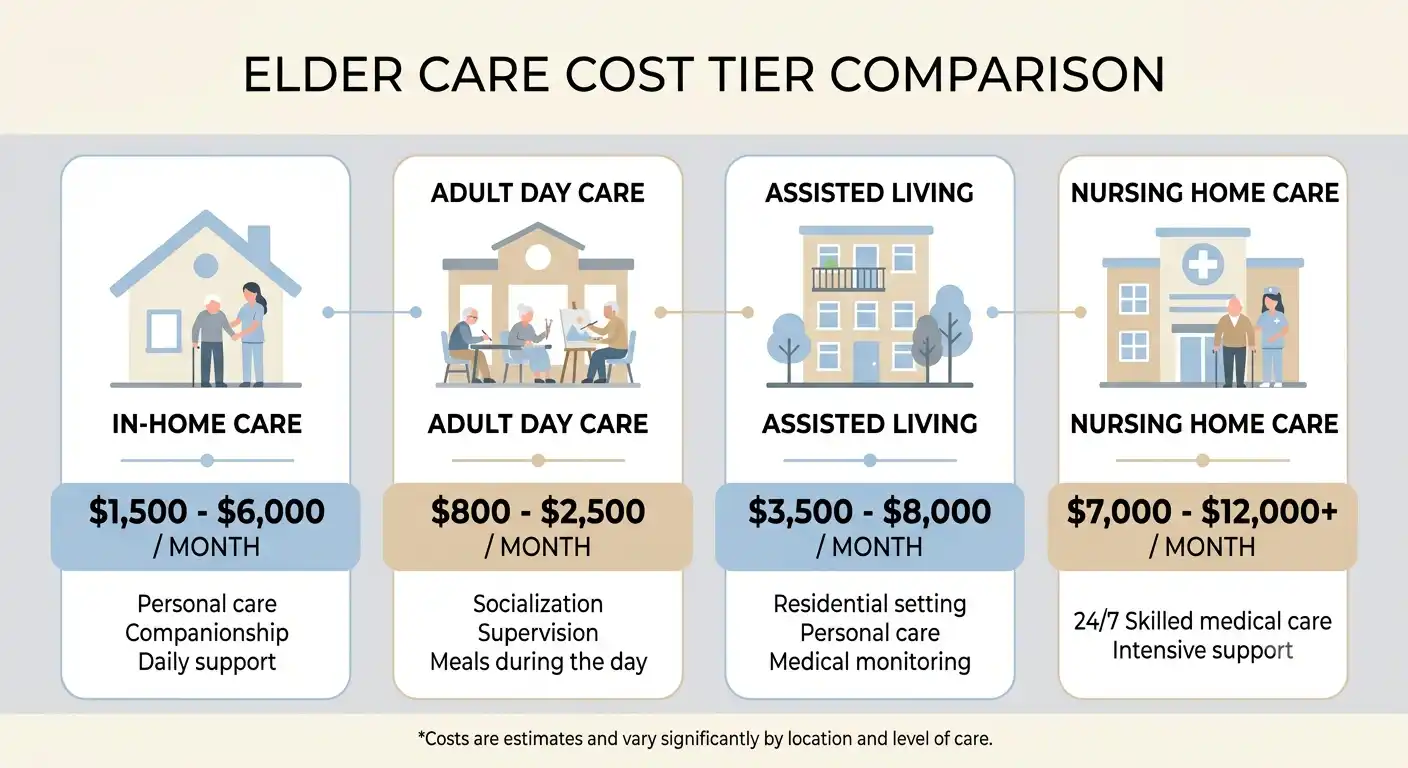
Elder care costs range from $25 to $35 per hour for non-medical home care, while specialized nursing facilities can exceed $8,000 per month. Overall expenses depend heavily on the required level of care, location, and total hours of support needed each week.
Budgeting effectively requires understanding how different services bill their clients:
| Care Type | Average Hourly Rate | Average Monthly Cost |
| In-Home Companion Care | $25 – $32 / hour | $2,000 – $4,500 |
| In-Home Personal Care | $28 – $35 / hour | $3,000 – $5,500 |
| Assisted Living Community | N/A | $4,500 – $6,000 |
| Nursing Home (Private Room) | N/A | $8,500 – $10,000 |
Insurance Coverage for Eldercare
Standard health insurance and traditional Medicare do not cover non-medical elder care, leaving families to pay out-of-pocket unless they hold long-term care insurance policies. Medicaid provides coverage for personal care services, but eligibility depends strictly on state income limits and demonstrated care needs.
Navigating financial coverage requires reviewing specific policy details early:
-
Medicare: Pays only for short-term, medically necessary home health visits prescribed by a physician following an illness or hospital stay.
-
Medicaid: Covers non-clinical personal support through state-specific home care waiver programs for low-income seniors.
-
Long-Term Care Insurance: Covers non-medical personal assistance, companion care, and memory care once a policyholder meets eligibility criteria.
-
Veterans Benefits: Programs like Aid and Attendance offer monthly pension supplements to help wartime veterans pay for home care.
Legal Planning Worth Doing Early
Early legal planning secures an older adult’s medical choices, assets, and care preferences before cognitive or physical decline limits their decision-making capacity. Establishing essential legal documents ensures family members can manage finances and healthcare decisions smoothly when support becomes necessary.
Prioritize establishing these legal tools as early as possible:
-
Financial Power of Attorney: Designates a trusted person to manage bank accounts, pay bills, and handle property decisions.
-
Healthcare Power of Attorney: Appoints a proxy to make medical decisions if the senior becomes unable to speak for themselves.
-
Living Will: Outlines specific preferences regarding life-sustaining medical treatments, resuscitation, and end-of-life interventions.
-
Revocable Living Trust or Will: Directs how assets, real estate, and personal belongings should be managed and distributed.
Types of Elder Care Services
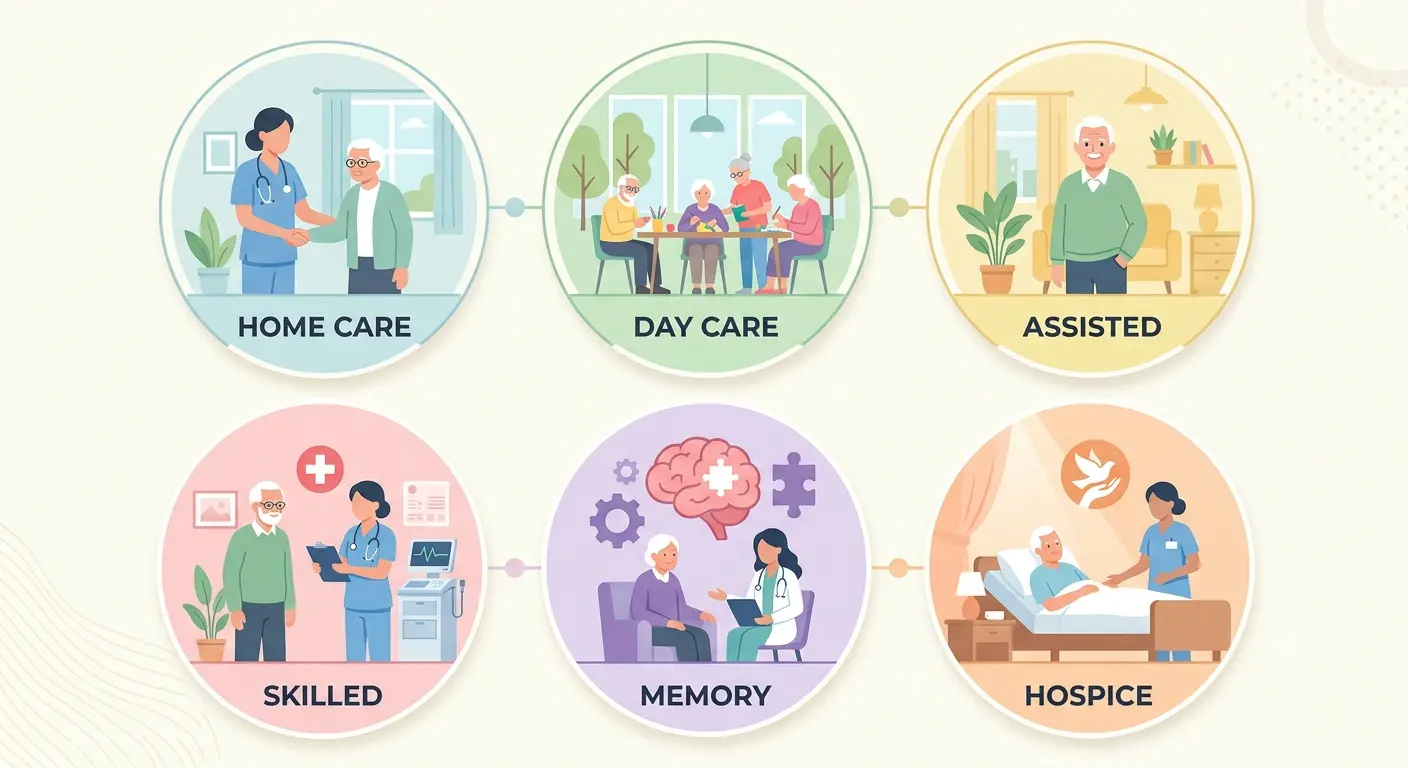
To find the right fit, you must understand the distinct types of care available today. Every option serves a specific level of need and fits a different family budget. You don’t have to jump straight to a full residential facility if small adjustments at home can solve the current safety issues.
In-Home Care Support
This option allows your relative to maintain their familiar routine while getting regular assistance. It focuses heavily on helping seniors age in place safely without leaving their neighborhood. The services split into non-medical help and skilled medical care. Non-medical workers handle cooking, light cleaning, and driving to the local grocery store.
Skilled home health care involves licensed nurses or physical therapists visiting the property. They handle wound care, manage complex IV medications, and run physical rehab sessions. This setup provides a safe middle ground for seniors recovering from major hospital stays.
Adult Day Health Services
If you work during the day, adult day care centers offer a safe place for your parent. These facilities operate during standard business hours and provide meals, social activities, and basic medical monitoring. It keeps seniors active while giving family caregivers a needed break to hold down a job. It’s one of the most affordable ways to get professional supervision without moving a parent out of their home.
Respite Care Programs
This service is built specifically to protect the health of the primary family caregiver. It provides short-term relief by bringing a professional into the home for a few days, or by placing the senior in a facility for a weekend. Using this option prevents caregiver burnout and ensures your relative stays safe while you rest or handle personal business.
Memory Care Facilities
When dealing with advanced dementia care, standard home care or basic assisted living is rarely enough. Specialized memory care units offer secure environments built to prevent wandering. The staff receives specific training to handle the behavioral changes and confusion tied to Alzheimer’s. The physical layouts use simple designs to minimize anxiety for the residents.
Residential Skilled Care
A traditional skilled nursing facility provides the highest level of daily medical oversight available. These spaces operate exactly like long-term medical wards, with registered nurses on duty around the clock. They’re built for seniors bedridden by chronic illnesses or those needing intense physical rehabilitation.
Elder Care Benefits for Families and Seniors
Good elder care does more than fill a gap. It reduces the odds of a fall or missed medication, it gives seniors a chance for real social contact instead of isolation, and it takes pressure off family members who were trying to do it all alone. Adults with disabilities and chronic conditions see similar gains when the right support is in place early rather than after a crisis.
There’s also a financial upside families rarely think about. Planned care, chosen calmly, almost always costs less than a rushed decision made after a hospital discharge or an emergency. A little planning goes a long way here.
How to Choose the Right Elder Care Option
Choosing the right elder care option requires assessing your loved one’s health needs, financial budget, safety risks, and personal living preferences. Evaluating these factors ensures you select a care provider capable of supporting long-term physical and emotional health.
Follow this step-by-step checklist when selecting a provider:
-
Assess Care Needs: List daily activities where your relative requires assistance, such as bathing, meals, or mobility support.
-
Determine Budget: Calculate monthly funds available from retirement income, long-term care insurance, or savings.
-
Research Licensed Agencies: Verify that care agencies are properly licensed, bonded, and insured in your state.
-
Ask Critical Questions: Inquire about caregiver background checks, specialized training, replacement policies, and emergency protocols.
-
Request an Assessment: Schedule an in-home evaluation to discuss care goals directly with a professional coordinator.
Finding Elder Care Close to Home
Every family’s situation looks a little different, and the right fit usually comes down to a real conversation about daily needs, budget, and what your loved one actually wants. If you’re looking into home care services in Denver, a local conversation beats a generic checklist every time, since state rules, staff availability, and local costs all change the picture from one city to the next.
Final Thoughts
So, what is elder care, really? It’s a wide range of support, from a few hours of help each week to full-time nursing care, and the right choice depends entirely on the person needing it. Start with an honest assessment, check what insurance and benefits actually cover, and don’t wait for a crisis to make the call. If you’d like help figuring out what fits your family, Castle Pines Home Care is happy to talk it through. Contact us whenever you’re ready.
Frequently Asked Questions
What is the eldercare meaning in simple terms?
The eldercare meaning refers to a wide range of support services built to help older adults live safely and maintain their independence when physical or mental health challenges make daily tasks difficult.
What is caring for the elderly on a daily basis?
Caring for the elderly involves assisting with personal hygiene, managing daily medications, preparing nutritious meals, providing safe transportation, and offering consistent social companionship to prevent isolation.
How do you define elder care versus standard home health?
To define elder care properly, look at the overall scope of help. Elder care includes both non-medical personal help and social support, while home health focuses strictly on short-term medical treatments ordered directly by a doctor.
What are the primary elder care benefits for a family?
The core elder care benefits include improved daily safety for the senior, professional health monitoring, reduced risks of dangerous household falls, and essential emotional relief for the primary family caregivers.
What is aged care in the broader healthcare industry?
The term what is aged care describes the global system of public and private services, residential communities, and financial assistance programs designed specifically to meet the unique needs of the aging population.