
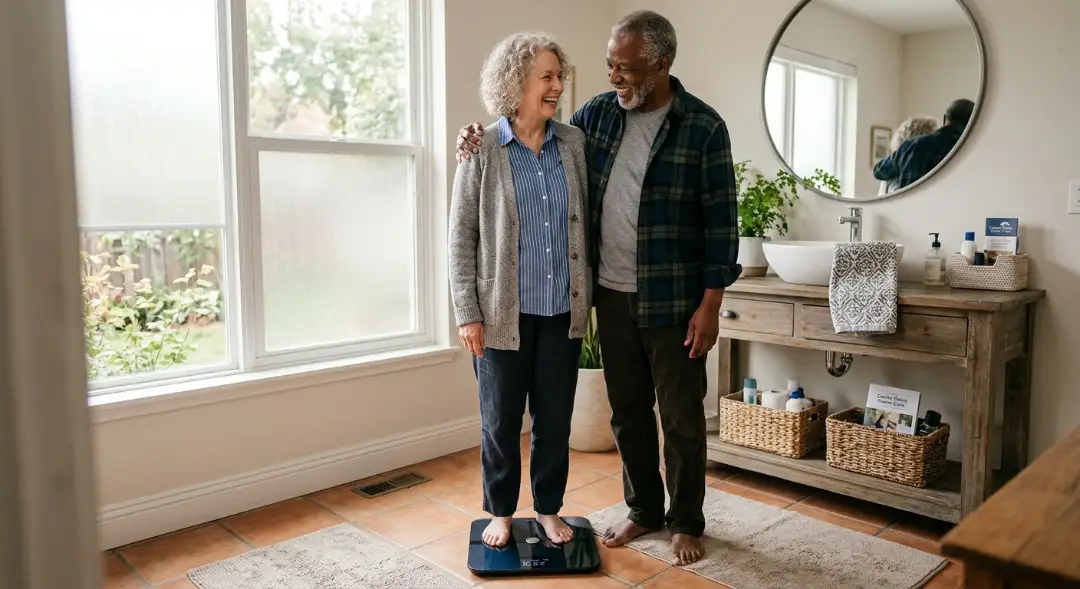
If you’ve been looking at a bathroom scale and wondered what that number really means for an older body, you are not alone. When you’re in your sixties or seventies, weight alone doesn’t tell the whole story and a lot of advice on the internet is designed for twenty-five-year-old gym-goers, not for the person you’re actually trying to help. We understand and we’re going to remedy it here.
Short answer on how do you determine body fat for senior health? Use a mix of easy instruments you have at home (such as a tape measure or smart scale) and a professional method (such as a DEXA scan or skinfold calipers done by someone who knows what they’re doing) for the clearest image. No one tool gives you the complete picture, especially in older folks, so this guide explains each alternative, how much it costs, what it can do well, and what it can’t do so well.
Why Body Fat Matters More (and Differently) as You Age
As you age, body fat becomes more important. Muscle naturally diminishes and fat often stays the same or increases even if the number on the scale doesn’t shift. It impairs the body’s processing of blood sugar and balancing and healing from disease. A senior may appear “average weight” on paper but yet have a percentage of fat that increases health concerns.
This is the trap with BMI . It merely looks at height and weight and cannot distinguish between muscle and fat. A 72-year-old woman who’s lost muscle over the course of 10 years may have the exact same BMI she had at 50, while her actual body fat percentage has added several points. This is called “normal weight obesity” by doctors and it’s more frequent than most people believe.
Muscle loss with age is called sarcopenia. Research suggests that about 10 to 20 percent of persons over 60 living in the community are affected by sarcopenia, and the prevalence jumps significantly once someone turns 80 or enters a hospital or care environment. Less muscle equals a slower metabolism, so the same amount of food you eat becomes more stored fat than it did twenty years ago.
But there is another dimension to the story. Where the fat is counts as much as how much fat there is. Even non-obese people tend to develop more visceral fat, the fat that engulfs organs in the belly, as they age. It is associated to heart disease, type 2 diabetes and inflammation. So if someone asks how do you estimate body fat for senior wellness tracking, the honest answer includes location, not just one percentage.
Healthy Body Fat Percentage Ranges for Seniors
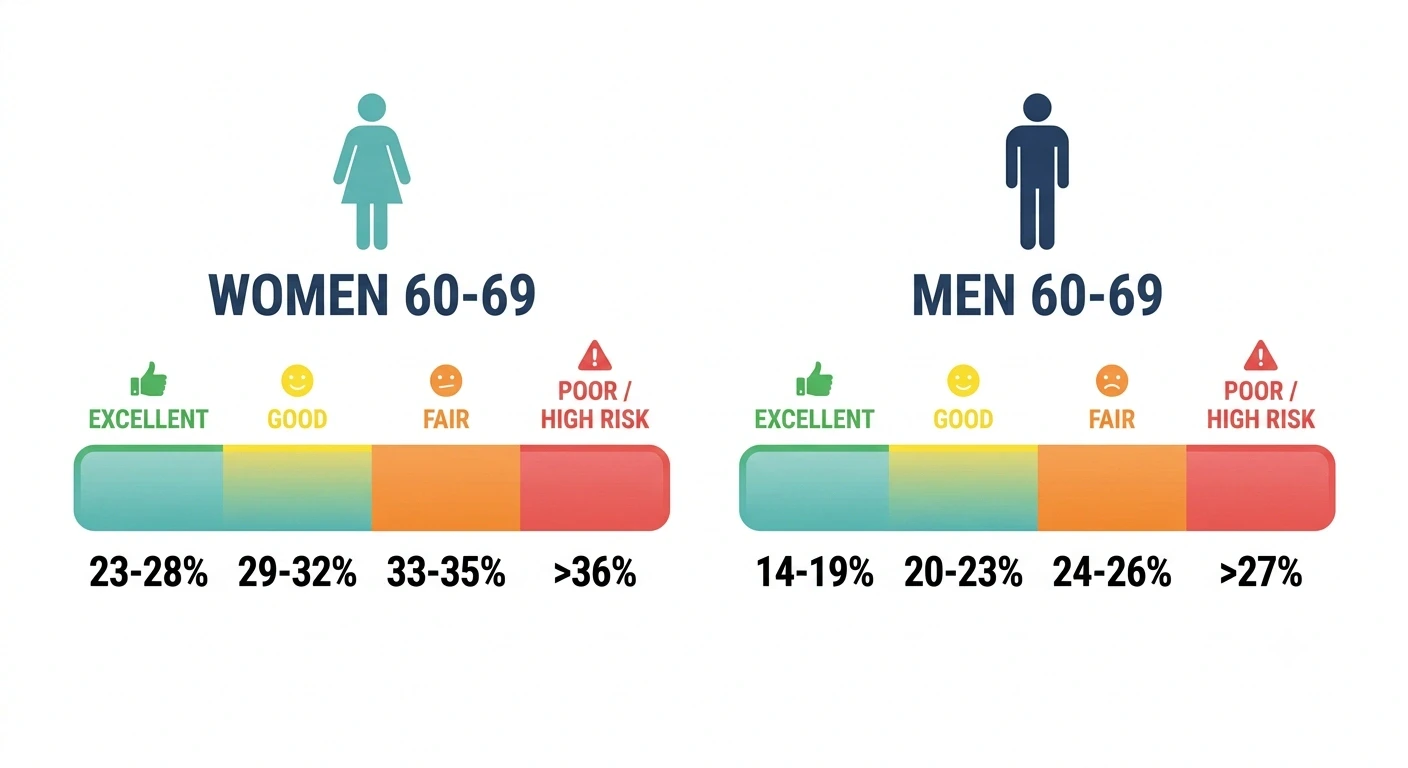
The ideal body fat percentage for seniors is generally 22% to 33% for women and 15% to 26% for men, which is slightly higher than the recommended ranges for younger adults.
This slightly higher range acts as an essential physical reserve. It provides insulation, protects joints during slips, and offers energy reserves during times of illness.
The table below outlines healthy body fat ranges specifically tailored for older adults (ages 60 and older).
| Category | Women (Ages 60+) | Men (Ages 60+) | What This Means for Your Health |
| Low / Essential | Under 18% | Under 10% | Too low; increases risks for osteoporosis and bone fractures. |
| Healthy Range | 22% to 33% | 15% to 26% | Optimal balance for energy reserves, joint protection, and muscle retention. |
| High | 34% to 38% | 27% to 30% | Moderate risk; watch for physical fatigue and mobility changes. |
| Dangerously High | Over 39% | Over 31% | Elevated risk for diabetes, joint wear, and cardiovascular strain. |
These figures differ from standard charts because older bodies require a buffer. Carrying a little extra body fat can be protective, as long as it isn’t paired with severe muscle loss.
Methods to Measure Body Fat: What’s Safe and Practical for Seniors
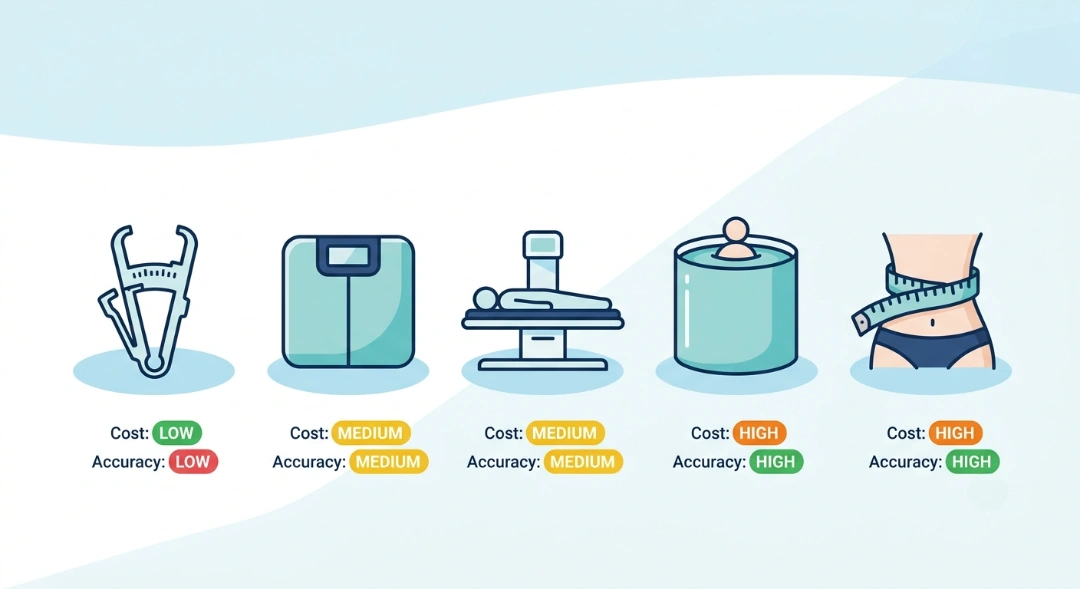
Cost and accuracy comparison of five body fat measurement methods, from skinfold calipers to DEXA scans and waist circumference.
The safest and most practical methods for measuring body fat in seniors are skinfold calipers done by a trained professional, bioelectrical impedance scales, and DEXA scans, depending on mobility and budget. Each one has trade-offs worth knowing before picking one.
Skinfold Calipers
A trained person pinches skin at a few spots (typically the triceps, waist, and thigh) and uses a formula to estimate fat percentage. It’s inexpensive and quick. The catch: accuracy depends heavily on the skill of the person doing it, and skin elasticity changes with age, which can throw off readings if the person taking measurements isn’t experienced with older bodies.
Bioelectrical Impedance (Smart Scales)
These send a mild electrical signal through the body and estimate fat based on how fast it travels through tissue. They’re widely available and easy to use at home. However, hydration status swings the results, and seniors often deal with fluctuating fluid levels due to medication or reduced thirst sensation. A scale reading taken in the morning versus evening can differ by several points for this reason alone.
DEXA Scan
This is the gold standard for accuracy and also measures bone density, which is useful given how common osteoporosis is in this age group. The downside is cost and access. It usually requires an appointment at an imaging center or hospital and isn’t something most people do more than once or twice a year.
Hydrostatic Weighing and Bod Pod
Both are highly accurate but require full submersion in water or sitting in a sealed chamber. Neither is practical for someone with limited mobility, balance concerns, or claustrophobia, so most seniors skip these options entirely.
Waist Circumference
A tape measure around the belly button provides a rough idea of visceral fat with no equipment expenditure. A waist more than 35 inches for women or 40 inches for males is wildly considered a danger indication no matter what your overall body fat percentage is. It’s not a substitute for a thorough measurement, but it’s a handy early sanity check.
So when someone asks how do you quantify body fat for senior use at home, the honest starting point is usually a tape measure and a bioelectrical scale, with a caliper or DEXA reading added occasionally through a doctor’s office for a more accurate baseline.
Another thing worth mentioning is that often cost determines whatever approach a family actually ends up using, not accuracy alone. A bioelectrical scale costs anywhere between $30 and $100 and works from home forever. A DEXA scan at an imaging center costs 100 to 400 dollars each session, and insurance rarely covers it unless it’s done in relation to a bone density issue. Knowing this ahead of time saves a lot of back and forth with a doctor’s office later on.
How to Calculate BMI (Step-by-Step)
BMI is calculated by dividing weight in pounds by height in inches squared, then multiplying by 703. It’s not a body fat measurement, but doctors still use it as a quick screening tool alongside other methods.
Here’s the process:
- Take your weight in pounds.
- Take your height in inches and multiply it by itself.
- Divide your weight by that number.
- Multiply the result by 703.
For example, someone who weighs 160 pounds and is 65 inches tall would calculate: 160 divided by (65 x 65 = 4,225), which equals 0.0379. Multiply that by 703, and the BMI comes out to about 26.6, which falls in the “overweight” category.
The categories break down like this:
- Below 18.5: underweight
- 18.5 to 24.9: normal weight
- 25 to 29.9: overweight
- 30 and above: obesity
Keep in mind BMI doesn’t separate muscle from fat, so a senior who’s lost muscle mass but kept the same weight might show a “normal” BMI while actually carrying more fat than the number suggests. This is exactly why BMI works best as one piece of a larger picture, not the whole answer.
Factors That Can Skew Results in Older Adults
Tracking body composition in our later years isn’t as simple as stepping on a scale. Several common physiological changes can alter your readings, making it seem like you’ve gained or lost fat when you haven’t.
- Dehydration and Fluid Shifts: Hydration levels play a massive role in how smart scales work. Because our thirst drive naturally declines as we age, seniors are often mildly dehydrated. If there is less water in your body, a smart scale will misinterpret the slower electrical signal and give you an artificially high body fat percentage reading.
- Osteoporosis and Height Loss: Conditions like osteoporosis can cause compression in the spine, resulting in a loss of actual height over time. If you use an outdated height measurement from ten years ago to calculate your BMI or waist-to-height ratio, your calculated body fat indices will be completely inaccurate.
- Loss of Skin Elasticity: Because older skin is thinner and contains less moisture, traditional caliper tests struggle to get a proper grip on subcutaneous tissue, leading to highly variable and unreliable measurements.
For Caregivers: Helping a Loved One Track Body Fat Safely
If you’re caring for an aging parent or loved one, monitoring their physical health is a balancing act between safety and comfort. Your primary goal is to spot sudden, unintended muscle loss or rapid abdominal fat accumulation without causing them physical stress.
1. Choose the Tape Measure Over the Scale
A soft, flexible fabric tape measure is your best tool. Once a month, measure their waist just above the hip bone while they’re standing comfortably. If their waist size is creeping up but their weight is staying the exact same, they may be losing muscle and gaining visceral fat. Keep a simple log of these measurements to share with their doctor.
2. Guard Against Fall Risks
Never let an older adult step onto a home smart scale unsupervised. Many of these scales have sleek, glass surfaces that can be incredibly slippery. Ensure they have a steady hand to hold onto like a sturdy wall bar or your arm to maintain their balance while stepping on and off.
3. Spotting the Warning Signs of “Sarcopenic Obesity”
Be on the lookout for functional warning signs rather than just numbers. Is your loved one struggling to get up from a low chair? Are they having more difficulty opening jars, or walking slower than they used to? These are classic physical signs of muscle loss, even if their body weight looks completely stable and healthy.
Final Thoughts
Learning how do you determine body fat for senior family members is a powerful step toward ensuring a high quality of life, preserving physical independence, and supporting healthy aging. Remember that a single number on a scale or chart never tells the whole story. The real focus should always be on preserving strength, staying physically active, and supporting daily mobility.
Sometimes, keeping up with healthy routines, preparing nutritious meals, and tracking these vitals safely at home can feel overwhelming for busy families. If you or your loved one could benefit from dedicated, professional assistance with daily routines, meal preparation, or safe mobility exercises, we can help.
At Castle Pines Home Care, we provide professional, compassionate care customized to support physical wellness and daily safety. To learn more about how our personalized care plans can assist your family, please feel free to contact us to schedule a friendly, no-obligation consultation. If you’re currently looking for trusted support options in Colorado, you can also explore our professional home care services in Denver to see how we help seniors live comfortably and independently in the homes they love.
Frequently Asked Questions
Is BMI accurate for seniors?
BMI gives a rough estimate but doesn’t account for muscle loss, so it can understate fat percentage in older adults. It works best paired with a waist measurement or a body fat test rather than used alone.
What is a healthy body fat percentage for a 70-year-old?
Most clinical charts put a healthy range for women around 24 to 33 percent and for men around 19 to 26 percent at this age, though individual health history matters more than hitting an exact number.
Can smart scales be used with a pacemaker?
Many manufacturers advise against it because the electrical signal these scales use can interact with implanted devices. Checking with a doctor or the device manufacturer before use is the safer route.
Does muscle loss affect body fat percentage readings?
Yes. As muscle shrinks, body fat percentage can rise even if total weight stays the same, since the two are measured relative to each other. This is part of why BMI alone often misses the full picture.
How often should body fat be measured in seniors?
Every three to six months is reasonable for most home methods, since body composition doesn’t shift quickly. More frequent testing (daily or weekly) usually just captures hydration swings rather than real change.