Depression can make everyday life feel heavy for an older adult. A parent who once enjoyed family dinners may stop joining them, lose interest in hobbies, or spend most of the day alone. These changes can worry loved ones, especially when it’s difficult to know what to say or do.
The good news is that helping an older adult starts with listening, offering practical support, and arranging professional care when needed. Small daily actions can make life feel less lonely, but they shouldn’t replace treatment. This guide explains the warning signs, common causes, practical ways to provide elderly depression help, and when to seek urgent assistance.
Understanding Depression in Seniors
Depression in older adults is a real medical condition, not a natural part of getting older. It affects how a person thinks, feels, and handles daily tasks like eating, sleeping, or bathing.
When an aging parent faces chronic illness, loss of friends, or reduced mobility, emotional health often takes a hit. Recognizing that mood changes stem from a health condition helps you offer practical elderly and depression support without judgment.
Signs and Symptoms of Depression in Seniors
Older adults rarely experience low mood in the same way younger people do. Instead of expressing sadness, they often complain about physical aches or pull away from social interaction.
-
Persistent fatigue, low energy, or slowed movement
-
Loss of interest in favorite hobbies, gardening, or family visits
-
Sudden changes in sleep patterns or appetite
-
Unexplained physical pain, headaches, or stomach issues that do not respond to treatment
-
Feelings of worthlessness or expressing a desire not to be a burden
Spotting these changes early lets you step in with gentle help for depressed seniors before isolation deepens.
Depression vs. Normal Aging and Dementia
Is memory loss a sign of cognitive decline, or could it be low mood? It is easy to confuse these conditions because their outward behaviors overlap significantly.
| Feature | Depression in Seniors | Normal Aging | Dementia / Alzheimer’s |
| Onset | Relatively rapid (weeks to months) | Gradual over years | Slow, steady decline over years |
| Memory Issues | Notices and worries about memory lapses | Minor forgetfulness (misplacing keys) | Unaware of memory gaps; hides lapses |
| Orientation | Knows where they are and current date | Completely oriented | Gets lost in familiar places; confused on time |
| Daily Function | Can perform daily tasks, but lacks energy | Fully capable of managing daily routine |
What Causes Depression in Older Adults?
Depression in older adults usually stems from several overlapping factors: grief after losing a spouse or friends, loneliness, chronic pain or illness, loss of independence, certain medications, and changes in brain chemistry. Retirement can also remove purpose and routine, which leaves some seniors feeling invisible.
Stacking matters. One loss hurts, but three at once can flatten anyone.
Heart disease, diabetes, stroke, thyroid problems, and low vitamin B12 all link to low mood. Some blood pressure drugs and steroids can too, so ask a pharmacist to review every prescription.
How to Talk to a Senior About Their Depression
To talk to an elderly parent about depression, choose a quiet, private moment, express your concerns using observation-based “I” statements, and avoid clinical labels like “mental illness” or “depression” if those words cause them to shut down. Many older adults grew up in an era when mental health was not openly discussed, and they may feel deep shame or worry about being viewed as weak.
8 Ways to Help an Elderly Person With Depression
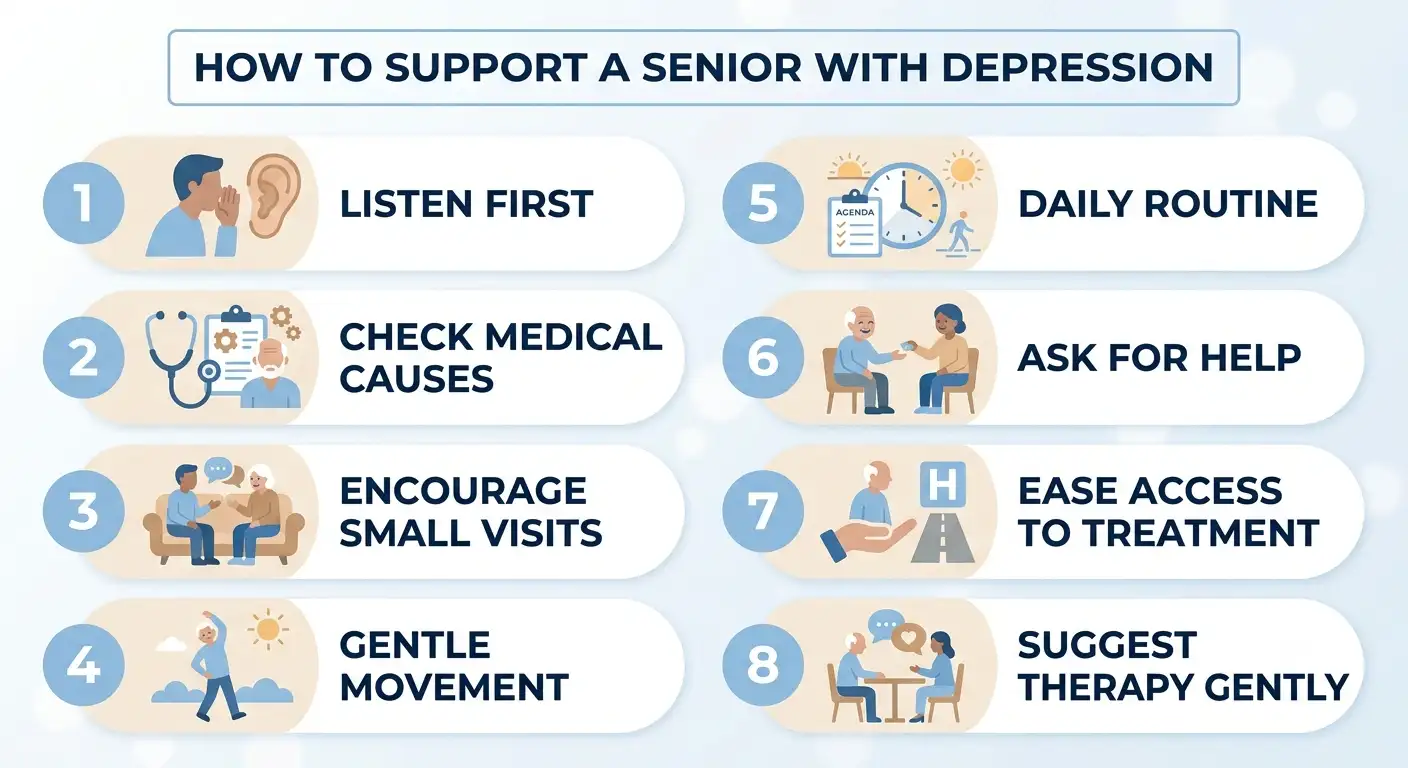
Knowing how to help a senior with depression starts with small, daily adjustments in how you interact and support them. You do not need to be a medical professional to make a profound difference in their comfort.
1. Establish a Predictable Daily Routine
Structure builds a sense of stability. Set regular times for waking up, eating meals, and sitting by a bright window. Simple predictability reduces daily stress and builds gentle momentum.
2. Encourage Nutrient-Dense Meals
Appetite often drops when mood dips. Offer smaller, frequent meals packed with lean protein, whole grains, and fresh vegetables. Cooking together or sharing lunch provides subtle encouragement to eat.
3. Schedule Gentle Physical Activity
Physical movement boosts natural feel-good chemicals in the brain. A brief ten-minute stroll around the yard or light chair exercises can lift spirits without causing exhaustion. This is an effective way when learning how to help an elderly person with depression.
4. Foster Meaningful Social Connections
Isolation breeds low mood. Arrange short visits with friends, video calls with grandchildren, or visits from a non-medical caregiver. Keeping social commitments small prevents your loved one from feeling overwhelmed.
5. Involve Them in Household Tasks
Feeling unneeded can worsen emotional distress. Ask for their help with light tasks, like folding laundry, watering houseplants, or sharing family recipes. Contributing restores a sense of personal worth.
6. Introduce Non-Clinical In-Home Support
When balancing work, family, and caregiving gets tough, bring in practical aid. Professional home care aides assist with meal preparation, light housekeeping, and personal care. Their companionable presence eases daily stress for everyone involved.
7. Make the Living Space Safer and Brighter
Dark, cluttered spaces sink mood and increase fall risks. Open curtains during the day, add warm lighting, and clear walking paths. A bright, safe home environment supports mental clarity.
8. Encourage Past Hobbies
Reconnecting with past passions lights up old memories. Bring out old photo albums, play classic music, or set up simple crafting supplies. Keep activities stress-free and enjoyment-focused.
When to Get Professional Help
Seek professional help when sadness lasts two weeks or longer, interferes with eating, sleeping, or daily tasks, or doesn’t improve with family support. A primary care doctor is the best first call. A geriatric psychiatrist or licensed therapist can follow up with specialized treatment.
Don’t wait for them to ask, because many seniors won’t. Bring a short list of symptoms, dates, and medications to the visit. Treatment works, and most older adults improve with therapy, medication, or both.
Call the doctor sooner if they stop eating, drinking, or taking medications.
What to expect: the doctor may ask about mood, sleep, and memory, often using short questionnaires such as the PHQ-9. Improvement can take several weeks, so keep encouraging them.
Recognizing a Mental Health Crisis
Warning signs of a mental health crisis in a senior include talking about death, giving away possessions, sudden calmness after a period of deep sadness, or direct statements about wanting to disappear or not wake up. These signs call for immediate action, not a wait-and-see approach.
If you notice any of these signs, don’t leave the person alone. Call 988, the Suicide and Crisis Lifeline, or take them to an emergency room if you believe they’re in immediate danger. A sudden lift in mood after a long depressive stretch can be misread as good news, but it sometimes means a decision has already been made. Trust your instincts here over any urge to downplay what you’re seeing.
Taking Care of Yourself as a Caregiver
Caregiver burnout is real, and taking care of your own mental health directly affects how well you can support a depressed senior. Ignoring your own limits doesn’t make you a better caregiver. It usually makes you a more exhausted, less patient one.
Set boundaries on what you can realistically offer, and bring other family members into the rotation where possible. A short walk, a call with a friend, or even ten quiet minutes with coffee can reset your patience for the rest of the day. If you’re feeling stretched thin, a support group or your own therapist isn’t an indulgence. It’s part of keeping the whole situation sustainable long term.
Final Thoughts
Depression in seniors is treatable, and most families see real progress once they stop waiting for things to improve on their own. If you’ve been searching for how to help a senior with depression because someone you love is struggling, the steps above give you a real starting point, not just something to read and set aside.
For families in Colorado looking for extra support at home, in-home caregivers can make a real difference in reducing isolation and helping seniors stick to daily routines that support their emotional health. If you’re exploring home care services in Denver for a loved one dealing with depression, isolation, or general daily support needs, Castle Pines Home Care can help you figure out what kind of support actually fits your situation. Contact us to talk through your options.
Frequently Asked Questions
What’s the difference between sadness and depression in seniors?
Sadness usually passes within days and connects to a specific event. Depression lasts two weeks or longer, affects sleep and appetite, and interferes with daily function even when there’s no clear trigger.
Can depression in older adults be treated without medication?
Yes, in many mild to moderate cases, therapy alone, especially cognitive behavioral therapy, works well. Medication becomes more relevant for moderate to severe depression or when therapy alone isn’t enough progress.
Is loneliness the same as depression?
No, but senior isolation and loneliness are strong risk factors for depression. Someone can feel lonely without being depressed, though prolonged loneliness raises the odds of it developing over time.
How long does depression recovery usually take?
Recovery timelines vary, but many people notice improvement within six to eight weeks of starting therapy or medication. Full recovery and staying stable often takes several months of consistent treatment.
What if my loved one refuses all help?
Keep the door open without forcing it. Continue showing up, offer low-pressure invitations, and revisit the conversation periodically. Refusal today doesn’t mean refusal forever.