

Caring for a loved one can be a full time job and even a committed family caregiver needs time away. ### What Is Respite Care? Respite care is temporary relief for a family or primary caregiver, with the care recipient being cared for by another trained individual. The break can take a few hours, a day, overnight, or longer, depending on the provider and the care needed.
The respite care services may be in the home, an adult day program or residential environment. Many families find respite care at home to be a pleasant choice since the older senior remains in an environment that is familiar. In this guide, we explain what respite care is, who could benefit from it, how it works, what factors determine the cost, and how general respite care differs from hospice respite care.
What Is Respite Care?
Respite care is a short-term care service that temporarily relieves a family caregiver of their daily caregiving duties. A trained caregiver or facility steps in to handle personal care, meals, medication reminders, and companionship, so the primary caregiver can rest, run errands, or attend to their own health. It’s not a permanent placement. It’s a pause button.
The word “respite” means a short period of rest. That’s exactly what this service is built around. A family caregiver arranges for someone else- a home health aide, an adult day program, or a residential facility- to take over care for a set window of time.
Types of Respite Care Services
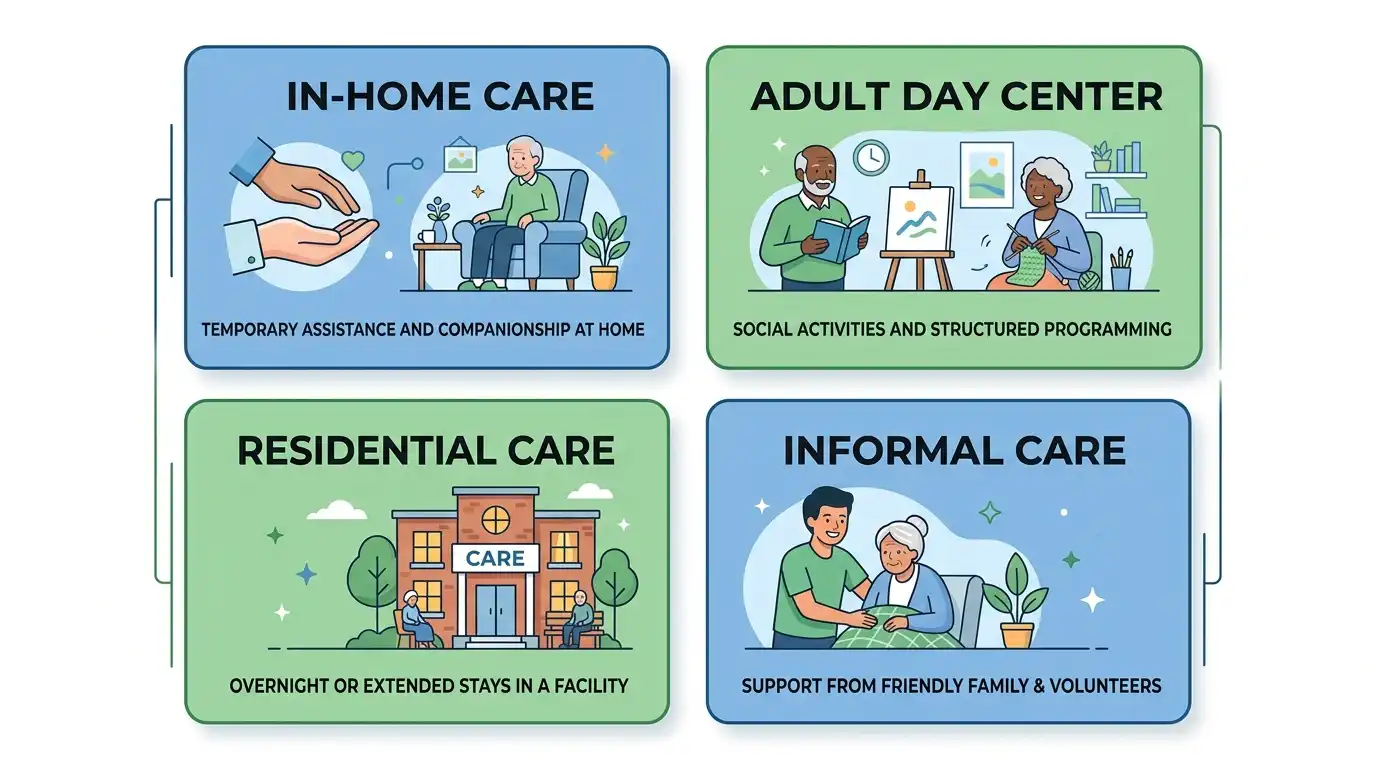
Every family requires a different level of support based on their daily routine. You can mix and match these options depending on your schedule and budget.
1. In-Home Respite Care Services
With in-home respite care, a qualified support worker comes directly to your residence. This arrangement keeps your family member in their familiar surroundings, preserving their usual routines and comfort. Services typically range from light companion care and meal preparation to personal care duties like assistance with dressing, bathing, and mobility support..
2. Adult Day Care Centers
Community-based adult day centers offer supervised daytime programs outside the home. Operating primarily during regular business hours, these centers provide structured activities, social interaction, therapeutic exercises, and group meals. This setup works exceptionally well for working family caregivers who need dependable support during the day while giving their aging loved one a chance to socialize.
3. Overnight Respite Care
Sometimes you need more than just a few hours of free time. Overnight options allow you to travel, attend out-of-town events, or get uninterrupted sleep. A professional stays at your home through the night or your relative stays at a dedicated facility. This prevents late-night wandering or falls while you rest.
4. Emergency Respite Care
Life happens, and crises arrive without warning. If you get sick or have an unexpected emergency, you need immediate backup. Emergency programs step in quickly to fill the gap so your relative is never left alone. Having a plan for this scenario reduces daily caregiving stress significantly.
Why Is Respite Care Important?
Caregiving without a break wears people down, physically and emotionally. Respite care matters because it protects the caregiver’s health just as much as it protects the person receiving care.
Think of it like a car engine that never gets turned off. Even the best-built engine will eventually overheat if it’s never allowed to cool down. A family caregiver runs on the same principle. Skipping rest doesn’t make you stronger. It just delays a breakdown.
Caregiver burnout is a real, documented condition. It shows up as chronic fatigue, irritability, trouble sleeping, and a weakened immune system. Left unaddressed, it can lead to depression or force a caregiver to place their loved one in full-time care sooner than necessary. Respite care interrupts that cycle before it gets there.
The Benefits of Respite Care for Your Family
The positive impact of temporary relief extends far beyond the primary caregiver, creating a healthier, happier household for everyone involved.
Benefits for the Primary Caregiver
-
Physical and Mental Rest: Uninterrupted sleep, lower daily anxiety, and reduced risk of chronic health issues.
-
Preserved Independence: Dedicated time to maintain personal doctor visits, pursue hobbies, or catch up on household chores.
-
Stronger Social Ties: Freedom to meet friends, attend community events, and spend quality time with other family members without feeling rushed.
Benefits for Your Loved One
-
Social Engagement: Opportunity to interact with new faces, participate in fresh group activities, and reduce feelings of isolation.
-
Professional Support: Access to experienced professionals trained in gentle mobility assistance, cognitive stimulation, and personal care.
-
Reduced Guilt: Many care recipients feel guilty about being a heavy burden on family members; professional visits ease that emotional pressure.
What Happens at Respite Care?
During respite care, a trained professional takes over the daily care tasks your loved one needs. This includes personal hygiene help, meal preparation, medication reminders, light household tasks, and companionship. The goal is to maintain your loved one’s routine while giving you time away.
The specifics depend on the type of respite and the individual’s care plan. Here’s what a typical in-home respite visit might include:
- Personal care: bathing, grooming, dressing
- Activities of daily living (ADLs): eating, mobility assistance, incontinence care
- Household tasks: laundry, light cleaning, meal prep
- Companionship: conversation, games, walks
- Transportation: driving to medical appointments or errands
- Medication management: reminders and basic oversight
For more medically complex patients, services may include skilled nursing support or physical therapy coordination.
What to Know About the Costs of Respite Care
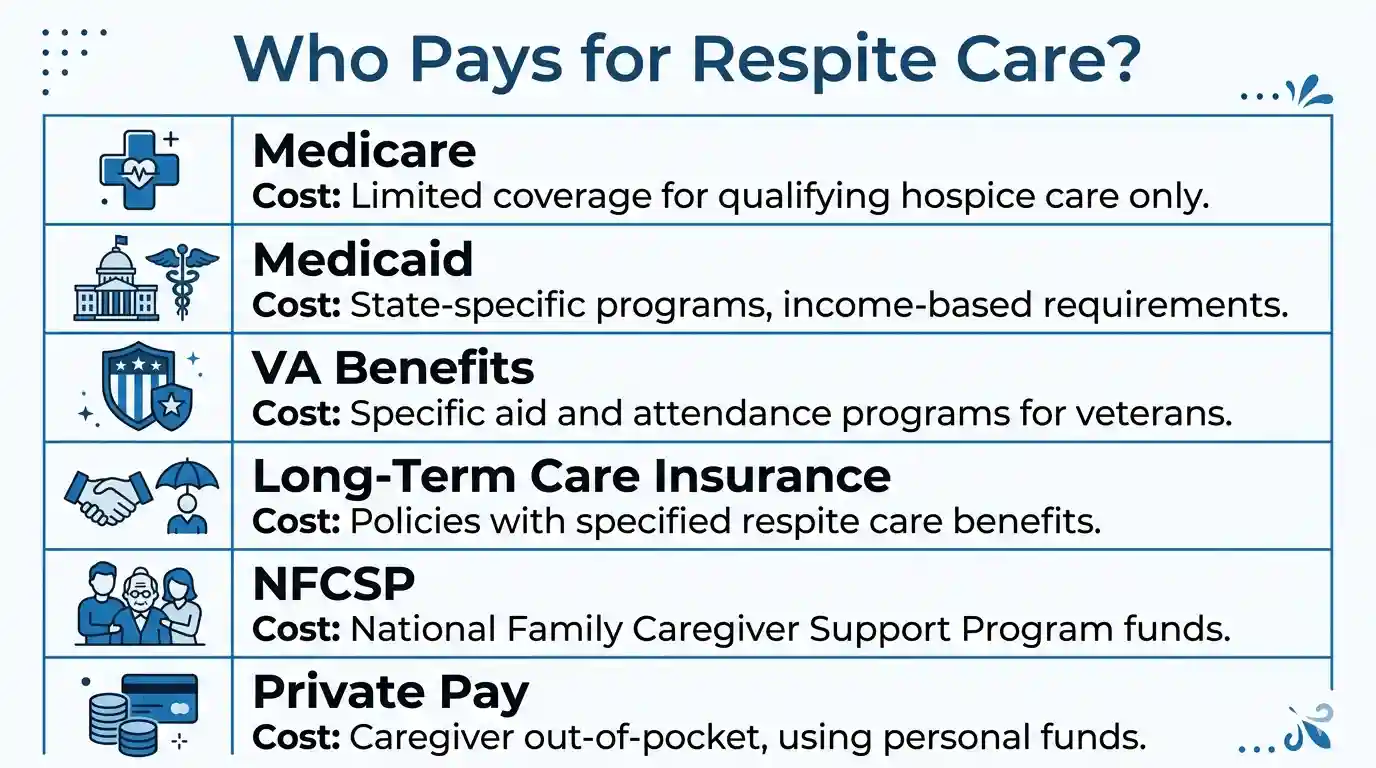
The costs of respite care vary heavily based on your geographic location, the specific type of care chosen, and the total hours needed. In-home care and adult day centers charge by the hour or day, while residential facilities charge a flat overnight or weekly rate.
| Service Type | Average Cost Basis | Payment Methods |
| In-Home Care | $25 – $40 per hour | Out-of-pocket, VA Benefits, Medicaid |
| Adult Day Centers | $75 – $150 per day | Medicaid Waivers, Private Pay, Grants |
| Residential Overnight | $200 – $450 per night | Long-term Care Insurance, Private Pay |
Understanding your financial options ahead of time eliminates massive stress later. Let us break down how families actually pay for these essential services.
Out-of-Pocket Costs and Private Pay
Many families pay for these services using personal savings or income. Because these services are flexible, you can control the cost by scheduling specific hours. Using a few hours a week can keep the overall budget highly manageable.
Veterans Affairs (VA) Benefits
If your relative is a veteran or a surviving spouse, major assistance is available. The VA offers specific programs designed to fund temporary relief for family caregivers. Programs like Aid and Attendance provide monthly funds that can be used directly for home care.
How Can Respite Care Help Family Caregivers?
Respite care helps by giving you back small, regular pockets of time that add up. You don’t need a two-week vacation to benefit. Even four hours a week, used consistently, can lower stress levels over time.
A few signs it might be time to look into respite care:
- You’re skipping your own medical appointments to manage caregiving duties.
- You feel irritable or resentful more often than not.
- Sleep has become inconsistent or hard to get.
- You’ve turned down family events or personal plans more than once this month.
- Friends or other family members have mentioned you seem worn out.
If two or more of these sound familiar, that’s worth paying attention to. Reaching out to a home care agency for a consultation costs nothing and doesn’t obligate you to anything.
Who Is Respite Care Best Suited For?
Respite care is best suited for primary family caregivers who provide daily or near-daily support to a loved one with a chronic illness, disability, or age-related condition. It’s also appropriate for caregivers preparing for surgery, travel, or any situation requiring temporary absence. There’s no strict eligibility rule if you’re a caregiver, you qualify for support.
Specifically, short-term respite care works well for:
- Caregivers of elderly parents dealing with mobility issues, dementia, or post-surgery recovery
- Parents of children with disabilities who need medical or behavioral support
- Spouses caring for a partner with a chronic or terminal illness
- Working caregivers who need daytime coverage during work hours
- Caregivers in crisis who need emergency, unplanned support
Respite care for elderly loved ones is particularly common, as the aging population continues to grow. According to the U.S. Bureau of Labor Statistics, demand for home health and personal care aides is expected to grow by 21% through 2033.
Where Do I Find Respite Care Services?
You can find respite care services through a local home care agency, your area’s Agency on Aging, or your loved one’s doctor. National directories like the ARCH National Respite Network and the Eldercare Locator can also connect you with vetted providers in your area. Always confirm licensing and insurance before hiring anyone.
Start by asking your loved one’s primary care doctor for a referral. Doctors often know which local agencies have a solid reputation. Your local Area Agency on Aging is another resource that keeps updated lists of respite providers, often broken down by service type.
Respite Care vs. Long-Term Care: What’s the Difference?
The primary difference is duration and intent: respite care offers temporary, short-term relief lasting hours to weeks, whereas long-term care provides permanent, continuous daily support in a facility or through full-time home visits.
Understanding these operational differences helps you decide which care model fits your current family dynamic.
| Feature | Respite Care | Long-Term Care |
| Primary Goal | Temporary caregiver relief & rest | Ongoing daily living support |
| Duration | Hours, days, or up to 4 weeks | Permanent or open-ended |
| Primary Setting | At home, adult day care, or short facility stays | Nursing homes, assisted living, 24/7 home care |
| Cost Model | Hourly rate, daily rate, or brief hospice benefit | Monthly residential fees or continuous agency billing |
How to Choose the Right Respite Care Provider
Neither competitor covers this and it’s one of the most practical things a family needs to know.
Before selecting a provider, consider these questions:
- Is the provider licensed and insured in your state?
- Do they have experience with your loved one’s specific condition (dementia, disability, etc.)?
- What is their staff-to-client ratio?
- Can you do a trial run before committing to longer care?
- Are background checks conducted on all caregivers?
Ask for references. Visit the facility if it’s a residential option. Trust your gut and your loved one’s reaction during an introductory visit.
Personal Care Support at Home
If you’re looking for reliable in-home support for a family member, professional personal care services can make a significant difference in day-to-day quality of life. Castle Pines Home Care offers trusted home care services in Denver, providing compassionate, trained caregivers who assist with daily living tasks, companionship, and short-term respite coverage. Whether you need a few hours of relief per week or more consistent support, having a dependable local team matters.
Final Thoughts
Taking care of someone you love is one of the most important things you can do for them. But it was never designed to be done alone, without breaks, or without help.
What are respite care services, in their most basic level? It’s okay. You have permission to take a break, take care of yourself, and come back to your loved one as the greatest version of yourself, not a tired one.
Respite care is there to help both you and your loved one, whether you need a few hours a week or a scheduled two-week break. The first step is to admit that you need it.
Contact us today to talk through your caregiving situation and find the right respite care solution for your family. You can reach our team directly through our website or by phone. We’re happy to answer questions, walk you through available services, and help you take that first step toward getting the relief you deserve.
Frequently Asked Questions
What does respite care mean?
Respite care means temporary support for a person who needs care so the regular family caregiver can take a break. Care may be provided at home, in an adult day program, or in a residential or facility setting, depending on the person’s needs.
Is respite care only for seniors?
No. Respite care can support seniors, adults with disabilities, people with chronic conditions, people recovering from illness, and others who rely on regular caregivers. The service is based on the need for temporary caregiver relief, not age alone.
Does respite care include personal care?
Respite care may include personal care such as bathing, dressing, grooming, toileting, eating, and mobility assistance when those tasks fit the caregiver’s training and provider’s scope. Always confirm the exact services before scheduling care.
Does Medicare pay for respite care?
Medicare can cover inpatient respite care for eligible hospice patients under the Medicare hospice benefit, generally for up to five consecutive days in an approved facility. Ordinary non-hospice respite care isn’t broadly covered by Medicare simply because someone needs a caregiver break.
Can respite care be provided at home?
Yes. In-home respite care allows a professional caregiver to come to the person’s home while the regular caregiver takes time away. Depending on the provider, services may include companionship, personal care, meal preparation, light housekeeping, mobility support, and medication reminders.