When families start exploring long-term care, terms like personal care home vs assisted living sound practically identical. Sorting out which environment fits your budget and offers the right level of daily assistance gets overwhelming quickly.
A personal care home provides hands-on help in a small, cozy residential house for fewer residents, making it a great budget-friendly option for non-medical care. Assisted living offers a larger, apartment-style community setting with rich social calendars, private living quarters, and more structured healthcare support.
What Is a Personal Care Home?
A personal care home is a residential property modified to house a small group of older adults, usually between 4 and 10 residents. These settings focus heavily on non-medical support, creating a familiar, cozy environment that feels just like living in a standard single-family home.
Residents receive hands-on assistance with activities of daily living (ADLs), including bathing, dressing, hygiene, and transferring. Staff members also manage instrumental activities of daily living (IADLs), such as home-cooked meal preparation, laundry, housekeeping, and basic medication reminders.
The primary draw here is the low staff-to-resident ratio. Because caregivers oversee only a handful of individuals at a time, your loved one gets attentive, customized care without navigating a massive, sprawling facility.
What Is Assisted Living?
Assisted living communities are larger, purpose-built facilities that host anywhere from 30 to over 200 residents. They combine private housing with personalized support, giving seniors maximum independence alongside round-the-clock staffing.
Residents typically live in private studio or one-bedroom apartments equipped with kitchenettes. These settings emphasize a maintenance-free, social lifestyle. Amenities often feature restaurant-style dining rooms, fitness centers, cinema spaces, and scheduled group outings.
While they provide full ADL and IADL assistance, assisted living properties also integrate access to licensed medical professionals, like registered nurses (RNs) or licensed practical nurses (LPNs). This makes them well-suited for individuals managing stable, ongoing health conditions.
Similarities Between Personal Care and Assisted Living
Before we get into what separates these two options, it helps to see what they actually have in common. Both models exist for the same basic reason: seniors who can still live somewhat independently but need daily assistance with personal care.
- Help with ADLs. Both settings assist with bathing, dressing, grooming, and mobility.
- Medication management. Staff in both types of homes help residents take the right medication at the right time.
- Meals included. Neither option expects residents to cook for themselves.
- No skilled nursing focus. Both are built for seniors who don’t need round-the-clock medical treatment, which sets them apart from nursing homes.
- Social connection. Both aim to reduce isolation, though the scale of activities differs quite a bit.
If your loved one needs daily assistance but not hospital-level care, both of these paths are worth a look. The real decision comes down to setting, cost, and how much structure your family wants.
Key Differences Between Personal Care and Assisted Living
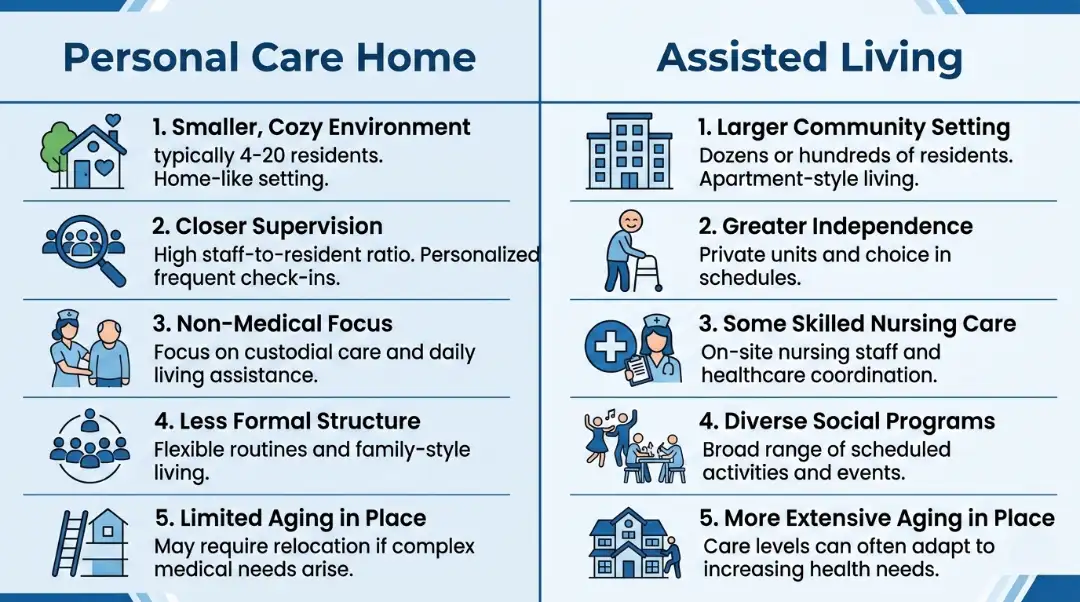
The core difference comes down to one thing: how much clinical care happens on-site. Personal care homes lean medical. Assisted living leans social. Everything else, cost, room setup, licensing, flows from that one distinction.
Here’s a side-by-side look:
| Factor | Personal Care Home | Assisted Living |
|---|---|---|
| Care model | Medical | Social |
| Nursing staff on-site | Yes, often 24-hour | Typically no |
| Help with daily activities | Full, hands-on support | Moderate support |
| Medication administration | Yes | Management only |
| Skilled nursing care | Yes | Not available |
| Ability to age in place | Often limited | Higher, in licensed communities |
| Licensing | Separate state license | Separate state license |
| Typical monthly cost | $3,500–$6,500 | $4,800–$6,500 |
| Room setup | Varies by state | Private room often required |
| Best fit for | Ongoing medical needs | Independent seniors needing support |
One detail that trips people up: in states like Pennsylvania, assisted living residences must provide a private room with a lockable door, a private bathroom, and a small kitchen area. Personal care homes aren’t required to offer any of that. Construction standards, not just care level, are part of what separates the two.
Factors to Consider When Choosing
Selecting between these two settings requires balancing your loved one’s physical health, personality, and financial backing.
1. Daily Care Needs & Medical Complexity
If your parent requires constant physical help with transfers or experiences significant confusion, a personal care home’s tight caregiver ratio offers continuous visual oversight. However, if they require regular insulin injections, wound care, or on-site physical therapy, an assisted living community with licensed nursing staff is usually necessary.
2. Social Preferences & Mobility
Introverted seniors or those with limited mobility often thrive in small residential care homes, where communal spaces are just a few steps down the hallway. Vibrant, active seniors who enjoy fitness classes, social clubs, and expansive grounds will likely feel restricted in a smaller house and prefer assisted living.
3. Financial Resources and Coverage
Assisted living typically costs significantly more, with base rates starting around $4,800 to $5,500 monthly, plus additional fees as care levels increase. Personal care homes average $3,000 to $4,500 monthly, frequently bundling meals and care into one flat rate.
Private pay covers both models, but coverage programs differ:
-
Medicaid: Traditional Medicaid does not pay for room and board. However, Home and Community-Based Services (HCBS) Medicaid Waivers may help cover the care portion in qualified personal care homes or assisted living facilities, depending on state funding.
-
VA Aid and Attendance: Eligible veterans and surviving spouses can apply these tax-free pension benefits toward monthly costs in either setting.
-
Long-Term Care Insurance (LTCI): Most policy riders pay out for licensed assisted living and residential care homes, provided the individual requires help with at least two ADLs.
Signs It May Be Time to Make a Move
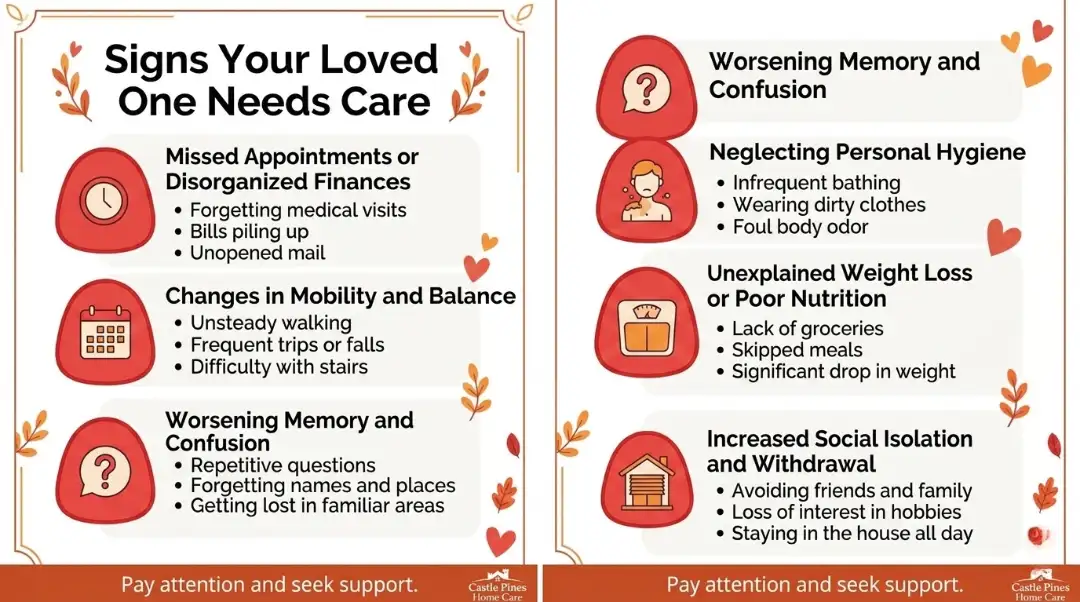
Families often wait too long to have this conversation, usually because it’s uncomfortable. A few warning signs tend to show up before a crisis does.
- Missed medications or confusion about dosing
- Unexplained weight loss or spoiled food in the fridge
- Falls, even minor ones, or new bruising
- A noticeably messier home than usual
- Withdrawal from friends, hobbies, or regular routines
- A caregiver in the family showing signs of burnout
None of these alone means it’s time to move. But two or three happening together is usually a sign the current setup isn’t working anymore, whether that’s living alone or relying on part-time family help.
Is Home Care an Option First?
Moving into a facility isn’t the only way to secure high-quality personal care. Many families prefer to keep their loved ones in familiar surroundings by bringing professional caregivers directly into the home.
In-home care provides customized non-medical support, allowing seniors to maintain their personal routines while receiving help with ADLs, meal preparation, medication reminders, and light housekeeping. This flexible approach allows you to schedule care only for the hours you need—whether that’s a few mornings a week or continuous daily supervision.
Making the Right Choice for Your Loved One
There is no universal right answer here. The best choice depends on your loved one’s health, independence, and what your family can realistically support.
If you are based in the Denver area and exploring your options, Castle Pines Home Care offers Personal Care Services in Denver that can help your loved one remain at home safely before or instead of a facility transition. Our team works directly with families to create a care plan that fits the individual, not a one-size-fits-all model.
For families uncertain about where to begin, consulting with a home care expert can provide clarity on the appropriate level of care required. The assessment can inform the decision regarding the most appropriate next step, whether it be home care, a personal care home, or an assisted living community.
The Verdict: Personal Care Home vs Assisted Living
Personal care homes are better for seniors with active medical needs who require nursing support. Assisted living is better for seniors who are mostly independent and want a structured, socially active lifestyle with some personal support.
Both are legitimate long-term care options. The decision comes down to the level of care your loved one needs today and what you anticipate they will need over time. Cost, location, and personal preference all play a role.
If your loved one is still able to live at home with some professional help, home care is always worth considering before moving to a facility. It preserves independence and can delay or even prevent the need for a facility placement.
FAQs About Personal Care Home vs Assisted Living
Is assisted living the same as a personal care home?
No. While both offer housing, meals, and help with daily tasks, personal care homes provide a higher level of medical supervision. Assisted living is designed for seniors who are more independent.
What are the personal care home requirements?
Requirements vary by state. In Pennsylvania, personal care homes must be separately licensed, have trained staff, and meet specific care standards. In Colorado, facilities must meet state health department regulations for residential care.
Does Medicaid cover assisted living or personal care homes?
Medicaid coverage for both options varies by state. Some states offer Medicaid waivers that help cover assisted living costs. Personal care homes may also qualify under certain state programs. It is best to check with your state’s Medicaid office directly.
Can someone with dementia live in an assisted living community?
Many assisted living communities have a dedicated memory care unit for residents with dementia or Alzheimer’s. If memory care needs are significant, a facility with a licensed memory care program is the safer choice.
What does a personal care facility provide that assisted living does not?
A personal care facility provides on-site nursing care, 24-hour medical supervision, and support for higher-level health needs. Assisted living does not provide skilled nursing care or clinical medical services.
Is home care better than assisted living?
For seniors who are relatively independent, home care allows them to stay in a familiar environment with professional support. It is often more flexible and less expensive in the early stages of care. As needs increase, a transition to a care facility may become necessary.