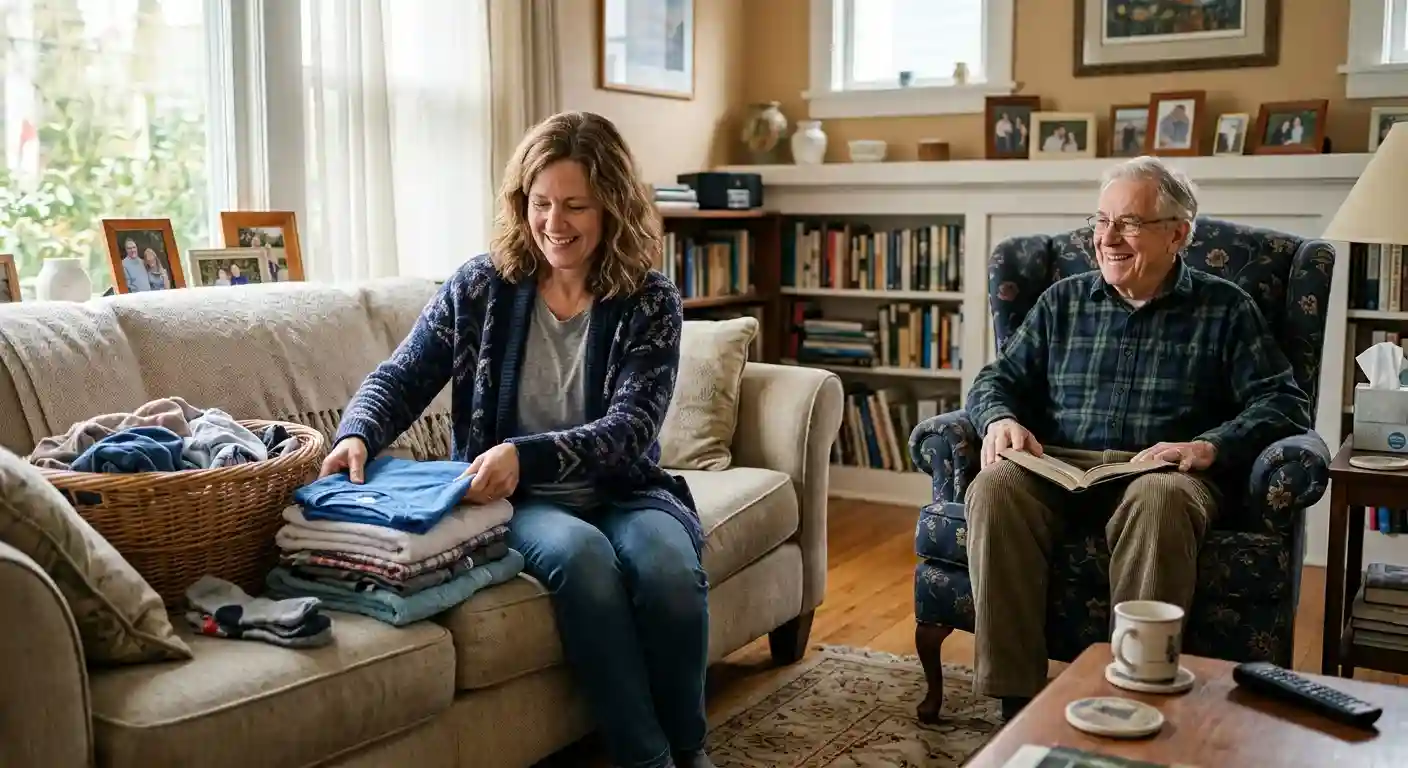
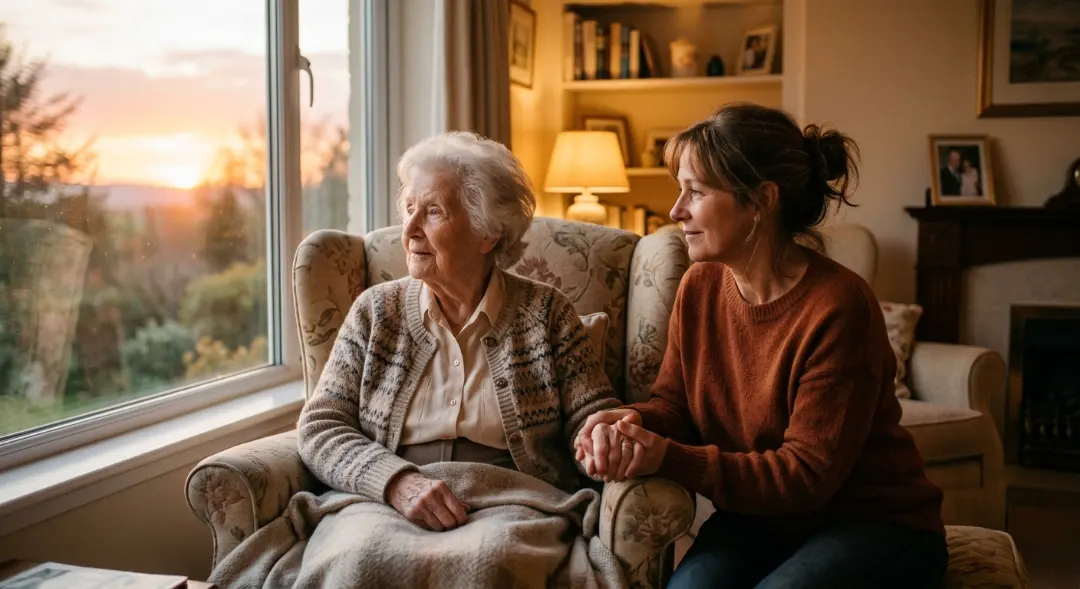
Late afternoon brings a sudden shift in behavior for many aging adults living with memory loss. Understanding what stage of dementia is sundowning helps families prepare for late-day confusion and find stability at home.
Sundowning happens most often during the middle and late stages of dementia. While late-day confusion can appear early, intense evening agitation typically peaks as brain changes progress. Knowing what stage of dementia is sundowning lets you adjust daily routines and create a safer, quieter environment.
What Is Sundowning?
Sundowning is a pattern of confusion, anxiety, and agitation that appears in the late afternoon or evening in some people with dementia. It’s not a disease on its own. It’s a symptom pattern, also called sundown syndrome, that tends to rise as daylight fades.
If you’ve typed “what does sundowning mean” into a search bar, here’s the plain version. Think of a dimmer switch on clear thinking. As the day wears on, a brain already struggling with memory and judgment loses more of its footing.
People also ask what is sundown behavior. It’s the same thing. Sundowning, sundown syndrome, and late-day confusion all describe one evening pattern.
Estimates of how common it is vary widely, from about 1 in 5 people with Alzheimer’s disease to well over half, depending on the study and how researchers define it.
What Stage of Dementia Is Sundowning Most Common?
Sundowning is most common in the middle to late stages of dementia, typically corresponding to stages 4, 5, and 6 of the clinical progression scales. During these moderate-to-severe phases, brain changes significantly damage the body’s internal clock, making it difficult for individuals to process transitions, manage daily fatigue, or interpret low lighting.
While some mild symptoms can appear earlier, the intense behavioral changes that families find hardest to manage almost always peak during the moderate stages of cognitive decline.
The 7 Stages of Dementia and Where Sundowning Fits

To understand exactly what stage of dementia is sundowning, it is helpful to look at the Reisberg 7-Stage Scale, also known as the Global Deterioration Scale (GDS). This scale is what medical professionals use to measure how cognitive decline progresses over time.
| Stage | Clinical Level | Typical Symptoms & Abilities | Does Sundowning Occur? |
| Stage 1 | No Cognitive Decline | Normal brain function; no noticeable memory loss. | No |
| Stage 2 | Very Mild Decline | Minor forgetfulness, like misplacing keys or forgetting names. | No |
| Stage 3 | Mild Cognitive Decline | Subtle trouble finding words; mild difficulty planning or organizing. | Rarely (Mild anxiety or irritation at the end of a long day) |
| Stage 4 | Moderate Dementia | Clear memory lapses; difficulty managing finances; struggles with personal history. | Yes (Often begins here as cognitive fatigue sets in) |
| Stage 5 | Moderately Severe | Major memory gaps; needs help choosing clothes; frequent confusion. | Yes (This is the peak phase for frequent, intense episodes) |
| Stage 6 | Severe Dementia | Needs help bathing and toileting; may forget spouse’s name; personality changes. | Yes (High risk of severe agitation, wandering, and night waking) |
| Stage 7 | Very Severe Decline | Loss of speech; needs help with feeding; loss of motor skills and movement. | Decreases (Due to limited mobility and overall loss of physical responsiveness) |
Signs and Symptoms of Sundowning

Recognizing the signs of sundowning helps you intervene before a loved one’s distress escalates into a full-blown crisis. These behavioral symptoms can look slightly different in every individual, but they generally involve a distinct shift in mood and energy as the daylight fades.
Common Physical Behaviors
- Wandering and Pacing: Walking back and forth continuously, trying door handles, or packing bags to leave.
- Restlessness: Inability to sit still, constant fidgeting, or repeatedly repeating the same movement or question.
- Shadowing: Following the primary care partner closely from room to room out of fear of being left alone.
Emotional and Cognitive Symptoms
- Nighttime Confusion: Forgetting where they are, what year it is, or failing to recognize close family members.
- Paranoia and Delusions: Accusing others of stealing their things, hiding items, or believing strangers are outside the window.
- Agitation and Anger: Sudden crying spells, screaming, shouting, or lashing out physically when they feel misunderstood.
What Does Sundowning Look Like?
Sundowning is a dramatic, sudden personality change, where someone who’s calm becomes very anxious, suspicious or combative as the shadows lengthen in the room. It often sounds like an irrational, urgent call to “go home” while they’re sitting safely in their own living room.
To give you a sense of what this clinical phenomenon looks like, here’s a short, real-life example of what an episode usually looks like in a household:
The first thing is to know that this is a physiological response to brain injury, not stubbornness, and to react with patience and love.
What Causes Sundowning?
Researchers haven’t found one cause. Sundowning likely comes from damage to the brain’s internal clock, which controls sleep and wake cycles, combined with fatigue, low light, and unmet needs like hunger or pain. Changes in melatonin, the sleep hormone, may also play a part.
Several everyday triggers can stack up like straws on a camel’s back:
- Mental exhaustion after a long day
- Fading light and long, scary shadows
- Hunger, thirst, pain, or a full bladder the person can’t explain
- Noise and activity around dinnertime
- Too little daylight or too many naps
- Medication timing or side effects
- Infections, such as a urinary tract infection
Caregiver stress matters too. People with dementia pick up on tone and tension, even when words slip away.
How Long Does Sundowning Last?
Yes, individuals can experience sundowning without having dementia, often due to delirium, severe sleep deprivation, medical infections, or medication side effects. Hospital stays and major routine disruptions can also trigger temporary late-day confusion in older adults.
Urinary tract infections (UTIs) frequently cause sudden, severe evening confusion in seniors. Electrolyte imbalances, dehydration, or adverse reactions to prescription drugs produce similar behavioral shifts. Seeking a medical evaluation helps rule out reversible temporary conditions.
Can You Have Sundowners Without Dementia?
Yes, you can experience symptoms of sundowning without having dementia, particularly in cases of acute delirium, severe urinary tract infections (UTIs), or parkinson’s disease. When late-day confusion occurs suddenly in an older adult without a history of cognitive decline, it is usually a sign of an underlying medical emergency.
Delirium vs. Dementia
Delirium is a sudden state of severe confusion that can be reversed once the physical cause is treated. UTIs, dehydration, medication side effects, or thyroid imbalances can all cause older adults to become highly agitated and confused in the evenings. If these behaviors start overnight, seek immediate medical attention.
Sundowners Parkinson’s Connection
People living with Parkinson’s disease, especially in the later stages, can also experience sundowning symptoms. This is often linked to the timing of their medications wearing off, daytime fatigue, and the progressive neurological changes associated with Parkinson’s dementia.
How to Manage Sundowning: Tips for Caregivers
Managing late-day distress requires practical adjustments to light, routines, and physical comfort:
-
Close curtains and turn on bright interior lights before dusk begins.
-
Establish a predictable, calm daily routine for meals and activities.
-
Limit afternoon caffeine, sugar, and lengthy daytime naps.
-
Reduce background noise from loud televisions or busy household commotion.
-
Offer a warm cup of herbal tea or play gentle music during dinner prep.
Finding Support When You Need It Most
Providing constant care for a family member experiencing late-day confusion is physically exhausting and emotionally draining. Sleep deprivation, constant worry, and the grief of watching a parent change can quickly lead to severe caregiver burnout. Recognizing when you need help is a courageous act of love, not a sign of failure.
Bringing in professional, non-medical caregivers can give you the vital rest you need to stay healthy, allowing you to focus on simply being a supportive daughter, son, or spouse again.
If you are caring for an aging family member in Colorado, we can help you navigate these daily challenges. Through Castle Pines Home Care, we provide customized home care services in Denver designed to support seniors with cognitive decline in the comfort of their own familiar surroundings. Whether you need a few hours of afternoon respite care to run errands or overnight support to ensure your loved one stays safe while you sleep, our compassionate team is here for you.
Contact us today to discuss your care needs and take the first step toward a peaceful evening routine.
Frequently Asked Questions
What stage of dementia is sundowning most common in?
It’s most common in the middle stage, though it can appear earlier and tends to lessen in the late stage as activity levels drop.
Can sundowning happen in early-stage dementia?
Yes, though it’s usually milder. Early sundowning often shows up as irritability or trouble settling down rather than intense agitation.
Does sundowning mean dementia is getting worse?
Not necessarily. Temporary flare-ups can be caused by poor sleep, illness, or a change in routine. Frequent or worsening episodes over time are worth discussing with a doctor.
Can you have sundowners without dementia?
Yes. Sundowning-like symptoms have been linked to delirium and some other conditions, so a new pattern like this deserves a medical evaluation.
What helps calm someone during a sundowning episode?
Reducing noise and stimulation, using a calm voice, offering reassurance, and checking for hunger, pain, or discomfort tend to help more than trying to reason with them.