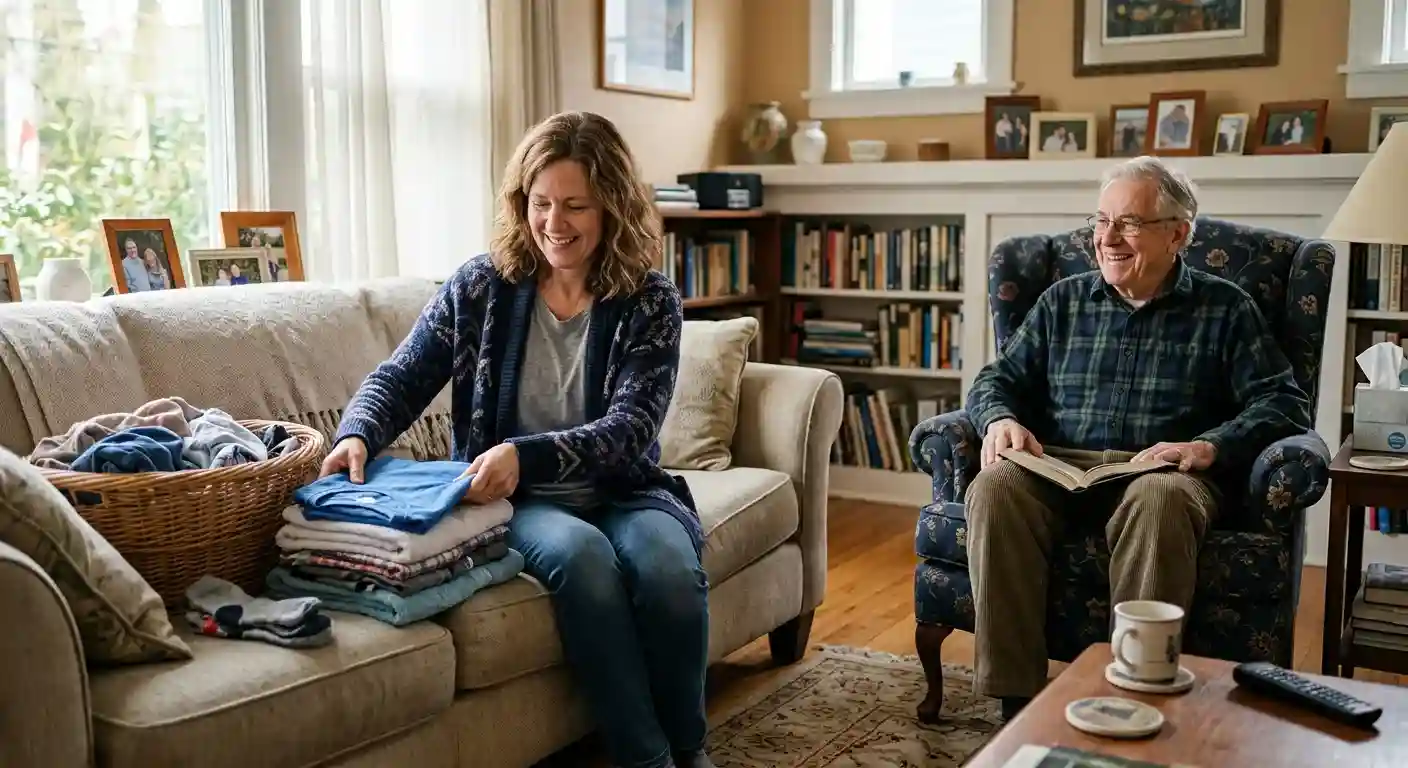

The term homemaker traditionally describes someone who manages a household, taking care of daily tasks like cooking, cleaning, budgeting, and organizing to ensure a safe, functional, and comfortable home environment. Today, the role extends beyond domestic chores to include non-clinical support and non-medical home care for seniors and individuals needing daily assistance.
Running a household or arranging support for a loved one is a major responsibility. Navigating options for domestic care can feel overwhelming when you are unsure where to turn. This guide provides a clear breakdown of what homemaking entails, how non-clinical home care services operate, and how professional support can help keep families safe and comfortable at home.
What Does “Homemaker” Mean?
A homemaker is an individual responsible for managing domestic duties, maintaining a clean living environment, and coordinating household routines to support family well-being. In modern care settings, the term also refers to trained non-medical professionals who assist seniors or individuals with chronic conditions with daily household tasks.
At its core, the homemaker meaning centers on creating stability inside the living space. The position covers basic home management along with specialized support for those who cannot manage daily tasks independently.
Whether self-directed or provided by an agency, home maker means establishing structure. It ensures that meals are prepared, living areas remain sanitary, and personal schedules run smoothly.
What Does a Homemaker Do? (Roles & Responsibilities)

A homemaker manages fundamental household tasks including meal planning, light housekeeping, laundry, grocery shopping, and basic home organization. When acting as a care provider, they also offer companion support, mobility assistance, medication reminders, and transportation for errands or medical appointments.
The responsibilities shift based on household needs. A full time homemaker meaning involves maintaining a balance between routine chores and supportive care.
-
Nutritional Support: Planning balanced meals, managing dietary restrictions, and handling grocery shopping.
-
Environmental Maintenance: Light cleaning, dusting, washing dishes, vacuuming, and managing laundry.
-
Administrative Oversight: Managing household budgets, paying bills, and keeping supply inventories stocked.
-
Care Coordination: Providing companion care, setting medication reminders, and organizing transportation.
Data on home care usage suggests that non-medical assistance allows older adults to age in place significantly longer. Including a breakdown of daily hours spent on routine chores versus personal support could clarify how professional agencies structure care plans.
Homemaker vs. Housewife What’s the Difference?

The difference between a homemaker and a housewife lies in scope, gender neutrality, and professional application. While a housewife traditionally refers to a married woman managing her marital home, a homemaker applies to anyone of any gender managing a household, including paid non-medical home care professionals.
Understanding these distinctions helps clarify modern household management roles.
| Feature | Homemaker | Housewife |
| Gender Application | Gender-neutral (men, women, professionals) | Gender-specific (traditionally married women) |
| Employment Status | Unpaid family role or paid care professional | Unpaid familial role |
| Primary Focus | Overall home health, support, and maintenance | Traditional domestic household management |
| Industry Usage | Standard term in non-medical home care | Standard term in cultural/traditional contexts |
Homemaker vs. Stay-at-Home Mom (SAHM) Is There a Difference?
A stay-at-home mom is a homemaker whose primary added responsibility is raising children full time. Every stay-at-home mom is a type of homemaker, but not every homemaker has children at home. The terms overlap but aren’t identical.
A stay-at-home mom’s day centers on kids: feeding them, teaching them, driving them to practice, managing school communication. Household chores like cooking and cleaning still happen, but childcare is the anchor task around which everything else gets scheduled.
A homemaker without children in the house has a different rhythm. An empty nester or a childless couple’s homemaker might spend more time on budgeting, home maintenance, or caring for an aging relative instead of school runs and pediatrician visits.
Can a Man Be a Homemaker?
Yes, a man can absolutely be a homemaker. Nothing about the role is tied to gender. Men who stay home to manage the household while a spouse or partner works outside the home fill the exact same responsibilities as any other homemaker.
Census data has tracked a slow but steady rise in stay-at-home fathers over the past two decades, and that trend is worth pulling recent figures for if you want to show readers this isn’t a fringe choice anymore. Pew Research has published surveys on this trend that would strengthen this section with a real, current statistic.
The Cooking and Cleaning of Homemaking
Cooking and cleaning form the foundation of homemaking by ensuring nutritional health, personal safety, and physical sanitation within the residence. Proper hygiene management reduces fall hazards, eliminates clutter, and prevents illness through safe food handling and regular environmental disinfection.
Keeping a home operational requires consistent routines. Cooking involves sourcing fresh ingredients, honoring dietary needs, and preparing easy-to-digest food. Cleaning focuses on essential sanitization rather than superficial organization.
-
Maintaining clear walkways to reduce trip hazards for mobility-impaired residents.
-
Sanitizing kitchen surfaces and bathroom fixtures to stop bacteria spread.
-
Handling bed linens and clothing to preserve personal comfort and skin health.
Qualities of a Homemaker
The key qualities of an effective homemaker include strong organizational skills, patience, empathy, adaptability, and time management. When providing care for elderly or disabled individuals, physical stamina, active listening, and attention to detail become equally critical traits.
Managing a living space requires more than finishing a checklist. It demands high emotional intelligence and practical competence.
-
Time Management: Prioritizing urgent physical needs while keeping background chores moving.
-
Adaptability: Adjusting routines quickly when personal health conditions or family schedules change.
-
Attention to Detail: Noticing minor changes in a living environment or a resident’s overall well-being.
-
Reliability: Arriving promptly and performing duties consistently to build household trust.
Benefits of Homemaking for Families
Homemaking benefits families by reducing stress, improving health outcomes, ensuring clean living spaces, and supporting independent living. For seniors and individuals with chronic conditions, dedicated home management preserves autonomy while providing consistent non-medical supervision.
Having structured support in the residence improves life quality across several areas.
-
Stress Reduction: Relieves family members from balancing career demands with continuous house maintenance.
-
Safety and Maintenance: Keeps living environments free from physical hazards that cause falls.
-
Consistent Nutrition: Ensures regular intake of home-cooked, nutrition-dense meals tailored to health profiles.
-
Preserved Independence: Allows older adults to stay in familiar surroundings without requiring immediate institutional care.
Challenges Homemakers Face
Let’s be honest about this part too, because neither of the competing posts goes deep enough here.
Invisible labor The work of a homemaker is constant but rarely acknowledged. The emotional load of tracking everyone’s needs, schedules, and moods is exhausting in a way that’s hard to explain to someone who hasn’t done it.
Caregiver anxiety and burnout Homemakers, especially those also caring for aging parents or family members with disabilities, carry an enormous mental load. The anticipatory grief of watching a parent age, the emotional burden of caregiving these are real, and they deserve to be named.
Financial vulnerability Without an independent income, homemakers can face economic insecurity if circumstances change. This is a practical reality worth planning for.
Social isolation Working from home, even when the work is meaningful, can be lonely. Adult conversation and a sense of identity outside the household matter.
Lack of recognition Perhaps the biggest challenge. What is a homemaker, in society’s eyes? Too often, the honest answer is “undervalued.” That needs to change.
Final Thoughts
A homemaker is not one who maintains a house clean. The role is in all aspect of family life – the food, the feelings, the memories and the order that allows everyone else to function. It’s one of the oldest and most essential jobs there is and it should be a whether due to aging, disability, or a health condition professional homemaker services can fill the gap. Castle Pines Home Care offers trusted home care services in Denver and Homemaker Services in Denver designed to support families with compassion and reliability. Reach out to us today to learn how we can help.
Frequently Asked Questions
What is a homemaker in simple terms?
A homemaker is a person who manages the household as their main responsibility. This includes cooking, cleaning, childcare, budgeting, and keeping the home running day to day.
Is homemaker a job title?
Yes. “Homemaker” is widely accepted as a legitimate job title on resumes, legal documents, and official forms. It accurately describes the role of managing a household.
How do I list homemaker on a resume?
List it as you would any job. Title: Homemaker. Include dates, and describe responsibilities budget management, meal planning, household operations, childcare. These are real, transferable skills.
What is the difference between a homemaker and a housewife?
A housewife is a married woman who stays home. A homemaker is any person regardless of gender or marital status who manages a household as their primary role.
What is the economic value of a homemaker?
When the individual services are priced out (cooking, childcare, cleaning, budgeting, errand running), the annual value of a full-time homemaker is estimated between $100,000 and $178,000 depending on the source.
Can men be homemakers?
Yes. Any person who manages a household as their primary role is a homemaker. Gender doesn’t define the role the work does.
What’s the hardest part of being a homemaker?
Most homemakers point to the invisible nature of the work the constant emotional labor, the mental load of managing everyone’s needs, and the lack of external recognition for work that never truly stops.